Why Is My Ball Python Pink? Belly and Body Color Changes
By Dr. Zubair Khalid, DVM, MS, PhD ·
This article is educational and is not a substitute for veterinary diagnosis or treatment.
If your ball python looks pink, the most common reason is that a shed is coming. The skin underneath new growth often shows through as a soft pink or salmon tone, especially on the belly. A pink tint can also be normal for certain color morphs, for warm spots where the snake has been resting, or for a white snake showing blood flow through pale scales. True redness, swelling, or open sores are different and need a closer look.
Quick Answer
- A pink or salmon belly is usually the first sign of an upcoming shed, and it fades within a few days to a week.
- Some morphs are bred to be pink, including many pastel, albino, and "white" lines, so a pink snake can simply be a pink snake.
- A pink patch that matches the shape of a heat mat, heat rock, or lamp is a burn until proven otherwise.
- Redness with swelling, discharge, a bad smell, or peeling scales points to infection or scale rot and needs a vet.
- If your snake is eating, moving, and acting normal, monitor for 3 to 5 days and take photos to track changes.
What Pink Looks Like and What Is Normal
Pink in a ball python can show up in a few places. The belly is the most common. You may see a uniform blush from throat to tail, or a patchy pink that follows the scale edges. The sides and back can also lighten or take on a pinkish hue just before a shed. In white or pale morphs, you may notice a pink tint over the whole body because the skin is thin enough to show the underlying blood vessels.
Normal pink is usually even, dry, and smooth. The scales lie flat. There is no swelling, no crust, and no smell. Your snake may also have cloudy eyes, a dull appearance, or go off food during this time. These are all part of the shed cycle.
Color in ball pythons is controlled by pigment cells called chromatophores, and the genes behind those cells shape both pattern and hue. A mutation in the melanocortin-1 receptor (MC1R) gene is linked to the Clown morph and affects how pigment cells are distributed [1]. Similar MC1R changes are tied to body color variation in other reptiles [2]. This is why two ball pythons of the same morph can look slightly different, and why some lines carry pink or orange tones.
Why Is My Ball Python Pink? The Main Causes
Pre-Shed (the most common reason)
About 5 to 10 days before a shed, the new skin forms underneath the old layer. Because the new skin is thinner and has more blood flow, it can look pink or reddish. This is called "in blue" or "going into shed." The belly usually turns pink first. Then the eyes cloud over, the body dulls, and the snake may hide more. Once the eyes clear, the shed happens within a few days. After that, the pink is gone.
Morph and Genetics
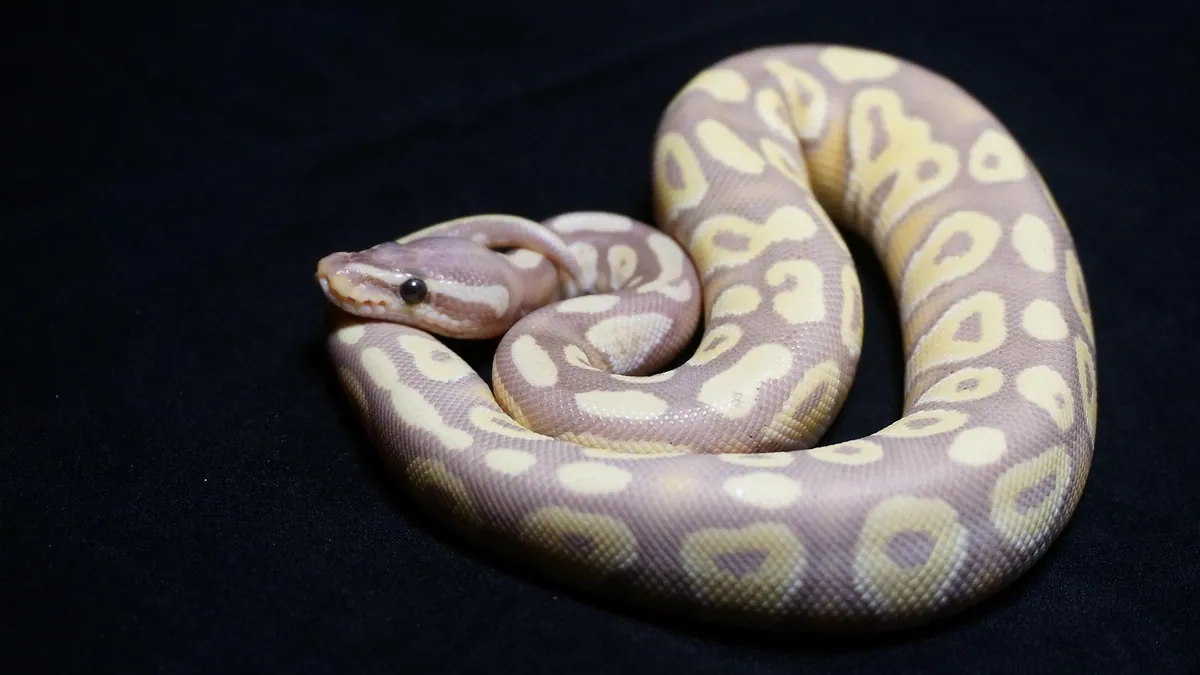
Some ball pythons are pink by design. Pastel, banana, albino, and many "white" morphs (such as blue-eyed leucistic and black-eyed leucistic) can show pink or lavender tones. Piebald ball pythons have patches of unpigmented skin, and the gene behind that pattern is linked to a loss of certain pigment cells [3]. If your snake has always been pink in the same places, this is likely just its genetics. You can read more about how these traits pass down in Ball Python Morphs and Genetics: A Visual Guide to Popular Color and Pattern Variations.
Warmth and Blood Flow
When a snake rests on a warm surface, blood flow to the skin increases. This can make the belly look pink or red for a few hours. It should fade once the snake moves to a cooler area. If the pink stays in one spot and the skin looks damaged, treat it as a burn.
Red Pigmentation in Reptiles
Red and orange colors in reptiles come from pigment cells called xanthophores and from dietary pigments like carotenoids. A study of yellow body color in soft-shelled turtles found that lower melanin and higher carotenoid levels produce a yellow appearance [4]. A similar shift in pigment balance can make a ball python look pink or orange instead of brown or black. This is normal when it is part of the snake's morph.
Burns
Thermal burns are a serious cause of redness. A burn from a heat rock, unregulated heat mat, or a lamp that is too close will look red, raw, or blistered. The shape often matches the heat source. The skin may peel, ooze, or turn dark. Burns are painful and can become infected. If you suspect a burn, see Ball Python Care: Thermal burns treatment and enclosure correction.
Scale Rot and Infection
Scale rot starts as red or brown patches on the belly, often where the snake sits on wet substrate. The scales may look swollen, lift at the edges, or feel slimy. A bacterial or fungal infection can spread and cause open sores. Redness with a bad smell or discharge is a sign of infection, not a shed.
Abscesses and Wounds
A pink or red bump that grows over days may be an abscess. These are common after a minor injury or a bad shed. They do not heal on their own and usually need veterinary care.
Table: Cause, Clues, and Urgency
| Cause | Typical clues | How urgent |
|---|---|---|
| Pre-shed | Even pink belly, cloudy eyes, dull body, hides more | Not urgent, monitor |
| Morph or genetics | Pink since you got the snake, same pattern every time | Not urgent |
| Warmth | Pink patch where the snake rested, fades in hours | Not urgent, check heat source |
| Burn | Red or raw patch shaped like heat source, blisters, pain | Same day vet visit |
| Scale rot | Red or brown belly, wet substrate, bad smell, lifted scales | Same day vet visit |
| Infection or abscess | Swelling, discharge, firm bump, spreading redness | Same day vet visit |
| Red flag emergency | Open wound, bleeding, lethargy, not eating for weeks | Emergency now |
Red Flags That Make It an Emergency
Call an exotic vet right away if you see any of these:
- An open wound, bleeding, or a burn that has blistered or turned black.
- Redness that spreads quickly over hours or days.
- Swelling, pus, or a foul smell.
- Your snake is limp, unresponsive, or has trouble breathing.
- The snake has not eaten for several weeks and is losing weight.
- You see neurological signs like head wobble, stargazing, or trouble righting itself. These can point to inclusion body disease, which you can read about in Ball Python Care: IBD inclusion body disease neurological signs.
- The pink area is hot to the touch or the snake flinches when you touch it.
Do not wait to "see if it gets better" with these signs. Reptiles hide illness well, and a small problem can become serious fast.
Safe Things You Can Do at Home While Waiting
While you wait for a vet visit or while you monitor a mild pink belly, you can take these steps:
- Check your heat sources. Use a thermostat on every heat mat or lamp. Measure the surface temperature with an infrared thermometer. The warm side should be in the low 90s Fahrenheit for most ball pythons. If you find a hot spot over 95 F, turn it down or unplug it.
- Clean the enclosure. Remove wet or soiled substrate. Replace it with dry paper towels or a clean, dry bedding. This reduces the chance of scale rot.
- Take photos. Photograph the pink area once a day in the same light. This helps you and your vet see if it is spreading.
- Do not apply creams or ointments unless your vet prescribes them. Many human products are not safe for reptiles.
- Keep handling to a minimum. Stress can slow healing. Move the snake only when you need to clean the cage.
- Offer food as usual if the snake is acting normal. If it refuses, do not force it. Note the date.
- Keep a log. Write down when you first saw the pink, what the enclosure temperature and humidity are, and any other changes.
If the pink is from a shed, you can raise humidity to 60 to 70 percent and provide a humid hide. This helps the old skin come off in one piece. Do not soak the snake unless your vet tells you to, because soaking can make scale rot worse if that is the problem.
What the Veterinarian Will Check and Test
When you bring your ball python in, the vet will start with a full history. They will ask about your enclosure, heat sources, humidity, diet, and when the snake last shed or ate. Then they will do a physical exam. They will look at the pink area under good light and check the whole body for other spots.
Depending on what they find, they may:
- Do a skin scraping or swab. This checks for bacteria, fungus, or parasites under a microscope.
- Culture the area. A sample is sent to a lab to identify the exact organism and which medication will work.
- Take a blood sample. This checks for infection, organ function, and overall health.
- Use a Wood's lamp. Some fungal infections glow under this light.
- Order imaging. X-rays or ultrasound can help if the vet suspects an abscess or internal problem.
Treatment depends on the cause. Burns need wound care and pain control. Infections need antibiotics or antifungals. Your vet will calculate the dose based on your snake's weight and health. Never use a medication left over from another pet or from a previous visit.
If the issue is husbandry, the vet will help you correct the enclosure. This is often the most important part of treatment. Without fixing the heat or humidity, the problem will come back.
Prevention and Monitoring
Most pink bellies are normal, but you can lower the risk of the serious causes with good care.
- Use a thermostat on every heat source. This is the single best way to prevent burns.
- Check temperatures daily. Use a digital thermometer or infrared gun. Do not guess.
- Keep the enclosure clean. Spot clean waste right away. Do a full substrate change every 4 to 6 weeks, or sooner if it gets wet.
- Maintain proper humidity. Too dry causes bad sheds. Too wet causes scale rot. Aim for 50 to 60 percent most of the time, and 60 to 70 percent during shed.
- Provide a humid hide. A plastic container with damp sphagnum moss gives your snake a place to shed without soaking the whole cage.
- Feed appropriate prey. Overfeeding can cause obesity and skin problems. A good rule is to feed prey about the same width as the snake's body.
- Quarantine new snakes. Keep any new ball python in a separate room for at least 90 days. This prevents spreading infections.
- Track sheds. Note when your snake goes into shed and how long it takes. If sheds become patchy or frequent, check your humidity.
- Watch for color changes. A sudden pink that was not there before, especially with swelling or behavior changes, is worth a vet call.
If you breed ball pythons, you may see pink in babies or in certain pairings. The genetics of color and pattern are complex, and traits like piebaldism are linked to specific genes [3]. Breeding for certain colors can also concentrate health problems, so learn the lines you are working with. You can read more in Ball Python Breeding: Genetics, Pairing, and Incubation.
Limitations and When to Contact a Veterinarian
This article cannot tell you what is causing the pink in your specific snake. Only a veterinarian who examines your pet can do that. Individual cases need a veterinarian.
Contact an exotic vet the same day if you see redness with swelling, a bad smell, discharge, or a burn. Go to an emergency clinic now if your snake is bleeding, unresponsive, having trouble breathing, or showing sudden weakness.
Schedule a routine visit within a week if the pink does not fade after a shed, if it comes back after each shed, or if your snake is eating less than usual. A routine visit is also a good idea for any new snake, even if it looks healthy.
If you are not sure whether the pink is normal, take a photo and call your vet's office. Many clinics will let you email a picture. It is better to ask than to wait.
Frequently Asked Questions
Why is my ball python belly pink?
A pink belly is most often the first sign of an upcoming shed. The new skin underneath is thinner and shows more blood flow. If the pink is even, dry, and your snake is acting normal, watch for cloudy eyes and a shed within a week.
Why is my white ball python pink?
White morphs have very little melanin, so the skin is thin enough to show blood vessels underneath. This can make the whole snake look pink, especially when warm. If the pink is patchy, raised, or smelly, it is not normal and needs a vet.
Why is my ball python turning pink all of a sudden?
A sudden pink change usually means a shed is coming or the snake has been resting on a warm surface. If the pink appeared overnight with swelling, blisters, or a bad smell, treat it as an emergency and call your vet.
Can a ball python be pink naturally?
Yes. Many morphs carry pink, lavender, or orange tones. Pastel, banana, albino, and leucistic lines often show pink. If your snake has always had pink in the same places, it is likely just its genetics.
How long does a pink belly last before a shed?
A pink belly usually shows up 5 to 10 days before the shed. The eyes cloud over for a few days, then clear. The snake sheds within 2 to 3 days after the eyes clear. If the pink lasts longer than two weeks without a shed, see your vet.
Related Articles
- Ball Python Morphs and Genetics: A Visual Guide to Popular Color and Pattern Variations
- Ball Python Breeding: Genetics, Pairing, and Incubation
- Ball Python Care: IBD inclusion body disease neurological signs
- Ball Python Care: Pyramiding & Shell Health Management
- Ball Python Care: Thermal burns treatment and enclosure correction
- Ball Python Care: Metabolic Bone Disease (MBD) Signs & UVB Lighting
- Why Does My Ball Python Feel Cold to the Touch?
- Why Is My Ball Python Drooling? Causes and Red Flags
- Why Is My Ball Python Rubbing Its Face?
References
- A Ball Python Colour Morph Implicates MC1R in Melanophore-Xanthophore Distribution and Pattern Formation. Pigment cell & melanoma research, 2025.
- Associations of MC1R Substitutions With Body Color Variation in a Desert Lizard. Ecology and evolution, 2026.
- Piebaldism and chromatophore development in reptiles are linked to the tfec gene. Current biology : CB, 2023.
- Disentangling the molecular mechanisms underlying yellow body coloration in a soft-shelled turtle. Zoological research, 2025.