Yellow Belly Turtle Care: Habitat and Diet
By Dr. Zubair Khalid, DVM, MS, PhD ·
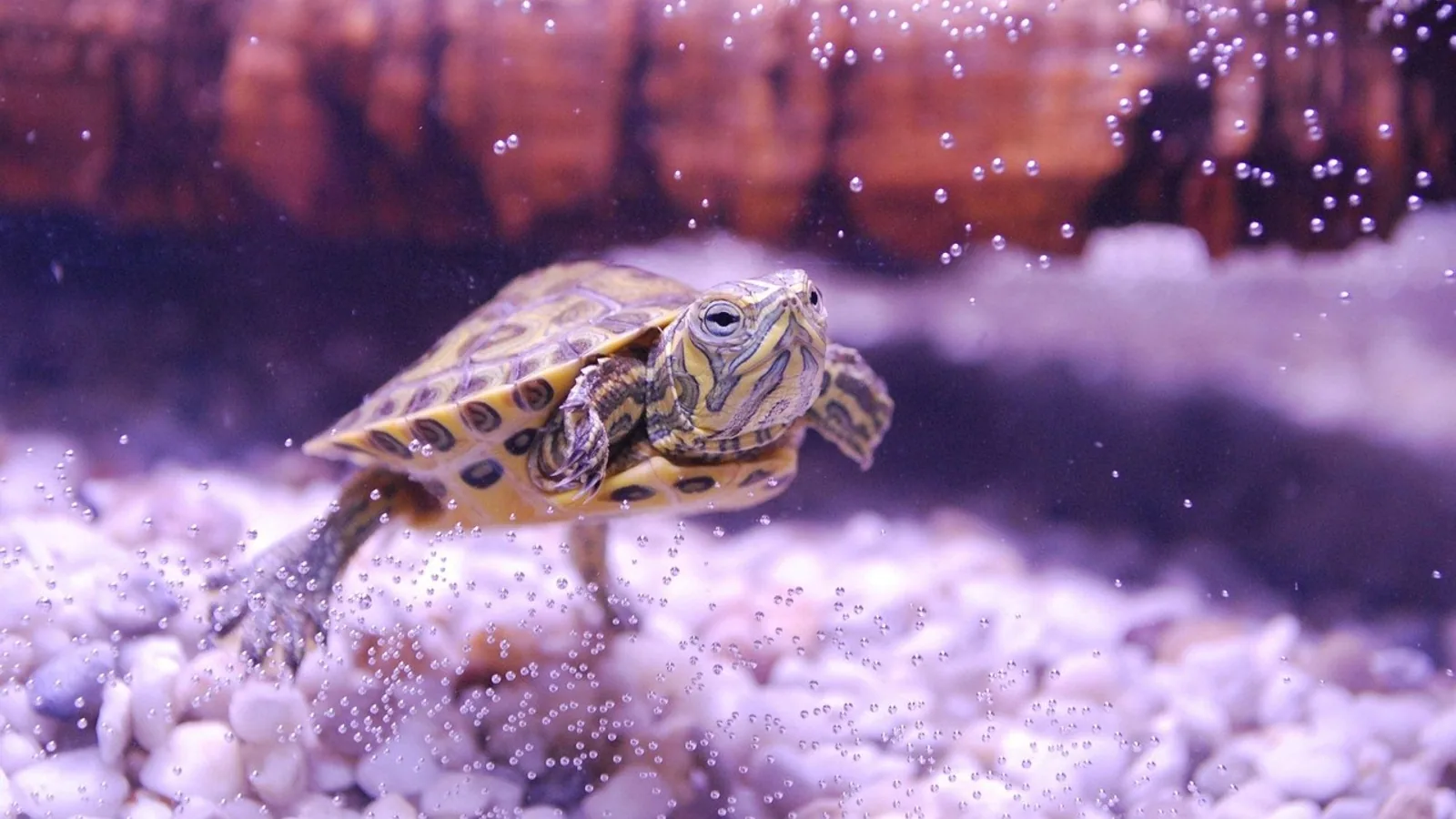
A yellow-bellied slider needs three things done right and everything else follows: a large body of clean, filtered water, a dry basking dock that is genuinely warm under a strong UVB lamp, and a diet built mostly from a quality commercial pellet with greens and a little animal protein on the side. Get those three right and you will avoid the majority of problems that bring pet turtles to a veterinarian, including shell rot, metabolic bone disease, and chronic infection from dirty water. Get them wrong and no amount of medication will fix a turtle that is being housed badly.
This guide covers the yellow-bellied slider, Trachemys scripta scripta, in practical detail. It explains tank sizing, water and basking temperatures, lighting schedules, a workable diet ratio, the shell checks you should run every week, and the specific signs that mean you need a veterinarian rather than a forum.
Key Facts at a Glance
| Item | Target | Notes |
|---|---|---|
| Adult tank size | 75 to 100 gallons minimum | Larger is better. One adult per enclosure is the safe default. |
| Water temperature | 24 to 27°C (75 to 81°F) | Use a submersible aquarium heater with a guard. |
| Basking area temperature | 30 to 32°C (86 to 90°F) | Measure at the surface of the dock, not the air above it. |
| UVB lighting | 10 to 12 hours daily | T5 or equivalent linear tube on a timer, replaced on schedule. |
| Diet ratio | 60% commercial pellets, 30% leafy greens, 10% animal protein | Adjust by life stage, with more protein for growing juveniles. |
| Water changes | Partial change weekly, filter cleaned on its own schedule | Water must look clear and must not smell. |
| Shell check | Weekly | Look for softness, pitting, odor, pyramiding, and retained scutes. |
| Adult shell length | Roughly 20 to 30 cm (8 to 12 inches) for females, smaller for males | Females are the larger sex. Plan the tank for the adult, not the hatchling. |
What a Yellow-Bellied Slider Actually Is
Many owners search for "yellow slider turtle" and "yellow bellied turtle" believing these are separate species. They are not. The yellow-bellied slider is a subspecies of the pond slider, Trachemys scripta, and the red-eared slider is a different subspecies of the same species, Trachemys scripta elegans. The two intergrade in the wild and are managed, studied, and treated as closely related animals in the veterinary literature. In older clinical papers the red-eared slider appears under the names Pseudemys scripta elegans and, more recently, Trachemys scripta elegans [1][2][3].
That taxonomic detail matters for you as an owner because almost all of the clinical and husbandry research on pond sliders is done on red-eared sliders, and the results carry across to yellow-bellied sliders. When you read a study on anesthesia, blood work, thermoregulation, or parasite detection in Trachemys scripta elegans, you are reading about an animal that is the same species as your yellow-bellied slider with different head markings. The term "terrapin yellow bellied slider" is also used by owners, and in British usage "terrapin" generally refers to freshwater turtles of this type rather than to sea turtles.
Habitat Setup: The Complete Tank Build
Tank Size: Why 75 to 100 Gallons Is the Floor, Not the Goal
An adult yellow-bellied slider is a large, active, messy animal. A female can reach 20 to 30 cm in shell length and will produce a substantial waste load. A tank of 75 to 100 gallons is a reasonable minimum for one adult, and it should be treated as the threshold below which you should not go rather than a target to aim for. A 100-gallon or larger tank with a wide footprint gives you more water volume to dilute waste, more swimming distance, and more room to build a proper basking platform.
Water volume, not glass footprint, is the real currency here. More water means slower accumulation of nitrogenous waste and more stable temperature. A tall, narrow tank that holds 75 gallons but has a small surface area is a worse choice than a long, low tank with the same volume, because surface area drives gas exchange and evaporation.
Three practical rules for tank selection:
- Plan for the adult size, not the size of the turtle you brought home. Growth is faster than most owners expect in the first two years.
- Assume one turtle per tank unless you have far more space than the minimum. Sliders compete for basking sites, and competition for basking space is well documented in this species [4].
- Any tank that will hold water must be properly supported. A 100-gallon aquarium weighs well over 800 pounds filled. Check the stand and the floor before you fill it.
Filtration
Choose a canister filter rated for at least twice the actual water volume, ideally three times. Turtles generate more solid and dissolved waste per gallon than fish do, and filter media clogs faster. You need mechanical filtration to catch solid waste, biological filtration to process ammonia, and enough turnover to keep the water from becoming a soup of suspended particles.
Clean the filter on its own schedule, separate from water changes. Rinse biological media in tank water, never in tap water, or you will kill the bacteria colony that is doing the real work.
The Basking Area
The basking dock is the single most important structural feature of a turtle tank. It must be:
- Large enough for the entire shell to sit out of the water and dry completely.
- Stable enough that a heavy adult cannot tip it.
- Positioned so the turtle can climb out easily, with a ramp or textured surface for grip.
- Placed directly under the heat lamp and the UVB lamp so the turtle gets both when it basks.
Basking is not a luxury behavior. Freshwater turtles adjust their thermoregulatory behavior according to their feeding status, and food deprivation reduces the upper set point temperature at which they stop basking [4]. In plain terms, a fed turtle basks warmer and longer than a fasting one, and a turtle that cannot reach its preferred basking temperature will not digest efficiently. Body temperature also directly affects physical performance in this species, with righting ability at its best near the preferred basking temperature [5]. A turtle that is chronically too cool is a turtle that is slow to react, slow to digest, and slow to fight off infection.
Water Temperature
Maintain water between 24 and 27°C (75 to 81°F). Use a submersible heater rated for the actual water volume, with a guard so the turtle cannot rest against the hot element and burn itself. A separate thermometer at the opposite end of the tank tells you the real temperature rather than what the heater dial claims.
Warmer is not automatically better. Water at the top of the range holds less dissolved oxygen and promotes bacterial and fungal growth. If your turtle is showing skin or shell problems, check water temperature before you change anything else.
Basking Temperature
Aim for 30 to 32°C (86 to 90°F) measured at the surface of the dock under the lamp. Use an infrared thermometer to check the actual surface, not the air temperature. The air a few inches above the dock can read very differently from the plastic or slate the turtle is lying on.
Provide a thermal gradient, not a single hot spot. The turtle should be able to move from the warmest point of the dock through progressively cooler zones and back into the water. That gradient is what lets the animal regulate its own body temperature, which is exactly the physiology the research on this species describes [4][5].
UVB Lighting
Run UVB lighting for 10 to 12 hours daily on a timer. A linear fluorescent tube, such as a T5 HO fixture sized to the tank length, delivers far more usable UVB over the basking area than a compact coil bulb. Mount it above a screen-free path to the basking surface if possible, because metal mesh and glass block UVB.
UVB has two jobs. It allows the skin to synthesize vitamin D3, which is required for calcium absorption and bone mineralization. It also supports normal shell development in a growing animal. Without adequate UVB, a juvenile slider can develop metabolic bone disease even on a calcium-rich diet, because the calcium cannot be used properly.
Replace UVB tubes on the manufacturer's schedule, typically every 6 to 12 months depending on the bulb, even if the bulb still lights. UVB output fades before visible light output does, and a bright tube that no longer emits meaningful UVB is a common and dangerous trap.
Substrate and Furnishings
Bare-bottom tanks are the easiest to clean and the least likely to trap waste. If you use gravel, use pieces too large to swallow, because sliders will mouth and ingest small stones. Provide smooth rocks, driftwood, and artificial plants for cover. Avoid sharp-edged decorations that can abrade the shell.
Water Quality
Set a routine and keep it. Partial water changes each week, a filter cleaning on its own cycle, and immediate attention to cloudy water or odor. Ammonia and nitrite should be undetectable in a cycled tank. If your water parameters are persistently off, the problem is almost always insufficient filter capacity or overstocking, not the test kit.
Diet: The 60/30/10 Mix
A yellow-bellied slider is an omnivore that drifts toward plant matter as it ages. Hatchlings and juveniles eat more animal protein because they are growing fast. Adults eat more vegetation. The ratio below is a practical starting framework for a healthy adult.
The Ratio
- 60% commercial pelleted diet formulated for aquatic turtles. This is the nutritional backbone. A quality pellet supplies balanced calcium, phosphorus, vitamin D3, and protein in proportions you cannot reliably hit by assembling food yourself.
- 30% leafy greens. Good options include romaine, red and green leaf lettuce, dandelion greens, collard greens, and aquatic plants. Avoid iceberg lettuce, which is mostly water and offers very little nutrition.
- 10% animal protein. feeder fish, earthworms, gut-loaded insects, and similar items. Treat this as a garnish, not the main event. An all-protein or all-fish diet is a common route to shell and bone problems.
Juveniles can be fed closer to 70% pellets and 20% protein with 10% greens, then shifted toward the adult ratio as growth slows. Judge by the animal in front of you and by your veterinarian's input rather than by a fixed calendar.
Feeding Schedule and Portion Control
Feed adults once daily or every other day, offering roughly the amount the turtle will finish in a few minutes. Remove uneaten food promptly. Food left in warm water fouls the tank and drives the water quality problems that then show up as shell and skin disease.
For growing juveniles, daily feeding is reasonable. For adults, overfeeding is a more common error than underfeeding, and obesity in captive turtles is a genuine welfare problem. A turtle that cannot fully retract into its shell because of fat deposits around the neck and limbs is overfed.
Supplements
Use a calcium supplement with vitamin D3 only as directed by your veterinarian, and only if the animal's UVB provision and diet do not already cover its needs. Indiscriminate supplementation can cause as many problems as it prevents. This is a conversation to have with a reptile-experienced veterinarian who has examined your specific animal.
What Not to Feed
Avoid dog food and cat food as staples. Avoid bread, dairy, and processed human foods. Avoid feeding only one type of protein, such as an all-fish diet, for months at a time. Variety within the framework above is what prevents single-nutrient deficiencies.
Shell Health Checks: The Weekly Routine
The shell is the most informative surface on a turtle. Handle your turtle briefly each week and check it properly. Shell problems in captive sliders fall into predictable categories.
Pyramiding
Pyramiding means the scutes rise into raised, cone-like peaks instead of forming a smooth, gently curved shell. It is a growth abnormality, most often linked to excess dietary protein and energy combined with inadequate UVB and calcium metabolism. It is easiest to prevent and very hard to reverse once the shell has formed. If you notice the scutes beginning to tent upward in a young turtle, treat it as a signal to review the entire setup with your veterinarian: diet ratio, UVB output, basking temperature, and calcium intake.
Shell Rot
Shell rot describes infection and erosion of the shell, typically caused by bacteria or fungi that take hold when the shell is damaged or stays wet and dirty for long periods. Early signs include:
- Soft, discolored, or pitted areas on the shell, especially on the plastron (belly).
- A foul odor.
- Whitish, grayish, or reddish patches that do not wipe away.
- Flaking or lifting scutes with discharge underneath.
Shell rot is a medical condition, not a cleaning problem. Superficial cases may respond to correcting water quality and providing a proper dry basking area, but anything with odor, softness, or spreading damage needs a veterinarian. Do not apply human antibiotic ointments or home remedies to a turtle shell. They can seal in infection and delay treatment.
Metabolic Bone Disease
Metabolic bone disease results from a mismatch between calcium, phosphorus, and vitamin D3, usually with inadequate UVB. Signs include a soft or rubbery shell, a soft jaw, difficulty walking or swimming normally, tremors, and, in severe cases, inability to lift the body off the ground. This is one of the most common and most preventable conditions in captive turtles. Any softness in the shell of a growing turtle is an emergency-level finding and warrants prompt veterinary attention.
Retained Scutes
Turtles shed scutes (the plates of the shell) as they grow. A scute that stays attached while a new one forms underneath looks raised and uneven. This is usually linked to insufficient basking and poor shedding conditions. If you see retained scutes with no other signs, review your basking temperature, UVB, and water quality first.
Behavior and Welfare in Captivity
Freshwater turtles in this species are intelligent, active, and strongly driven by thermoregulation and feeding. Their behavior is not random. Research on Trachemys scripta shows that feeding status directly shapes basking decisions and that body temperature affects physical performance, including the ability to right themselves when flipped [4][5]. That is a welfare issue. A turtle that cannot right itself promptly in cool conditions is at risk if it ends up on its back.
Enrichment for a slider is mostly structural. Provide a tank large enough to swim, a dock worth using, and enough visual barriers to reduce stress if more than one animal is somehow housed together. The strongest welfare recommendation is simply to house one turtle per enclosure, at the largest volume you can manage.
Common Mistakes
Buying a small tank and planning to upgrade later. Most owners do not upgrade soon enough. Buy the adult-sized enclosure up front or accept that you will be doing a full rebuild.
Underpowered filtration. The filter looks fine for a week and then the water turns. Match the filter to the animals, not to the tank volume alone.
Weak or expired UVB. A fixture that lights does not mean it emits useful UVB. Replace tubes on schedule.
Feeding mostly protein. It is the fastest route to shell and bone disease in a growing turtle.
Ignoring the first signs of shell change. Shell problems progress. Weekly checks catch them early.
Handling without washing. Turtles can carry organisms of public health relevance, including Cryptosporidium parvum, which has been detected in a slider in a European survey [2]. Wash your hands after handling the animal, the water, or the tank equipment. Beyond that basic hygiene point, if anyone in the household is immunocompromised, discuss reptile ownership with a physician.
Health Monitoring and Diagnostic Context
Routine veterinary care for a slider relies on physical examination, history, and selected laboratory testing. Understanding a few limitations of common tests helps you ask better questions.
Blood glucose. A veterinary portable glucose meter has been shown to overestimate blood glucose in red-eared sliders compared with a laboratory reference method, with a mean overestimation of 28.0 mg/dL and a proportional bias that grows worse at higher glucose concentrations [6]. The degree of overestimation also varied with the packed cell volume of the sample [6]. This matters because a single handheld reading in a turtle can be misleading, and your veterinarian may reasonably choose a laboratory method for a definitive result.
Blood gases and lactate. In red-eared sliders, blood samples stored on ice and analyzed serially showed that analysis should be done as soon as possible after collection. If a delay is unavoidable, samples may be capped on ice and analyzed later, with clinically acceptable results for pH and lactate within 90 minutes and for partial pressure of carbon dioxide within the same window, though oxygen readings showed substantial artifactual increases [3]. The practical takeaway for owners is that prompt sample handling affects how much your veterinarian can trust a result.
Environmental contaminants. In one study of yellow-bellied sliders, animals sampled from coal combustion residue-contaminated wetlands accumulated trace elements such as arsenic, cadmium, copper, and selenium in claw and blood samples, with measurable immunological effects [7]. This is a wild-population study, not a typical captive scenario, but it is a reminder that water quality and water source matter in captivity too. Use a clean, treated water source and test it if you have any reason for concern.
Herbicide exposure. A study on slider eggs incubated on substrate treated with a glyphosate formulation or its byproduct found only mild metabolic alterations in hatchling livers and no significant changes in egg survival, incubation length, hatchling size, or locomotor performance [8]. This is not a reason to be careless with chemicals around a turtle tank. It is a reason to base concerns on data rather than alarm, and to keep pesticides away from animals and enclosures as a matter of routine.
When a Veterinarian Is Needed
A yellow-bellied slider that is eating, swimming normally, basking daily, producing droppings, and showing no shell changes is doing well. Specific findings that warrant a veterinary visit:
- Soft or rubbery shell, soft jaw, or any visible shell deformity.
- Shell odor, discharge, pitting, or spreading discoloration.
- Open wounds, swelling, or bleeding.
- Lethargy, refusal to bask, or a turtle that stops eating for more than a few days.
- Abnormal swimming, floating tilted to one side, or difficulty submerging.
- Swollen eyes, nasal discharge, or open-mouth breathing.
- Straining to defecate or pass an egg.
Reptile medicine has specific constraints that owners should know about. Anesthesia protocols for sliders have been studied, and both low and high dose medetomidine-ketamine combinations produced anesthesia adequate for physical examination, minor procedures, and endotracheal intubation, with the higher dose sufficient for skin incision and suture placement [1]. This is background for understanding that a qualified veterinarian can safely anesthetize and work on a slider. Drug selection and dosing is a decision for the veterinarian examining your animal, not something to attempt at home.
Limitations and When to Contact a Veterinarian
Everything in this guide describes general husbandry for Trachemys scripta scripta and the health patterns most commonly seen in captive sliders. It does not replace an examination. Two turtles with the same visible shell lesion can have entirely different underlying causes, and a turtle that appears mildly off can deteriorate quickly.
Contact a reptile-experienced veterinarian the same day if your turtle stops eating and stops basking together, if the shell is soft anywhere, if there is discharge or a foul odor, if breathing is labored, or if the animal is floating unevenly or unable to right itself. For smaller concerns, such as a single retained scute or a mild change in appetite, schedule a visit within a few days rather than waiting weeks. If you are unsure whether a finding is serious, call the clinic and describe it. That call costs nothing and it prevents the common outcome of a treatable problem becoming an untreatable one.
This article is educational and is not a substitute for veterinary diagnosis or treatment.
Frequently Asked Questions
Is a yellow-bellied slider the same as a red-eared slider?
They are different subspecies of the same species, Trachemys scripta. The yellow-bellied slider is Trachemys scripta scripta and the red-eared slider is Trachemys scripta elegans. Their care is essentially identical, and clinical research on red-eared sliders applies directly to yellow-bellied sliders.
What size tank does an adult yellow-bellied slider need?
A minimum of 75 to 100 gallons for one adult, with larger being better. This is a floor rather than a target. More water volume means more stable temperature and slower waste accumulation.
What temperature should the water be?
Keep the water between 24 and 27°C (75 to 81°F). Use a guarded submersible heater and verify with a separate thermometer at the far end of the tank.
How warm should the basking area be?
30 to 32°C (86 to 90°F) measured at the surface of the dock. Use an infrared thermometer on the actual basking surface, not the air above it.
How long should the UVB light stay on?
10 to 12 hours per day on a timer. Replace the tube on the manufacturer's schedule even if it still lights, because UVB output fades before visible brightness does.
What should I feed my yellow-bellied slider?
About 60% commercial aquatic turtle pellets, 30% leafy greens, and 10% animal protein for an adult. Juveniles need proportionally more protein and pellets.
How do I know if my turtle has shell rot?
Look for soft, pitted, or discolored areas, a foul odor, and whitish or reddish patches that do not wipe off. Shell rot with odor, softness, or spreading damage needs a veterinarian.
Can my turtle get sick even if the tank looks clean?
Yes. Water can look clear while temperature, UVB output, or filtration is still inadequate. Test water parameters, verify temperatures with a real thermometer, and replace UVB tubes on schedule rather than judging by appearance.
Related Articles
- Red-Eared Slider Turtle Care Guide
- Spiny Softshell Turtle: Identification, Habitat, and Care Considerations
- Softshell Turtle Care: Species, Habitat, and Health Management
- Hamster Care Guide: Habitat, Diet, and Health
- Red-Eared Slider Turtle Care: Scurvy & Vitamin C Deficiency Treatment
- Red-Eared Slider Turtle Care: Pyramiding & Shell Health Management
- What Do Turtles Eat? Diet Guide by Species
- What Do Foxes Eat? Diet by Season and Habitat
- Red-Eyed Tree Frog Care: Habitat, Diet, and Health
Sources
- Medetomidine-ketamine anesthesia in red-eared slider turtles (Trachemys scripta elegans).
- Detection of Cryptosporidium parvum in a Red-Eared Slider Turtle (Trachemys scripta elegans), a Noted Invasive Alien Species, Captured in a Rural Aquatic Ecosystem in Eastern Poland.
- TEMPORAL STABILITY OF IN VITRO VENOUS BLOOD GAS, pH, AND LACTATE VALUES OF COWNOSE RAYS (RHINOPTERA BONASUS) AND RED-EARED SLIDER TURTLES (PSEUDEMYS SCRIPTA ELEGANS).
- Feeding status and basking requirements of freshwater turtles in an invasion context.
- Effects of body temperature on righting performance of native and invasive freshwater turtles: consequences for competition.
- Performance of a Veterinary Portable Glucose Meter for Blood Glucose Concentration Measurement in Red-Eared Slider Turtles (Trachemys scripta elegans).
- Accumulation of coal combustion residues and their immunological effects in the yellow-bellied slider (Trachemys scripta scripta).
- Liver metabolomic alterations in hatchlings of invasive turtle, Trachemys scripta elegans, following egg exposure to glyphosate-isopropylammonium or aminomethylphosphonic acid.