My Ball Python Escaped: Where to Look and How to Catch It
By Dr. Zubair Khalid, DVM, MS, PhD ·
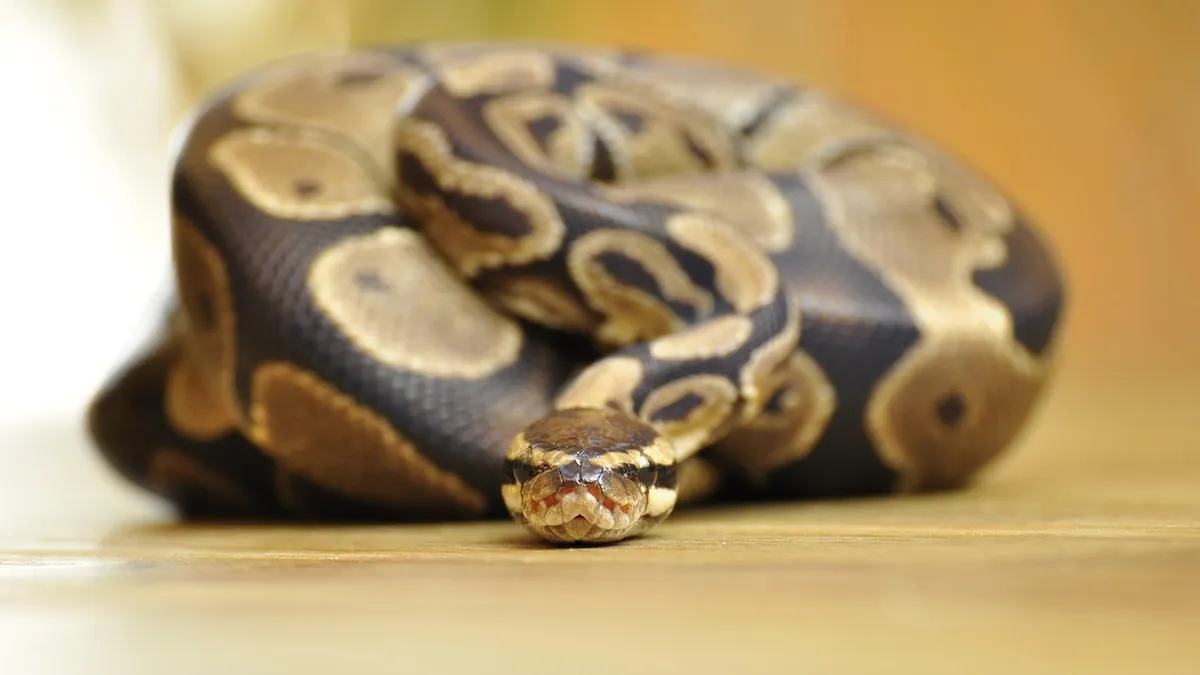
If your ball python escaped, where would you look? Start within a few feet of the enclosure, because most ball pythons stay close and hide in the first dark, warm, tight space they find. Then work outward room by room, searching low and slow, ideally after dark when the snake is more likely to move. This article is educational and is not a substitute for veterinary diagnosis or treatment.
Quick Answer
- Search the room the enclosure is in first, checking within a 10 to 15 foot radius before you expand the search.
- Look low and tight: under and behind furniture, inside box springs, along baseboards, behind appliances, and inside any gap wider than a pencil.
- Follow heat and cover, since ball pythons seek warm, dark, enclosed spots instead of open floor.
- Search at night with a flashlight, because these snakes are most active after lights out.
- Set up a safe capture station with a hide, a heat source, and a way to contain the snake once it enters.
My Ball Python Escaped: First Steps in the First Hour
Stay calm and act in a set order. Panic searching scatters your attention and can injure the snake if you move furniture carelessly.
Secure the area
Close all doors to the room. Block gaps under doors with rolled towels. Shut off ceiling fans and check that no other pets (cats, dogs) can reach the escape route. A loose ball python is at real risk from a curious cat or dog, and your other pets are at risk too.
Check the enclosure itself
Before you search the room, look inside the enclosure and its stand. Snakes sometimes never leave. Check inside hides, under the water bowl, behind the background panel, and inside any hollow decor. Then check the stand, the shelf under the tank, and any drawer or cabinet the enclosure sits on.
Think like a snake
A ball python is a heavy-bodied ambush predator that feels safest wedged into a tight, dark, warm space. It does not want open floor. It wants a gap. In field surveys of large pythons, detectability was low (about 20% on average) and depended on conditions like moon phase, which shows how well a python can stay hidden even when people are actively looking for it [1]. Your snake is not being difficult. It is doing what its instincts tell it to do.
Where to Look When Your Ball Python Got Out
Work through this list in order. Mark each spot as you check it so you do not repeat the same places.
The room with the enclosure
- Under and behind the enclosure stand
- Inside the stand, drawers, and cabinets
- Behind and under baseboard heaters
- Along the wall where the tank sits, especially the warm side
- Inside closets, shoes, and laundry baskets
- Under rugs and inside folded blankets
Furniture and soft goods
- Inside couch cushions and under the couch
- Inside and under the mattress, box spring, and bed frame
- Inside dressers, especially the bottom drawer
- Inside pillowcases and duvet covers
- Inside laundry piles and hampers
Appliances and warm zones
- Behind and under the refrigerator, freezer, and dishwasher
- Near the water heater, furnace, and dryer vent
- Behind the TV, computer, and cable boxes
- Inside the dryer drum (check before running any appliance)
Rooms beyond the first
If the first room turns up nothing, expand outward. Check bathrooms, kitchens, and hallways. Look behind toilets, under sinks, inside cabinets, and along pipes. Ball pythons can climb, so also check shelves, curtain rods, and the tops of cabinets.
Outside the house
This is uncommon but possible. Check the garage, porch, and any open vent or crawl space. If your snake got outside, search at dusk and dawn near warm surfaces like pavement, foundations, and compost piles.
A Search Schedule That Works
Ball pythons are crepuscular and nocturnal, meaning they move most at dawn, dusk, and night. Searching only in bright midday is a common reason people miss their snake.
| Time of day | What to do | Why it helps |
|---|---|---|
| First hour | Secure the room, check the enclosure and stand | The snake often never left |
| Evening (after dark) | Full room search with a flashlight | Snakes move more when the room is quiet and dark |
| Before bed | Set the capture station and check it | Overnight is peak activity |
| Early morning | Check the station and re-search warm spots | The snake may have moved to a new hiding place |
| Repeat daily | Search one new area each day | Keeps you systematic instead of random |
Keep a written checklist. Searching the same couch five times while ignoring the closet is a waste of the short window when the snake is most likely to be found.
How to Catch an Escaped Ball Python Safely
Never grab a snake by the tail or the middle of the body. That can injure the spine and provoke a defensive bite. Instead, use these methods.
The capture station
Set up a small, dark hide (a plastic container with a hole cut in the side works well) near a wall. Place a heat mat or a low-wattage heat source nearby, but never leave an unregulated heat source unattended. Add a hide box and a water bowl. Check the station every few hours, especially at night.
The towel and bin method
When you find the snake, place a towel or pillowcase over it gently. Then slide a plastic bin or sturdy box under the towel and lift. This contains the snake without squeezing it. Move slowly and keep your hands behind the snake's head, not in front of it.
Handling after capture
Once contained, return the snake to its enclosure and let it settle. Do not feed it for a few days. A stressed snake may refuse food, which is common and usually temporary. If your snake has not eaten for a while, see our Ball Python Feeding Guide and Refusing to Eat.
If you cannot find it
Keep the room warm and quiet. Leave the capture station in place and check it twice daily. Most escaped ball pythons are found within days to a few weeks. If your home has cats or dogs, keep them out of the search room until the snake is found.
Signs Something Is Wrong After an Escape
An escaped snake can pick up injuries, mites, or respiratory problems during its time out. Watch for these signs.
- Labored breathing, wheezing, or bubbles around the mouth or nose
- Visible wounds, cuts, or swelling
- Mites (tiny dark specks) on the skin or around the eyes
- Incomplete shedding or retained eye caps
- Refusing food for more than a few weeks
- Lethargy or unusual weakness
Ectoparasites like ticks and mites can seriously compromise a captive python's health, and heavy infestations have been linked to skin damage, poor shedding, and anorexia [2]. If you see mites or ticks, do not wait. A veterinarian can confirm the problem and calculate the correct treatment dose based on your snake's weight and condition.
If your snake is having trouble shedding after the escape, our Ball Python Stuck Shed Help article covers what to do at home and when to call a vet.
Common Mistakes When a Ball Python Gets Out
- Searching only in daylight. These snakes move most at night.
- Looking only at floor level. They climb and wedge into high gaps.
- Moving heavy furniture fast. You can crush or injure the snake.
- Leaving doors open during the search. The snake can move to a new room.
- Using glue traps or snap traps. These cause severe injury and are not humane.
- Grabbing the snake by the tail. This risks spinal injury and bites.
- Assuming the snake is gone forever. Most are found close to home.
Enclosure Fixes to Prevent a Repeat
Prevention is the most reliable part of this whole process. A ball python escape almost always traces back to an enclosure gap.
Check every opening
- Screen tops: make sure the screen is intact and the lid is secured with clips or a lock.
- Sliding glass doors: use a lock or a wedge so the snake cannot push one side open.
- Cord holes and vents: cover them with mesh or tape from the outside.
- Front-opening doors: check that the latch actually engages.
Match the enclosure to the snake
A young ball python can slip through gaps you would not expect. As it grows, recheck the setup. For a full walkthrough of heating, humidity, and hides, see our Ball Python Care and Enclosure Setup.
Reduce escape behavior with enrichment
Environmental enrichment can change how captive reptiles behave. In a study of freshwater turtles, adding colored objects to the enclosure reduced escape behavior (interaction with transparent boundaries) and increased exploration and random swimming, and fish-scented objects drew significantly more interest [3]. The same principle applies to your ball python: more cover, more climbing options, and more things to explore can reduce the drive to push at the walls. Add clutter, cork bark, and multiple hides.
Keep records
Note the date of the escape, where you found the snake, and what gap allowed it out. This helps you fix the exact problem instead of guessing. If you keep more than one snake, individual identification matters. Long-term photographic datasets have been used to identify individual reptiles by their unique scale patterns, which shows how reliable visual records can be for tracking individual animals over time [4].
Supplies That Matter for Health and Safety
Keep these on hand so a future escape is easier to manage.
- A secure, escape-proof enclosure with locking lids or doors
- Two snug hides (one on the warm side, one on the cool side)
- A digital thermometer and hygrometer
- A regulated heat source with a thermostat
- A capture kit: pillowcase, plastic bin, towel, flashlight
- A small quarantine container for any snake found with mites or wounds
If you find mites, isolate the snake from other reptiles. Mites and ticks spread between animals, and a python with a heavy infestation may need veterinary treatment. A case report of a captive African rock python with severe tick infestation showed facial swelling, incomplete shedding, anorexia, and lethargy, and the snake improved after mechanical tick removal, antiparasitic treatment, and better husbandry [2]. Your veterinarian will decide the right treatment and dose for your snake.
Limitations and When to Contact a Veterinarian
This guide helps you search and prevent escapes, but it cannot diagnose an injury or illness. Individual cases need a veterinarian who can examine your snake in person.
Contact a veterinarian the same day if you find your snake with:
- An open wound, bleeding, or a suspected broken bone
- Labored breathing, wheezing, or mucus from the mouth or nose
- Mites or ticks visible on the skin
- A burn from a heat source
- Swelling around the face or eyes
Go to an emergency veterinary clinic now if your snake is unresponsive, limp, or has been caught by a cat or dog. Cat and dog bites cause puncture wounds that can be deeper than they look and can lead to serious infection.
Schedule a routine visit within a few days if your snake is eating and behaving normally but you want a post-escape check. A veterinarian can look for hidden wounds, check for parasites, and confirm that your snake is in good body condition.
Frequently Asked Questions
How far can a ball python travel after escaping?
Most stay within the same room or an adjacent one, often within a few feet of the enclosure. They move slowly and stop at the first tight, warm hiding spot. Some do travel farther, especially along walls and pipes, so expand your search gradually.
Will my ball python come out on its own?
It may, especially at night when the room is quiet and dark. Leaving a capture station with a hide and a gentle heat source gives it a reason to settle in one place. Check the station twice daily and keep other pets away.
Can I use food to lure my escaped ball python?
Food is a weak lure because a stressed snake often will not eat. Warmth and a dark hide work better. If you do offer food, place it near the capture station and remove it after a few hours so it does not spoil.
How long can a ball python survive outside its enclosure?
A healthy ball python can survive for weeks indoors if it has access to water and warmth. The bigger risks are dehydration, cold, injury from other pets, and household hazards. Search daily and keep the room warm.
What is the best way to prevent another escape?
Fix the exact gap that let the snake out, then recheck every opening on the enclosure. Add clips, locks, and mesh over cord holes. More clutter and hides can also reduce escape behavior, since enrichment has been shown to lower boundary-pushing behavior in captive reptiles [3].
Related Articles
- Ball Python Stuck Shed Help
- Ball Python Care: Stuck shed retained eye caps removal guide
- Ball Python Feeding Guide and Refusing to Eat
- Ball Python Morphs and Genetics: A Visual Guide to Popular Color and Pattern Variations
- Ball Python Care and Enclosure Setup
- Ball Python Care: Overgrown Dental Spurs & Tooth Trimming Guide
- My Leopard Gecko Escaped: How to Find It Fast
- My Bearded Dragon Got Lost Outside: How to Find It
- Why Is My Ball Python Trying to Escape?
References
- Efficacy of field-based surveys for detecting and assessing demographics of giant snakes (Malayopython reticulatus) in Malaysia. Scientific reports, 2026.
- Severe Tick Infestation and Haemogregarina spp. Infection in a Captive African Rock Python (Python sebae): A Clinical and Parasitological Case from Nigeria. Veterinary medicine and science, 2026.
- Can colored object enrichment reduce the escape behavior of captive freshwater turtles?. Zoo biology, 2021.
- A long-term photographic dataset for individual identification of the Balearic wall lizard. Scientific data, 2026.