Are Flea Collars Toxic to Cats? Safety Guide
By Dr. Zubair Khalid, DVM, MS, PhD ·
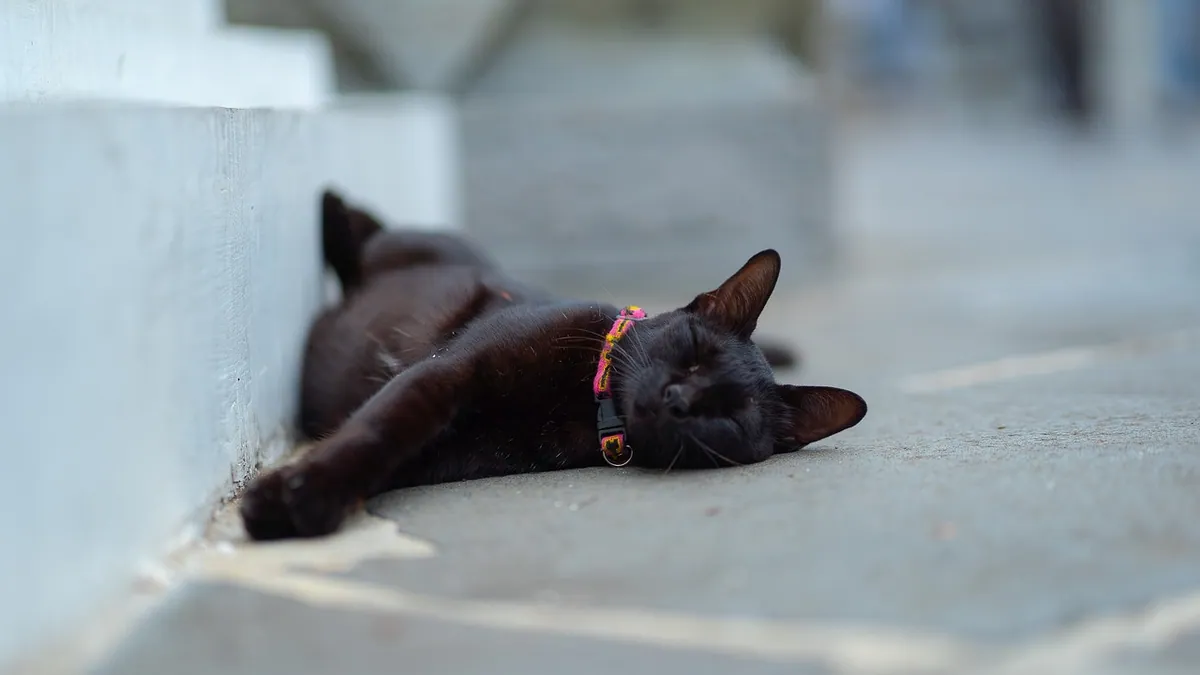
Are flea collars toxic to cats? Some are, and some are not. The answer depends entirely on the active ingredients in the collar, because cats are highly sensitive to certain insecticides that are safe for dogs. A collar that is fine on your dog can be poisonous to your cat, so you need to read the label before you fasten anything around her neck. This article is educational and is not a substitute for veterinary diagnosis or treatment.
Quick Answer
- Flea collars containing permethrin are dangerous to cats, and cats can also be poisoned by licking a treated dog or brushing against one [1].
- Ingesting pieces of any flea collar can cause a foreign body obstruction, which is a medical emergency [1].
- If your cat licks a wet topical product, she may drool, foam at the mouth, vomit, or act agitated because of the bitter taste [2].
- Never put a dog flea product on a cat, and keep treated dogs away from cats until the product dries [1].
- If you suspect poisoning, call your veterinarian, the number on the product package, or Pet Poison Helpline at 800-213-6680 right away [1].
What Flea Collars Are and What Veterinarians Use Them For
Fleas are small, wingless insects that feed on animal blood. They are more than a nuisance. They can transmit diseases and cause allergies or anemia, and a single female flea can lay up to 50 eggs per day and about 2,000 in her lifetime [3]. In North America, the cat flea (Ctenocephalides felis) is the species that most often infests both dogs and cats [3]. Because fleas reproduce so quickly, treating the pet is only part of the job. You also have to deal with eggs and larvae in bedding, carpet, and soil, where they hatch in 1 to 6 days [3].
A flea collar is a plastic strip worn around the neck that slowly releases an insecticide onto the skin and coat. Some collars kill adult fleas. Others also contain an insect growth regulator that stops flea eggs and larvae from developing. Collars are popular because they are inexpensive and last for weeks or months. They are not the only option, and they are not always the best option. Many veterinarians prefer spot-on products or oral medications because the dose is more predictable and the ingredients are chosen for the species being treated. If you want to compare options, see Fleas on Cats: Safe Flea Treatments and What to Avoid.
Some collars sold for cats contain ingredients that are also used in prescription products. For example, fipronil combined with (S)-methoprene is used in veterinary flea control, and research in cats shows this combination can reduce the risk of flea-borne disease transmission among exposed cats [4]. That does not mean every collar on the shelf is equivalent. Over-the-counter collars vary widely in quality, ingredient, and how evenly they release the drug.
How Flea Collars Work
The active ingredient moves from the collar to the oils in your cat's skin and spreads across the coat. When a flea contacts the treated coat, the insecticide disrupts the flea's nervous system and kills it. Growth regulators work differently. They interfere with the flea life cycle so eggs do not hatch or larvae do not mature.
This delivery method has limits. The concentration of insecticide is highest near the collar and lower farther away, so fleas on the tail end or the belly may not get a lethal dose. Collars also lose potency over time, and a collar that gets wet may release its ingredient unevenly. That is one reason flea infestations sometimes continue even when a collar is in place. Flea control works best when you treat the pet and the environment together. For more on household products, read Home Flee Treatment Safe For Cats.
Dosing Basics for Cats
You do not choose the dose. Your veterinarian does. The dose depends on your cat's weight, age, health, and the product being used. Never cut a dog collar down to size for a cat, and never use a product labeled for dogs on a cat unless your veterinarian specifically tells you to.
Flea collars are not dosed in the same way as liquids or pills. The collar is sized to your cat, fastened with a snug fit, and trimmed so there is no long tail for her to chew. You should be able to fit two fingers under the collar. Check it every few days, because a collar that is too loose can catch on something or be pulled off and chewed.
If you use a topical product instead, the same rule applies. Your veterinarian calculates the dose from your pet's weight and health. Let the product dry completely so your cat cannot lick it off [2]. If she does lick it, offer fresh water and wet food or tuna to mask the unpleasant taste, and if you want the product off her skin, bathe her with liquid dish soap [2].
If you miss a dose, do not double up. Read the product label or call your veterinarian for instructions. With collars, replace the collar on the schedule the label gives, not whenever you remember.
Side Effects: Common and Serious
| Side effect | How common or serious | What to do |
|---|---|---|
| Drooling, foaming at the mouth, vomiting, agitation, hyperactivity after licking a wet product | Common when a cat grooms off wet medicine, caused by the bitter taste [2] | Offer fresh water and wet food or tuna, and bathe with liquid dish soap to remove the product [2] |
| Skin irritation or hair loss under the collar | Uncommon, usually mild | Remove the collar and call your veterinarian |
| Weakness, tremors, twitching, seizures, trouble breathing | Serious, can be life threatening | Remove the collar, wash the area, and call a veterinarian or Pet Poison Helpline at 800-213-6680 immediately [1] |
| Vomiting, drooling, not eating, or belly pain after chewing a collar | Serious, possible foreign body obstruction [1] | Go to a veterinary clinic right away, because pieces may lodge in the stomach or intestines [1] |
Permethrin deserves its own warning. Cats are highly sensitive to permethrin products, and a cat can be poisoned by licking a wet permethrin product off a dog or by brushing against the dog and then grooming her own fur [1]. If your cat has been exposed to a dog flea product, contact a veterinarian, the emergency number on the product package, or Pet Poison Helpline at 800-213-6680 immediately [1].
Who Should Not Wear a Flea Collar
Kittens, pregnant or nursing cats, and cats with liver, kidney, or neurologic disease should not wear a flea collar unless your veterinarian says it is appropriate. Very young or very small cats are at higher risk because a small body absorbs the same amount of chemical with less ability to clear it.
Do not use a collar on a cat who is already taking another flea product unless your veterinarian approves the combination. Stacking products can add up to a toxic dose. If your cat is on medication for seizures, behavior, or parasites, tell your veterinarian before you start any new flea product.
Do not use a permethrin collar on a cat at all, and do not let your cat near a dog that is wearing one while the product is still wet [1]. If you are unsure whether a product is safe, check Cat Flea Treatment Safety before you apply anything.
Overdose and When to Call for Help
An overdose can happen in several ways. Your cat may chew off and swallow part of a collar. She may groom a wet spot-on product off herself or off a dog. She may wear a collar that is meant for a larger animal.
If you see your cat chewing a collar, take it away and check her mouth. Call your veterinarian or Pet Poison Helpline at 800-213-6680. Pieces of collar can lodge in the stomach or intestines, and that obstruction is a medical emergency [1]. Most collars show up on an X-ray, so your veterinarian can see how many pieces are inside, how large they are, and where they are located [1].
If your cat is drooling, vomiting, twitching, trembling, or having trouble walking, treat it as an emergency. Do not wait to see if she improves on her own. Bring the collar or the product packaging with you so the veterinary team knows exactly what she was exposed to.
Limitations and When to Contact a Veterinarian
No article can tell you whether your specific cat is safe with a specific collar. Individual cases need a veterinarian who can examine your cat, ask about her history, and look at the exact product label.
Contact your veterinarian the same day if your cat has mild drooling, vomiting, or skin irritation after wearing a collar or after licking a wet product. These signs often settle with simple care, but they can also be the first sign of a bigger problem [2].
Go to an emergency clinic now if your cat has tremors, twitching, seizures, weakness, trouble breathing, collapse, or severe vomiting. Also go now if you think she swallowed part of a collar [1]. These are time-sensitive problems.
Schedule a routine visit if your cat keeps scratching despite a collar, if you see live fleas, or if you want help choosing a product that fits her age, weight, and health. Flea infestations often need a plan that covers the pet and the home at the same time [3].
Frequently Asked Questions
Are flea collars harmful to cats?
Some are harmful and some are not, depending on the ingredients. Collars containing permethrin are dangerous for cats, and cats can be poisoned by contact with a treated dog [1]. Always read the label and confirm the product is made for cats.
Are flea collars poisonous to cats if the cat chews them?
Yes, chewing a collar can be poisonous and can also cause a physical obstruction. Swallowed pieces may lodge in the stomach or intestines, which is a medical emergency [1]. Call your veterinarian or a poison control service right away if this happens.
Is a flea collar safe for cats if it is labeled for cats?
A cat-labeled collar is generally safer than a dog product, but it still may cause drooling, vomiting, or skin irritation. Cats can react to the bitter taste if they lick the product before it dries [2]. Watch your cat closely for the first day and remove the collar if she seems uncomfortable.
Are flea collars dangerous to cats in a home with dogs?
They can be, because the risk often comes from the dog's collar, not the cat's. If your dog wears a permethrin product, keep the cat away until the dog is dry, since licking or brushing against the dog can poison a cat [1]. Wash your hands after handling any treated pet.
What should I do if my cat has a reaction to a flea collar?
Remove the collar, wash the area with liquid dish soap, and call your veterinarian. If your cat is drooling or vomiting from the taste, offer fresh water and wet food or tuna [2]. If she has tremors, seizures, weakness, or trouble breathing, call Pet Poison Helpline at 800-213-6680 or go to an emergency clinic immediately [1].
Related Articles
- Cat Flea Treatment Safety
- Cat Flea Treatment Safe For Cats
- Are Lilies Toxic to Cats?
- Home Flee Treatment Safe For Cats
- Fleas on Cats: Safe Flea Treatments and What to Avoid
- Flea Prevention Dogs Cats
- Is It Safe for Cats to Lick a Flea Collar?
- What Medications Are Toxic to Cats? Common Household Risks
- Are Naphthalene Mothballs Toxic to Cats? Vet Warning
- Dipylidium caninum Flea Tapeworm in Dogs and Cats: Lifecycle, Clinical Signs, and Flea Control
References
- Flea And Tick Toxicity - Questions And Answers. Pet Poison Helpline.
- Flea Medicine Side Effects on Cats. Pet Poison Helpline.
- Fleas of Cats - Cat Owners. Merck Veterinary Manual.
- Fipronil and (S)-methoprene can lessen the risk of transmission of Bartonella clarridgeiae among cats with exposure to Ctenocephalides felis. American journal of veterinary research, 2024.