When Do Cats Have Kittens? Pregnancy and Birth Timing
By Dr. Zubair Khalid, DVM, MS, PhD ·
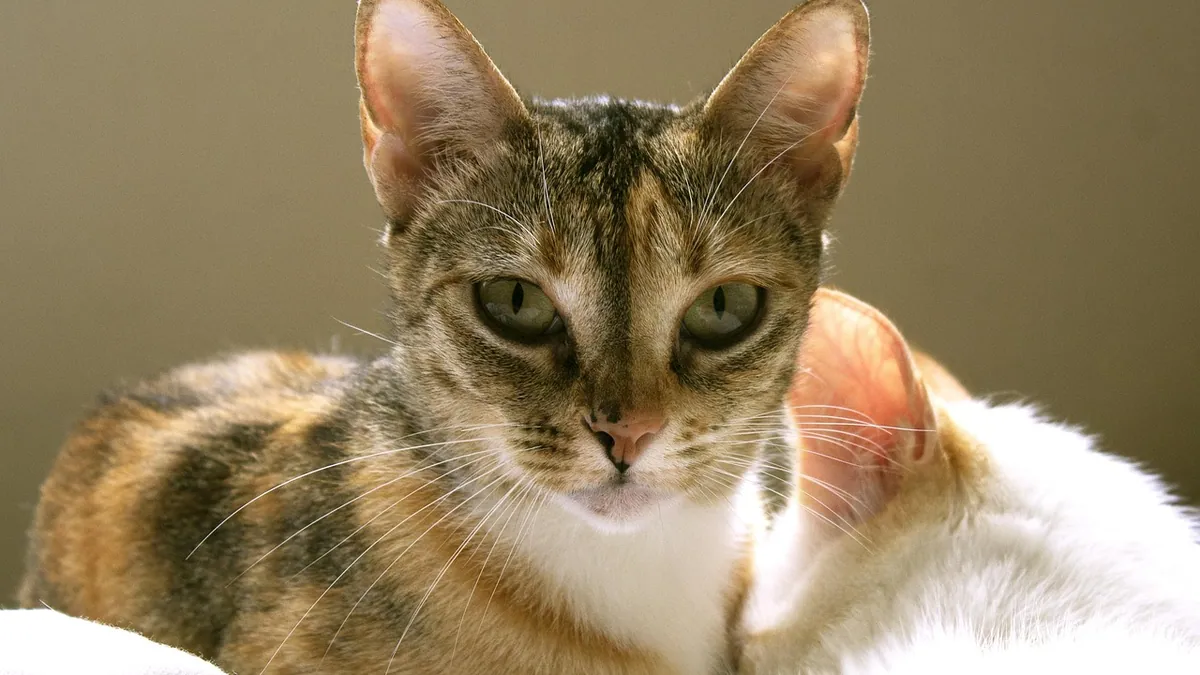
Most cats have kittens about 60 to 65 days after mating, which works out to roughly two months of pregnancy [1]. Labor usually happens in stages, and most queens deliver their whole litter within 6 to 12 hours once active contractions begin. Knowing the timeline helps you prepare, watch for problems, and get veterinary help fast if something goes wrong.
This article is educational and is not a substitute for veterinary diagnosis or treatment.
Quick Answer
- Feline pregnancy lasts 60 to 65 days from breeding, and your veterinarian can confirm it by ultrasound around day 21 to 30 [1].
- X-rays taken after day 55 can show how many kittens to expect, which helps you know when labor is finished [1].
- Most queens deliver kittens without help, but a difficult birth (dystocia) affects about 15% of pedigree litters that need veterinary care [2].
- Call your veterinarian if strong contractions last more than 1 to 2 hours with no kitten, or if the mother rests more than 4 to 6 hours between kittens [3].
- Set up a quiet, warm nesting box a week or two before the due date so your cat can settle in before labor starts.
When Do Cats Have Kittens? The Feline Pregnancy Timeline
A cat's pregnancy, called the gestation period, runs 60 to 65 days from the day of breeding [1]. That range is fairly tight, so once you know the breeding date, you can predict the due window with reasonable accuracy.
Your veterinarian can confirm pregnancy in a few ways. Palpation of the abdomen or an ultrasound can detect pregnancy by day 21 to 30 [1]. If you do not know the breeding date, ultrasound measurements of fetal structures such as crown-rump length, biparietal diameter, and femur length are the most reliable ways to estimate the delivery date [4]. Toward the end of pregnancy, after day 55, X-rays can reveal how many kittens are present [1]. That count matters because it tells you when labor should be complete.
If you want a day-by-day view of the timeline, a cat pregnancy calculator can help you map out each stage from breeding to birth.
When Are Cats Kittens Themselves?
The word "kitten" applies from birth until about 6 months of age, when most cats reach sexual maturity. A female cat can become pregnant during her first heat cycle, sometimes before she is fully grown. That is one reason early spaying matters for cats not intended for breeding.
How Do Cats Have Kittens?
Cats give birth through the birth canal, usually lying on their side. Each kitten is delivered inside its amniotic sac, which the mother typically tears open and eats. She then licks the kitten clean, which stimulates breathing, and bites through the umbilical cord. Most queens handle this sequence on their own, and most kittens are born nose-first, though feet-first deliveries are also normal.
Preparing for Birth: A Step-by-Step Plan
Step 1: Confirm the Pregnancy and Health Status
Before breeding, or as soon as you suspect pregnancy, have your cat examined by a veterinarian. Cats should be tested for diseases they could pass to their kittens, including feline leukemia virus and feline immunodeficiency virus [1]. Routine blood and urine tests can check general health, especially in cats older than 5 years [1]. Your veterinarian can also advise on nutrition and the timing of vaccinations [1].
Step 2: Adjust Nutrition and Environment
Pregnant and nursing queens need more calories and a diet formulated for growth or lactation. Ask your veterinarian which food fits your cat's body condition. Keep the environment calm, and limit rough handling as the belly grows.
Step 3: Set Up a Whelping (Queening) Box
About two weeks before the due date, offer a box with low sides, soft bedding, and a heat source that the mother can move away from. Place it in a quiet, dim area. Most cats will choose their own spot, so make the box appealing and let her settle in early.
Step 4: Learn the Signs of Labor
Signs that labor is near include restlessness, nesting behavior, panting, and a drop in rectal temperature below 100°F. Kittens are not delivered within 24 hours after that temperature drop, that is a reason to call your veterinarian [3].
Step 5: Know What Normal Delivery Looks Like
Stage one labor can last 6 to 12 hours with subtle contractions. Stage two is active pushing and delivery of each kitten. Stage three is passing each placenta. Kittens usually arrive every 10 to 60 minutes, but a resting period of up to 4 to 6 hours can still be normal [3].
Step 6: Count the Placentas and Kittens
If you had an X-ray, you know how many kittens to expect. Keep a simple written log of birth times and placentas. If the count does not match, call your veterinarian.
Labor and Delivery Schedule at a Glance
| Stage | What Happens | Typical Timing | What You Should Do |
|---|---|---|---|
| Pre-labor | Nesting, restlessness, temperature drop below 100°F | 12 to 24 hours before birth | Keep the area quiet, offer the box |
| Stage 1 | Subtle contractions, cervix dilates | Up to 6 to 12 hours | Observe from a distance |
| Stage 2 | Active pushing, kittens delivered | Every 10 to 60 minutes | Watch, do not interfere unless needed |
| Stage 3 | Placenta passes after each kitten | Minutes after each birth | Note the count |
| Resting periods | Mother pauses between kittens | Up to 4 to 6 hours is normal | Call if it exceeds 6 hours [3] |
| After birth | Nursing begins, uterus contracts | First 24 hours | Check kittens are latching and warm |
Signs That Something Is Wrong
Difficult birth, called dystocia, should be suspected in several specific situations [3]:
- Strong contractions for more than 1 to 2 hours with no kitten born
- A resting period during labor that lasts more than 4 to 6 hours
- Obvious pain or illness in the mother, such as crying, licking, or biting the vulva
- Abnormal discharge, including fresh blood or dark green discharge before any kittens are born
- No kittens delivered within 24 hours after a rectal temperature drop below 100°F
- A partially delivered kitten stuck in the birth canal
That last point is urgent. Unless the kitten's head is out and it can breathe, it must be delivered within 10 to 20 minutes or it will die [3].
Dystocia is not rare. In one large survey of pedigree litters, 14.9% required veterinary intervention, and 10.7% of litters needed a cesarean section [2]. Another study of 111 dystocia cases found that kitten mortality after treatment was about 44%, which shows how quickly these situations can turn serious [5]. Queens older than 5 years and litters of more than six kittens were linked to a lower risk of dystocia in the survey data [2].
Common Mistakes Owners Make
Waiting Too Long to Call
The most common and most costly mistake is hoping a stalled labor will resolve on its own. The timing rules above exist because kittens and mothers can deteriorate fast. If you are unsure, call. A phone call costs nothing.
Interfering With Normal Birth
Most queens do not need help. Pulling on a kitten, breaking sacs too early, or constantly checking the mother can interrupt labor and stress her. Watch quietly and step in only if a kitten is stuck or the mother ignores a newborn.
Missing the Temperature Drop
Taking a rectal temperature twice daily during the last week of pregnancy gives you a clear signal. A drop below 100°F means labor is likely within 24 hours [3].
Skipping the Pre-Breeding Exam
Health screening before breeding reduces the risk of passing infections to kittens [1]. It also gives your veterinarian a baseline for the pregnancy.
Assuming All Breeds Are the Same
Dystocia rates vary by breed, from 0 to 22.2% in one survey, though the differences were not statistically significant [2]. Cornish Rex cats had the highest rate of cesarean sections in that data [2]. If you have a breed with a known higher risk, plan for closer monitoring.
Supplies and Setup That Matter for Health
- Nesting box: Low-sided, washable, lined with clean towels you can change often.
- Heat source: A safe heating pad set on low, placed so the mother can move away. Newborn kittens cannot regulate their own temperature.
- Scale: A kitchen scale to weigh kittens daily. Weight loss or no gain in the first days is a reason to call your veterinarian.
- Clean towels and gloves: For drying kittens if the mother does not.
- Bulb syringe: To clear fluids from a newborn's nose or mouth if needed.
- Notebook or phone log: Record birth times, placenta count, and kitten weights.
- Veterinarian's number and emergency clinic address: Posted where you can see it.
If you are also planning for your cat's reproductive cycle, our guide on how often cats go into heat explains the estrous cycle and what to expect between pregnancies. For care during pregnancy, see pregnant cat care.
Limitations and When to Contact a Veterinarian
This article covers typical feline pregnancy and birth, but every cat is an individual. Your veterinarian needs to evaluate your cat in person for any specific concern.
Call your veterinarian the same day if you notice:
- Resting between kittens longer than 4 to 6 hours [3]
- Strong contractions for more than 1 to 2 hours with no birth [3]
- A kitten partially delivered and stuck
- Dark green or bloody discharge before any kitten is born [3]
- The mother seems painful, distressed, or uninterested in her kittens
Go to an emergency clinic now if:
- A kitten is visibly stuck in the birth canal and cannot be delivered
- The mother is weak, collapsed, or having seizures
- There is heavy bleeding
- More than 24 hours have passed since a temperature drop below 100°F with no kittens [3]
Schedule a routine visit if:
- You want to confirm pregnancy or estimate the due date
- You need a kitten count before labor
- You have questions about nutrition, vaccination timing, or spaying after this litter
Frequently Asked Questions
How long after mating does a cat give birth?
Most cats give birth 60 to 65 days after mating. Your veterinarian can confirm pregnancy by ultrasound around day 21 to 30 and can estimate the due date more precisely with ultrasound measurements later in pregnancy.
Can a cat have kittens without any signs of labor?
No, labor always produces signs, though some are subtle. Nesting, restlessness, panting, and a drop in rectal temperature below 100°F are the clearest signals that birth is close.
How many kittens does a cat usually have?
Litter size varies widely by age, breed, and health. Your veterinarian can count kittens with an X-ray after day 55 of pregnancy, which is the most reliable way to know how many to expect.
Do cats need help giving birth?
Most queens deliver without assistance. Veterinary intervention is needed in a minority of births, but the rate is high enough that you should know the warning signs and have a clinic number ready.
What should I do with the placenta after a cat gives birth?
Most mothers eat the placentas, which is normal. If she does not, remove them and note how many passed so you can confirm the count matches the number of kittens.
When can kittens leave their mother?
Kittens should stay with the mother and littermates for at least 8 to 12 weeks. Early experiences during this period shape adult behavior, and breeders play a major role in socialization during this window [6].
Related Articles
- How Long Are Cats Pregnant? Gestation, Care, and When to Call a Veterinarian
- How Often Do Cats Go Into Heat? Feline Estrous Cycle & Signs Guide
- Cat Pregnancy Calculator: Feline Gestation Timeline, Queening Stages, and Veterinary Care Guide
- Pregnant Cat Care: Nutrition, Gestation, and Kitten Delivery
- When Do Kittens Get Microchipped
- Introducing New Kitten
- How Long Can a Cat Be in Labor? Stages and Timing
- How Many Kittens Can a Cat Have? Litter Size Explained
- When Do Kittens Wean? Age and How to Wean
References
- Management of Reproduction of Cats - Cat Owners. Merck Veterinary Manual.
- Feline dystocia and kitten mortality up to 12 weeks in pedigree cats. Journal of feline medicine and surgery, 2024.
- Reproductive Disorders of Female Cats - Cat Owners. Merck Veterinary Manual.
- Ultrasound biometry for estimating delivery dates in small and medium breed cats. Theriogenology, 2025.
- A retrospective study on dystocia in the cat, evaluation of 111 cases. Acta veterinaria Scandinavica, 2025.
- Exploring kitten socialisation practices and welfare implications within a Swedish breeding association. Animal welfare (South Mimms, England), 2026.