6-Week-Old Kitten Care: Needs, Milestones, and Feeding
By Dr. Zubair Khalid, DVM, MS, PhD ·
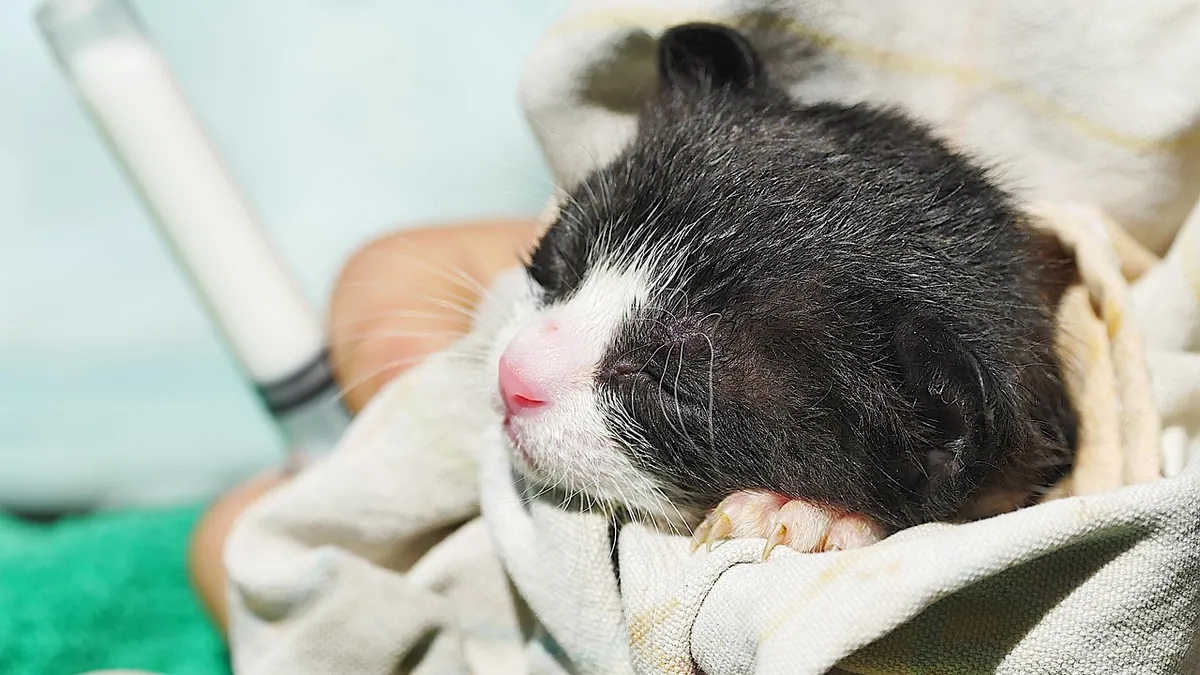
At six weeks old, a kitten is weaning off mother's milk, learning to use a litter box, and starting to play hard. To care for a kitten 6 weeks old, you feed a gruel of kitten food and formula several times a day, keep the box clean, and book the first vet visit. This article is educational and is not a substitute for veterinary diagnosis or treatment.
Quick Answer
- Feed a warm mash of canned kitten food mixed with kitten milk replacer, offered 4 times a day, and let the kitten eat as much as it wants in about 15 minutes.
- Expect the kitten to be unsteady but active, with blue-gray eyes that are still changing color and ears that are starting to stand up.
- Use a shallow litter box with unscented, non-clumping litter, and place the kitten in it after every meal and nap.
- Schedule the first veterinary visit now, because kittens need to see the vet every 3 to 4 weeks until they are about 6 months old [1][2].
- Keep the kitten away from unvaccinated cats until the full vaccine series is complete [1].
What a 6-Week-Old Kitten Needs Day to Day
A six-week-old kitten is in the middle of weaning. Weaning is a real physiological transition, not just a change in menu. Research on weaned kittens shows measurable shifts in gut bacteria, immune markers, and metabolism during this window, and weaning is a common trigger for diarrhea and slow growth [3]. That is why the food you offer and how you offer it matter so much right now.
Feeding: How Much and How Often
At this age, most kittens are eating a soft, mushy food. Mix canned kitten food with kitten milk replacer until it looks like oatmeal. Warm it slightly, because kittens are drawn to the smell of warm food. Offer it 4 times a day and let the kitten eat as much as it wants in about 15 minutes, then take the bowl away.
Do not free-feed unlimited dry food yet. A six-week-old kitten's teeth and jaw are still small, and dry kibble alone is hard work. You can start leaving a little dry kitten kibble out between meals so the kitten learns to chew, but keep the wet mash as the main source of calories.
Fresh water should be available at all times in a shallow dish. Kittens this age often step in water bowls, so use something heavy and low.
If the mother cat is still around, she may continue to nurse a few times a day. That is normal. Weaning is gradual, and kittens can be separated from the mother and littermates once they are weaned, beginning at 6 to 7 weeks old [1]. If you are hand-raising the litter or the mother rejected them, follow the feeding plan your veterinarian gives you.
Never give cow's milk. It causes diarrhea in kittens. Use a commercial kitten milk replacer only. If you are transitioning from bottle feeding, see our guide to newborn kitten care 0-4 weeks for the earlier stages.
Litter Training
Most six-week-old kittens take to litter quickly, but they need help at first. Use a box with low sides so the kitten can climb in and out. Fill it with unscented, non-clumping litter. Clumping litter can be swallowed during grooming and cause a blockage in a kitten this small.
Place the kitten in the box after every meal, after every nap, and any time you see it sniffing or circling. Praise it when it goes. If it has an accident, move the waste into the box so the scent guides it back.
Keep the box away from the food and water bowls. Cats prefer to eat and eliminate in separate places. Scoop the box at least once a day, and wash it with mild soap and water weekly.
Play and Socialization
Play is not optional at this age. Kittens learn bite inhibition and social rules from their littermates and from you. Use wand toys, small balls, and soft crinkle toys. Never use your hands or feet as toys, because a kitten that learns to bite hands becomes a cat that bites hands.
Short play sessions several times a day work better than one long session. A six-week-old kitten tires fast and sleeps a lot, often 16 to 20 hours a day.
Handle the kitten gently every day. Pick it up with one hand under the chest and one under the rear. Talk softly. This kind of handling builds a calm adult cat.
Warmth and Safety
A six-week-old kitten cannot regulate body temperature as well as an adult cat. Keep the room warm, around 75 to 80 degrees Fahrenheit, and give the kitten a soft bed with a low-sided box or a covered cave. Avoid drafts.
Kitten-proof the room. Block gaps behind appliances, cover electrical cords, and put away string, ribbon, rubber bands, and small toys that can be swallowed. String and thread are common causes of serious intestinal injury in kittens.
First Vet Visit and the 6-Week Schedule
Kittens need to visit the vet every 3 to 4 weeks until they are about 6 months old to receive shots and parasite treatment [1]. That schedule starts now. If you have not booked the first appointment, do it this week.
Vaccination timing is a bit different from visit timing. Because maternal immunity declines slowly over time, kittens should be vaccinated according to a regular schedule, beginning at 2 to 3 months old, so the vaccine works soon after the mother's protection fades [1]. Your veterinarian will set the exact dates based on your kitten's history and your area.
| Age | What Happens | What You Do |
|---|---|---|
| 6 weeks | Weaning, first deworming often done, first exam | Book the vet visit, start gruel feeding, start litter box |
| 8 to 9 weeks | Next exam, fecal test, weight check | Continue gruel to soft food, keep socializing |
| 10 to 12 weeks | Vaccine series begins or continues | Keep away from unvaccinated cats [1] |
| 14 to 16 weeks | More vaccines, parasite prevention | Ask about spay or neuter timing |
| 6 months | Series complete, spay or neuter often done | Discuss adult food transition |
Your veterinarian will also check for fleas, ear mites, and intestinal worms. Parasite control is part of routine health care for every cat, along with nutrition, grooming, and home safety [2]. Ask what product is right for a kitten this small, because many adult products are not safe for kittens. The dose is calculated by your veterinarian from the kitten's weight and health, so never guess.
If you are planning ahead, our article on preventive care for kittens walks through the full first-year schedule, and kitten spay timeline covers when to schedule that surgery.
If you are bringing this kitten into a home with other cats, read introducing new kitten before you put them together.
What Kittens Do at 6 Weeks Old
Owners often ask what kittens do at 6 weeks old. Here is what is normal.
- Eyes are open and may still be blue-gray. The final adult color appears over the next few weeks.
- Ears are upright or nearly so.
- Walking is steadier, but the kitten still wobbles and falls during fast turns.
- Play is rough and clumsy. Kittens pounce, bat, and wrestle with littermates.
- Biting is common. This is how kittens test the world and learn limits.
- Sleep takes up most of the day.
- Meowing, purring, and hissing all appear.
- The kitten can climb out of a low box and may try to explore the whole room.
If your kitten is still crawling, not holding its head up, or not interested in food, that is not a normal six-week pattern. Call your veterinarian.
Signs Something Is Wrong
Kittens can go downhill fast. Watch for these signs and act quickly.
- Refusing to eat for more than 12 hours
- Watery diarrhea, especially with blood or mucus
- Vomiting more than once
- Lethargy, weakness, or a kitten that feels cool to the touch
- Trouble breathing, open-mouth breathing, or coughing
- Discharge from the eyes or nose
- A swollen or painful belly
- Straining in the litter box with no urine or stool produced
- Sudden collapse or a seizure
Weaning itself can cause loose stool, because the gut bacteria and immune system are shifting during this period [3]. A little soft stool during the food transition is common. Repeated diarrhea, blood, or a kitten that stops eating is not something to wait out.
Common Mistakes Owners Make
Feeding dry food only too early. A six-week-old kitten needs moisture and soft texture. Dry food alone can lead to poor intake and dehydration.
Using clumping litter. Kittens eat litter by accident. Non-clumping litter is safer until they are older.
Skipping the first vet visit. Many owners wait until the kitten looks sick. By then, parasites and early infections have had weeks to build up. Kittens need visits every 3 to 4 weeks until about 6 months old [1][2].
Letting the kitten around unvaccinated cats. Until the full vaccine series is done, your kitten is not protected. Keep it away from unknown cats and from cats with unknown vaccine history [1].
Playing with hands. It seems harmless at six weeks. It is not harmless at six months.
Giving human medicine. Never give a kitten any human pain reliever, cold medicine, or anti-diarrheal. These can be fatal.
Free-feeding a whole bowl of dry food and assuming it is enough. Measure and watch. A kitten that is not gaining weight needs a vet check.
Ignoring the mother cat's health. If the mother is still nursing, she needs good nutrition and her own vet care. Our guide to pregnant cat care covers her needs.
Supplies and Setup That Support Health
You do not need much, but the right basics make a difference.
- Food: Canned kitten food and kitten milk replacer for the gruel. Transition to a complete kitten diet as the kitten grows.
- Bowls: Shallow, heavy, and easy to wash. One for food, one for water.
- Litter box: Low sides, unscented non-clumping litter, scooped daily.
- Bed: A soft, washable bed in a warm, draft-free spot.
- Carrier: A hard-sided carrier for vet visits. Line it with a towel.
- Toys: Wand toys, soft balls, and crinkle toys. Rotate them so the kitten stays interested.
- Grooming: A soft brush and kitten-safe nail clippers. Start handling paws now so nail trims are easy later.
- Scale: A kitchen scale that measures in grams or ounces. Weigh the kitten weekly and write it down. Steady weight gain is one of the best signs that feeding is working.
Nutrition during and after weaning shapes long-term health. Research on weaned kittens shows that diet affects growth, immune markers, and the gut bacterial community [3][4]. A complete kitten food formulated for growth is the right choice. Supplements are not needed unless your veterinarian recommends one for a specific problem, and the dose is set by your veterinarian based on your kitten's weight and health.
Limitations and When to Contact a Veterinarian
This article covers general care. Every kitten is an individual, and only a veterinarian who examines your kitten can give advice for your specific case.
Call your veterinarian the same day if you see:
- The kitten has not eaten in 12 hours
- Diarrhea lasting more than a day, or any diarrhea with blood
- Vomiting more than once
- Eye or nose discharge
- Sneezing with poor appetite
- A body temperature that feels too cool or too warm
- Weight loss or no weight gain over a week
Go to an emergency clinic now if you see:
- Trouble breathing or open-mouth breathing
- Collapse, seizure, or unresponsiveness
- Repeated vomiting with inability to keep water down
- A swollen, painful, or hard belly
- Straining to urinate with no urine produced
- Bleeding that will not stop
- Suspected poisoning or swallowing of string, thread, or a foreign object
Schedule a routine visit if:
- You have not yet had the first exam
- The kitten is due for the next vaccine or deworming
- You have questions about spay or neuter timing
- The kitten seems healthy but you want a weight and growth check
Frequently Asked Questions
How much should a 6-week-old kitten eat?
Offer a warm gruel of canned kitten food mixed with kitten milk replacer 4 times a day, and let the kitten eat as much as it wants in about 15 minutes. Appetite varies a lot at this age, so watch weight gain instead of counting bites. Your veterinarian can tell you if your kitten's growth is on track.
Can a 6-week-old kitten use a litter box?
Yes, most kittens this age can learn quickly. Use a low-sided box with unscented, non-clumping litter and place the kitten in it after meals and naps. Clumping litter is risky because kittens may swallow it while grooming.
When should a 6-week-old kitten see a vet?
Book the first visit now if you have not already. Kittens need veterinary visits every 3 to 4 weeks until they are about 6 months old for shots and parasite treatment [1]. The first exam checks weight, eyes, ears, teeth, and stool, and sets up the vaccine plan.
Can I take a 6-week-old kitten away from its mother?
Kittens can generally be separated from the mother and littermates once they are weaned, beginning at 6 to 7 weeks old [1]. If the kitten is still nursing well and gaining weight, a little more time with the mother is often better. If the mother is gone or rejecting the kitten, you can hand-feed with kitten milk replacer and a soft food transition.
Do 6-week-old kittens need vaccines yet?
Vaccination usually begins at 2 to 3 months old, because maternal immunity declines slowly and can block the vaccine if given too early [1]. Your veterinarian will set the exact start date. Until the full series is complete, keep your kitten away from unvaccinated cats [1].
Related Articles
- Pregnant Cat Care: Nutrition, Gestation, and Kitten Delivery
- Preventive Care For Kittens
- Newborn Kitten Care 0-4 Weeks: Warmth Colostrum and Stimulation Protocol
- Introducing New Kitten
- Kitten Spay Timeline
- Newborn Puppy Care Week by Week: Neonatal Care and Development
- What Can 5- and 6-Week-Old Kittens Eat?
- Kitten Care by Age: 1 Week to 3 Months Explained
- When Do Kittens Wean? Age and How to Wean
References
- Kitten Care - Cat Owners. Merck Veterinary Manual.
- Routine Health Care of Cats - Cat Owners. Merck Veterinary Manual.
- Dynamic development of gut microbiota and metabolism during and after weaning of kittens. Animal microbiome, 2025.
- Alterations in the Intestinal Microbiome and Metabolic Profile of British Shorthair Kittens Fed with Milk Replacer. Animals : an open access journal from MDPI, 2024.