Do Budgies Mate for Life? Bonding Facts for Owners
By Dr. Zubair Khalid, DVM, MS, PhD ·
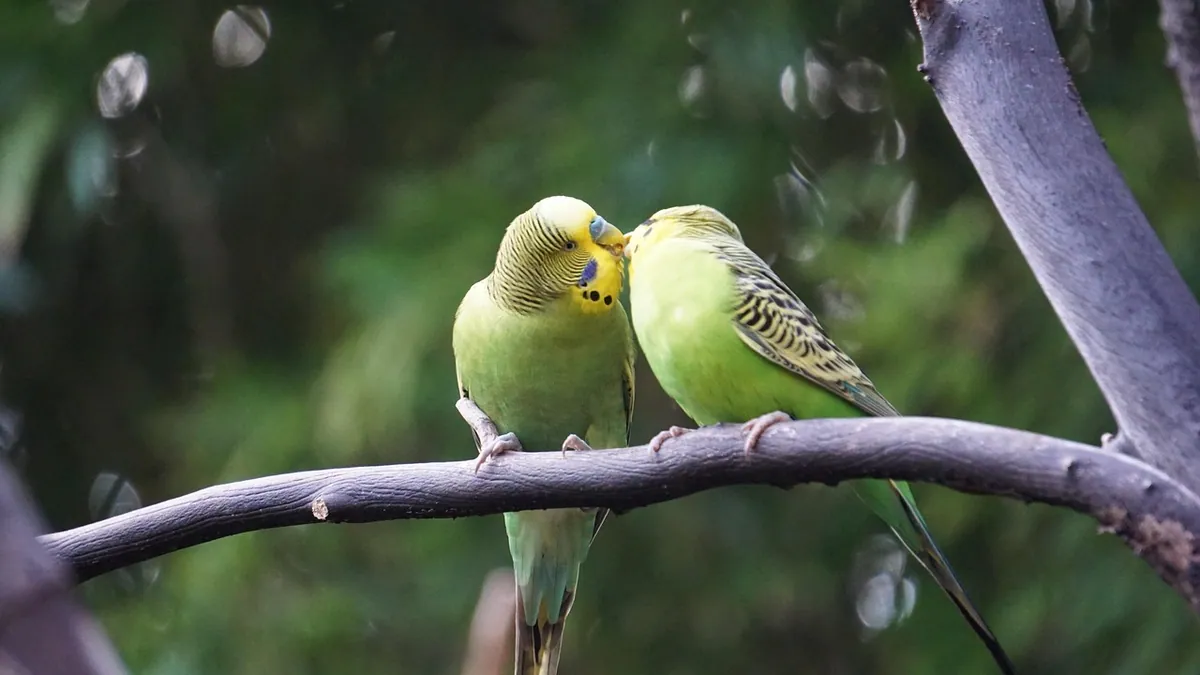
Budgies can form strong pair bonds, and bonded pairs often stay together across breeding seasons, but they do not mate for life in the way some large parrots or wild seabirds do. A budgie that loses its mate may grieve, call, and search, then bond again with a new bird over time. This article is educational and is not a substitute for veterinary diagnosis or treatment.
Quick Answer
- Budgies are social flock birds that can bond closely with one partner, but most can and will pair with a new mate if their partner dies or is removed.
- A bonded pair often feeds each other, preens each other, and stays close, and allopreening between partners is linked to stable pair bonds across breeding seasons in birds [1].
- Two budgies of any sex can bond, but a male and female pair is the combination most likely to breed, so house same-sex pairs if you do not want chicks.
- Bonding is driven by hormones and daylight cues, and full physical contact between mates is needed for nesting and egg laying to occur [2].
- If a budgie loses its mate, expect changes in appetite, vocalizing, and activity for days to weeks, and watch for signs that need a veterinarian.
Do Budgies Mate for Life? What the Bonding Behavior Really Means
In the wild, budgerigars live in large, moving flocks. They are not territorial in the way many parrots are, and they do not defend a lifelong partnership the way some species do. Instead, they form seasonal or multi-season pair bonds that help them raise chicks together.
Research on birds shows that allopreening, which is when two birds gently preen each other's head and neck feathers, is more common in species where both parents cooperate to raise young. The same research found that pairs that allopreen are more likely to stay together over successive breeding seasons [1]. So a budgie pair that preens each other is showing you a real bond, even if that bond is not permanent.
For pet budgies, "mate for life" is better described as "mate for now, and maybe for several seasons." A budgie may keep the same partner for years if both birds stay healthy and the pair is stable. If the partner dies or is rehomed, most budgies will accept a new mate.
Budgie Pair Bonding: What Normal Bonded Behavior Looks Like
Bonded budgies show a fairly predictable set of behaviors. Watching for these helps you understand what is happening in your cage.
Signs of a bonded pair
- Mutual preening, especially around the head and neck, which is the classic allopreening behavior linked to stable pair bonds [1]
- Sitting close together, often touching, and following each other around the cage
- Feeding each other by regurgitating food, which is a courtship and pair-bond behavior
- Sharing a favorite perch, food dish, or sleeping spot
- One bird calling and the other answering when they are briefly separated
Signs of a pair that is only tolerating each other
- Sitting on opposite sides of the cage
- Chasing, lunging, or feather pulling
- One bird guarding the food dish or a perch
- Constant contact calls with no answer
If you see the second pattern, the birds are not bonded. That is not a medical problem by itself, but it does affect how you house them. A larger cage with duplicate food and water stations helps. You can read more about cage setup in our guide to a proper Budgie Cage.
Do Budgies Stay With One Mate? What Happens After Mate Loss
Budgies do not stay with one mate for life in the strict sense. In the wild, pair bonds often form before the breeding season and can last through it, and some pairs reunite in later seasons [3][4]. In free-living rose-ringed parakeets, a related small parrot, pair bond formation happened between September and December and was linked to rising luteinizing hormone levels, and the bond was tied to the breeding cycle instead of to a permanent life partnership [3][4].
When a bonded budgie loses its mate, owners often describe a grief-like response. The surviving bird may call repeatedly, pace, sit puffed up, eat less, or lose interest in toys. This can last days to a few weeks. Some budgies recover faster if they have other budgies nearby. Others do better with extra one-on-one time with you. If you are building that relationship, our article on Taming and Bonding With Your Pet Bird walks through a gentle approach.
A single budgie can live a good life, but budgies are flock animals and usually do best with at least one companion. If you plan to add a new budgie, quarantine the new bird away from your current bird for at least 30 days and have it checked by a veterinarian first. Introduce them slowly, with separate cages side by side at first.
When Budgie Bonding Becomes a Problem
Bonding itself is normal and healthy. Problems usually come from what the bond triggers, not from the bond itself.
Breeding and egg laying
If you house a male and female budgie together, they may breed. Full physical contact between mates is needed for nesting behavior and egg laying in small parrots, and pairs with limited contact are much less likely to lay eggs [2]. A hen can lay eggs even without a male, and chronic egg laying can drain her calcium and lead to serious health problems. If you do not want chicks, house same-sex pairs or separate birds during breeding condition.
Hormonal and territorial behavior
A bonded pair may become aggressive toward other birds in the cage, especially during breeding season. One bird may guard the nest box, food, or a favorite perch. In some cases, a bonded budgie may redirect aggression toward you.
Mate loss and stress
A budgie that loses its mate can become withdrawn, stop eating, or over-preen. Stress can also lower a bird's resistance to illness. If your budgie is not eating or is sitting fluffed on the cage floor, that is a same-day veterinary concern.
Over-bonding to a person
Some single budgies bond intensely to their owner and may scream, bite, or feather-pick when left alone. This is a behavior problem, not a medical one, but it needs a plan.
What to Do Step by Step
1. Rule out medical causes first
Any sudden change in behavior, appetite, droppings, breathing, or activity level should be checked by a veterinarian who treats birds. Budgies hide illness well, and a sick bird may look like a "sad" bird.
2. Set up the environment for the number of birds you have
- One budgie: give a large cage, daily out-of-cage time, and plenty of foraging toys.
- Two budgies: use a cage wide enough for each bird to get away from the other. Provide two food dishes, two water dishes, and multiple perches at different heights.
- A bonded pair that is breeding: decide whether you want chicks before you add a nest box. Removing the nest box reduces egg laying.
3. Use enrichment to reduce problem behavior
- Foraging toys, shreddable paper, and rotating toys keep budgies busy.
- Training with a target stick or simple step-up cues gives you a way to interact without hands-on grabbing.
- A predictable sleep schedule of 10 to 12 hours of dark, quiet time helps calm hormonal birds.
4. Handle mate loss with patience
- Keep the surviving bird's routine as normal as possible.
- Offer favorite foods and warm, quiet space.
- Spend extra calm time near the cage.
- Consider a new companion after a quarantine period, but only if you can commit to the added care.
5. Introduce new birds slowly
- Quarantine the new budgie for at least 30 days.
- Place cages side by side so the birds can see and hear each other.
- Supervise first out-of-cage meetings.
- Watch for chasing, biting, or food guarding, and separate if it continues.
If you keep other social species, the same slow-introduction logic applies. Our guide on Guinea Pig Companionship: How to Introduce and Bond Pairs covers the general principles of pairing social animals safely.
What Not to Do
- Do not punish a budgie for hormonal or bonded behavior. Yelling, spraying, or grabbing increases fear and can make biting worse.
- Do not separate a bonded pair suddenly unless there is fighting or a medical reason. Sudden separation is stressful for both birds.
- Do not assume two budgies will bond just because they are the same species. Bonding takes time and compatible personalities.
- Do not add a nest box "to make them happy." A nest box triggers breeding behavior and egg laying [2].
- Do not breed budgies casually. Raising chicks takes space, time, money, and veterinary support, and it carries risk for the hen.
- Do not believe the myth that a budgie will die of grief after losing a mate. Budgies can grieve, but with good care most adjust and can bond again.
When to Involve a Veterinarian or Behavior Professional
Call a veterinarian who treats birds if your budgie stops eating, has changes in droppings, sits fluffed at the bottom of the cage, breathes with its tail bobbing, or shows sudden weakness. These are same-day concerns.
Seek emergency care now if your budgie is bleeding, has labored open-mouth breathing, is unable to perch, has a prolapsed vent, or is straining to pass an egg.
Schedule a routine visit if you see a gradual change in behavior after a mate loss, if a hen is laying eggs frequently, or if you are planning to add a new bird. A certified avian behavior consultant can help with persistent screaming, biting, or feather-damaging behavior.
Limitations and When to Contact a Veterinarian
This article gives general information about budgie bonding. It cannot tell you what is happening with your specific bird. Individual cases need a veterinarian who can examine your budgie, ask about its history, and run tests if needed.
Red flags to act on:
- Same day: not eating, not drinking, reduced droppings, sitting fluffed, vomiting, or a sudden change in voice or activity
- Emergency now: bleeding, open-mouth breathing, inability to perch, seizures, or a hen straining to lay an egg
- Routine visit: chronic egg laying, feather loss, over-preening, or a slow decline after losing a mate
If you are unsure, call your avian veterinarian. It is always better to check early.
Frequently Asked Questions
Can two male budgies bond?
Yes, two male budgies can form a close pair bond. They may preen each other, feed each other, and stay close, and this is normal social behavior. Same-sex pairs are a good choice if you do not want breeding.
Will a budgie die if its mate dies?
No, a budgie will not automatically die from grief. Some budgies show a grief-like response with less eating and more calling, but with good care most recover. If your budgie stops eating or acts sick, see a veterinarian.
How long does it take for budgies to bond?
It varies. Some budgies bond within days, and others take weeks or months. Slow introductions with separate cages side by side give the best chance of a calm bond.
Can a budgie bond with a different species?
Budgies usually do best with other budgies. They can sometimes live peacefully near other small parrots, but bonding across species is uncommon and can lead to injury. Keep different species in separate cages unless an experienced avian veterinarian or behavior consultant advises otherwise.
Should I get a companion for a budgie that lost its mate?
It can help, but timing matters. Give the surviving bird a few weeks to settle, then quarantine any new budgie for at least 30 days and have it examined by a veterinarian before introductions. If your budgie is not eating or is acting ill, address that first.
Related Articles
- Taming and Bonding With Your Pet Bird
- How to Bond With Your Sugar Glider
- Budgie Cage
- Do Cockatiels and Parrots Mate for Life? Bonding Facts
- Do Cockatiels and Budgies Need to Be in Pairs? Pros and Cons
- Do Budgies Have a Mating Season? Breeding Cycles
References
- Allopreening in birds is associated with parental cooperation over offspring care and stable pair bonds across years. Behavioral ecology : official journal of the International Society for Behavioral Ecology, 2017.
- Reproductive behavior and LH levels of cockatiels (Nymphicus hollandicus) associated with photostimulation, nest-box presentation, and degree of mate access. Hormones and behavior, 1989.
- Environmental and hormonal factors in seasonal breeding in free-living male Indian rose-ringed parakeets (Psittacula krameri). Hormones and behavior, 1988.
- Environmental, dietary, and hormonal factors in the regulation of seasonal breeding in free-living female Indian rose-ringed parakeets (Psittacula krameri). Hormones and behavior, 1988.