Do Budgies Have a Mating Season? Breeding Cycles
By Dr. Zubair Khalid, DVM, MS, PhD ·
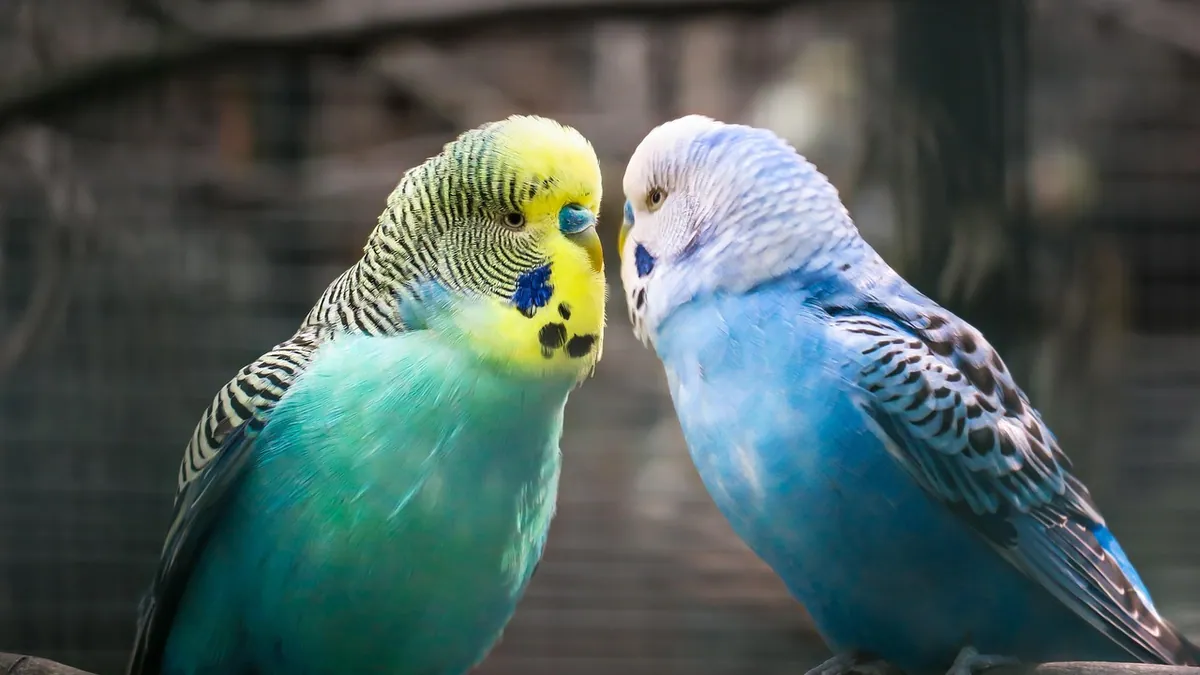
Do budgies have a mating season? Not in the way most people mean. Budgies are opportunistic breeders, which means they can breed whenever conditions are good instead of waiting for one fixed time of year. In the wild, rain, fresh grass seed, and available nest holes set the timing, and in your home, long daylight hours, rich food, and a cozy enclosed space do the same thing.
This article is educational and is not a substitute for veterinary diagnosis or treatment.
Quick Answer
- Budgies do not have one universal mating season. They respond to triggers like day length, food supply, and the presence of a nest site.
- In many pet homes, the "season" is spring and summer because natural daylight gets longer, but indoor lighting and heating can keep birds hormonal year round.
- A male budgie's sperm production can be shut down by keeping him at 8 hours of daylight or less [1].
- Two budgies of opposite sex living together can produce chicks even if you never planned to breed them.
- If you see hormonal behavior, the fix is usually environmental (light, food, sleep, nest sites), not punishment.
Why Budgies Breed When They Do
Budgies Are Opportunistic, Not Seasonal
A true seasonal breeder has a biological clock that shuts down reproduction for part of the year no matter how good conditions are. Budgies are more flexible. Their bodies read the environment and switch reproduction on when resources look plentiful.
Research on related parrots shows how tightly this is tied to surroundings. In free-living rose-ringed parakeets, the ovaries and oviducts began to enlarge in January, were fully developed in February, and started to regress in March, with pair bonds forming months earlier between September and December [2]. The birds were tracking conditions, not a calendar.
The pineal gland and melatonin help regulate this timing in tropical birds. In blossom-headed parakeets, the pineal gland was inactive during the breeding season and active during the nonbreeding phase, and melatonin given for 10 consecutive days caused significant testicular involution during the breeding phase but did not change reproductive activity during the nonbreeding phase [3]. In plain terms, the body's reproductive switch is sensitive to light and season, and it can be flipped in either direction.
For budgies specifically, spermatogenesis (sperm production) can be arrested by reducing the photoperiod to 8 hours of daylight or less [1]. That is one of the most useful facts a budgie owner can know.
The Three Main Triggers
Light. Longer days signal that spring has arrived and food should be abundant. Indoor birds often get 12 to 14 hours of light because of room lamps, televisions, and kitchen activity after sunset. That is a breeding cue.
Food. Abundant, energy-dense food tells a budgie's body that there is enough to raise chicks. Seed-heavy diets, constant food availability, and warm soft foods all push the same button.
Nest sites. A budgie looking for a place to lay needs a cavity. In your home, that can be a nest box, a happy hut, a cardboard box, a cabinet, a bookshelf gap, or even the corner behind a mirror. Any dark, enclosed, quiet spot can qualify.
Hormonal Behavior You May See
When a budgie is in breeding condition, you may notice:
- A male regurgitating food onto a toy, a mirror, or your hand
- A female chewing at cage bars, shredding paper, or tucking materials into her feathers
- A female's cere (the fleshy area above the beak) turning brown and crusty
- A male's cere turning a deeper, brighter blue
- Mounting, wing quivering, or head bobbing
- Increased aggression toward cage mates or toward hands
- More vocalizing and pacing
Pair bonds matter here too. Allopreening, where birds groom each other's heads and necks, is more common in species where both parents cooperate to raise young, and it is linked to partners staying together across breeding seasons [4]. If your budgies groom each other constantly, they have formed a bond, and bonded pairs are more likely to breed.
Medical Causes to Rule Out Before You Assume It Is Hormonal
Some behaviors that look like breeding behavior are actually signs of illness or pain.
Chronic egg laying is the big one. A single female budgie with no mate can lay clutch after clutch. This drains calcium and can lead to egg binding, which is a life-threatening emergency. If your female is laying repeatedly, that is a medical issue, not a personality trait.
Reproductive disease. Ovarian tumors, testicular tumors, and cystic reproductive organs are seen in budgies. Signs include a swollen abdomen, labored breathing, tail bobbing, sitting on the cage floor, and changes in droppings.
Skin and feather problems. Over-preening or self-mutilation can look like nesting behavior. Mites, fungal infections, and nutritional deficiencies can all cause feather damage.
Respiratory disease. A budgie that is open-mouth breathing, clicking, or tail bobbing needs a veterinarian, not a behavior plan.
If your bird is eating, drinking, pooping, and behaving normally apart from hormonal displays, the odds are good that this is behavioral. If anything seems off physically, get a veterinary exam first.
When Budgie Breeding Behavior Becomes a Problem
Hormonal behavior is normal. It becomes a problem when it affects health or safety.
Unwanted egg laying. A female who lays eggs without a mate is at risk for egg binding, calcium depletion, and chronic reproductive disease. Repeated laying shortens lives.
Aggression. A hormonal budgie may bite hard, attack a cage mate, or guard a chosen nest spot. Injuries happen fast in a small cage.
Feather damage and self-trauma. Some birds pluck or chew themselves when hormonal and frustrated.
Exhaustion. A bird that is constantly in breeding mode may lose weight, sleep poorly, and stop playing.
Accidental breeding. If you have a male and female together, you have a breeding pair whether you intended it or not. Budgies are prolific, and hand-raising chicks is a serious commitment.
If you are also managing other species in the home, the principles are similar across animals. Feline breeding management covers estrus detection and mating in cats, and understanding snake reproduction covers mating behaviors and egg-laying in reptiles. The common thread is that environment drives reproduction.
How to Reduce Hormonal Behavior Step by Step
Step 1: Fix the Light Schedule
This is the single most effective change. Give your budgie 10 to 12 hours of dark, quiet sleep every night. Cover the cage with a breathable cover or move it to a room that stays dark. Reducing daylight to 8 hours or less can arrest sperm production in male budgies [1], so a shorter photoperiod is a real biological brake, not a trick.
Use a timer if you can. Consistency matters more than perfection.
Step 2: Rethink the Diet
- Move away from an all-seed diet. A formulated pellet diet with fresh vegetables is better for overall health.
- Stop warm, soft, or mushy foods if you are feeding them. These mimic the regurgitated food a parent bird gives chicks.
- Do not remove food entirely. Budgies have fast metabolisms and need to eat throughout the day. Instead, offer measured portions at set times instead of a constantly overflowing bowl.
- Keep fresh water available at all times.
Step 3: Remove Nest Sites
Walk around the cage and the room. Look for anything dark, enclosed, or shreddable.
- Remove nest boxes, huts, tents, and cardboard boxes
- Block access to cabinets, drawers, and shelves
- Remove mirrors, which some birds treat as a mate
- Limit paper shredding toys if your female is stuffing paper into her feathers
- Rearrange the cage so there is no single cozy corner
Step 4: Change the Cage Layout
A static cage becomes a territory. Move perches, food bowls, and toys every week or two. This interrupts the "this is my nest" mindset.
If you have a bonded pair and you are not breeding them, consider separate cages side by side. They can still see and hear each other without the constant physical contact that drives breeding.
Step 5: Increase Enrichment and Foraging
A bored budgie channels energy into breeding. A busy budgie does not.
- Use foraging toys so your bird works for food
- Rotate toys weekly
- Teach simple target training or step-up cues
- Offer new textures, colors, and sounds
- Let your bird fly in a safe room daily if possible
Step 6: Handle Interactions Carefully
- Pet your budgie on the head and neck only. Stroking the back, wings, or vent mimics mating and stimulates hormones.
- Keep petting sessions short.
- Do not let your bird regurgitate onto your hand or fingers. If it happens, gently set the bird down and walk away.
- Avoid letting your bird nest in your hair, shirt, or hoodie.
Step 7: Be Patient and Consistent
Hormonal behavior does not stop overnight. It takes weeks of consistent light, diet, and environment changes. If you make one change and give up, you will not see results.
What Not to Do
Do not punish your bird. Yelling, squirting water, or tapping the beak damages trust and does not change hormones. Your budgie is not being naughty. It is responding to biology.
Do not remove food as punishment. Budgies can become dangerously weak quickly without food.
Do not assume a mirror is harmless. Many single budgies become hormonally bonded to their reflection and show constant breeding behavior.
Do not believe the myth that a female must lay eggs to be healthy. She does not. Egg laying is a reproductive event, not a health requirement, and repeated laying is risky.
Do not assume two females or two males cannot show hormonal behavior. Same-sex pairs can mount, regurgitate, and bond. They just will not produce fertile eggs.
Do not breed your budgies "just once" without a plan. You need homes lined up for every chick, an avian veterinarian available, and the time to hand-feed if the parents reject them.
Do not use hormone injections or implants on your own. These are prescription treatments. A veterinarian calculates the dose from the bird's weight and health.
When to Involve a Veterinarian or Behavior Professional
Call an avian veterinarian if:
- Your female has laid eggs and seems strained, sits fluffed on the cage floor, or cannot pass a dropping
- You see a swollen abdomen, labored breathing, or tail bobbing
- Your bird is losing weight or has changed droppings
- Your bird is plucking or injuring itself
- Aggression is causing injuries to a cage mate
- Egg laying continues despite your environmental changes
A certified avian behavior consultant can help if the behavior is complex, if you have multiple birds, or if you have tried the steps above for several weeks without improvement. Your veterinarian can also rule out medical causes before a behavior plan is built.
Limitations and When to Contact a Veterinarian
This article covers general principles. Every bird is an individual, and a budgie's history, age, sex, and living situation change what is safe and effective. Individual cases need a veterinarian who can examine the bird in person.
Contact a veterinarian the same day if:
- A female has been straining to pass an egg for more than a short time
- You see a prolapse (tissue protruding from the vent)
- Your bird is bleeding
- Your bird has stopped eating or drinking
- Breathing looks labored at rest
Go to an emergency clinic now if:
- Your bird is collapsed, unresponsive, or cannot perch
- There is heavy bleeding
- Your bird is gasping with the beak open and the tail bobbing
- You suspect poisoning or exposure to fumes, such as from a nonstick pan overheated on the stove
Schedule a routine visit if:
- Your female has laid more than one clutch in a few months
- Hormonal behavior has lasted more than a few weeks despite changes
- You are considering breeding and want a pre-breeding health check
- You want help building a diet and light plan
Frequently Asked Questions
Do budgies breed all year round?
In a climate-controlled home with long artificial light and constant food, yes, they often can. Their bodies respond to conditions, not a fixed calendar. Shortening daylight and removing nest sites is what stops the cycle.
How do I stop my budgie from laying eggs?
Reduce daylight to 10 to 12 hours of dark sleep, remove all nest sites and mirrors, stop warm soft foods, and increase foraging and flight time. If laying continues, see an avian veterinarian, because chronic laying can cause serious health problems.
Can two female budgies mate?
Two females can mount each other and bond closely, but no fertile eggs will result. If one of them lays, the eggs will be infertile. Same-sex hormonal behavior still responds to the same light, diet, and environment changes.
Does a mirror make budgies hormonal?
Often, yes. A single budgie may treat its reflection as a mate and show constant regurgitating, mounting, and nest-seeking. Removing the mirror is one of the simplest changes you can make.
How long does budgie breeding season last?
There is no fixed length. It lasts as long as the triggers are present. Once you shorten daylight, simplify the diet, and remove nest sites, hormonal behavior usually fades over several weeks.
Related Articles
- Breeding Soundness Examination of Bulls: Standards and Interpretation
- Do Budgies Mate for Life? Bonding Facts for Owners
- Why Does My Budgie Dance? Head Bobbing and Mating Moves
- Do Cockatiels and Budgies Need to Be in Pairs? Pros and Cons
References
- Ultrastructure of the budgerigar testis during a photoperiodically induced cycle. Cell and tissue research, 1975.
- Environmental, dietary, and hormonal factors in the regulation of seasonal breeding in free-living female Indian rose-ringed parakeets (Psittacula krameri). Hormones and behavior, 1988.
- A comparative study of annual changes in the pineal gland morphology with reference to the influence of melatonin on testicular activity in tropical birds, Psittacula cyanocephala and Ploceus philippinus. General and comparative endocrinology, 1993.
- Allopreening in birds is associated with parental cooperation over offspring care and stable pair bonds across years. Behavioral ecology : official journal of the International Society for Behavioral Ecology, 2017.