Budgie Cage
By Dr. Zubair Khalid, DVM, MS, PhD ·
Key Takeaways
- Inadequate caging is the leading preventable cause of morbidity in budgies, contributing to obesity, feather damaging behavior, pododermatitis, and respiratory disease by inducing chronic stress that suppresses the immune system and predisposes to infections like avian polyomavirus and psittacosis.
- Minimum cage dimensions for a single budgie are 20" L x 20" W x 30" H (50 cm x 50 cm x 76 cm) with bar spacing not exceeding 1/2 inch (1.27 cm); horizontal bars are crucial for climbing and exercise, and rectangular cages are preferred over round ones to prevent disorientation and stress.
- Perch selection is critical for foot health; provide 3-5 perches of varying diameters (3/8 to 3/4 inch or 1-2 cm) made of natural, unsprayed wood, avoiding uniform dowel or sandpaper types that cause pododermatitis.
- Environmental enrichment, including foraging opportunities and shreddable toys, is a veterinary necessity to prevent obesity, feather picking, and stereotypic behaviors by mimicking natural foraging behaviors which occupy 60-70% of a wild budgie's waking hours.
- Recognizing subtle illness signs such as decreased vocalization, increased sleeping, tail bobbing, and fecal changes is paramount, as budgies are prey species that mask illness until critically ill, necessitating immediate veterinary attention for emergency signs like open-mouth breathing or seizures.
- Diet conversion from seed to a high-quality pellet-based diet, supplemented with fresh vegetables, is a critical veterinary protocol; seed should be used sparingly as training treats (<10% of total intake) to prevent nutritional deficiencies and related health problems.
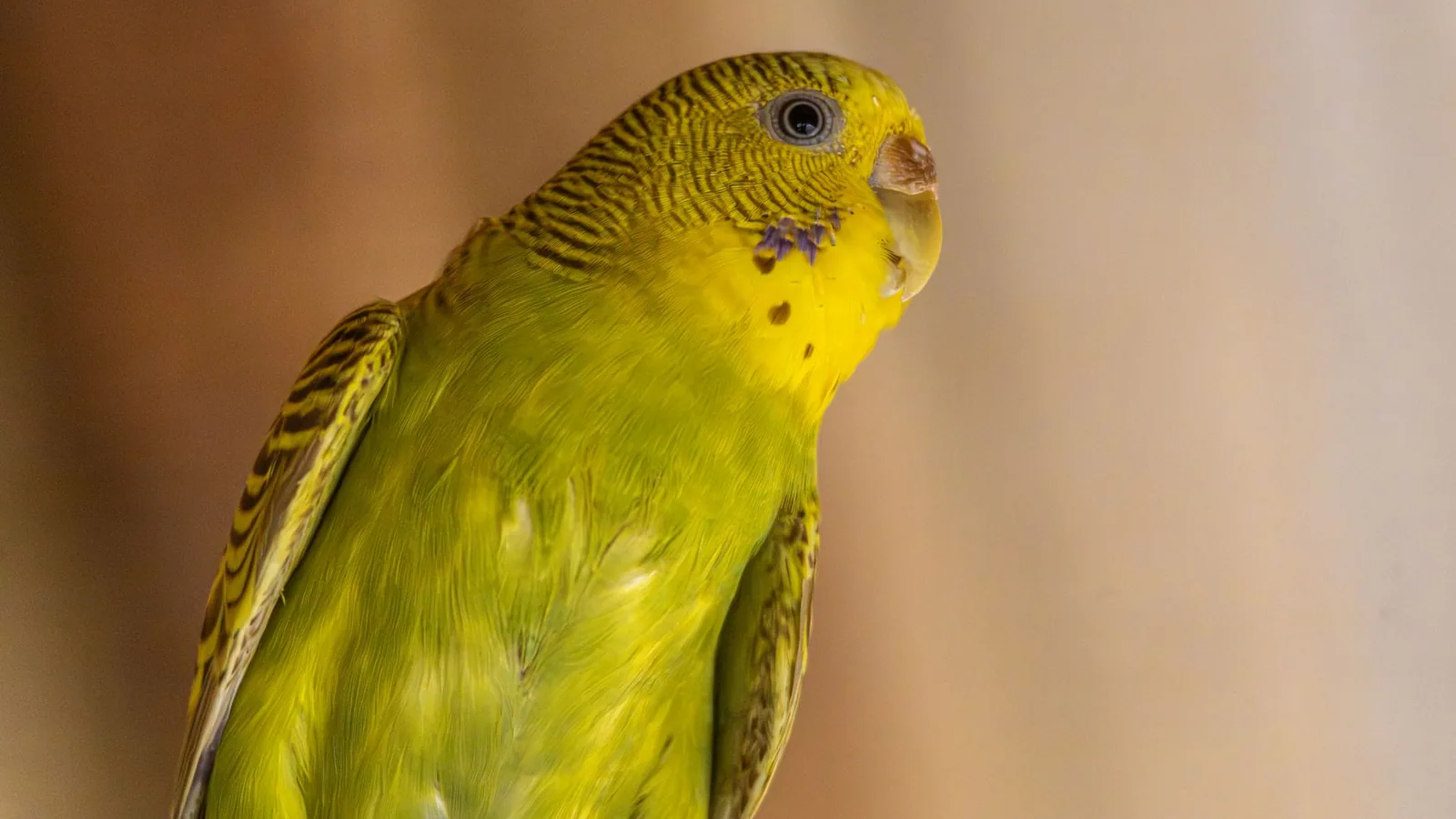
Budgerigars (Melopsittacus undulatus), commonly known as budgies or parakeets, are among the most popular companion birds globally. Despite their small size, these psittacine birds have complex physiological and psychological needs that directly impact their longevity and quality of life. According to the Association of Avian Veterinarians (AAV), improper caging remains the leading preventable cause of morbidity in pet budgies. This comprehensive veterinary guide addresses the clinical standards for budgie cage selection, enrichment, diet conversion, and recognition of early illness signs.
Quick Q&A
Question: What is the minimum cage size for a single budgie according to avian veterinary guidelines?
Answer: The AAV and Merck Veterinary Manual recommend a minimum cage size of 20 inches long by 20 inches wide by 30 inches tall (50 cm x 50 cm x 76 cm) for a single budgie. Bar spacing should not exceed 1/2 inch (1.27 cm) to prevent head entrapment or escape. Larger cages are strongly preferred for flight and enrichment.
Clinical Importance of Proper Caging
The budgie cage is not merely a containment system; it is the bird's primary environment. Inadequate housing is a documented risk factor for multiple health disorders including obesity, feather damaging behaviour, bumblefoot (pododermatitis), and respiratory disease. The VCA Animal Hospitals emphasize that caging must meet the bird's physical and behavioural needs to prevent chronic stress, which suppresses the avian immune system and predisposes to infections such as avian polyomavirus and psittacosis (Chlamydia psittaci).
Cage Selection Criteria
Dimensions and Shape
The most critical error in budgie caging is prioritizing height over horizontal space. Budgies are horizontal flyers, not vertical climbers like cockatiels. The AAV guidelines state that cage length is more important than height. For a single budgie, the absolute minimum floor area is 400 square inches (approximately 2,580 cm²). For each additional bird, increase the floor area by 50%.
- Single budgie: 30" L x 20" W x 30" H (76 x 50 x 76 cm)
- Pair of budgies: 40" L x 20" W x 30" H (102 x 50 x 76 cm)
- Flight cage (preferred): 48" L x 24" W x 36" H (122 x 61 x 91 cm)
Rectangular cages are superior to round or dome-shaped cages. Round cages cause spatial disorientation and lack corners where budgies feel secure. The Lafeber Company notes that round cages are associated with increased stress behaviours and should never be recommended.
Bar Spacing and Material
Bar spacing is a safety-critical specification. The Merck Veterinary Manual warns that bars spaced wider than 5/8 inch (1.6 cm) risk head entrapment, while spacing narrower than 3/8 inch (1 cm) can trap toes or beaks.
- Safe bar spacing: 1/2 inch (1.27 cm)
- Bar diameter: 2-3 mm (thin enough for small feet to grip)
- Material: Powder-coated, non-toxic metal (avoid galvanized wire due to zinc toxicity risk; avoid lead and brass)
Stainless steel cages are the veterinary gold standard as they are non-toxic, easy to disinfect, and resistant to corrosion from bird droppings and cleaning agents.
Bar Orientation
Horizontal bars are essential for budgies. These birds naturally climb using their beaks and feet, and horizontal bars facilitate exercise and enrichment. Cages with only vertical bars are inadequate and should be avoided.
Cage Furnishings and Placement
Perches
Perch selection directly affects foot health. The DVM360 veterinary resource emphasizes that uniform, sandpaper-covered, or dowel perches cause pododermatitis and pressure sores.
Veterinary perch recommendations:
- Provide 3-5 perches of varying diameters (ranging from 3/8 to 3/4 inch or 1-2 cm)
- Use natural, unsprayed wood branches (manzanita, eucalyptus, apple, willow)
- Avoid plastic perches (too slippery, promote foot infections)
- Place perches to allow clear flight paths, not directly over food/water bowls
- Include a flat platform perch for resting
Food and Water Stations
Place food and water dishes at opposite ends of the cage to encourage movement. Use heavy ceramic or stainless steel bowls that cannot be tipped. The VCA Animal Hospitals advise against plastic dishes as they harbor bacteria in scratches and can be chewed, causing gastrointestinal obstruction.
Critical placement rule: Never place food or water directly under perches where they will be contaminated with droppings. This is a common source of bacterial enteritis and crop infections.
Cage Placement in the Home
Budgies are prey animals and require strategic cage placement:
- Position cage against a wall for security (one side covered)
- Place at eye level or higher (budgies feel vulnerable on the floor)
- Avoid direct sunlight (risk of hyperthermia)
- Avoid drafty areas, kitchens (Teflon fumes are lethal), and bedrooms (sleep disruption)
- Maintain ambient temperature between 65-80°F (18-27°C)
Enrichment and Environmental Complexity
Environmental enrichment is not optional; it is a veterinary medical necessity. The AAV position statement on psittacine welfare identifies environmental complexity as critical for preventing behavioural disorders.
Foraging Opportunities
In the wild, budgies spend 60-70% of waking hours foraging. Captive budgies without foraging opportunities develop obesity, feather picking, and stereotypic behaviours.
Veterinary foraging recommendations:
- Hide food in foraging toys (shreddable paper, puzzle boxes)
- Scatter seed on cage floor substrate (paper only, not wood shavings)
- Use hanging millet sprays as foraging challenges
- Rotate foraging devices weekly to maintain novelty
Toys and Chewing Materials
Budgies are destructive chewers by nature. This behaviour maintains beak health and provides mental stimulation. The Merck Veterinary Manual recommends:
- Shreddable toys (balsa wood, sola, palm leaves, cardboard)
- Foot toys (small bells, plastic beads on bird-safe chains)
- Preening toys (coconut fiber, sisal rope)
- Mirrors (use cautiously; some birds become fixated, but most benefit)
Safety warnings: Remove loose threads, small parts that could be swallowed, and any toy with metal clips that could trap toes. Inspect toys daily for wear.
Out-of-Cage Time
Daily supervised out-of-cage time is essential. The VCA Animal Hospitals recommend a minimum of 2-4 hours per day in a bird-safe room. This prevents muscle atrophy, maintains respiratory fitness, and provides essential social interaction.
Diet Conversion: A Veterinary Protocol
Seed-only diets are the most common nutritional deficiency in pet budgies. The Lafeber Company reports that 90% of budgie health problems are diet-related. Converting a seed-addicted budgie to a formulated diet requires a structured, veterinary-supervised protocol.
The Conversion Process
Week 1-2: Introduction phase
- Offer 75% seed, 25% pellets in a separate dish
- Crush pellets slightly to match seed size
- Sprinkle pellets over seed (taste association)
Week 3-4: Transition phase
- Gradually shift to 50% seed, 50% pellets
- Add finely chopped vegetables (dark leafy greens, carrots, bell peppers)
- Remove seed at night; offer pellets only for first 2 hours of morning
Week 5-6: Maintenance phase
- Target ratio: 70-80% high-quality pellets, 20-30% fresh vegetables, minimal seed
- Seed should be used only as training treats (<10% of total intake)
Clinical monitoring: Weigh the bird daily during conversion. Weight loss exceeding 10% indicates too rapid transition. Consult an avian veterinarian if the bird refuses pellets for more than 48 hours.
Foods to Avoid
The AVMA guidelines list the following as toxic or dangerous for budgies:
- Avocado (persin toxicity)
- Chocolate (theobromine)
- Caffeine
- Alcohol
- Onions and garlic (hemolytic anemia)
- Fruit pits and apple seeds (cyanide)
- High-fat, high-salt human foods
- Dairy products (birds are lactose intolerant)
Recognizing Illness Signs: The Avian Veterinary Perspective
Budgies are prey species that mask illness until critically ill. The DVM360 veterinary education platform emphasizes that owners must recognize subtle signs. The "fluffed and quiet" bird is a medical emergency.
Early Warning Signs
Behavioural changes:
- Decreased vocalization or activity
- Increased sleeping (sleeping on two feet with head tucked)
- Sitting low on perch or on cage floor
- Tail bobbing (respiratory effort)
Physical signs:
- Cere (nose) discharge or crusting
- Fecal changes: polyuria (excess urine), diarrhoea/diarrhea, undigested seed in droppings
- Regurgitation (distinguish from normal courtship feeding)
- Weight loss (palpable keel bone)
- Feather abnormalities: plucking, poor color, broken shafts
Emergency Signs Requiring Immediate Veterinary Attention
- Open-mouth breathing or audible respiratory sounds
- Bleeding from any orifice
- Seizures or falling off perch
- Inability to stand or fly
- Vomiting (projectile)
- Egg binding in females (straining, tail pumping)
Preventive Healthcare
The CVMA and AVA recommend annual wellness examinations for budgies, including:
- Physical examination with body condition scoring
- Fecal Gram stain and parasitology
- Blood work (CBC, biochemistry panel)
- Chlamydia psittaci PCR testing (especially in multi-bird households)
- Wing, nail, and beak trimming if needed
Regional Considerations
United States and Canada
The AVMA and CVMA emphasize testing for avian bornavirus (proventricular dilatation disease) and psittacine beak and feather disease (PBFD) in new birds. Quarantine for 30-45 days is standard.
Europe
FVE and EFSA guidelines highlight surveillance for avian influenza (H5N1) in pet birds. Budgies housed outdoors require protection from wild bird contact. EU regulations require microchipping for CITES-listed species (budgies are exempt but documentation is recommended for travel).
Australia
The AVA and DAFF note that budgies are native to Australia and may carry endemic parasites such as Giardia and Cochlosoma. Quarantine periods for interstate movement vary. Outdoor aviaries must be predator-proof against snakes, goannas, and feral cats.
Special Populations
Breeding Pairs
Breeding budgies require a nest box (minimum 8" x 6" x 6" or 20 x 15 x 15 cm) with a concave floor. The AAV advises against continuous breeding; limit to 2-3 clutches per year to prevent calcium depletion and egg binding.
Senior Budgies (7+ years)
Geriatric budgies benefit from:
- Lower perch heights (easier access)
- Warmer ambient temperature (75-80°F or 24-27°C)
- Soft food options (soaked pellets, warm vegetables)
- More frequent veterinary monitoring (every 6 months)
Single vs. Paired Housing
Budgies are highly social. The Merck Veterinary Manual states that single budgies require extensive human interaction (minimum 4 hours daily) to prevent depression. A same-species companion is strongly recommended. Pairs should be same-sex to prevent uncontrolled breeding, or opposite-sex with breeding management.
Cage Cleaning and Hygiene Protocol
The VCA Animal Hospitals recommend the following cleaning schedule:
Daily:
- Remove soiled cage liner paper
- Wash food and water dishes with hot soapy water
- Spot-clean perches and toys
Weekly:
- Remove all cage components
- Scrub entire cage with bird-safe disinfectant (diluted chlorhexidine or F10)
- Rinse thoroughly with hot water
- Replace all cage liners
- Rotate and sanitize toys
Monthly:
- Deep clean cage in bathtub or outdoors
- Inspect for rust, sharp edges, loose bars
- Replace perches and toys showing wear
Conclusion
The budgie cage is the foundation of avian health. Veterinary evidence supports that appropriate cage size, bar spacing, enrichment, and diet conversion dramatically reduce morbidity and mortality in captive budgerigars. Owners should consult an avian veterinarian for species-specific guidance, annual wellness examinations, and immediate evaluation of any illness signs. Proper husbandry, grounded in veterinary science, allows these intelligent, social birds to thrive for 10-15 years or more.
Related Clinical & Scientific Guides
References
Association of Avian Veterinarians. (2023). Psittacine Welfare Guidelines. AAV Publications.
Merck Veterinary Manual. (2024). Pet Birds: Housing and Management. Merck & Co., Inc.
VCA Animal Hospitals. (2023). Avian Enrichment and Behavioural Health. VCA Inc.
Lafeber Company. (2024). Nutritional Management of Pet Birds. Lafeber Veterinary Resources.
DVM360. (2023). Avian Medicine: Recognizing Illness in Pet Birds. MJH Life Sciences.
American Veterinary Medical Association. (2022). Pet Bird Care Guidelines. AVMA.
Canadian Veterinary Medical Association. (2023). Avian Medicine Position Statement. CVMA.
Federation of Veterinarians of Europe. (2024). Pet Bird Housing Standards. FVE.
Australian Veterinary Association. (2023). Native Bird Care Guidelines. AVA.
Cornell College of Veterinary Medicine. (2024). Avian Health Topics. Cornell University.