Why Does My Budgie Dance? Head Bobbing and Mating Moves
By Dr. Zubair Khalid, DVM, MS, PhD ·
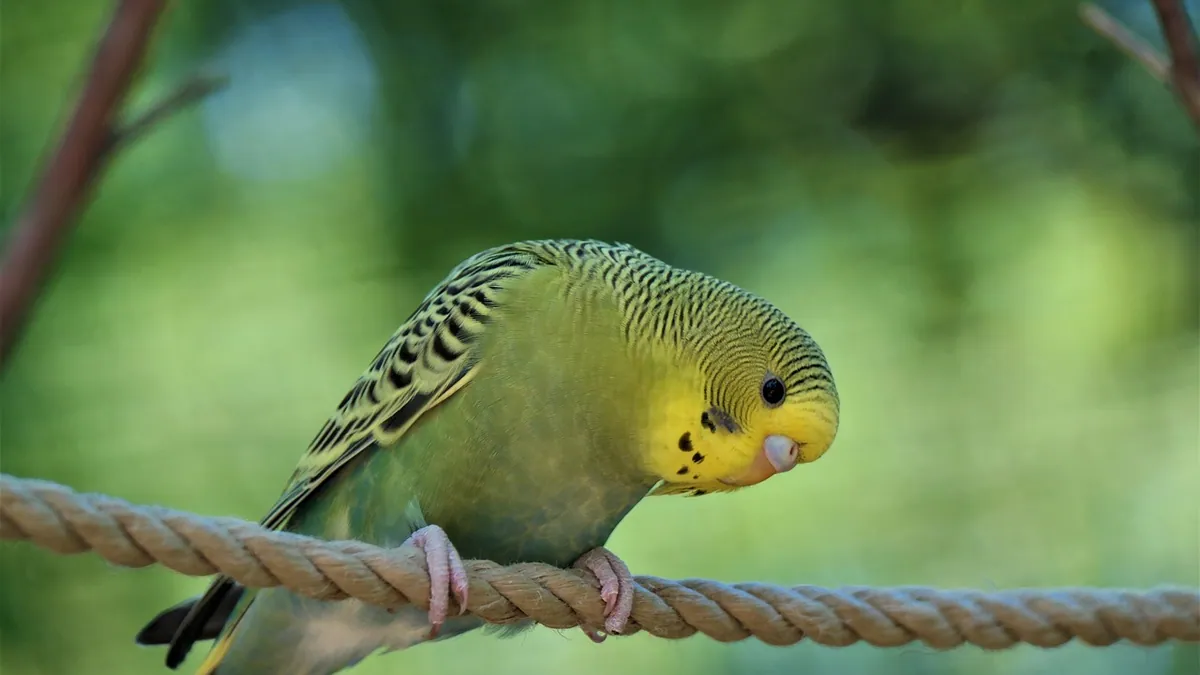
Budgies dance for many reasons, and most of the time it is normal. Head bobbing, tapping, and wing flicking are part of how budgies communicate, court a mate, and respond to sound. When you ask "do budgies dance," the honest answer is yes, and the trick is learning which moves are playful and which need a vet.
This article is educational and is not a substitute for veterinary diagnosis or treatment.
Quick Answer
- Head bobbing, tapping, and wing flicking are common budgie behaviors, and they often appear during courtship or when your bird hears rhythmic sound.
- Budgies can align their movements with a beat, which is a rare skill among animals [1].
- A mating dance usually includes head bobbing, wing flicking, and sometimes regurgitation or tail lifting toward another bird or a mirror.
- Sudden, one-sided, or constant movements, especially with head tilt, balance loss, or breathing changes, need a veterinary exam.
- Punishing a dancing budgie does not work and can damage your bond. Change the environment instead.
Why Do Budgies Dance? Normal Reasons First
Dancing in budgies is a mix of instinct, communication, and play. Most of the movements owners describe as dancing fall into a few normal categories.
Courtship and Mating Displays
Do budgies have a mating dance? Yes, and it is one of the most common reasons for head bobbing and wing flicking. A male budgie often bobs his head up and down, flicks his wings slightly away from his body, and taps his beak on perches or cage bars. He may also feed a female by regurgitating, or bob while walking toward her. Females sometimes bob too, though it is usually less dramatic.
These displays are tied to breeding hormones. Small parrots have deep-rooted reproductive behaviors that show up even in birds that never breed, including egg-care and courtship movements that appear in captive settings [2]. That is why a single budgie with a mirror or a favorite toy may still perform a full mating dance.
Rhythm and Sound
Budgies are one of the few animals known to coordinate their movements with a rhythmic pulse [1]. In one study, budgerigars did not show an overall preference for rhythmic over arrhythmic sound, but their responses varied with sex, which suggests that individual birds and males and females may react to music differently [1]. In practice, many owners notice their budgie bobbing along to a beat, a vacuum cleaner, or a song. This is real, and it is not a sign of illness.
Excitement and Play
A budgie that is happy to see you may bob, flick its wings, and chatter. Some birds do this when you walk in the room or when they get a favorite treat. This is social behavior, not a medical problem.
Movement on Perches and Cages
Budgies move differently depending on what they are standing on. Parrots prefer small, terminal branches and change their gait based on the size and angle of the surface [3]. A budgie shifting, tapping, and bobbing on a thin perch or the side of the cage may simply be adjusting its balance. When birds climb steep surfaces, they use their tail and neck in the gait cycle, and their movements slow down as the angle gets steeper [4]. If your budgie bobs while climbing the cage bars, that can be normal balance work.
Medical Causes to Rule Out
Not every repetitive movement is dancing. Some movements look similar but come from a health problem.
Neurologic Signs
Head bobbing that is constant, jerky, or paired with a head tilt, circling, or falling to one side is not courtship. These can be signs of neurologic disease, injury, or poisoning. A budgie that was fine yesterday and now cannot balance needs urgent care.
Respiratory and Cardiovascular Clues
A budgie that bobs its whole body with each breath, or bobs its tail up and down while resting, may be working hard to breathe. Tail bobbing during rest is a warning sign in birds. Learn more in Why Is My Bird Tail Bobbing? Breathing Warning Signs.
Hormonal and Reproductive Problems
A budgie that dances nonstop, lays eggs without a mate, or shows nesting behavior for weeks may have a hormonal problem. Chronic egg laying can drain calcium and lead to serious illness. A veterinarian can assess body condition and discuss options.
Pain, Skin, or Foot Problems
A budgie that taps its feet, shifts weight, or bobs while standing may have a sore foot, an injured leg, or a skin issue. Watch for favoring one foot, reluctance to perch, or changes in grip.
Toxins and Nutrition
Heavy metal poisoning, fumes from nonstick cookware, and poor diet can all cause abnormal movement. If your budgie shows sudden tremors, weakness, or seizures, treat it as an emergency.
When Does Budgie Dancing Become a Problem?
Dancing is a problem when it interferes with normal life. Ask yourself these questions.
- Is the behavior constant, even when the bird should be resting or eating?
- Is it directed at a mirror, toy, or cage mate to the point that your bird ignores food, sleep, or you?
- Has your budgie become aggressive, biting or lunging when you approach?
- Is your bird losing weight, plucking feathers, or laying eggs repeatedly?
- Are there other signs, such as tail bobbing at rest, sneezing, or a change in droppings?
If you answer yes to any of these, the behavior may be hormonal, behavioral, or medical. A single budgie with a mirror often shows intense courtship dancing because the mirror acts like a rival or mate that never leaves. Removing the mirror for a few weeks is a simple first step.
What to Do: Step by Step
1. Observe and Record
Write down when the dancing happens. Note the time of day, what is nearby (mirror, another bird, music, window), and how long it lasts. This record helps your veterinarian or behavior consultant.
2. Reduce Hormonal Triggers
Long daylight hours, warm temperatures, and rich food can push a budgie into breeding mode. Keep your bird on a consistent sleep schedule with 10 to 12 hours of dark, quiet time. Remove mirrors, huts, and any object your budgie treats as a mate. Rearrange the cage so it does not have a dark, nest-like corner.
3. Improve the Cage Setup
A well-planned cage reduces stress and gives your budgie room to move. Perch variety matters, since parrots select different branch sizes for different activities [3]. For setup ideas, see Budgie Cage.
4. Add Enrichment
Boredom can make repetitive behavior worse. Offer foraging toys, shreddable paper, safe branches, and rotating toys. Change toys every week or two. If your budgie dances at a mirror, replace the mirror with a foraging puzzle.
5. Teach Alternative Behaviors
When your budgie starts a courtship dance, redirect it. Ask for a simple behavior like stepping onto your hand, then reward with a treat or praise. Keep sessions short and calm. Do not reward the dancing itself with attention if the behavior is becoming a problem.
6. Support Social Needs
Budgies are flock birds. A single budgie may direct courtship at a mirror or toy. If you cannot add another budgie, increase daily interaction and out-of-cage time. If you do add a companion, plan a slow introduction and separate cages at first.
7. Check the Environment
Remove scented candles, aerosol sprays, and nonstick cookware fumes from the room. Keep the cage away from drafts and direct sun. Sudden changes in routine can trigger stress behaviors.
8. Talk to Your Vet About Diet
A seed-only diet is not balanced for budgies. Your veterinarian can recommend a diet plan based on your bird's weight and health. Do not change the diet abruptly without guidance.
What Not to Do
- Do not punish your budgie. Yelling, tapping the cage, or squirting water does not stop courtship behavior and can make your bird fearful.
- Do not assume every dance is hormonal. Rule out pain and illness first.
- Do not use mirrors to "keep your bird company" if the dancing is intense. The mirror can make hormonal behavior worse.
- Do not breed your budgies to "fix" the behavior. Breeding adds risk and does not solve the underlying trigger.
- Do not ignore weight loss or changes in droppings. These are medical signs, not behavior quirks.
- Do not rely on home remedies or supplements to stop dancing. There is no evidence they work, and some can be harmful.
When to Involve a Veterinarian or Behavior Professional
Call an avian veterinarian if the dancing is new, intense, or paired with any physical sign. A certified behavior professional can help if your veterinarian finds no medical cause and the behavior is affecting your bird's quality of life.
For general behavior questions about other pets in your home, our guides on Guinea Pig Behavior: Understanding Sounds and Actions and Understanding Rabbit Behavior: Body Language and Vocalizations explain how different species show stress and comfort. If you also have a dog, Why Is My Dog Pacing and Whining? covers repetitive behavior in dogs.
Limitations and When to Contact a Veterinarian
This article cannot tell you what is happening with your specific budgie. Only a veterinarian who examines your bird can do that.
Contact a veterinarian the same day if your budgie has a head tilt, cannot perch, falls, has one-sided weakness, or shows a sudden change in behavior.
Go to an emergency clinic now if your budgie is gasping, has a tail that bobs with every breath at rest, is bleeding, has seizures, or was exposed to fumes, heavy metals, or a toxin.
Schedule a routine visit if the dancing is new, has lasted more than a few weeks, or comes with weight loss, feather plucking, chronic egg laying, or changes in droppings.
Frequently Asked Questions
Is head bobbing always a mating dance?
No. Head bobbing can be courtship, excitement, balance work, or a neurologic sign. Context matters. A budgie that bobs while singing to a mirror is likely courting, while a budgie that bobs with a head tilt or cannot balance needs a vet.
Can female budgies dance?
Yes. Females bob, flick wings, and tap too, though their displays are often less intense than males. A female that dances and then lays eggs needs a veterinary check because chronic egg laying can be dangerous.
Does music make budgies dance?
Some budgies do respond to rhythm. Budgerigars are one of the few animals shown to align movements with a beat, and their responses can differ by sex [1]. Not every budgie cares about music, and a lack of dancing does not mean anything is wrong.
Should I remove the mirror from my budgie's cage?
If your budgie dances at the mirror for long periods, yes, remove it for a few weeks. Mirrors can trigger constant courtship and hormonal behavior in single budgies. Replace it with foraging toys and more time with you.
Can dancing be a sign of pain?
Yes, in some cases. Repetitive movement, foot tapping, or shifting weight can mean a budgie is uncomfortable. If dancing comes with limping, favoring one foot, or fluffed feathers, see a veterinarian.
How much sleep does a budgie need to reduce hormonal behavior?
Most budgies do well with 10 to 12 hours of dark, quiet sleep each night. A consistent schedule helps calm breeding hormones. If your bird still shows intense courtship behavior after a few weeks, talk to your veterinarian.
Related Articles
- Why Is My Bird Tail Bobbing? Breathing Warning Signs
- Budgie Cage
- Do Budgies Have a Mating Season? Breeding Cycles
- Do Budgies Mate for Life? Bonding Facts for Owners
- Do Parrots Dance? The Science of Bird Rhythm
References
- Sex Differences in Rhythmic Preferences in the Budgerigar (Melopsittacus undulatus): A Comparative Study with Humans. Frontiers in psychology, 2016.
- Presumptive relict reproductive behavior in small parrots. Brain, behavior and evolution, 1988.
- Positional Behavior of Introduced Monk Parakeets (Myiopsitta monachus) in an Urban Landscape. Animals : an open access journal from MDPI, 2022.
- What does climbing mean exactly? Assessing spatiotemporal gait characteristics of inclined locomotion in parrots. Journal of comparative physiology. A, Neuroethology, sensory, neural, and behavioral physiology, 2024.