Budgie Tail Bobbing: When It's Normal and When It's Serious
By Dr. Zubair Khalid, DVM, MS, PhD ·
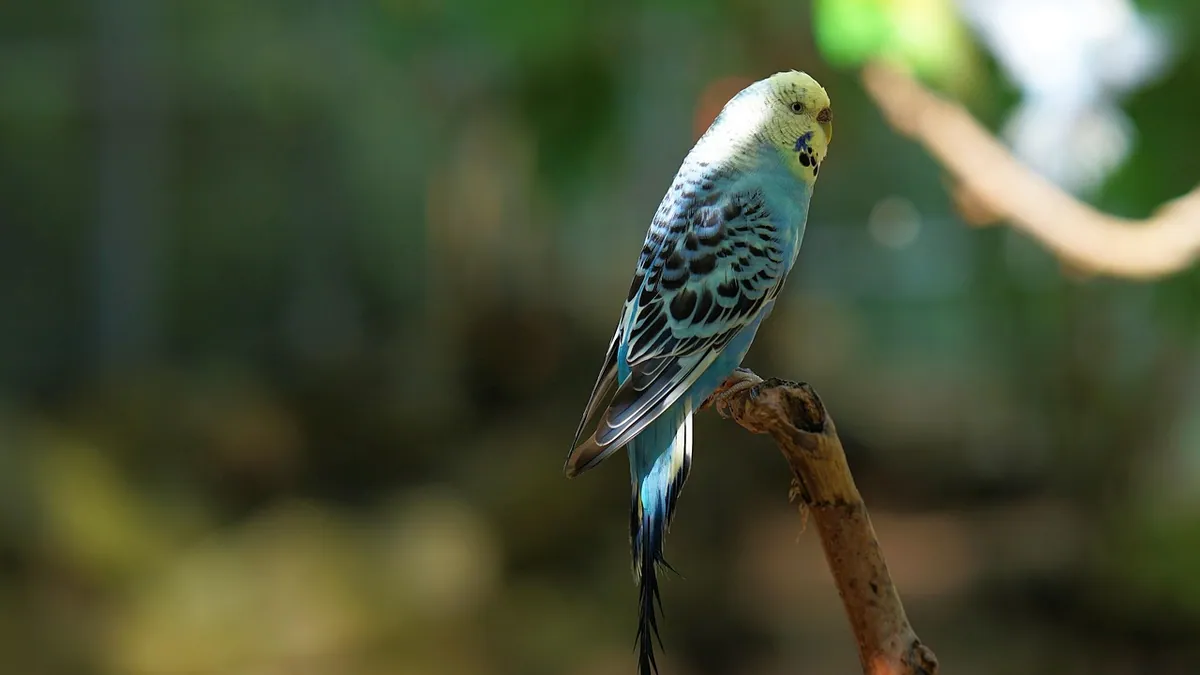
Budgie tail bobbing is a small up and down movement of the tail that often happens with normal breathing, but it can also be the first visible sign that a bird is working hard to breathe. The difference comes down to timing, effort, and what else you see. A tail that bobs gently while your budgie sings or climbs is usually nothing to worry about, while a tail that pumps steadily while the bird sits still is a reason to call a veterinarian.
This article is educational and is not a substitute for veterinary diagnosis or treatment.
Quick Answer
- Mild tail movement during activity, chirping, or warm weather is normal and matches your bird's breathing rate.
- Tail bobbing at rest, especially with a tail that flicks downward with each breath, points to labored breathing.
- Birds hide illness to avoid predators, so any unusual behavior can mean a problem and deserves prompt veterinary advice [1].
- A budgie that is huddled, weak, unresponsive, or lying on the cage bottom needs emergency care now [1].
- Do not wait a few days to see if tail bobbing improves. Respiratory signs in birds can worsen quickly.
What Budgie Tail Bobbing Looks Like and What Is Normal
The tail is a breathing gauge in small birds. When a budgie breathes easily, the belly and tail move just a little, and the rhythm stays slow and steady. You may notice a gentle bob when your bird is excited, singing, or hopping between perches. That is normal.
Normal tail movement usually comes with:
- A bright, alert bird that eats, drinks, and vocalizes.
- Smooth feathers held close to the body.
- A tail that moves only slightly, or only when the bird is active.
- No change in droppings, weight, or activity level.
Abnormal tail bobbing looks different. The tail pumps up and down with every breath, even when the bird is perched quietly. The movement is bigger, faster, or more forceful than usual. Some owners describe the whole rear end rocking with each breath. This is the pattern that points to respiratory distress, and it is the same sign owners notice in a sick cockatiel with tail bobbing.
If you are unsure which one you are seeing, watch your bird from across the room for two or three minutes while it rests. A calm bird with normal breathing will settle into a slow, quiet rhythm. A bird in trouble keeps pumping.
Why Is My Budgie Tail Bobbing? Main Causes
Tail bobbing happens because a bird is using its abdominal muscles to push air in and out. Anything that makes breathing harder can trigger it. In one report of herpetic pneumonia in parrots, tail bobbing appeared alongside ruffled feathers, open wings while breathing, depression, and loss of appetite [2]. A case report of aspergillosis in a budgerigar described abnormal tail movements along with difficult breathing, lethargy, poor appetite, ruffled feathers, and drowsiness [3].
| Cause | Typical clues | How urgent |
|---|---|---|
| Normal breathing or exertion | Tail moves gently, bird is active and eating, settles when resting | Not urgent, keep watching |
| Respiratory infection (bacterial, viral, fungal) | Tail bobbing at rest, open-mouth breathing, sneezing, nasal or eye discharge, ruffled feathers [2][3] | Same day, emergency if severe |
| Chlamydiosis (psittacosis) | Loss of appetite, depression, diarrhea, mild breathing difficulty [4] | Same day |
| Air sac or lung disease, including aspergillosis | Ongoing breathing effort, weight loss, voice change, poor response to rest [3] | Same day |
| Tracheal obstruction after intubation | Sudden severe breathing distress, often days after a procedure [5] | Emergency now |
| Obesity or poor body condition | Slow breathing effort, bird tires easily, low activity | Routine visit soon |
| Heat, stress, or recent exercise | Tail bobbing that stops once the bird cools down or rests | Not urgent unless it continues |
| Gastric yeast (Macrorhabdus) | Weight loss, undigested seed in droppings, vomiting, general decline [6] | Routine visit soon |
A sick bird often shows more than one sign. If your budgie is tail bobbing and also fluffed up, quiet, or off its food, treat it as a sick bird until a veterinarian says otherwise.
Budgie Head Bobbing Is Different
Head bobbing is not the same as tail bobbing. Budgies bob their heads to focus their vision, to beg for food, and during courtship. Baby budgies bob their heads when asking to be fed. Head bobbing alone is usually behavioral, not a breathing sign.
That said, a bird in respiratory distress may bob its whole body, including the head, as it struggles for air. If head bobbing comes with a pumping tail, open-mouth breathing, or a bird that sits still and puffed up, the picture changes. For a closer look at breathing signs across species, see Why Is My Bird Tail Bobbing? Breathing Warning Signs.
Red Flags That Make It an Emergency
Some signs mean you should stop reading and call a veterinarian or an emergency clinic right away.
- Your bird is huddled, weak, unresponsive, or lying on the cage bottom [1].
- Breathing is open-mouthed, noisy, or visibly straining.
- The tail pumps hard with every breath and does not stop at rest.
- Your bird is bleeding, especially from the wing, beak, or foot [1].
- There is discharge from any body opening, or droppings have changed clearly [1].
- Your bird has stopped eating or is losing weight.
- Your bird cannot perch and keeps slipping or falling.
Birds in the wild hide illness and injury to avoid predators, and pet birds do the same [1]. By the time a budgie looks obviously sick, the problem may already be advanced. That is why tail bobbing at rest matters so much. It can show up before the bird looks weak.
What You Can Safely Do at Home While You Wait
Your job at home is to reduce stress and get your bird to a veterinarian. Do not try to treat breathing problems on your own.
- Move the cage to a quiet, dim, warm room away from drafts, other pets, and loud noise.
- Keep the cage covered on three sides so your bird feels secure.
- Do not handle, chase, or towel your bird unless you must move it. Stress makes breathing worse.
- Keep the room temperature steady and comfortable. Avoid overheating.
- Offer food and water close to the perch so your bird does not have to climb far.
- Remove anything that could injure a weak bird, such as open water bowls deep enough to fall into.
- Note the breathing rate, how long the tail has been bobbing, and any other signs. Bring these notes to the visit.
Do not give any medication, including antibiotics or human drugs, without a veterinarian's direction. The dose for a bird depends on its weight, species, and diagnosis, and your veterinarian will calculate it for your pet.
If your bird is stable but you are not sure how serious this is, call your avian veterinarian and describe what you see. Many clinics will fit in a bird with breathing trouble the same day.
What Your Veterinarian Will Check and Test
A veterinarian will start with a full physical exam, including listening to the air sacs and lungs, checking the choana (the slit in the roof of the mouth), and weighing your bird. Weight is one of the most useful numbers in bird medicine because small changes matter.
Depending on what the exam shows, your veterinarian may recommend:
- A fecal exam to look for yeast such as Macrorhabdus ornithogaster, which is common in budgerigars and cockatiels with digestive and general signs [6].
- Blood work to check for anemia, infection, and organ function. In one parrot with chlamydiosis, testing showed anemia, a high white cell count, and other blood changes [4].
- PCR testing for Chlamydophila psittaci from a choanal or cloacal swab, which confirmed the diagnosis in that same case [4].
- Imaging such as X-rays to look at the lungs and air sacs. In the aspergillosis report, the contact bird had changes on X-rays and improved with antifungal treatment [3].
- Tracheoscopy or other airway evaluation if a blockage is suspected. Postintubation tracheal obstruction has been confirmed with tracheoscopy or radiology [5].
Treatment depends on the cause. A bacterial or chlamydial infection may need a long course of antibiotics, and in one reported case a parrot was hospitalized and treated for 45 days with weekly testing [4]. Fungal disease such as aspergillosis is hard to diagnose and treat, so prevention matters most [3]. Supportive care such as oxygen, fluids, and a warm quiet space may be needed first.
Prevention and Daily Monitoring
Most respiratory problems in budgies are easier to prevent than to treat.
- Keep the air clean. Avoid aerosol sprays, scented candles, smoke, and nonstick cookware fumes near birds.
- Feed a balanced diet with pellets, fresh vegetables, and limited seed. Poor nutrition weakens birds over time.
- Keep the cage clean and replace bedding often to reduce mold and dust.
- Quarantine any new bird for at least several weeks before introducing it to your flock.
- Schedule a checkup with an avian veterinarian when you first get a budgie, then yearly.
- Weigh your bird regularly on a small kitchen scale. A steady drop is an early warning.
- Watch resting breathing for a minute each day. You will learn what is normal for your bird.
A good setup helps too. A cage that is wide enough for short flights, with perches of different sizes and a quiet corner for sleep, supports normal activity and rest. For setup ideas, see Budgie Cage. Sleep matters as well, since birds often sleep when their owners do but also need naps [7]. Boredom and stress can affect a bird's overall health, so music, foraging toys, and daily time with you all help [7].
If your bird has a known breathing problem, ask your veterinarian how often to recheck. Some conditions need monitoring every few weeks, while others need only routine visits.
Limitations and When to Contact a Veterinarian
No article can tell you whether your specific budgie is in trouble. Individual cases need a veterinarian who can examine the bird, listen to its breathing, and run tests.
Call an emergency clinic now if your bird is open-mouth breathing, gasping, lying on the cage bottom, unresponsive, or bleeding [1]. These are emergencies, and transport should not wait.
Call your veterinarian the same day if you see tail bobbing at rest, a change in droppings, discharge from any opening, decreased activity, or a bird that has stopped eating [1]. Do not wait to see if it improves on its own.
Schedule a routine visit soon if the tail bobbing is mild, your bird is still eating and active, and you want a baseline exam. Bring notes on when you first noticed the sign and any changes in weight, appetite, or behavior.
Frequently Asked Questions
Is tail bobbing always a sign of illness in budgies?
No. Gentle tail movement during activity, singing, or warm weather is normal. The sign to worry about is a tail that pumps with every breath while your bird sits quietly at rest.
Can a sick cockatiel have tail bobbing too?
Yes. Tail bobbing is a breathing sign in many pet birds, not just budgies. A cockatiel with tail bobbing at rest, fluffed feathers, or open-mouth breathing needs the same prompt veterinary care.
What does it mean if my budgie's tail is bobbing but it still eats?
It can still mean trouble. Birds often keep eating early in an illness, so a good appetite does not rule out a respiratory problem. Watch for tail bobbing at rest and call your veterinarian.
Should I wait a few days to see if the tail bobbing stops?
No. Breathing problems in birds can get worse quickly, and birds hide illness until they are quite sick [1]. Call your veterinarian the same day you notice tail bobbing at rest.
Can stress or heat cause tail bobbing?
Yes. Exercise, warm rooms, and stress can make a bird breathe faster, and the tail may move with it. If the bobbing stops once your bird cools down and rests, it is less concerning. If it continues at rest, treat it as a medical sign.
Related Articles
- Why Is My Bird Tail Bobbing? Breathing Warning Signs
- Budgie Cage
- Conure Biting Behavior
- Budgie Respiratory Infection: Signs, Causes, and Urgent Care
- Why Is My Cockatiel Tail Bobbing or Head Bobbing?
- Why Is My Budgie Puffed Up? When Fluffing Means Illness
- Budgie Poop Color and Consistency: What's Normal and What's Not
References
- Injuries and Accidents of Pet Birds - Bird Owners. Merck Veterinary Manual.
- Herpetic Pneumonia in Indian Ringneck Parrots (Psittacula krameri): First Report of Novel Psittacid Alphaherpesvirus-5 Infection in Europe. Animals : an open access journal from MDPI, 2022.
- Diagnostic case report of aspergillosis (Aspergillus sp.) (Michelli, 1729) in budgerigar (Melopsittacus undulatus) (Shaw, 1805). Veterinary research communications, 2026.
- Molecular identification and successful treatment of Chlamydophila psittaci (genotype B) in a clinically affected Congo African grey parrot (Psittacus erithacus erithacus). Iranian journal of veterinary research, 2016.
- Review of 23 cases of postintubation tracheal obstructions in birds. Journal of zoo and wildlife medicine : official publication of the American Association of Zoo Veterinarians, 2013.
- Avian gastric yeast (macrorhabdosis) in cockatiel, budgerigar and grey parrot: a focus on the clinical signs, molecular detection and phylogenetic evaluation. Veterinary research forum : an international quarterly journal, 2023.
- Behavior of Pet Birds - Bird Owners. Merck Veterinary Manual.