Why Is My Budgie Rubbing Its Head on the Perch?
By Dr. Zubair Khalid, DVM, MS, PhD ·
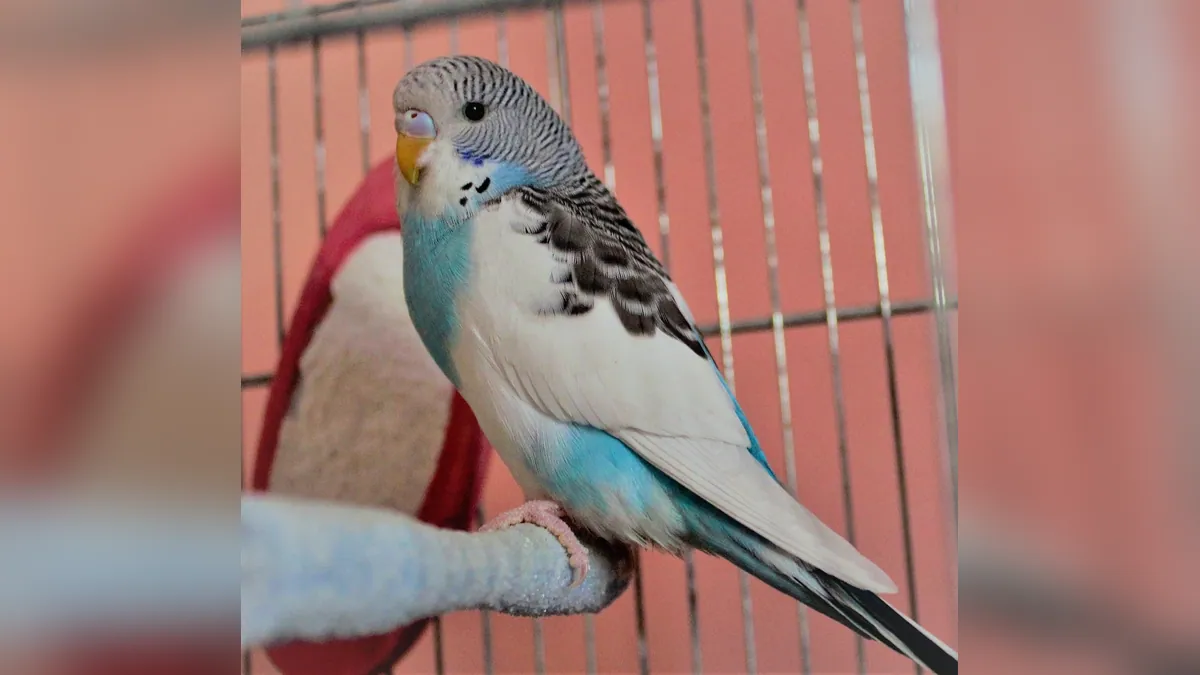
Budgies rub their heads and beaks on perches for many ordinary reasons, including cleaning the beak, scratching an itch, and marking territory. A budgie rubbing his head on his perch becomes a concern when the rubbing is constant, when the feathers or skin look damaged, or when the bird also loses its balance. This article is educational and is not a substitute for veterinary diagnosis or treatment.
Quick Answer
- Occasional head and beak wiping on a perch is normal grooming and scent-marking behavior in budgies.
- Frequent rubbing with head shaking, scratching, feather loss, or a crusty beak points toward skin or feather mites, irritation, or an infection.
- A budgie that rubs its head and then falls off the perch may have a balance, vision, or neurologic problem and needs a same-day veterinary visit.
- Chewing a wooden perch is separate from rubbing. Destructive chewing can mean boredom, a need for foraging, or a diet that is too low in fiber and minerals.
- Punishing the behavior does not work. Change the environment, add enrichment, and get a veterinary exam if symptoms persist.
Why Is My Budgie Rubbing His Head on His Perch?
Most head rubbing is part of a budgie's daily routine. Parrots are active, tactile birds that use their beaks and heads to explore and maintain their feathers. A quick wipe after eating, a scratch behind the eye, or a firm press of the beak against the wood can all look like the same motion to an owner.
Normal beak and head wiping
Budgies wipe their beaks to remove food residue, moisture, and dust. They also rub their heads along perches, cage bars, and toys to scratch hard-to-reach spots near the eye, ear opening, and nape. This is grooming, and it usually lasts a few seconds.
Parrots also use their environment for postural support and positioning. A study of Monk Parakeets in an urban setting recorded thousands of observations of how parrots grip, balance, and move on different perch sizes and surfaces [1]. Budgies are built to grip and lean on perches, so some contact between the head and the perch is expected during normal movement.
Scent marking and territorial rubbing
Budgies have a small preen gland near the base of the tail, and they spread oil through their feathers during preening. Rubbing the head and face on a favorite perch can deposit scent and leave a familiar mark. This is one reason a budgie may rub the same spot on the same perch over and over.
Chewing versus rubbing
Owners often search for "why is my budgie eating his wooden perch" when they see a bird gnawing on wood. Chewing and rubbing are different behaviors. Chewing is normal beak maintenance and exploration, but heavy destruction of a perch can signal boredom, a cage that is too small, or a lack of things to shred. Wood chewing is not the same as head rubbing, and it should be managed with safe chew toys and foraging opportunities.
Medical Causes to Rule Out
When rubbing becomes frequent or intense, the cause may be physical. A veterinarian can examine the skin, feathers, ears, eyes, and nares to look for these problems.
Mites and other external parasites
Feather mites, scaly face mites, and other external parasites cause itching and irritation. A budgie with mites may rub its head and beak on perches, cage bars, and toys, and it may scratch with its foot. Look for crusty buildup around the beak, cere, and eyes, and for damaged or missing feathers. Do not try to treat mites with over-the-counter products without a diagnosis, because some products are toxic to birds.
Skin and feather irritation
Dry air, poor diet, molting, and feather cysts can all make the skin itch. A budgie may rub its head to relieve the sensation. If the skin is red, flaky, or broken, or if the bird is pulling feathers, this needs veterinary attention. Feather picking and self-mutilation are recognized behavioral problems in psittacine birds, and they often start with a medical trigger that then becomes a habit [2].
Ear, eye, and respiratory problems
An ear infection, an eye infection, or a sinus problem can cause head rubbing and head shaking. Budgies with respiratory disease may also have discharge from the nares, sneezing, or tail bobbing. Any of these signs warrants an exam.
Nutritional problems
A seed-only diet is low in vitamin A and other nutrients. Vitamin A deficiency can cause dry, thickened skin and a weakened immune system, which makes infections and itching more likely. A veterinarian can recommend a balanced diet that includes pellets, vegetables, and limited seed.
When Head Rubbing Becomes a Problem
The line between normal and abnormal is about frequency, intensity, and what else is happening.
Signs the behavior is no longer normal
- The budgie rubs its head for long periods, many times a day.
- The rubbing is hard enough to damage the beak, cere, or skin.
- Feathers around the head, neck, or face are broken, frayed, or missing.
- The bird also scratches, shakes its head, or flicks its ears.
- The budgie stops eating, stops vocalizing, or sits fluffed on the cage floor.
Why is my budgie falling off its perch?
Falling off the perch is a red flag. A budgie that rubs its head and then loses its grip may have a neurologic problem, an inner ear problem, a vision problem, or weakness from an illness. It can also be a sign of a seizure, a toxin exposure, or a serious infection. A bird that falls repeatedly can injure its beak, wings, and legs, so remove high perches and pad the cage floor until you see a veterinarian.
Stress and behavioral rubbing
Psittacine birds are highly social, and they are prone to behavioral disorders when their environment does not meet their needs. Hand-rearing can create abnormal fixation on people, and this can lead to psychoreactive behavioral problems sometimes called cage neuroses [3]. Chronic stress also affects parrot behavior. In one study, golden conures showed self-mutilation behavior within about six hours after receiving an adrenocorticotropic hormone injection, and the behavior disappeared after two days [4]. That finding shows how strongly stress hormones can drive abnormal behavior in parrots.
Feather picking and self-mutilation are best understood as stereotypic behaviors or obsessive compulsive disorders, and they often result from high arousal with no appropriate outlet [2]. A budgie that rubs its head constantly may be redirecting that arousal onto its perch.
What to Do Step by Step
Step 1: Observe and record
Watch your budgie for a few days. Note when the rubbing happens (after eating, at night, during molting), how long it lasts, and whether the bird also scratches, shakes its head, or falls. Take a short video on your phone. This information helps your veterinarian.
Step 2: Check the perch and cage
Inspect perches for rough spots, splinters, or sharp edges. Replace worn wooden dowels with natural branch perches of different diameters so the feet and beak get varied grip. Clean perches and cage bars with a bird-safe cleaner, and rinse well.
Step 3: Improve the environment
- Provide a cage large enough for short flights and full wing stretches.
- Offer foraging toys, shreddable paper, and safe wood chews.
- Rotate toys every week to prevent boredom.
- Keep the cage away from drafts, kitchen fumes, and loud traffic.
- Give 10 to 12 hours of dark, quiet sleep each night.
Step 4: Review the diet
Offer a high-quality pellet base, dark leafy greens, and orange vegetables. Limit fatty seeds. Fresh water should be available at all times, and food and water dishes should be cleaned daily.
Step 5: Support normal grooming
Offer a shallow dish of room-temperature water for bathing, or mist the bird lightly with a clean spray bottle. Bathing softens dry skin and helps with molting itch.
Step 6: Address behavior with training
If a veterinarian rules out medical causes, use positive reinforcement. Reward calm behavior with treats, praise, or a favorite toy. Redirect the bird to a foraging toy when it starts rubbing. Keep sessions short and consistent.
What Not to Do
- Do not punish, flick, or yell at your budgie. Punishment increases fear and stress and can make the behavior worse.
- Do not apply human creams, oils, or lice products to your bird. Many are toxic to birds.
- Do not assume every head rub means mites. Over-treatment with the wrong product can harm your budgie.
- Do not ignore falling off the perch. It is not a behavior problem by itself, and it needs a medical workup.
- Do not rely on seed-only diets or vitamin supplements without veterinary guidance.
- Do not buy a second bird to "fix" the behavior without a plan. A new cage mate can add stress if introductions are not managed.
If you also keep dogs and notice head shaking or scratching in them, the causes are different, but the principle is the same: look for a medical trigger first. You can read more about head shaking in dogs in Why Does My Dog Keep Shaking Her Head and about body shaking in Why Is My Dog Shaking?. If your dog has a honking cough, see Why Does My Dog Have A Honking Cough.
When a Veterinarian or Certified Behavior Professional Should Be Involved
Call an avian veterinarian if the rubbing continues after you have improved the environment and diet. A board-certified avian veterinarian or a certified applied animal behaviorist can help when medical causes are ruled out but the behavior persists.
Behavior problems in parrots are challenging to treat, and birds respond best when treatment starts early [2]. A veterinarian may recommend a full physical exam, skin scrapings, fecal testing, blood work, and imaging. If a behavioral diagnosis is made, the plan usually combines removing the source of conflict, enriching the environment, using medication when appropriate, and counter-conditioning [2].
Limitations and When to Contact a Veterinarian
This article cannot diagnose your bird. Every budgie is an individual, and only a veterinarian who examines your bird can determine the cause of head rubbing or falling.
Contact a veterinarian the same day if your budgie:
- Falls off the perch more than once
- Tilts its head, circles, or has trouble standing
- Has a swollen, crusty, or bleeding beak, cere, or eye
- Stops eating or drinking
- Sits fluffed and quiet on the cage floor
- Has trouble breathing, sneezing, or discharge from the nares
Go to an emergency clinic now if your budgie:
- Has a seizure
- Cannot stand or use its legs
- Is bleeding
- Collapses or becomes unresponsive
- Was exposed to fumes, lead, zinc, or another toxin
Schedule a routine visit if the rubbing is frequent but your budgie is otherwise eating, drinking, and active. Bring your video, notes about the behavior, and a list of foods and toys in the cage.
Frequently Asked Questions
Is head rubbing on a perch always a sign of mites?
No. Most head rubbing is normal grooming, beak cleaning, or scratching. Mites are more likely when rubbing is constant and comes with crusty skin, feather loss, or intense scratching. A veterinarian can confirm mites with a skin sample.
Why does my budgie rub its head after eating?
Budgies wipe their beaks after meals to remove food and moisture. This is normal and usually lasts only a few seconds. If the wiping becomes frantic or the bird also shakes its head, have it checked.
Can stress cause my budgie to rub its head constantly?
Yes. Parrots are sensitive to chronic stress, and stress hormones can trigger abnormal behavior. One study found that self-mutilation appeared within hours of a hormone injection in golden conures [4]. A boring cage, poor sleep, and a poor diet all raise stress.
Should I remove the perch my budgie rubs on?
Not automatically. First check the perch for splinters, rough spots, or sharp edges. If the perch is damaged or dirty, replace it with a clean natural branch perch. If the bird rubs the same spot obsessively, that is a reason to see a veterinarian.
Can a budgie hurt itself by rubbing its head on the perch?
Yes, if the rubbing is hard or constant. The beak, cere, and skin around the eyes can become raw, and feathers can break. A damaged beak can make eating painful. Stop the behavior from continuing by getting a diagnosis and improving the cage setup.
Is falling off the perch related to head rubbing?
Sometimes. Both can point to the same underlying problem, such as an ear infection, weakness, or a neurologic issue. Falling is always a red flag and needs a same-day veterinary visit.
Related Articles
- Why Does My Budgie Dance? Head Bobbing and Mating Moves
- Budgie Tail Bobbing: When It's Normal and When It's Serious
- Why Is My Budgie Flapping Its Wings? 7 Reasons
References
- Positional Behavior of Introduced Monk Parakeets (Myiopsitta monachus) in an Urban Landscape. Animals : an open access journal from MDPI, 2022.
- Feather picking and self-mutilation in psittacine birds. The veterinary clinics of North America. Exotic animal practice, 2001.
- Behavior dissorders in psittacines. 1. Symptoms and causes. Tierarztliche Praxis, 1997.
- ACTH Stimulation Induced Self-Mutilation Behavior in the Golden Conure (Guaruba guarouba). Animals : an open access journal from MDPI, 2020.