How Fast Can Horses Run? Speed and Breeds
By Dr. Zubair Khalid, DVM, MS, PhD ·
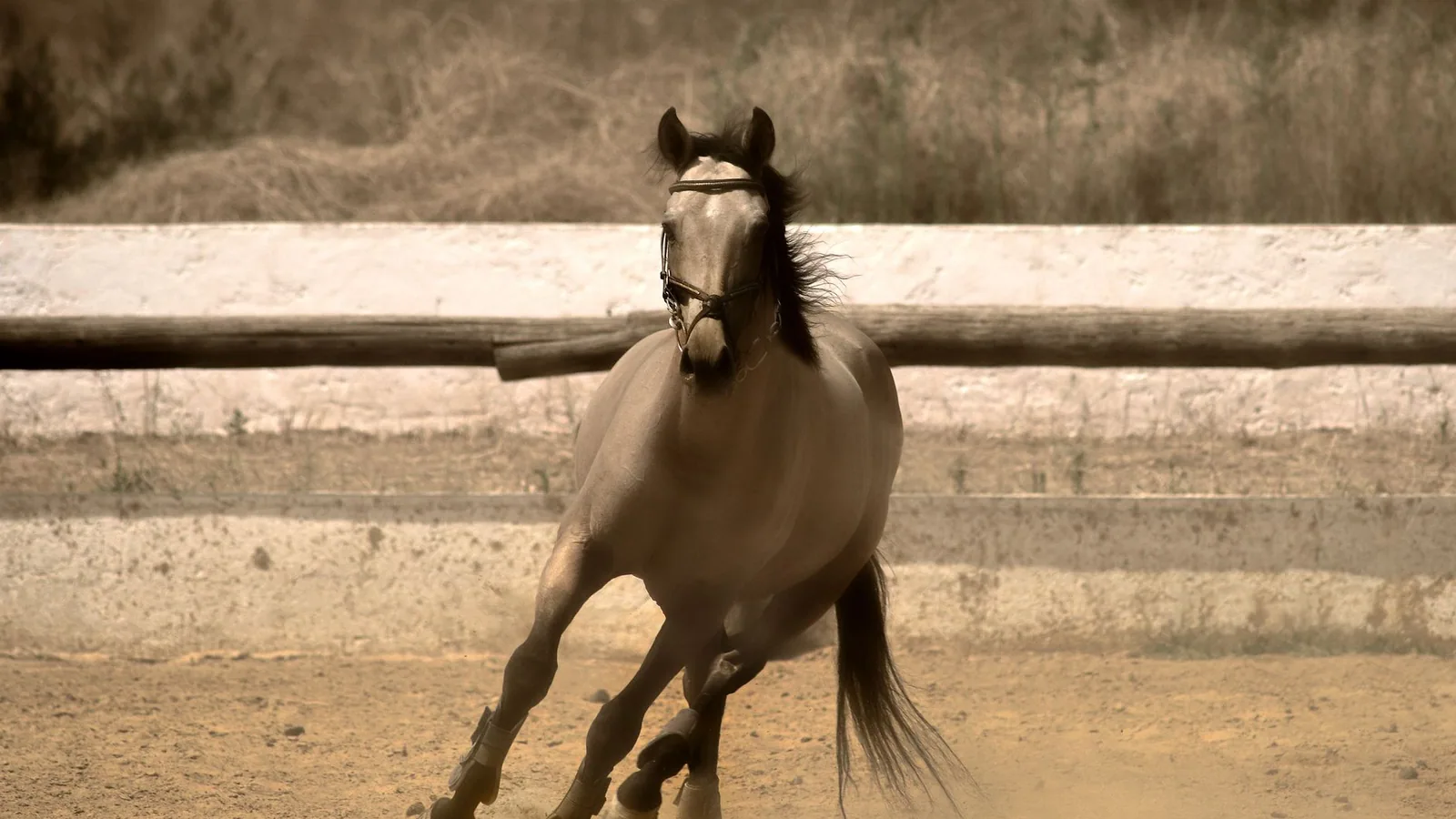
Elite racehorses can gallop at speeds exceeding 35 to 40 miles per hour (16 meters per second) during high-speed training and racing [1]. However, "how fast do horses run" is not a single number. A horse's top speed depends on its breed, genetics, training status, track conditions, and the distance of the race. While a Thoroughbred can sustain blistering speed over a mile, a Quarter Horse excels at short, explosive bursts. Understanding the physiology and biomechanics behind equine speed helps owners and trainers optimize performance while safeguarding welfare.
At a Glance: Key Facts about Horse Speed
| Factor | Details |
|---|---|
| Elite Galloping Speed | Around 35 to 40 mph (16 m/s) for trained Thoroughbreds [1][2]. |
| Sex Differences | Top running speeds are statistically similar between male and female horses, unlike the ~10% gap seen in human athletes [3]. |
| Key Breeds | Thoroughbreds (distance), Quarter Horses (short bursts), Turkmen horses (racing) [4][5]. |
| Genetic Influence | Heritability of average speed ranges from low to medium (0.004 to 0.347), meaning training and management are crucial [4][6]. |
| Critical Speed (CS) | The speed that can be maintained using aerobic energy. Speeds above CS rely on anaerobic energy and lead to fatigue [7]. |
| Lactate Clearance | After high-intensity exercise, blood lactate can exceed 19 mmol/L and may take over 110 minutes to return to baseline under passive recovery [8]. |
| Injury Risk | High-speed galloping, especially on curves and hard tracks, increases limb loading and the risk of musculoskeletal injury [1][5][9]. |
The Fundamentals of Equine Speed
A horse's ability to run fast is not just about muscle mass. It is a complex interplay of energy systems, muscle fiber recruitment, and biomechanical efficiency.
Aerobic vs. Anaerobic Energy
Horses, like all mammals, generate energy for movement through aerobic (with oxygen) and anaerobic (without oxygen) pathways. The aerobic system is sustainable and fuels the majority of a horse's running capacity. The anaerobic system provides rapid energy for bursts of speed but quickly leads to the accumulation of metabolic byproducts, notably lactate [10][7].
The speed-duration relationship is a core concept in exercise physiology. It defines the critical speed (CS), which is the theoretical maximal speed a horse can maintain using purely aerobic energy. Any speed above CS taps into a finite anaerobic reserve (often termed D'). Once this reserve is depleted, the horse must slow down or stop [7]. This explains why a horse cannot sprint at top speed for an entire race and why pacing is crucial [2].
Lactate Threshold and Clearance
During incremental exercise, blood lactate concentration ([La-]) rises. A common method to estimate a horse's performance capacity is measuring the velocity at which blood lactate reaches a specific concentration, such as 4 mmol/L (known as V4) [10].
However, research in teaching horses shows that the V4 threshold may not always accurately predict the maximal lactate steady state (MLSS), which is the highest exercise intensity where lactate production equals clearance. In one study, the average plasma [La-] at MLSS was only 1.50 ± 0.37 mM, significantly lower than the V4 threshold, suggesting that V4 may overestimate a horse's sustainable speed [10].
Lactate clearance is equally important. A study on Jeju horses found that after an 800-meter high-intensity barrier trial, blood lactate spiked to 19.75 ± 2.27 mmol/L. Under passive recovery conditions, it took an estimated 110 minutes for lactate to drop below 2 mmol/L. Notably, younger (2-year-old) and unraced horses had significantly slower lactate clearance, highlighting the importance of training adaptations [8].
Breed-Specific Speeds and Genetics
Breed is the strongest predictor of a horse's athletic potential. Centuries of selective breeding have produced distinct conformational and physiological traits tailored for speed.
Thoroughbreds and Quarter Horses
Thoroughbreds are the undisputed kings of distance racing, capable of sustaining speeds around 16 m/s (35.8 mph) during galloping work. Their skeletal structure has adapted for this purpose. Research comparing the third metacarpal (MCIII) bone shows that Thoroughbreds have higher antero-posterior bending strength relative to medio-lateral strength compared to Quarter Horses, reflecting the demands of high-speed, straight-line galloping [5].
Quarter Horses, on the other hand, are bred for short, explosive acceleration over quarter-mile distances. The same study noted that while diaphyseal strength relative to body size is similar, the different racing regimes of these breeds drive distinct structural adaptations in their limbs [5].
Turkmen and Yili Horses
Other breeds also have notable racing histories. The Turkmen horse, bred in Iran, has been formally studied for race performance traits. Analysis of over 10,000 official race records from 1,667 horses showed that race completion time and average speed are complex traits influenced by genetics and many non-genetic factors like jockey and race conditions [4].
Similarly, the Yili horse in China is a riding-type breed with a long history of independent breeding. A large-scale genetic study estimated the heritability of average speed at 0.347, which is considered medium to high, indicating strong potential for genetic selection for speed in this breed. Interestingly, racing time had a much lower heritability (0.054), suggesting that environmental and training factors play a larger role in determining actual race times than previously thought [6].
The Role of Genetics vs. Management
The heritability of racing performance varies widely between breeds. In Turkmen horses, heritability estimates for average speed were very low (0.004), while in Yili horses they were much higher (0.347) [4][6]. This discrepancy underscores a critical point for owners: genetics provide the ceiling, but training, nutrition, and management determine how close a horse gets to that ceiling. For most racing traits, the repeatability is high (0.341 to 0.604), meaning a horse's performance is consistent over time, but the low to medium heritability suggests that environmental factors are the primary drivers of success [4][6].
Biomechanics of High-Speed Galloping
The gallop is a four-beat gait that requires immense muscular coordination and skeletal strength. As speed increases, the horse's biomechanics change significantly.
Stride Length and Frequency
At a gallop, speed is the product of stride length (SL) and stride frequency (SF). Research using GPS/GNSS loggers on galloping horses shows that both stride length and frequency are highly sensitive to track conditions. At an average speed of 16.48 m/s, track hardness and moisture content significantly affected both parameters. The study found a difference in stride length of up to 0.186 meters between different track hardness and moisture conditions. This is critical because a decrease in stride length of just 0.10 meters over consecutive races is an established predictor of musculoskeletal injury [1].
Muscle Activity and Effort
Increasing speed demands exponentially more muscular work. A study on Thoroughbreds using surface electromyography (sEMG) measured muscle activity during cantering at 7, 10, and 13 m/s. The integrated EMG (iEMG) values, representing the total muscular effort, increased dramatically with speed. At 13 m/s compared to 7 m/s, muscle activation rose by anywhere from +15% to +134% depending on the specific muscle, with the triceps brachii and gluteus medius showing the largest increases [11].
Limb Loading and Track Surface
High-speed galloping places enormous loads on the distal limbs. The third metacarpal (MCIII) bone must withstand these forces, and all breeds have lower bone mineral density in the lateral versus medial condyle of the distal epiphysis, an inherent structural feature that influences fracture risk [5]. Track surface plays a major role in limb loading. Dirt track preparation, including harrowing depth and water content, directly influences stride mechanics. Harder and drier tracks were associated with significant changes in stride frequency and length, which could increase the risk of injury [1]. Furthermore, galloping on curves imposes centripetal acceleration on the horse. Studies show that the duty factor (the fraction of the stride that a limb is in contact with the ground) decreases by 0.61% for every 1 m/s² increase in centripetal acceleration, altering limb lean angles and increasing the load on the inside limbs [9].
Kinematics of the Proximal Limb
While much research focuses on the distal limb, the proximal limb (scapula and hip) is the engine of locomotion. Advanced imaging studies using biplanar high-speed fluoroscopic kinematography in a pony revealed that the scapula rotates around an instantaneous center of rotation rather than a fixed pivot point. The range of motion (ROM) of the scapula was 27.6° during walking and 23.3° during trotting. This detailed understanding of skeletal movement is vital for diagnosing gait abnormalities and improving training methods [12].
Endurance and the Speed-Duration Relationship
Top speed is only one part of the equation. A horse's ability to sustain a high speed over a distance is defined by its aerobic capacity and its "critical speed" (CS). The speed-duration relationship is a mathematical model that describes the hyperbolic curve between running speed and the time to exhaustion [7].
In practical terms, a horse can run indefinitely at speeds below its CS because the energy demand is met aerobically. Above CS, the horse relies on anaerobic energy reserves (D'), which are finite. Once D' is depleted, the horse must slow down to below CS to recover. This principle applies across the animal kingdom, from humans and horses to crabs and salamanders, but the specific parameters (CS and D') vary by species. Horses have a relatively large D', allowing them to sprint powerfully, but they cannot sustain it [7].
Training can raise a horse's CS. A study on untrained five-year-old horses raised on pasture showed that their endurance variables (v4 and v180) developed significantly within one year of training, and approached the levels of six-year-olds raised under the same conditions [13]. This demonstrates that even genetically similar horses can improve their sustainable speed with appropriate conditioning.
Training the Equine Athlete
Training strategies significantly influence a horse's speed and performance. The ultimate goal is to raise the critical speed (CS) and improve the efficiency of energy utilization.
High-Intensity Training
High-intensity interval training is a cornerstone of equine conditioning. However, the environment in which this training occurs can modulate its effects. A randomized crossover study investigated the impact of four weeks of high-intensity training in moderate hypoxia (H16, FiO2 = 16%), mild hypoxia (H18, FiO2 = 18%), and normoxia (N21, FiO2 = 21%). Results showed that run time during an incremental exercise test increased significantly more in the H16 and H18 groups compared to the normoxic group. Speed at V̇O2max was increased significantly only in the H16 group. This suggests that training in moderate hypoxia can improve performance and running economy more effectively than normoxic training [14].
The Role of Nutrition and Gut Health
Emerging research highlights the role of the large intestine microbiota in equine athletic performance. A pilot study on French trotters found that maximal running speed (MRS) was positively correlated with the efficiency of the fecal microbiota in degrading cellulose in vitro (r = 0.51). Horses with more efficient fibrolytic microbiota tended to have higher maximal speeds. This suggests that a diet supporting a healthy hindgut microbiome, particularly the ability to convert dietary fiber into short-chain fatty acids (SCFAs), may contribute to exercise capacity [15].
Race Strategy and Pacing
Even with optimal training, how a horse runs a race is a matter of strategy. Mathematical models of Thoroughbred racing demonstrate that horses do not run the entire race at top speed. Instead, they regulate their speed to manage anaerobic energy expenditure, oxygen uptake, and propulsive force. The optimal speed profile depends on the track's topography, including altitude changes and bends. A horse that starts too fast may deplete its anaerobic reserves (D') before the finish line, while a horse that starts too slow may leave too much energy unused [2].
Limitations and When to Contact a Veterinarian
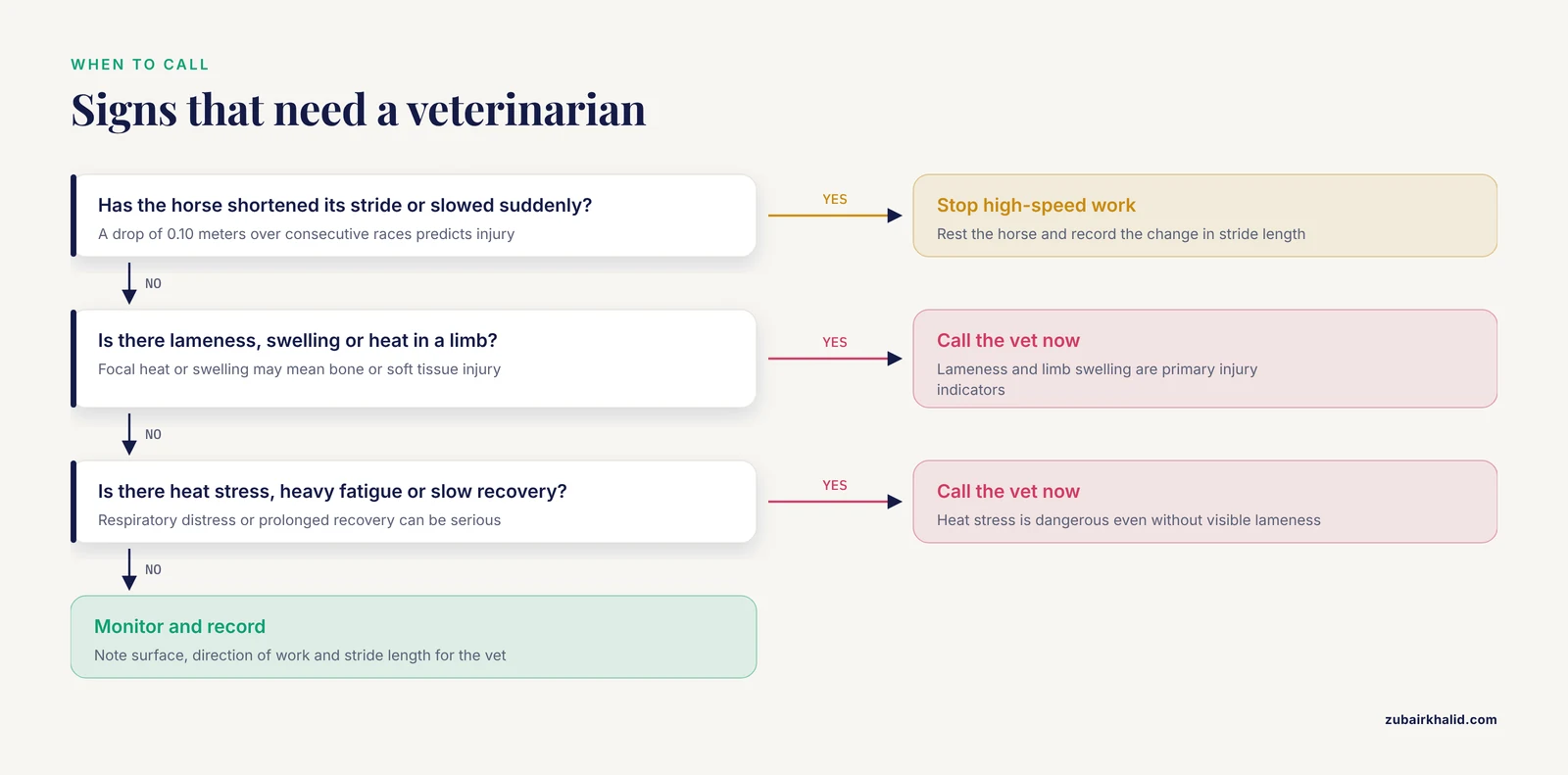
While high-speed exercise is the goal for performance horses, it carries inherent risks. The dramatic increases in muscle activity and limb loading at high speeds predispose horses to fatigue and musculoskeletal injuries [11][1]. Research shows that decreases in stride length over consecutive races can be an early indicator of injury risk [1]. Similarly, the structural properties of the MCIII bone in racehorses, while adapted for speed, operate at a morphological extreme with a high risk of fracture [5]. Galloping on curves and hard tracks further compounds this risk by altering limb kinematics and increasing loads on specific limbs [9].
You should contact a veterinarian if you observe any of the following in your horse:
- Lameness or an altered gait, which is a primary indicator of musculoskeletal injury [1][9].
- Sudden poor performance or a decrease in stride length during training or racing [1].
- Heat stress or excessive fatigue, which can be dangerous even if the horse is not visibly lame.
- Abnormal swelling or heat in the limbs, which could indicate bone stress or soft tissue injury [5].
- Respiratory distress or prolonged recovery times after exercise, which may signal an underlying cardiovascular or respiratory issue.
Early intervention is critical. Musculoskeletal injuries in racehorses are often preceded by subtle changes in stride parameters, so paying close attention to your horse's movement can help catch problems before they become severe [1][5][9]. Always consult with a veterinarian before starting a new training program or if you have any concerns about your horse's soundness or health.
Clinical Reasoning: From Subtle Stride Changes to Injury
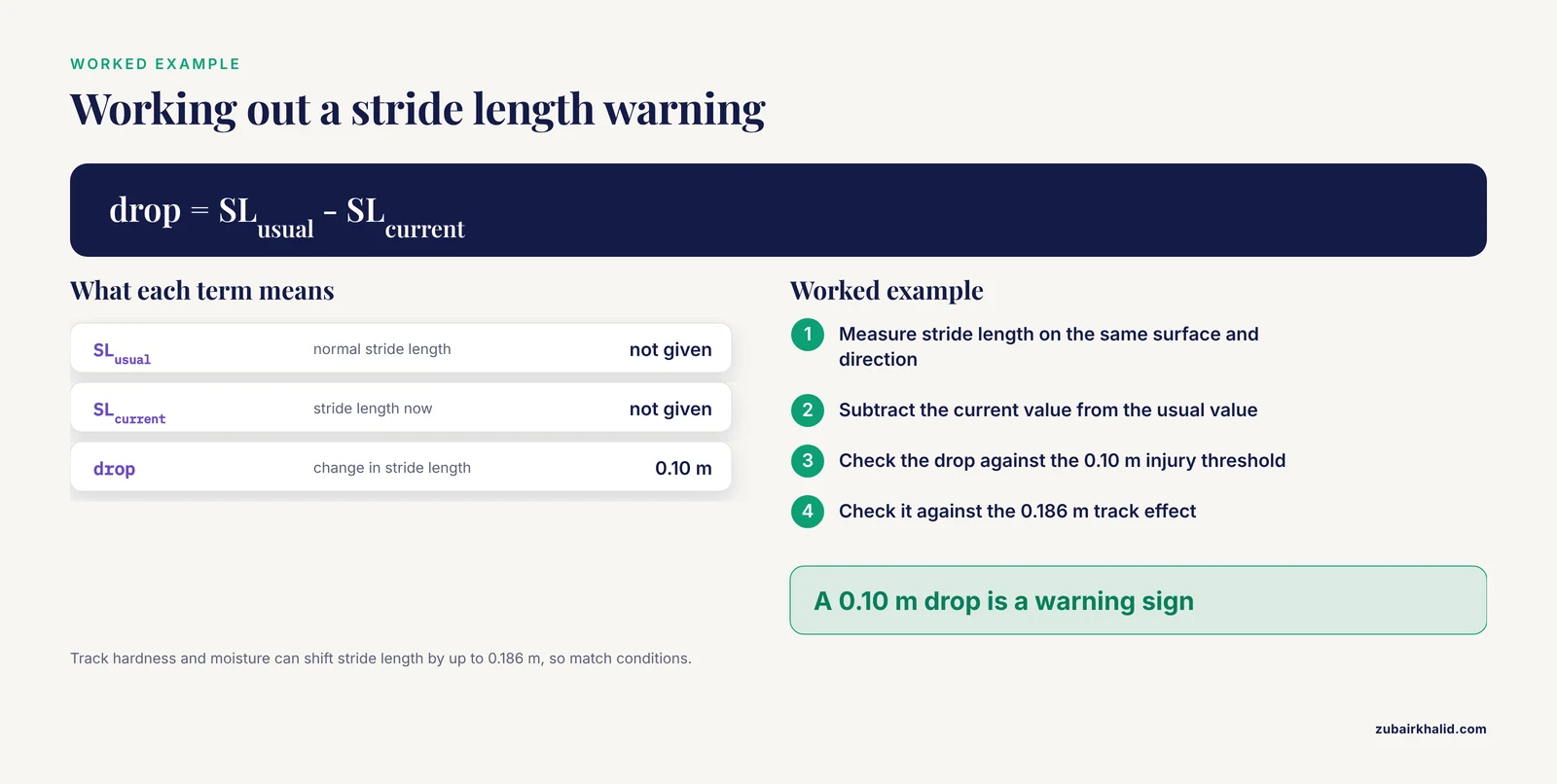
The transition from sound performance to clinical lameness is rarely sudden. In many cases, the earliest warning signs are embedded in the biomechanical data that owners and trainers can observe with careful attention. Research on galloping Thoroughbreds has shown that a decrease in stride length of just 0.10 meters over consecutive races is an established predictor of musculoskeletal injury [1]. This means that a horse who is "just a little off" or "not striding out like usual" may be displaying the first objective signal of bone or soft tissue stress.
The clinical reasoning process begins with recognizing that stride length and stride frequency are not fixed traits. They respond dynamically to track hardness and moisture content, with differences of up to 0.186 meters reported between surface conditions [1]. When an owner reports a sudden drop in performance, the veterinarian must distinguish between a surface-related change and a pathological one. A horse that shortens its stride on a hard, dry track may be protecting an injured limb, whereas the same horse on a well-cushioned surface may stride freely. This distinction is central to the diagnostic plan.
Galloping on curves adds another layer of complexity. The duty factor, which is the fraction of the stride that a limb spends in contact with the ground, decreases by 0.61% for every 1 m/s² increase in centripetal acceleration [9]. This shifts load onto the inside limbs and alters lean angles. Clinically, horses that show lameness only when worked on a circle or on a curved track may be experiencing asymmetric loading that is not apparent during straight-line exercise. Owners should therefore report not only whether the horse is lame, but also the specific conditions under which the lameness appears.
Diagnostic Workflow for the Performance Horse
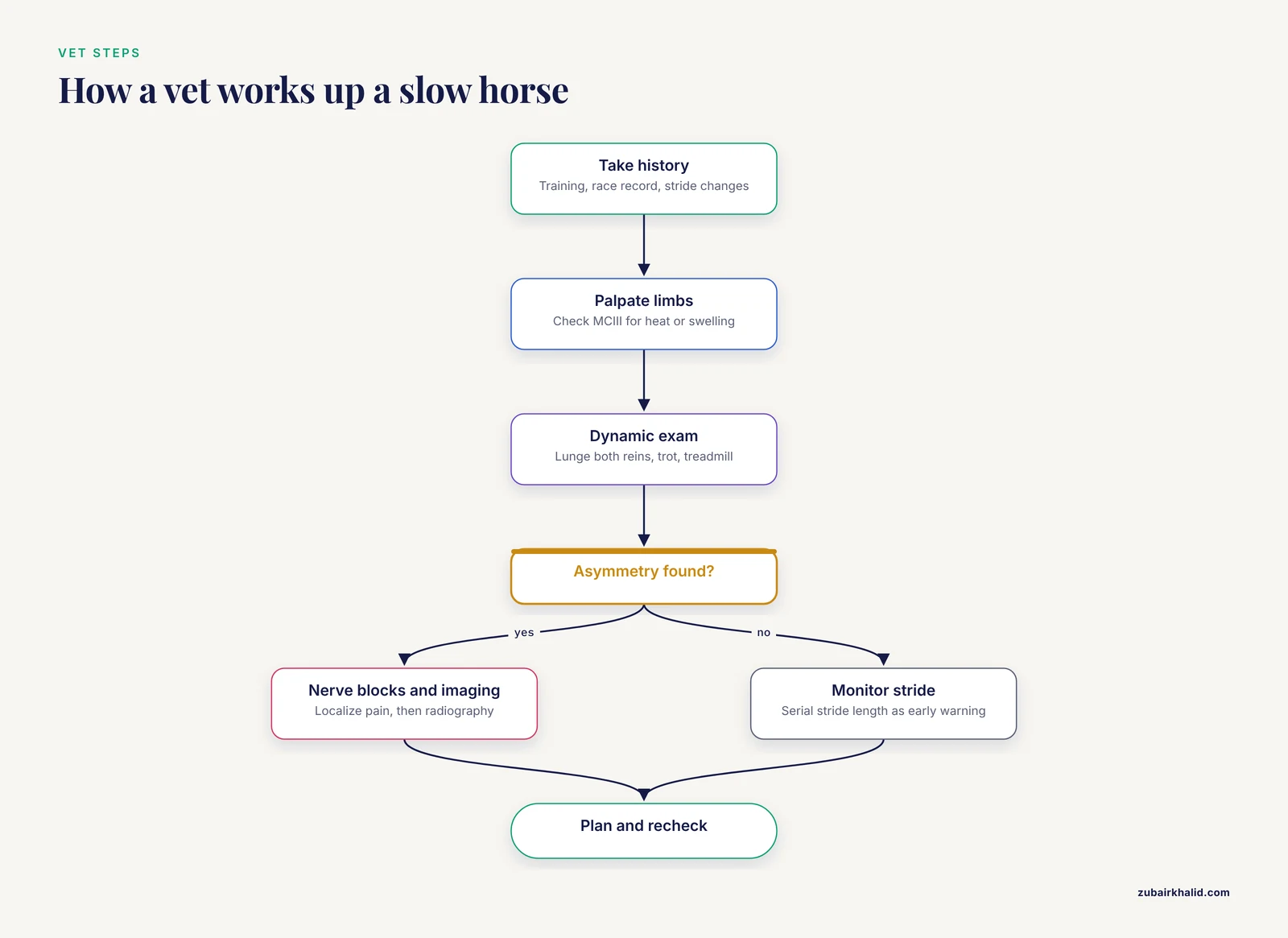
When a performance horse presents with reduced speed or suspected injury, the veterinarian follows a structured diagnostic workflow. The first step is a detailed history, including the horse's recent training schedule, race or competition record, and any observed changes in stride length or willingness to work [1]. Owners should be prepared to describe the exact surface conditions, the direction of work, and whether the problem appears during warm-up, peak exercise, or recovery.
The physical examination begins at rest, with palpation of the distal limbs. The third metacarpal bone is a common site of stress-related injury in racehorses, and its structural properties reflect a morphological extreme that carries an inherent fracture risk [5]. Palpation may reveal focal heat, swelling, or pain, but many early bone injuries are not palpable. The examination then moves to dynamic assessment, which may include lunging on both reins, straight-line trotting, and, when available, high-speed treadmill evaluation. Observing the horse at speed is essential because muscle activation and limb loading increase dramatically with velocity, and subtle gait asymmetries often only appear under these conditions [11].
Imaging is guided by the clinical findings. The veterinarian may recommend diagnostic analgesia to localize the source of pain, followed by radiography or advanced imaging of the affected region. The goal is to identify injuries before they progress to catastrophic failure. Because stride length changes can precede overt lameness by days or weeks, serial monitoring of stride parameters is a valuable adjunct to the clinical examination [1].
Evidence Limitations in Equine Speed Research
Owners and trainers should interpret published speed data with an understanding of the limitations of the underlying research. Many studies in equine exercise physiology are conducted on small numbers of animals, specific breeds, or under controlled conditions that do not fully replicate racing. For example, the finding that the maximal lactate steady state occurs at a plasma lactate concentration of only 1.50 ± 0.37 mM, well below the commonly used V4 threshold, came from a study of teaching horses [10]. This population may not represent elite athletes, and the findings suggest that V4 may overestimate sustainable speed in some individuals.
Heritability estimates for speed also vary enormously between breeds. In Turkmen horses, the heritability of average speed was estimated at 0.004, while in Yili horses it reached 0.347 [4][6]. This wide range reflects differences in breed history, population structure, and the statistical models used. It also underscores that genetic potential is only one component of performance. The low heritability in Turkmen horses suggests that non-genetic factors, including jockey skill, training, and race conditions, dominate the outcome [4].
Other studies are explicitly preliminary. The research linking fecal microbiota efficiency to maximal running speed in French trotters was a pilot study, and the reported correlation of 0.51 does not establish a causal relationship [15]. Similarly, the detailed kinematic analysis of the proximal limb was performed on a single pony, which limits its generalizability to horses of different sizes and conformations [12]. These limitations do not invalidate the findings, but they do mean that individual horses may respond differently than the research averages suggest.
Prevention and Injury Risk Mitigation
Prevention of high-speed injury begins with an understanding of the interaction between the horse and its environment. Track surface is one of the most modifiable risk factors. Research has demonstrated that track hardness and moisture content significantly affect stride length and frequency, with stride length varying by up to 0.186 meters across surface conditions [1]. A track that is too hard increases impact loading on the distal limbs, while a track that is too deep increases muscular effort and fatigue. Regular monitoring of track conditions and consistent maintenance are therefore essential components of injury prevention.
Training progression is equally important. A study of untrained five-year-old horses raised on pasture showed that endurance variables developed significantly within one year of training, approaching the levels of six-year-olds raised under the same conditions [13]. This finding supports a gradual, structured approach to conditioning rather than abrupt increases in speed or distance. Horses that are asked to gallop at high speed before their aerobic capacity has developed are at greater risk of fatigue and injury.
Curve management is a less obvious but clinically relevant consideration. Because the duty factor decreases as centripetal acceleration increases, horses working on tight circles or banked tracks experience asymmetric limb loading [9]. Trainers can reduce this risk by varying the direction of work, avoiding excessive circle work on hard surfaces, and ensuring that horses are adequately conditioned for the specific demands of their discipline. Serial monitoring of stride length over consecutive races can also serve as an early warning system, allowing intervention before a minor issue becomes a major injury [1].
Prognosis and Return to Performance
The prognosis for a horse returning to high-speed work after injury depends on the nature and severity of the injury, the speed of diagnosis, and the quality of rehabilitation. One of the key physiological considerations is lactate clearance. After an 800-meter high-intensity effort, blood lactate in Jeju horses reached 19.75 ± 2.27 mmol/L and required an estimated 110 minutes to return below 2 mmol/L under passive recovery [8]. This has direct implications for rehabilitation: horses should not be re-exercised intensively until lactate has cleared, and active recovery may be preferable to passive standing.
The speed-duration relationship provides a framework for designing return-to-work programs. Speeds below critical speed can be maintained using aerobic energy and are sustainable, while speeds above critical speed draw on a finite anaerobic reserve [7]. Rehabilitation should therefore begin with aerobic exercise below critical speed and gradually introduce short intervals above it as fitness improves. The finding that untrained horses can develop significant endurance capacity within one year of training offers hope for horses returning from extended rest [13]. However, the rate of progression must be individualized, and horses that have been injured may require longer recovery periods than young, healthy horses.
Prognosis is also influenced by the specific structure involved. The third metacarpal bone in racehorses operates at a morphological extreme, and stress injuries in this region carry a guarded prognosis for return to full racing soundness [5]. Early detection through stride monitoring and prompt veterinary evaluation improves the chances of a successful outcome.
Special Populations: Young, Aged, and Untrained Horses
Not all horses respond to exercise in the same way, and age and training status are important determinants of both performance and injury risk. A study of Jeju horses found that two-year-old and unraced horses had significantly slower lactate clearance after high-intensity exercise compared to older, trained horses [8]. This means that young horses are not simply smaller versions of mature athletes; their metabolic systems are still adapting to the demands of speed work. Trainers should therefore limit the frequency and intensity of high-speed efforts in young horses and allow longer recovery periods.
Untrained horses, even those that are mature, also show distinct physiological responses. Five-year-old horses raised on pasture had underdeveloped endurance variables at the start of a training study, but improved significantly within one year [13]. This demonstrates that the equine cardiovascular and muscular systems retain plasticity into adulthood. However, it also means that a horse coming from a pasture environment should not be expected to perform at the level of a horse that has been in consistent training.
Sex differences in top speed are minimal in elite horses, unlike the approximately 10% gap observed in human athletes [3]. This has practical implications for breeding and racing decisions: fillies and mares can be expected to achieve speeds comparable to colts and geldings, and training programs should not be modified based on sex alone. Aged horses, while not specifically addressed in the cited studies, are likely to have slower recovery times and a higher prevalence of accumulated joint and bone stress, warranting more conservative training loads.
Monitoring Training Load and Recognizing Overtraining
Overtraining is a common but underrecognized cause of poor performance in equine athletes. The physiological markers described in the research provide a framework for monitoring training load. Muscle activation increases dramatically with speed, with integrated EMG values rising by 15% to 134% as canter speed increased from 7 to 13 m/s in one study [11]. This exponential relationship between speed and muscular effort means that small increases in training speed can produce large increases in fatigue. Trainers should therefore progress speed incrementally rather than in large jumps.
Blood lactate measurement is a practical tool for assessing whether a horse is training at an appropriate intensity. After high-intensity exercise, lactate can exceed 19 mmol/L and may take over 110 minutes to clear under passive recovery [8]. If a horse's lactate remains elevated for an unusually long time, or if the horse appears dull and stiff at the start of the next training session, the training load may be too high. Younger and unraced horses are particularly vulnerable, as their lactate clearance is slower [8].
The speed-duration relationship offers another monitoring framework. Speeds above critical speed draw on a finite anaerobic reserve, and repeated training above critical speed without adequate recovery can deplete this reserve and lead to chronic fatigue [7]. A horse that is consistently unable to reach its previous speeds, or that shows a declining stride length over consecutive workouts, may be overreached [1]. In such cases, a period of reduced intensity or active recovery is preferable to pushing through the fatigue.
Preparing for the Veterinary Visit: What Owners Should Document
A well-prepared owner can significantly improve the efficiency and accuracy of the veterinary examination. Before the veterinarian arrives, the owner should document the onset and progression of the problem. Key questions to answer include: When did the change in performance first appear? Was it sudden or gradual? Did it follow a specific workout, race, or change in track conditions? The existing research shows that stride length changes can be subtle and may precede overt lameness, so any observation of a shortened stride or reluctance to stretch out should be reported [1].
Video recordings are invaluable. Footage of the horse trotting and cantering on a straight line, as well as on a circle in both directions, allows the veterinarian to assess gait asymmetries that may not be visible during a brief examination. Owners should also record the horse on the specific surface where the problem occurs, since track hardness and moisture content directly influence stride mechanics [1]. If the horse is only lame on curved tracks, this should be noted, as centripetal acceleration alters limb loading and may reproduce the lameness [9].
Finally, owners should bring a complete training and health history, including recent shoeing, farrier work, medication, and any previous injuries. The structural properties of the third metacarpal bone and other distal limb elements are shaped by cumulative loading, and a history of prior stress injuries is relevant to the current presentation [5]. The more information the owner can provide, the more targeted the diagnostic plan can be.
Related Guides
- Draft Horse Breeds for Farm Work: Selection Criteria and Comparison: Draft horse breed comparison for size and work suitability
- American Paint Horse: Breed Traits and Care: Paint Horse traits and care for breed comparisons
- Appaloosa Breed: Horse Care and Health Guide: Appaloosa health and care for breed-specific context
- Horse Shelter and Run-In Shed Design for Small Farms: Shelter design background for horse owners and small farms
- Horse Run-In Shed Requirements: How to Choose: Run-in shed choices for horse housing and small properties
- Point-of-Care Ultrasound (POCUS) in Veterinary Emergency Triage: Protocols and Interpretation: Veterinary point-of-care ultrasound for emergency triage imaging
Frequently Asked Questions
What is the average speed of a horse?
The average speed of a horse depends heavily on the breed and the activity. A horse at a gallop can reach speeds of around 35 to 40 mph, while an average horse at a canter might go 10 to 17 mph.
Are male horses faster than female horses?
In elite Thoroughbreds and greyhounds, the upper limit of performance does not appear to differ between sexes. This is in contrast to humans, where elite males outperform females by about 10% [3].
What is the fastest horse breed?
Thoroughbreds are generally considered the fastest breed for sustained distance racing, capable of galloping at speeds around 16 m/s (35.8 mph). Quarter Horses are faster over very short distances (a quarter mile) but lack the endurance of Thoroughbreds.
How long can a horse maintain its top speed?
Horses cannot maintain their absolute top speed for long due to the finite anaerobic energy reserve (D'). They rely on the speed-duration relationship, where speeds above their critical speed (CS) can only be held for a limited time before fatigue forces them to slow down [7].
What is the critical speed (CS) in horses?
Critical speed (CS) is the theoretical maximal running speed that a horse can maintain indefinitely using aerobic energy production. Speeds above CS require anaerobic energy and result in fatigue.
Does track surface affect how fast a horse runs?
Yes. Track hardness and moisture content significantly affect stride length and frequency. Changes in track conditions can alter stride length by up to 0.186 meters, which can impact speed and increase the risk of injury [1].
How does training improve a horse's speed?
Training, particularly high-intensity interval training, improves aerobic capacity (V̇O2max) and running economy. Training in moderate hypoxic conditions has been shown to improve performance more effectively than normoxic training [14]. Even untrained horses show significant improvements in endurance with consistent conditioning [13].
What is lactate threshold and why is it important?
Lactate threshold is the exercise intensity at which blood lactate concentration begins to rise rapidly. It is often estimated using the V4 velocity (the speed at which blood lactate reaches 4 mmol/L). While V4 is a common benchmark, it may not always accurately predict the maximal lactate steady state (MLSS) in individual horses [10].
This article is educational and is not a substitute for veterinary diagnosis or treatment.
Sources
- Dirt Track Surface Preparation and Associated Differences in Speed, Stride Length, and Stride Frequency in Galloping Horses.
- Optimal speed in Thoroughbred horse racing.
- Sex-based limits to running speed in the human, horse and dog: The role of sexual dimorphisms.
- Bayesian estimation of genetic parameters and comparison of statistical models for race performance traits in the Turkmen horse.
- Locomotion on the edge: Structural properties of the third metacarpal in Thoroughbred and Quarter Horse racehorses and feral Assateague Island ponies.
- Estimation of genetic parameters of body conformation and racing performance traits in Yili horses.
- Invited review: The speed-duration relationship across the animal kingdom.
- Quantitative modeling reveals prolonged lactate clearance in young and unraced Jeju horses following high-intensity exercise under passive recovery conditions.
- The effect of curve running on distal limb kinematics in the Thoroughbred racehorse.
- Evaluating plasma lactate running speed derived parameters for predicting maximal lactate steady state in teaching horses.
- Effect of speed and leading or trailing limbs on surface muscle activities during canter in Thoroughbred horses.
- Equine upper limb kinematics: Comparison between biplanar high-speed fluoroscopic kinematography and optoelectronic motion capture in one Mini Shetland Pony.
- Measurement of Endurance of Untrained Five-Year-Old and Six-Year-Old Horses Raised in Multi-age Herds on Pasture.
- Four weeks of high-intensity training in moderate, but not mild hypoxia improves performance and running economy more than normoxic training in horses.
- Fibrolytic efficiency of the large intestine microbiota may benefit running speed in French trotters: A pilot study.