Why Horses Wear Horseshoes: Purpose and Care
By Dr. Zubair Khalid, DVM, MS, PhD ·
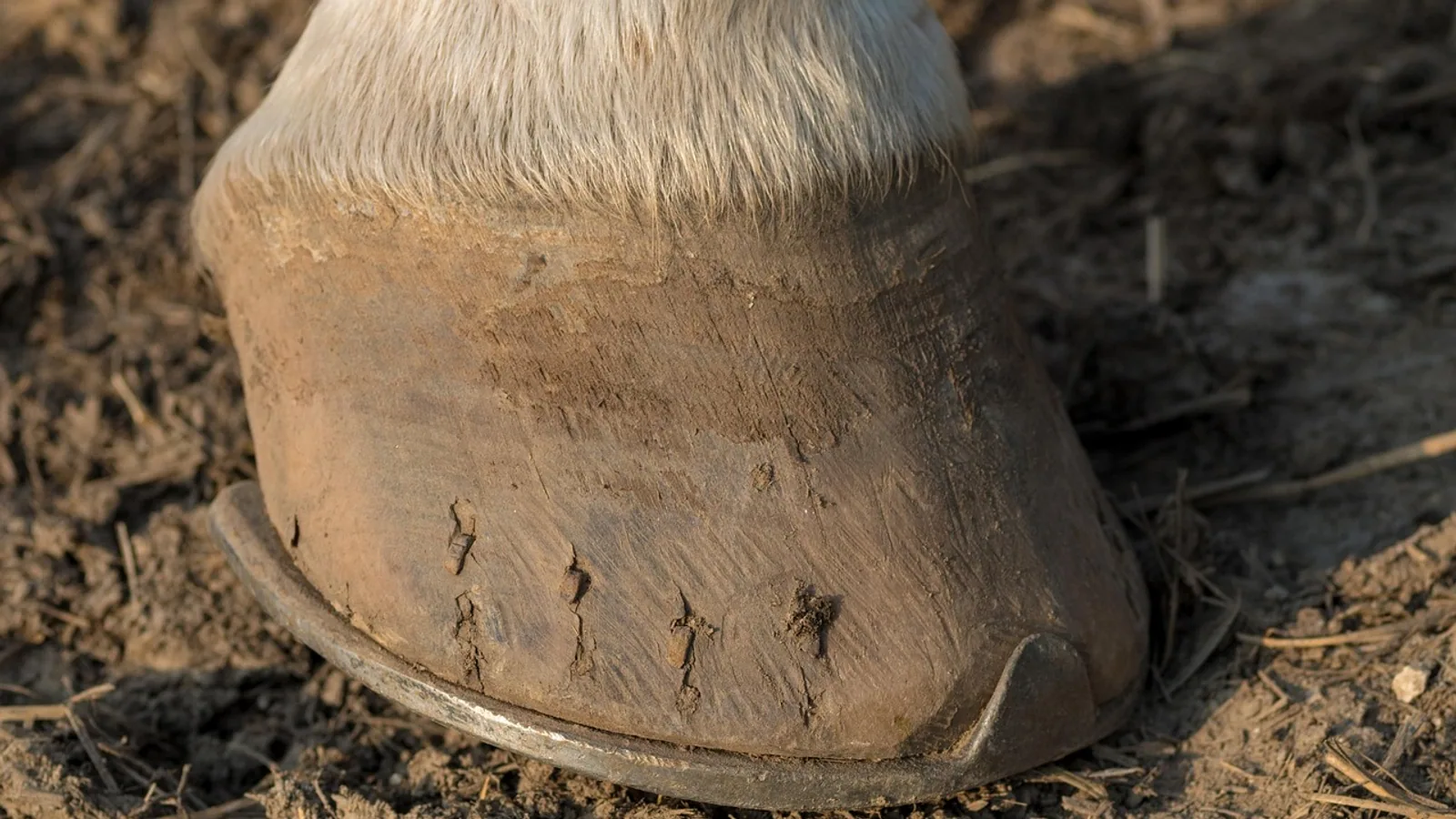
Horses wear horseshoes to protect the hoof wall from excessive wear on hard or rocky surfaces and to support specific therapeutic goals, such as redistributing load in a laminitic foot or easing breakover in a horse with navicular syndrome. Not every horse needs shoes. Many horses with strong hooves, light workloads, and forgiving footing do better barefoot, and the decision should be made for the individual horse rather than as a default.
This article explains the anatomy that makes shoeing possible, the conditions where shoes help, the farrier schedule most horses follow, and the signs that a shoe is doing harm rather than good.
This article is educational and is not a substitute for veterinary diagnosis or treatment.
Basic Hoof Anatomy: What a Horseshoe Actually Protects
The equine foot is a weight-bearing structure built around a bone suspended inside a keratin capsule. Understanding six structures explains almost everything about why shoes are nailed where they are and why poor shoeing causes lameness.
The hoof wall
The hoof wall is the hard, pigmented outer layer that meets the ground. It grows downward from the coronary band at roughly the rate of a fingernail and is the part of the foot that a horseshoe contacts. The wall is thickest at the toe and thinner at the quarters and heels. Because the wall has no nerve endings in its outer layers, farriers can drive nails into it without causing pain, provided the nails stay in the insensitive zone and do not reach the sensitive tissue underneath.
The sole
The sole is the concave underside of the foot inside the wall. It is a protective layer over the sensitive structures beneath and normally does not bear full weight on flat ground. A shoe is designed so the sole stays slightly off the ground, which is why a shoe that presses into the sole is a problem rather than a feature.
The frog
The frog is the rubbery, V-shaped structure at the back of the sole. It contributes to shock absorption, traction, and circulation within the foot. Frog support is a deliberate therapeutic goal in some shoeing systems. Adjustable heart-bar shoes, for example, are designed to provide frog support in laminitic feet [1].
The white line
The white line is the visible junction between the sole and the inner edge of the hoof wall. It is a landmark farriers use when placing nails and trimming the sole. Nails driven too far inward, past the white line, risk entering sensitive tissue.
The laminae
The laminae are the microscopic interlocking sheets that suspend the distal phalanx inside the hoof capsule. When these attachments fail, the bone can rotate or sink within the capsule. That failure is the defining event of laminitis, and it is why laminitis is a disease of the foot rather than simply of the hoof wall [1].
The distal phalanx (P3)
The distal phalanx, also called P3 or the coffin bone, is the bone at the bottom of the digit. It sits inside the hoof capsule, suspended by the laminae and connected to the deep digital flexor tendon. Its orientation relative to the hoof wall, sometimes called the hoof-pastern axis, is a central concern in both trimming and therapeutic shoeing. In a study of 59 Thoroughbred racehorses, a broken-backward hoof-pastern axis was identified in 100% of horses by radiographic methods, and hoof distortions including underrun heels (97%), low heel angles (85%), and low palmar angles (87%) were highly prevalent [2]. That study highlights how common imbalanced feet are in high-performance populations and why trimming and shoeing practices matter for injury prevention.
Why Horses Wear Horseshoes: The Core Purposes
Shoeing exists for two broad reasons. The first is protection. The second is therapy.
Protection from wear
Domestic horses often work on surfaces their hooves did not evolve to handle. Asphalt, packed gravel, arena sand mixed with stone, and frozen ground all accelerate wear of the hoof wall faster than it grows. A shoe made of steel or aluminum takes that wear instead of the wall. The shoe also spreads load across a wider area than the wall alone.
Shoes change how the foot interacts with the ground. A study using hoof-mounted inertial sensors in ten sound horses found that steel shoes increased landing duration compared with barefoot and reinforced each horse's individual landing location at the trot. The same study noted that trimming and shoeing have less impact on landing pattern than commonly assumed in practice, but that steel shoes do change the sliding properties of the hoof on firm ground and add weight [3].
Therapy for specific conditions
Therapeutic shoeing is prescribed for a diagnosis, not for general wear. Examples include:
- Laminitis. Shoeing and trimming in laminitis aim to restore normal spatial relationships among the distal phalanx, hoof wall, and sole, and to reestablish normal digital perfusion and hoof growth [1]. Frog support through adjustable heart-bar shoes is one described approach [1]. In severe refractory cases, deep digital flexor tenotomy combined with customized Steward clog shoeing has been reported, with one retrospective study of 7 horses and 8 ponies showing 6-month survival of 100% in horses and 88% in ponies, and 24-month survival of 43% in horses and 50% in ponies [4]. A separate review of 871 laminitis cases found that 8% underwent deep digital flexor tenotomy, and horses that had the procedure showed a 20-fold improvement at 3 to 6 months, though candidacy for surgery is selective and outcomes in the literature remain inconsistent [5]. These are specialist decisions made with a veterinarian.
- Navicular syndrome. This chronic, progressive condition affects the navicular bone and bursa, the deep digital flexor tendon, and associated soft tissues. Nonsurgical management consists of rest, hoof balance, corrective trimming and shoeing, and medical therapy [6]. Shoeing modifications are one component of a broader plan.
- Hoof cracks. In 54 horses referred for hoof cracks, deep or complicated quarter cracks were the most common type diagnosed. Poor conformation and abnormal hoof shape were the most important causes, while injury to the coronary band was less common. Effective treatment included corrective shoeing, removing horn from the weight-bearing surface and from the crack, and immobilizing the crack borders. Even with treatment, the recurrence rate was 20% [7].
What shoes do not do
Shoes do not strengthen the hoof, cure laminitis, or replace correct trimming. A study of 18 clinically sound Warmblood horses shod with standard flat shoes found that horses compensate for hoof growth across an 8-week shoeing interval through small changes in the angles of the distal limb segments, including increased dorsal angle at the fetlock, rather than by changing their basic movement pattern [8]. In other words, the horse adapts to the shoe, not the other way around. That adaptation has limits, and pushing past them is where problems start.
When Shoeing Helps and When Barefoot May Be Better
The honest answer is that shoeing is a tool matched to a horse, a workload, and a surface.
Situations where shoeing is commonly appropriate
- Horses working regularly on hard, abrasive, or rocky ground where wall wear outpaces growth.
- Horses with thin soles, shelly walls, or a history of sole bruising on work surfaces.
- Horses in therapeutic programs for laminitis, navicular syndrome, or hoof cracks [6][7][1].
- Horses in disciplines where a specific shoe modification changes breakover or traction, such as rolled-toe or palmarly placed shoes.
Situations where barefoot may be better
- Horses with strong, well-conformed hooves on soft or forgiving footing.
- Horses in light work or on pasture turnout with minimal abrasive surface contact.
- Horses whose feet are healthier without nails, particularly where previous shoeing caused wall damage.
- Young horses and horses in rest periods, provided the hoof can tolerate the surface.
Shoeing versus barefoot: a practical comparison
| Factor | Shod | Barefoot |
|---|---|---|
| Wall wear on hard or rocky ground | Protected by the shoe | Wear depends on growth rate and surface |
| Traction | Depends on shoe type and caulks | Natural, varies with surface and frog contact |
| Landing and breakover | Steel shoes increase landing duration and can lengthen breakover [3][9] | Shorter landing duration in sound horses [3] |
| Therapeutic use | Central to laminitis, navicular, and crack management [6][7][1] | Limited therapeutic role for these conditions |
| Risk of nail-related damage | Present, especially with poor fit | Absent |
| Suitability | Workload and surface dependent | Hoof quality and workload dependent |
The choice is not ideological. It is a clinical and practical decision that should be revisited as the horse's work, age, and hoof quality change.
How a Farrier Puts a Shoe On: Nails, Placement, and the Insensitive Wall
A correctly placed nail enters the hoof wall in the insensitive zone and exits the wall lower down without contacting sensitive tissue. The white line is the inner boundary farriers respect. Nails placed too far inward can puncture sensitive laminae or the sole, which causes pain and creates a tract for infection.
The shoe itself is shaped to the trimmed foot, not the other way around. The farrier trims the sole and wall to balance the foot, then fits the shoe so it contacts the wall and provides the intended support. For therapeutic work, the shape and placement of the shoe change the mechanics of the foot. A rolled toe, for example, eases the process of hoof unrollment and lowers peak loading of the distal limb during breakover in sound horses [10]. Heel elevation significantly decreases breakover duration in walk and trot, and a plain steel shoe increases breakover duration in walk, an effect that can be reversed by a rolled toe or by placing the shoe palmarly [9]. These are the mechanical reasons therapeutic shoeing prescriptions look the way they do.
Farrier Schedule: How Often Horses Need Shoes Reset
Most shod horses need the farrier every 4 to 8 weeks. The interval is driven by hoof growth, which continues regardless of the shoe, and by how quickly the shoe wears or loosens. During an 8-week shoeing interval, hoof morphology changes measurably, and horses compensate through small adjustments in the angles of the distal limb segments [8]. That compensation is why an overdue reset is not just a cosmetic issue.
Signs that the interval should be shortened include:
- The shoe has grown forward past the toe or the heel has grown beyond the shoe.
- Clenches have risen above the hoof wall.
- The horse has started to feel uneven or short-strided.
- The shoe is loose, sprung, or partially displaced.
A veterinarian and farrier working together is the standard for complex cases. One educational resource on hoof protection and shoeing emphasized that good cooperation between farrier, veterinarian, and horse owner is an important prerequisite for optimal support of the horse's shoeing and hoof health [11].
Signs of Poor Fit and Shoeing-Related Lameness
Shoeing problems show up in the shoe, the hoof, and the horse's movement. Watch for these signs.
Risen clenches
Clenches are the folded nail ends on the outside of the hoof wall. When they rise, the shoe is no longer held tightly and the wall is being stressed. Risen clenches often mean the foot has grown out and the shoe is due for reset or removal.
Loose or sprung shoes
A shoe that moves under the foot can shear the wall, pull nails, and create sole pressure. A sprung shoe has bent out of shape and no longer matches the foot.
Sole pressure
A shoe that presses into the sole causes bruising and lameness. This can happen when the shoe is too small, when the sole has dropped, or when the foot has changed shape between visits.
Lameness or foot soreness after shoeing or trimming
Owner-reported lameness or foot soreness after shoeing or trimming has been identified as a factor associated with laminitis risk in a case-control study of 1,010 horses and ponies in Great Britain [12]. That does not mean every sore horse has laminitis. It means that soreness after farriery deserves attention rather than being dismissed as normal.
Changes in gait or landing
Horses with hoof distortions may show altered landing and breakover. In a study of 59 Thoroughbred racehorses, radiographic evaluation detected high prevalences of low heel angles (85%), underrun heels (97%), low palmar angles (87%), and negative palmar angles (56%), and the authors called for improved trimming and shoeing practices to prevent injuries and protect welfare [2].
Wall cracks and flares
Flares of the dorsal hoof wall were the most prevalent hoof deformity in a study of 133 Icelandic competition horses, and longer dorsal hoof wall length was associated with toe flares, a broken hoof-pastern axis, and asymmetry of quarter wall heights [13]. These are structural findings a farrier and veterinarian can assess together.
The Decision Path for a Horse with Foot Problems
The following flow shows how a foot problem moves from observation to action.
flowchart TD
    A[Notice foot problem] --> B{Is the horse lame}
    B -->|Yes| C[Contact veterinarian]
    B -->|No| D{Is the shoe loose or risen}
    D -->|Yes| E[Contact farrier]
    D -->|No| F{Is the horse sore after trimming}
    F -->|Yes| C
    F -->|No| G[Monitor and document]
    C --> H[Diagnosis and imaging]
    H --> I[Therapeutic shoeing plan]
    I --> J[Farrier and vet collaborate]
    E --> J
    G --> K[Recheck at next visit]
    J --> K
What Owners Should Watch Between Farrier Visits
Daily or near-daily observation catches most shoeing problems early.
- Pick out the feet and look at the shoe, clenches, and sole.
- Note any heat, digital pulse, or sensitivity to hoof testers.
- Watch the horse move on a hard surface in a straight line and on a circle.
- Record the date of each shoeing and reset.
- Photograph the feet from the front, side, and sole so changes are visible over time.
For horses with chronic laminitis, home care is a substantial part of management. A clinical review of home care for chronic laminitis notes that this aspect of treatment is rarely discussed in the literature even though most practitioners have at least one chronic laminitis case being managed at home, and that much of the knowledge comes from experience with the medical, ethical, financial, and emotional challenges these cases present [14]. Owners of laminitic horses should expect an ongoing partnership with their veterinarian and farrier rather than a one-time fix.
Common Myths About Horseshoes
Myth: All horses need shoes. Many horses do not. Shoeing is indicated for wear protection or therapy, not as a universal requirement.
Myth: Shoes make hooves stronger. Shoes protect the wall from wear. They do not strengthen the hoof itself, and nail holes are a form of wall damage.
Myth: A horse that is sore after shoeing just needs time. Soreness after shoeing or trimming is a recognized risk factor for laminitis in epidemiologic data [12] and should be evaluated.
Myth: Any farrier can do therapeutic shoeing. Therapeutic shoeing for laminitis, navicular syndrome, and complicated cracks requires coordination between veterinarian and farrier [11][6][7].
Myth: Barefoot is always healthier. Barefoot can be the better choice for many horses, but it is not automatically better for a horse with laminitis, navicular syndrome, or a hoof crack that needs mechanical support.
What Is Still Uncertain
The evidence on shoeing is thinner than most owners assume. A study of ten sound horses found that trimming and shoeing have less impact on landing pattern than assumed in practice, even though steel shoes do change sliding properties and weight [3]. Another study of ten sound horses found that trimming had no significant influence on breakover duration, while heel elevation and shoe type did [9]. These are small studies, and they show that some traditional assumptions about shoeing mechanics are not well supported.
The relationship between shoeing and laminitis risk is also complex. In a prospective web-based cohort study of 1,070 horses and ponies in Great Britain, 123 owner-recognized or veterinary-diagnosed episodes of active laminitis were reported, and multivariable modeling identified 16 risk or protective factors [15]. Laminitis is multifactorial, and shoeing is one factor among many, including weight gain, season, access to grass, box rest, endocrinopathic disease, and time since last anthelmintic treatment [12]. No single shoeing decision determines a horse's outcome.
Limitations and When to Contact a Veterinarian
This article is educational and is not a substitute for veterinary diagnosis or treatment. Individual horses need individual assessment, and no article can replace an examination of your horse's feet.
Contact a veterinarian promptly if your horse shows any of the following:
- Lameness that does not improve within a day or two, or that worsens.
- Heat in the feet, a bounding digital pulse, or reluctance to move.
- A horse that is rocking back on its heels or lying down more than usual, which can indicate laminitis.
- Soreness after shoeing or trimming that persists beyond a short adjustment period [12].
- A loose, sprung, or partially displaced shoe, especially with a nail protruding.
- A crack that is bleeding, discharging, or extending toward the coronary band [7].
- Any penetrating wound to the sole or frog.
For chronic laminitis, navicular syndrome, or complicated hoof cracks, ask your veterinarian to coordinate with your farrier. That collaboration is the standard for complex hoof care [11].
Frequently Asked Questions
Do all horses need horseshoes?
No. Many horses with strong hooves, light workloads, and soft footing do well barefoot. Shoes are used for wear protection on hard or rocky ground and for therapeutic goals such as laminitis, navicular syndrome, and hoof cracks.
How often should horses be shod or reset?
Most shod horses need the farrier every 4 to 8 weeks. The exact interval depends on hoof growth, shoe wear, and how the horse is working.
Where do farriers put the nails?
Nails go into the insensitive hoof wall, staying outside the white line. Nails placed too far inward can reach sensitive tissue and cause pain.
Can horseshoes cause lameness?
Yes, if the fit is poor. Risen clenches, loose shoes, sole pressure, and wall damage can all cause lameness. Soreness after shoeing or trimming is a recognized risk factor for laminitis in epidemiologic data [12].
Does shoeing help laminitis?
Shoeing and trimming are part of laminitis management. The goals are to restore normal spatial relationships among the distal phalanx, hoof wall, and sole and to support normal hoof growth and perfusion [1]. Severe cases may need advanced options such as deep digital flexor tenotomy with customized clog shoeing [4][5].
Does shoeing help navicular syndrome?
Corrective trimming and shoeing are part of nonsurgical management for navicular syndrome, alongside rest and medical therapy [6].
Can a horse with hoof cracks be shod?
Corrective shoeing is one component of crack treatment, along with removing horn from the weight-bearing surface and immobilizing the crack borders. Recurrence is common even with treatment [7].
What is the most common sign of a poorly fitting shoe?
Risen clenches and a loose or sprung shoe are the most visible signs. Sole pressure, lameness, and soreness after shoeing are also warning signs.
Related Articles
- Ultrasound-Guided Injection of Joints in Horses for Therapeutic Purposes
- How To Wear A Dog Harness
- Miniature Horse Care Guide
- Senior Horse Care Guide
- Complete Horse Care Guide for New Owners
- Horse Hoof Care and Lameness Basics
- Hippocampus Function: Memory and Spatial Navigation
- Dual Purpose Chicken Breeds: Comparison Table for Homesteads
Sources
- The treatment of laminitis in horses.
- Radiographic and morphological prevalence of dorsopalmar hoof distortions in Brazilian high-performance racehorses.
- Characteristics of Hoof Landing in Sound Horses and the Influence of Trimming and Shoeing Examined With Hoof-Mounted Inertial Sensors.
- High-metacarpal deep digital flexor tenotomy and Steward clog shoeing for managing chronic refractory laminitis: A retrospective clinical study.
- Deep digital flexor tenotomy provides pain relief and clinical comfort in horses with chronic laminitis.
- Treating navicular syndrome in equine patients.
- [[Do hoof cracks represent a superficial hoof-problem?].](https://pubmed.ncbi.nlm.nih.gov/16509166/)
- Compensation for changes in hoof conformation between shoeing sessions through the adaptation of angular kinematics of the distal segments of the limbs of horses.
- Influence of trimming, hoof angle and shoeing on breakover duration in sound horses examined with hoof-mounted inertial sensors.
- Shoeing sound warmblood horses with a rolled toe optimises hoof-unrollment and lowers peak loading during breakover.
- [[Interactive educational DVD on hoof protection, horseshoeing and diseases of the hoof].](https://pubmed.ncbi.nlm.nih.gov/16509169/)
- Risk factors for equine laminitis: a case-control study conducted in veterinary-registered horses and ponies in Great Britain between 2009 and 2011.
- Hoof conformation in Icelandic competition horses and its interrelationship with hoof pathologies and tölt performance.
- Home care for horses with chronic laminitis.
- Identification of modifiable factors associated with owner-reported equine laminitis in Britain using a web-based cohort study approach.