How Long Can a Dog Be Outside in 100 Degree Heat?
By Dr. Zubair Khalid, DVM, MS, PhD ·
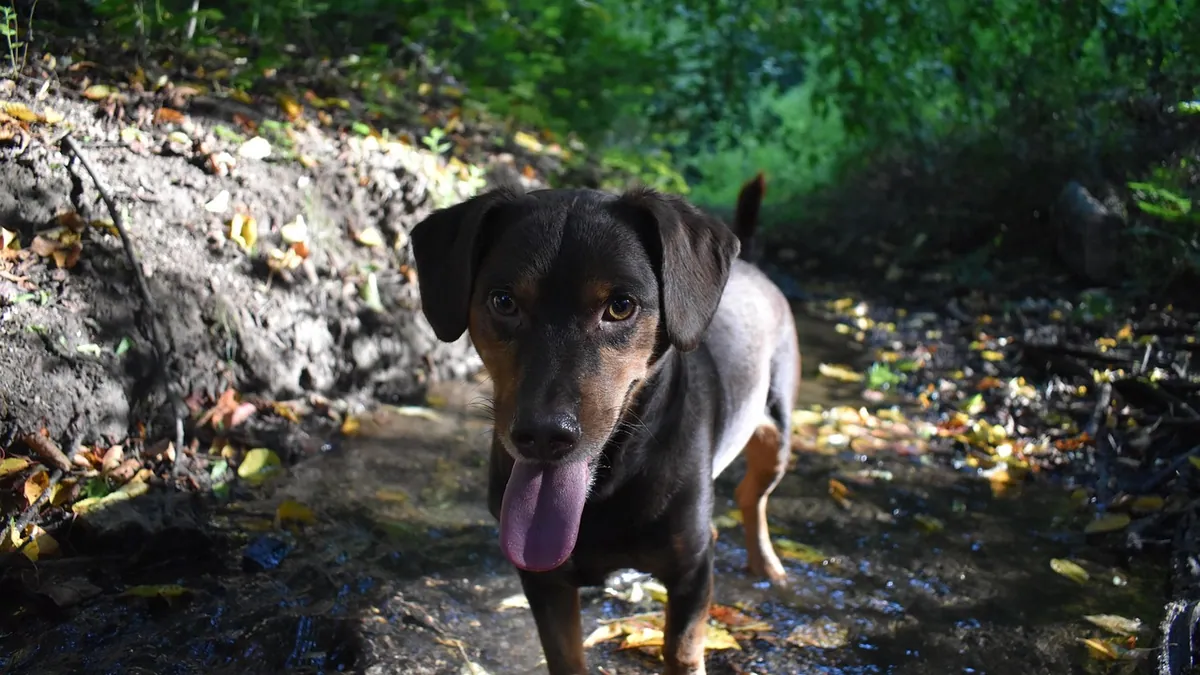
Is it safe for dogs to be outside in 100 degree weather? For most dogs, no. At 100°F, even healthy adult dogs should be outside only long enough to potty, roughly 5 minutes or less, and some dogs should not be out at all. This article is educational and is not a substitute for veterinary diagnosis or treatment.
Quick Answer
- At 100°F, keep outdoor time to about 5 minutes or less for a healthy adult dog, and skip it entirely for flat-faced breeds, seniors, puppies, and overweight dogs.
- Humidity matters as much as the number on the thermometer. Dogs cool themselves mainly by panting, and panting works poorly in humid air [1].
- Shade and water are not optional. A dog left outside in hot, humid weather without shade is one of the most common situations that leads to heatstroke [1].
- If you cannot hold your bare hand or foot on the pavement for about 10 seconds, it is too hot for your dog to walk on [1].
- Never leave a dog alone in a parked car in this weather, even with the windows cracked [2].
Is It Safe for Dogs to Be Outside in 100 Degree Weather?
No, not for more than a few minutes. Dogs have sweat glands only on their paws, so their main way to dump heat is panting [1]. When the air is 100°F, panting moves heat out of the body very slowly. When the air is also humid, it barely works at all.
Every dog can overheat, even a young, fit one [1]. The difference is how fast it happens. A short-nosed dog like a Pug, Bulldog, Boston Terrier, or Boxer cannot pant efficiently, so it heats up faster and is at higher risk [1]. The ASPCA groups flat-faced dogs with seniors, overweight dogs, and dogs with heart or lung disease, and says these pets should be kept cool in air-conditioned rooms as much as possible [2].
How Long Can a Dog Stay Outside in 100 Degree Weather?
Think in minutes, not hours.
- Healthy adult dog, low humidity, full shade, water available: about 5 minutes, then back inside.
- Healthy adult dog, high humidity or direct sun: 2 to 3 minutes, potty only.
- Flat-faced breed, senior, puppy, overweight, or heart or lung disease: 0 to 2 minutes, and only if your veterinarian has cleared outdoor potty breaks.
- Any dog showing heavy panting, drooling, or wobbling: inside immediately.
These are practical limits based on how dogs lose heat, not a formal veterinary standard. Your dog's own tolerance may be lower.
Is It Safe for Dogs to Be Outside in 90 Degree Weather?
At 90°F, a healthy adult dog can usually handle 10 to 15 minutes in shade with water, and shorter if it is sunny or humid. At 90°F with high humidity, treat it like 100°F and cut the time in half. A 12-minute walk in a hot, sunny region pushed dogs' breathing rate from about 47 breaths per minute at rest to roughly 374 breaths per minute, and their water intake jumped by about 215 mL compared to cooler walks [3]. That is a lot of strain for a short walk.
Heat Safety for Dogs: Step-by-Step
- Check the actual temperature and humidity, not just the forecast high. Humidity is the part owners forget.
- Test the pavement with your bare hand or foot for about 10 seconds [1]. If it is too hot for you, it is too hot for your dog.
- Pick the coolest window of the day. Early morning before sunrise, or after sunset, is far safer than midday.
- Set a timer before you go out. Do not trust your sense of time when it is hot.
- Walk on grass or dirt when you can. Blacktop holds heat and can be much hotter than the air [1].
- Bring water for anything longer than a quick potty break.
- Go straight back inside. No lingering in the yard.
- Check your dog for 10 minutes after coming in. Watch the breathing rate come down.
If your dog is recovering from a walk and still breathing hard, a 10-minute rest period may not be enough on a second consecutive hot day [4]. Give more rest, not less.
Temperature and Humidity Guide
| Air temperature | Humidity | Healthy adult dog | Higher-risk dog |
|---|---|---|---|
| 100°F | Low | 5 minutes, shade only | 0 to 2 minutes, potty only |
| 100°F | High | 2 to 3 minutes | Keep inside |
| 90°F | Low | 10 to 15 minutes, shade | 5 minutes |
| 90°F | High | 5 minutes | 2 minutes |
| 80°F | Low | 20 to 30 minutes | 10 minutes |
| 80°F | High | 10 to 15 minutes | 5 minutes |
Use this as a starting point, not a rule. Your dog's coat, fitness, age, and health change the numbers. If you are unsure, err on the side of a shorter trip.
Signs That Something Is Wrong
Heatstroke in dogs moves fast. Watch for these, in rough order of severity:
- Heavy, loud panting that does not slow down after a few minutes inside
- Thick drooling, or foam around the mouth
- Bright red gums or tongue
- Wide eyes, a worried look, or restlessness
- Wobbling, stumbling, or weakness in the back legs
- Vomiting or diarrhea
- Confusion, staring, or not responding to you
- Collapse, seizures, or unconsciousness
The first four signs mean bring the dog inside now and start cooling. The last four mean this is an emergency. Wet the dog with cool water and call your veterinarian or an emergency clinic on the way [5]. Do not wait to see if it improves on its own.
Common Mistakes
Leaving the dog in the yard "because there is shade." Shade helps, but it does not fix 100°F air. A dog left outside in hot, humid weather without shade is one of the top causes of heatstroke [1].
Skipping the pavement test. Paw pads are tougher than human skin, but they still burn [1]. If you would not stand there barefoot, do not make your dog walk there.
Shaving the dog down to the skin. Trimming long hair is fine, but shaving removes the coat layers that protect against overheating and sunburn [2].
Assuming a young dog is safe. All dogs are susceptible to heatstroke [1]. Fitness helps, but it does not make a dog heatproof.
Cracking the car window. That does not make a parked car safe. Leaving an animal alone in a parked vehicle can cause fatal heatstroke, and it is illegal in several states [2].
Using human sunscreen or insect repellent. Only use products labeled for animals [2].
Forgetting that heat stress has lasting effects. Heat stress raises oxidative stress in the body, and in male dogs it can affect sperm quality for weeks [6]. Recovery is not instant just because the panting stops.
Setup and Supplies That Matter
A few items make hot-weather care much safer.
- A shaded, ventilated outdoor spot for potty breaks, with the water bowl in the shade, not in the sun.
- A second water bowl inside, refreshed often. Dogs drink a lot more in heat [3].
- A cooling mat or a damp towel on a tile floor for recovery.
- A thermometer for the yard or a weather app that shows humidity, not just temperature.
- A timer on your phone for outdoor breaks.
- Booties if your dog must walk on pavement in warm weather. They are not a substitute for the hand test, but they add a layer.
- A written plan for who checks the dog and when. Heat problems get missed when everyone assumes someone else looked.
If your dog is intact and you are tracking a heat cycle this summer, heat stress is one more reason to keep activity low. These articles cover the timing side of that: How Long Are Dogs In Heat, How Long Does A Dog Stay In Heat, and How Long Does A Dogs Heat Last. For a broader look at safe walking windows across the year, see Dog Walking Safety in Extreme Heat and Cold: Temperature Guidelines.
Limitations and When to Contact a Veterinarian
The time limits above are general guidance. They do not account for your dog's exact breed mix, weight, coat, medications, or medical history. Individual cases need a veterinarian who can examine your dog.
Call your veterinarian the same day if your dog had a long hot outing and is now quieter than usual, has soft stool, is drinking much more than normal, or seems off. Heat stress can affect the body for days after the event [6].
Go to an emergency clinic now if your dog is vomiting, has diarrhea, is wobbly or unable to stand, has bright red or purple gums, is breathing with obvious effort, or has collapsed or had a seizure. Wet the dog with cool water on the way [5]. Do not use ice-cold water or ice packs directly on the skin, and do not force the dog to drink.
Book a routine visit if your dog has heart or lung disease, is overweight, is a flat-faced breed, or is a senior, and you want a personalized hot-weather plan [2]. Your veterinarian can set safe activity limits for your dog specifically.
Frequently Asked Questions
Can a dog survive being outside in 100 degree heat?
Yes, most dogs survive short potty breaks in 100°F heat. The danger comes from duration and from being trapped without shade or water. A dog left outside in hot, humid weather without shade is at real risk of heatstroke [1].
Is 100 degrees too hot to walk my dog?
Yes, for anything beyond a quick potty break. Keep it to a few minutes, stay in shade, and test the pavement first [1]. If your dog is flat-faced, a senior, a puppy, or overweight, keep the walk inside or skip it [2].
Do dogs sweat?
Dogs have sweat glands only on their paws, so sweating is not their main cooling method [1]. They rely on panting, which is why humidity is such a big factor in hot weather.
Does humidity really change how long my dog can be outside?
Yes, and it may matter more than the temperature itself. Panting cools a dog by moving heat into the air, and humid air holds that heat in. That is why a 90°F humid day can be harder on your dog than a dry 100°F day.
Should I shave my dog for summer?
No. Trim longer hair if you like, but do not shave your dog, because the coat layers protect against overheating and sunburn [2]. Ask your veterinarian or groomer how short is safe for your dog's coat type.
Related Articles
- How Long Are Dogs In Heat
- How Long Does A Dog Stay In Heat
- How Long Does A Dogs Heat Last
- Dog Walking Safety in Extreme Heat and Cold: Temperature Guidelines
- Stop Dog In Heat
- How to Safely Check Your Dog's Temperature at Home
- How Long Can a Dog Be Outside in 80-90 Degree Weather?
- How Long Can a Dog Stay in a Hot Car? Heat Risk
- How Long Can a Dog Pant? Normal vs Dangerous Breathing
References
- Summer heat safety tips for dogs. Cornell University College of Veterinary Medicine.
- Hot Weather Safety Tips. ASPCA Animal Poison Control Center.
- Cool and safe walks: heat stress threshold for domestic dogs living in hot and sunny regions. International journal of biometeorology, 2026.
- Detection Dogs Working in Hot Climates: The Influence on Thermoregulation and Fecal Consistency. Animals : an open access journal from MDPI, 2024.
- Dying of heat? Remember: wet, then vet. The Veterinary record, 2026.
- Effects of heat stress on oxidative balance and sperm quality in dogs. Frontiers in veterinary science, 2024.