What Causes a Dog's Stomach to Flip? GDV Explained
By Dr. Zubair Khalid, DVM, MS, PhD ·
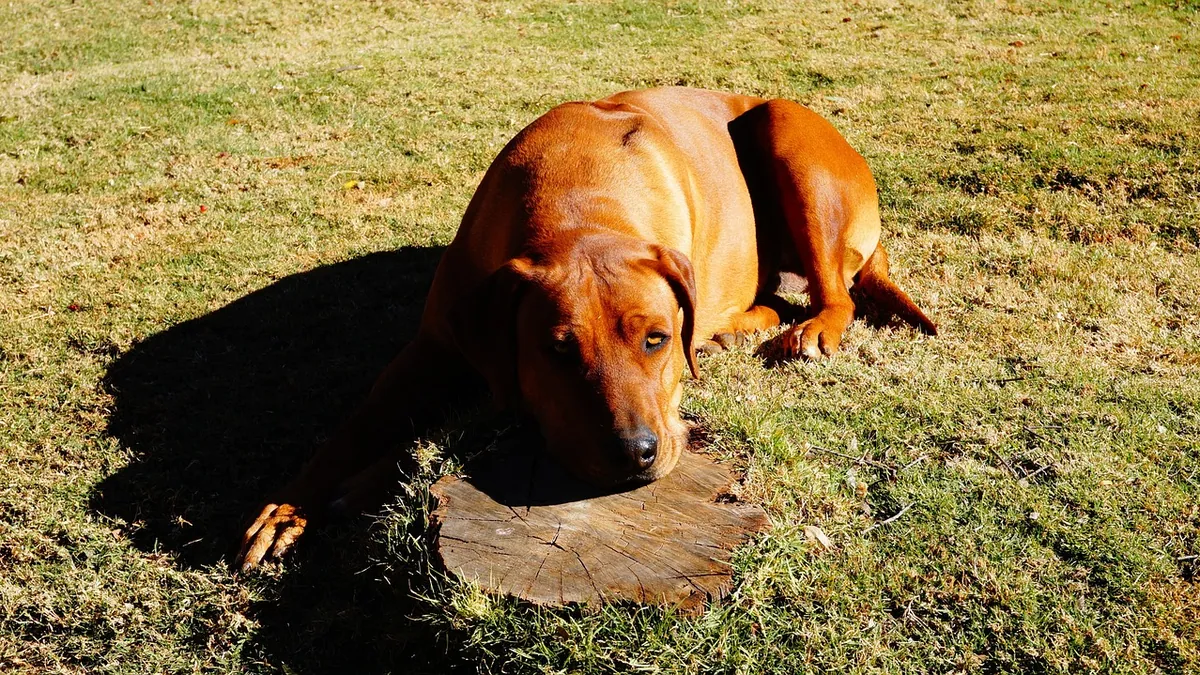
What causes a dog's stomach to flip comes down to two things happening together: the stomach fills with gas and fluid, then rotates on its own axis. That rotation traps the gas, cuts off blood flow, and turns a bad stomachache into a surgical emergency within hours. Large, deep-chested dogs are affected most often, and the earliest signs can look like nothing more than restlessness.
This article is educational and is not a substitute for veterinary diagnosis or treatment.
Quick Answer
- A dog's stomach flips when it dilates with gas and fluid, then twists along its axis, a condition called gastric dilatation and volvulus, or GDV [1].
- Large, deep-chested breeds are at highest risk, and risk climbs with age, so a Great Dane, German Shepherd, or Standard Poodle with a painful, swollen belly needs emergency care right away [1].
- The classic early picture is a dog that has eaten a large meal, exercised, and now retches repeatedly without bringing anything up [1].
- Bloat is survivable when treated fast, and surgery with a gastropexy greatly lowers the chance of it happening again [2].
- Never wait to see if it passes. Call your veterinarian or an emergency clinic the moment you suspect it.
What Is GDV in Plain Words
The word "bloat" gets used loosely, but true GDV has two parts. First comes dilation: the stomach stretches with swallowed air and gas from digestion, sometimes with fluid [1]. Then comes volvulus: the heavy, swollen stomach rotates on its axis, twisting the esophagus and the outflow tract shut [1].
Once that twist happens, gas cannot escape in either direction. Pressure builds, the stomach wall loses blood supply, and the dog slides toward shock. The Merck Veterinary Manual describes this as a life-threatening emergency, and that is not an overstatement [1]. A dog can go from uncomfortable to critical in a short window, which is why every hour counts.
Some dogs have dilation without a twist. That is still serious, and veterinarians use imaging to tell the two apart [1]. Radiographs can show whether the stomach has actually rotated, and specific patterns help distinguish a full twist from simple dilation [3].
Signs Owners Notice First
The retching that produces nothing
Repeated, unsuccessful attempts to vomit are the hallmark sign [1]. Your dog heaves and heaves, and nothing comes up, or only foam and saliva. This is different from ordinary vomiting, where food or bile appears and the dog seems a little better afterward. If you are seeing dry heaves over and over, treat it as an emergency.
Restlessness and a belly that looks wrong
Owners often describe a dog who cannot get comfortable, paces, pants, and does not want the abdomen touched [1]. The belly may look bloated or feel tight like a drum. Rapid breathing, excessive drooling, and obvious pain are common [1].
Signs of shock
As the condition advances, a veterinarian may find a rapid, weak pulse, pale mucous membranes, and other signs of shock [1]. An irregular heart rate can develop too [1]. These are late findings, and you do not want to wait for them. If your dog's abdomen looks swollen and you are unsure why, this guide on what would cause a dog's stomach to swell walks through the possibilities, but a hard, distended belly with retching means go now.
What Causes a Dog's Stomach to Flip? Causes and Risk Factors
The anatomy problem
Deep-chested dogs have a long, narrow rib cage and a stomach that sits high and loose. That shape allows more room for the stomach to swing and rotate. This is why bloat primarily affects large, deep-chested dogs [1].
Breed and family history
Certain breeds show up again and again: Doberman Pinschers, German Shepherds, Standard Poodles, Great Danes, Saint Bernards, Irish Setters, Weimaraners, Bassett Hounds, and Gordon Setters [1]. A recent study of companion dogs also found increased odds of GDV in Poodle breeds and Poodle mixes, along with purebred status, male sex, and a body weight over 40 kg [4]. Dogs with a parent, sibling, or offspring who had the condition also carry higher risk, which points to a genetic component [1].
Age, body condition, and eating habits
Incidence increases with age [1]. A lean body size is a risk factor, which surprises many owners, and so is a low body condition score in the Dog Aging Project data [1][4]. Once-daily feedings, dry food diets, and eating quickly all appear on the risk list [1]. Stress may trigger an acute episode as well [1].
What the newer data says about diet and temperament
The Dog Aging Project analysis found no increase in GDV odds tied to primary diet type or to fearful and anxious behavior [4]. That does not erase older observations about stress and fast eating, but it does suggest those factors are less clear-cut than once believed. If you are weighing whether your dog's personality or food is to blame, the honest answer is that the research is still mixed.
The meal-and-exercise pattern
Veterinarians commonly see bloat in dogs who ate a large meal and then exercised, followed by those repeated, unsuccessful vomiting attempts [1]. Avoiding hard activity right after a big meal is a reasonable habit, even though the exact role of exercise timing is not fully settled in the research.
How Veterinarians Diagnose GDV
Diagnosis starts with your dog's history and a hands-on exam. Your veterinarian will ask about the meal, the retching, and how fast the abdomen changed. They will check heart rate, pulse quality, mucous membrane color, and abdominal shape [1].
X-rays are the usual next step, because they show whether the stomach has rotated [1]. Other imaging techniques can help too [1]. One recent study described a radiographic feature called the caudal esophageal twist sign, a funnel shape in the lower esophagus that appeared in dogs with a full 360-degree volvulus [3]. That sign can be harder to see if the stomach was decompressed before the x-ray was taken [3].
Blood work and an electrocardiogram are often part of the workup, since an irregular heart rate can develop with GDV [1]. Your veterinarian sets the specific tests based on your dog's stability.
Treatment Options
Decompression first
The immediate goal is to relieve pressure in the stomach. A veterinarian passes a tube to release gas and fluid, or uses a large needle through the body wall if a tube cannot be placed. This buys time and stabilizes your dog. Decompression alone, however, does not fix a twisted stomach.
Surgery and gastropexy
Most dogs with a true volvulus need surgery to untwist the stomach and check the tissue for damage. During that surgery, the veterinarian typically performs a gastropexy, which permanently tacks the stomach wall to the body wall so it cannot rotate again. The evidence here is strong: recurrence of GDV is much lower in dogs who had a gastropexy compared with dogs treated with decompression alone [2]. A separate review of sixteen studies also reported a consistently low recurrence rate after gastropexy, though the authors noted weaknesses in the study designs [5].
When the stomach does not empty afterward
A small number of dogs develop severe gastroparesis after GDV surgery, meaning the stomach becomes enlarged and static and does not move food along. One report described a Belgian Malinois who developed gastric atony and progressive dilatation after surgical correction, with vomiting of undigested food and weight loss, and who was ultimately managed with a sleeve-type gastrectomy [6]. This is an uncommon delayed complication, likely related to vagal nerve injury during the original event [6]. It is worth knowing about, but it is not what most owners will face.
Recovery, Outlook, and Long-Term Management
The first 24 to 72 hours after surgery are the most critical, and many dogs stay hospitalized on fluids, pain medication, and heart rhythm monitoring. Your veterinarian will decide when your dog is stable enough to go home, and that timing depends on the individual case.
At home, expect a bland diet, small frequent meals, restricted activity while the incision heals, and a recheck schedule. Your veterinarian will calculate any medication doses based on your dog's weight and health, so follow the label exactly and do not adjust on your own.
Long-term, the gastropexy is your main protection against a repeat twist [2][5]. Keep an eye out for the same early signs you learned here, because a dog who has had GDV once is still a dog with the same anatomy. If your dog's belly looks swollen again, or if you notice whimpering when the abdomen is touched, this article on why a dog whimpers when touched on the belly covers other painful abdominal conditions, but with a GDV history, call your vet first.
Prevention
For high-risk breeds
If you own a Great Dane, Standard Poodle, German Shepherd, Doberman Pinscher, or another deep-chested breed, talk with your veterinarian about a preventive gastropexy. This is often done at the same time as spay or neuter in breeds with strong risk profiles. It is a planned surgery, which is far safer than an emergency one.
Feeding and lifestyle changes
Feed two or more smaller meals instead of one large one, since once-daily feeding is a listed risk factor [1]. Slow down a dog who inhales food by using a puzzle bowl or scattering kibble. Avoid vigorous exercise right after meals, based on the common pattern of a large meal followed by activity [1]. If your dog is lean, do not assume that protects them, because lean body size is itself a risk factor [1][4].
Know your dog's normal
The single most useful prevention tool is familiarity. You know how your dog's belly normally looks and feels. You know their normal breathing rate and how they act after eating. When something shifts, you will notice it faster than anyone.
| Risk factor | What the evidence shows |
|---|---|
| Breed | Doberman Pinschers, German Shepherds, Standard Poodles, Great Danes, Saint Bernards, Irish Setters, Weimaraners, Bassett Hounds, Gordon Setters most frequent [1]. Poodles and Poodle mixes also at increased odds [4] |
| Body size | Body weight over 40 kg raises odds [4]. Large, deep-chested build is the classic risk profile [1] |
| Body condition | Lean body size and low body condition score increase risk [1][4] |
| Sex | Male dogs at increased odds [4] |
| Age | Incidence increases with age [1] |
| Family history | A parent, sibling, or offspring with GDV raises risk [1] |
| Feeding | Once-daily feedings, dry food, and eating quickly are listed risk factors [1] |
| Stress | May trigger an acute episode [1] |
| Diet type and anxiety | No increased odds found in one large cohort [4] |
Limitations and When to Contact a Veterinarian
Call an emergency clinic immediately, do not drive to a routine appointment, if your dog is retching without producing anything, has a distended or drum-tight belly, is pacing and cannot settle, is drooling heavily, or is breathing fast [1]. Do not wait to see if it passes. Do not give anything by mouth. Go now.
Contact your veterinarian the same day if your dog has a known GDV history and seems off after eating, or if you notice mild abdominal discomfort that is new and unexplained. A dog with a prior episode deserves a low threshold for recheck.
Schedule a routine visit to discuss preventive gastropexy if you have a deep-chested breed, or to review feeding frequency and speed if your dog eats one large meal a day [1].
Every dog is an individual, and only a veterinarian who examines your dog can decide what is happening and what to do. This article cannot replace that exam.
Frequently Asked Questions
Can a dog's stomach flip without warning?
It can, though many dogs show subtle signs first. Restlessness, drooling, and dry heaving often come before the belly looks obviously swollen [1]. Owners who know their dog's normal behavior tend to catch it earlier.
Does exercise after eating really cause bloat?
The pattern of a large meal followed by exercise shows up commonly in affected dogs, so avoiding hard activity right after meals is sensible [1]. That said, the newer cohort data did not find diet type or anxiety to be significant factors, so the picture is not fully settled [4].
Can bloat resolve on its own?
Simple dilation sometimes responds to decompression, but a true twist does not untwist by itself. A dog with volvulus needs surgery, and delay raises the risk of stomach wall damage and shock [1].
Will my dog bloat again after surgery?
Recurrence is much lower after a gastropexy than after decompression alone [2]. One review of sixteen studies found consistently low recurrence rates after gastropexy, though the authors flagged weaknesses in those studies [5]. Your dog's individual risk still depends on breed, age, and anatomy.
Should I get a preventive gastropexy for my deep-chested puppy?
That is a conversation to have with your veterinarian, ideally before your puppy's spay or neuter. Preventive surgery is planned and controlled, while emergency GDV surgery happens on a dog already in shock. For breeds with strong risk profiles, many veterinarians recommend it.
Related Articles
- Why Is My Dog having swollen belly? Ascites GDV and Cushings Disease
- What Would Cause A Dogs Stomach To Swell
- Dog Bad Breath Caused By Stomach
- Why Is My Dog whimpering when touched on belly? Pancreatitis and Peritonitis Signs
- Dog Vomiting Bile Causes
- Dog Swollen Stomach Causes
- Twisted Stomach in Dogs: Signs, Causes, and Emergency Care
- Bloated Belly in Dogs: Causes of a Distended Abdomen
- Stomach Blockage in Dogs: Symptoms, Causes, and When to Worry
References
- Disorders of the Stomach and Intestines in Dogs - Dog Owners. Merck Veterinary Manual.
- Recurrence rates in dogs with GDV treated with gastric decompression versus dogs treated with gastric decompression and gastropexy. Veterinary evidence, 2025.
- Caudal esophageal twist sign may help in differentiating between 360° gastric dilatation-volvulus and gastric dilatation in dogs. Journal of the American Veterinary Medical Association, 2026.
- Gastric dilatation-volvulus is associated with Poodle breeds, increased body size, and male sex, but not primary diet type or anxiety in the Dog Aging Project cohort. Journal of the American Veterinary Medical Association, 2026.
- In dogs with gastric dilatation volvulus (GDV) undergoing gastropexy, what is the rate of recurrence of GDV?. Veterinary evidence, 2025.
- Severe post-GDV gastroparesis managed with sleeve-type gastrectomy in a dog. The Journal of small animal practice, 2026.