Stomach Blockage in Dogs: Symptoms, Causes, and When to Worry
By Dr. Zubair Khalid, DVM, MS, PhD ·
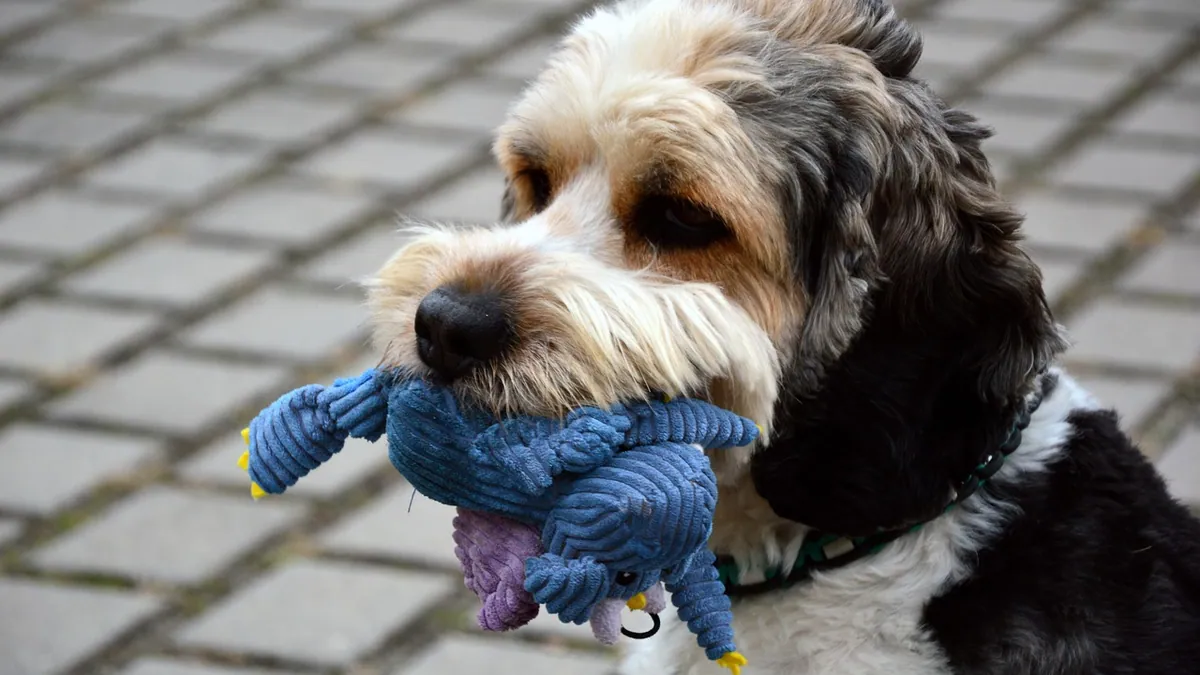
A dog with a stomach blockage often vomits repeatedly, refuses food, and has a painful or swollen belly. A simple stomach ache may cause one or two vomits and then improve, but a blockage usually gets worse over hours. Knowing the signs of dog stomach blockage helps you decide whether to call your vet or rush to an emergency clinic.
This article is educational and is not a substitute for veterinary diagnosis or treatment.
Quick Answer
- Repeated vomiting, especially after drinking water, is the most common early clue of a blockage.
- A dog with a blockage often stops eating, acts restless or painful, and may pass little or no stool.
- A hard, swollen, or tender belly is an emergency sign and needs immediate veterinary care.
- Never give human pain relievers, and never try to make your dog vomit at home.
- Call your veterinarian or an emergency clinic the same day if vomiting happens more than two or three times, or right away if your dog is weak, collapsing, or has a bloated belly.
What a Stomach Ache Looks Like Versus a Blockage
Dogs get upset stomachs for many reasons. They eat something greasy, they eat too fast, or they pick up a mild bug. In those cases you might see one or two episodes of vomiting, some lip licking, and a day of picky eating. Most dogs with a mild stomach ache still have energy and still want to be near you.
A blockage is different. Something is physically stuck in the stomach or intestine, so food and fluid cannot move through. The digestive system includes the mouth, esophagus, stomach, liver, pancreas, intestines, rectum, and anus, and digestion depends on that path staying open [1]. When the path is blocked, the dog keeps vomiting because the stomach cannot empty.
Signs of dog stomach ache that are usually mild
- One or two vomits, then your dog settles
- Eating grass or licking the floor
- Soft stool or a small amount of diarrhea
- Normal energy between episodes
- Interest in food returns within a few hours
Dog stomach blockage symptoms that point to something stuck
- Vomiting that repeats, often several times in a day
- Vomiting after drinking even small amounts of water
- Complete loss of appetite
- Restlessness, pacing, or a tucked belly
- Drooling or gulping
- Little or no stool, or straining with nothing coming out
- A belly that looks swollen or feels firm
Dog intestinal blockage symptoms look similar but often include more diarrhea early on, then no stool at all as the blockage continues. Some dogs also have bloody stool or a fever if the intestine is damaged.
Main Causes of Stomach and Intestinal Blockage
The most common cause in dogs is a swallowed foreign object. Intestinal obstruction from a foreign body accounts for about 80% of all canine intestinal blockages [2]. That means most blockages are things your dog ate, not tumors or disease.
Other causes include masses, severe inflammation, and a twisted stomach. A twisted stomach, called gastric dilatation and volvulus, is a separate emergency where the stomach fills with gas and rotates. One study of dogs with this condition found that 89% had high blood lactate levels, a sign of poor blood flow to tissue [3]. A dog with a bloated, hard belly may have this problem, and it can look similar to a blockage at first.
A rare cause is gastric intussusception, where one part of the stomach slides into another. In a review of 25 dogs and one cat, 22 of the animals presented with vomiting, and the condition was diagnosed with ultrasound in most cases [4]. This is uncommon, but it shows why imaging matters when vomiting will not stop.
| Cause | Typical clues | How urgent |
|---|---|---|
| Swallowed foreign object (toy, bone, sock, corn cob) | Repeated vomiting, no appetite, known or suspected ingestion | Emergency, same day |
| Gastric dilatation and volvulus (twisted stomach) | Hard swollen belly, retching without vomit, collapse | Emergency now |
| Intestinal mass or tumor | Slow onset, weight loss, vomiting over weeks | Urgent, within a day or two |
| Severe gastroenteritis | Vomiting and diarrhea, often with a trigger | Urgent if vomiting will not stop |
| Gastric intussusception | Vomiting, bloody stool, low energy | Emergency, same day |
| Hair, grass, or food material | Mild vomiting that may pass | Call your vet for advice |
If your dog's belly looks swollen, read more about what would cause a dog's stomach to swell and why a dog's stomach can be bloated and hard.
Red Flags That Mean Emergency Care Now
Some signs mean you should not wait for a morning appointment. Go to an emergency clinic right away if you see any of these.
- A belly that is hard, tight, or visibly swollen
- Unproductive retching, where your dog tries to vomit but nothing comes up
- Collapse, weakness, or pale gums
- Severe pain when you touch the belly
- Vomiting that continues for more than a few hours
- Blood in the vomit or stool
- Known ingestion of a toy, bone, string, or sharp object
A swollen, painful belly with retching is the classic picture of a twisted stomach. Dogs with this condition often have acid-base imbalances and high lactate, which reflect serious illness [3]. This is a surgical emergency. Delay of even an hour or two can be fatal.
If your dog is vomiting but the belly looks normal, see dog vomiting: when should you worry for help sorting mild from serious.
What You Can Safely Do at Home While You Wait
Your job at home is to keep your dog safe and get ready for the vet visit. Do not try to treat a suspected blockage yourself.
Do these things
- Remove all food and water for now if your dog is vomiting repeatedly.
- Keep your dog quiet and warm, and watch the belly for swelling.
- Write down when the vomiting started, how many times, and what came up.
- Note whether your dog has passed stool and when.
- Gather any packaging, toy pieces, or chewed items you find.
- Call your vet or an emergency clinic and describe what you see.
- Ask about bringing the object or its remains with you.
Do not do these things
- Do not give human pain medicine. Many are toxic to dogs.
- Do not try to make your dog vomit unless a veterinarian tells you to.
- Do not feed a large meal to "settle" the stomach.
- Do not wait to see if it passes on its own if your dog is painful or bloated.
- Do not push on a swollen belly to check it.
If you suspect your dog ate something poisonous, call your veterinarian or a pet poison hotline right away. Have the product name and your dog's weight ready.
What Your Veterinarian Will Check and Test
Your vet will start with a full physical exam. They will feel the abdomen for a firm mass, a gas-filled stomach, or a tender spot. They will check gum color, heart rate, and hydration.
Next come tests. Common ones include:
- Blood work to check organ function, electrolytes, and blood cell counts
- Abdominal X-rays to look for a gas pattern or a visible object
- Ultrasound, which is often the best way to find a blockage or a mass
- A barium study in some cases, where contrast dye shows how well material moves through
Imaging is central to the diagnosis. In the intussusception review, 21 of 25 dogs were diagnosed with ultrasound, and two with CT [4]. A different study described how radiographs can show a gas-distended stomach with displacement of the pylorus in dogs with a twisted stomach [5]. Your vet may also use radiographs to tell a simple bloat apart from a twist [6].
Treatment depends on the cause. Some blockages pass with fluids and monitoring. Others need surgery to remove the object or the damaged intestine. A dog with a twisted stomach needs surgery to untwist the stomach, and sometimes a preventive tacking procedure is done at the same time [5]. After severe stomach surgery, some dogs develop long-term delayed stomach emptying, which can require ongoing management [7].
If your dog has a swollen belly, your vet may also consider other causes. See dog swollen stomach symptoms and dog swollen stomach causes for more detail.
Prevention and Monitoring
You cannot prevent every blockage, but you can lower the risk a lot.
- Pick up toys, string, socks, and small objects your dog might swallow.
- Choose chew toys that are too large to swallow and replace them when they break apart.
- Keep trash, bones, and corn cobs out of reach.
- Feed meals on a schedule instead of free feeding if your dog gulps food.
- Watch dogs that have had surgery for a blockage, since they may eat objects again.
- Ask your vet about the risk of a twisted stomach if your dog is a large, deep-chested breed.
If your dog has had a blockage removed before, keep a close eye after meals. Vomiting that starts again in a dog with a history of obstruction deserves a call to your vet the same day.
Limitations and When to Contact a Veterinarian
No article can tell you whether your dog has a blockage. Only a veterinarian can examine, image, and test your dog. Individual cases need a veterinarian, and the timing below is a guide, not a rule.
Call your veterinarian the same day if your dog vomits more than two or three times, refuses food for more than 12 hours, or seems painful but is still alert and stable.
Go to an emergency clinic now if your dog has a hard or swollen belly, retches without producing vomit, collapses, has pale gums, or you know they swallowed an object that could block the gut.
Schedule a routine visit if your dog has mild, on-and-off vomiting over weeks, gradual weight loss, or a change in appetite without pain. Long-standing vomiting can point to a mass, chronic inflammation, or another problem that needs testing.
Frequently Asked Questions
How long can a dog live with a stomach blockage?
It depends on where the blockage is and how complete it is. A full blockage can become life-threatening within a day or two because the dog cannot keep food or water down. Call your vet as soon as you suspect a blockage instead of waiting to see how long your dog lasts.
Can a dog pass a blockage on its own?
Sometimes a small, soft object passes with fluids and time. Sharp, large, or string-like objects often cannot pass and can cut or bunch the intestine. Only your veterinarian can judge whether waiting is safe, and they will use imaging to decide.
What are the first signs of a dog stomach blockage?
The earliest signs are usually vomiting and a loss of interest in food. Many dogs vomit after drinking water because the stomach cannot empty. Some pace, drool, or act uncomfortable before any other sign appears.
Is a dog stomach ache the same as a blockage?
No. A stomach ache is a general term for an upset stomach, and most mild cases improve within a day. A blockage is a physical obstruction that will not clear without treatment and often gets worse. Repeated vomiting, pain, and a swollen belly point toward a blockage.
Should I feed my dog if I think there is a blockage?
No. Withholding food and water is safer until your veterinarian examines your dog. Feeding can trigger more vomiting and, in some cases, make surgery riskier. Your vet will tell you when and how to restart food, and they will calculate any fluids or medicines based on your dog's weight and health.
Related Articles
- What Would Cause A Dogs Stomach To Swell
- Dog Swollen Stomach Symptoms
- Why Is My Dog's Stomach So Bloated And Hard
- Dog Swollen Stomach Causes
- Dog Vomiting: When Should You Worry?
- Dog Swollen Stomach Pain
- Foreign Body in a Dog's Stomach or Gut: Warning Signs
- Twisted Stomach in Dogs: Signs, Causes, and Emergency Care
- Bloated Belly in Dogs: Causes of a Distended Abdomen
References
- Introduction to Digestive Disorders of Dogs - Dog Owners. Merck Veterinary Manual.
- Hematological Markers to Predict Enterectomy Versus Enterotomy in Dogs with Foreign-Body Intestinal Obstruction: Preliminary Data. Animals : an open access journal from MDPI, 2024.
- Retrospective Acid-Base Analysis in Dogs With Gastric Dilatation-Volvulus (2003-2018): 100 Cases. Journal of veterinary emergency and critical care (San Antonio, Tex. : 2001), 2026.
- Imaging Characteristics of Pylorogastric, Duodenogastric, and True-Gastrogastric Intussusception in 25 Dogs and One Cat. Veterinary radiology & ultrasound : the official journal of the American College of Veterinary Radiology and the International Veterinary Radiology Association, 2026.
- Gastric Dilatation and Volvulus and Heartworm Disease in a Dog With Situs Inversus. Veterinary radiology & ultrasound : the official journal of the American College of Veterinary Radiology and the International Veterinary Radiology Association, 2026.
- Caudal esophageal twist sign may help in differentiating between 360° gastric dilatation-volvulus and gastric dilatation in dogs. Journal of the American Veterinary Medical Association, 2026.
- Severe post-GDV gastroparesis managed with sleeve-type gastrectomy in a dog. The Journal of small animal practice, 2026.