How to Flush a Dog's Eye Safely at Home
By Dr. Zubair Khalid, DVM, MS, PhD ·
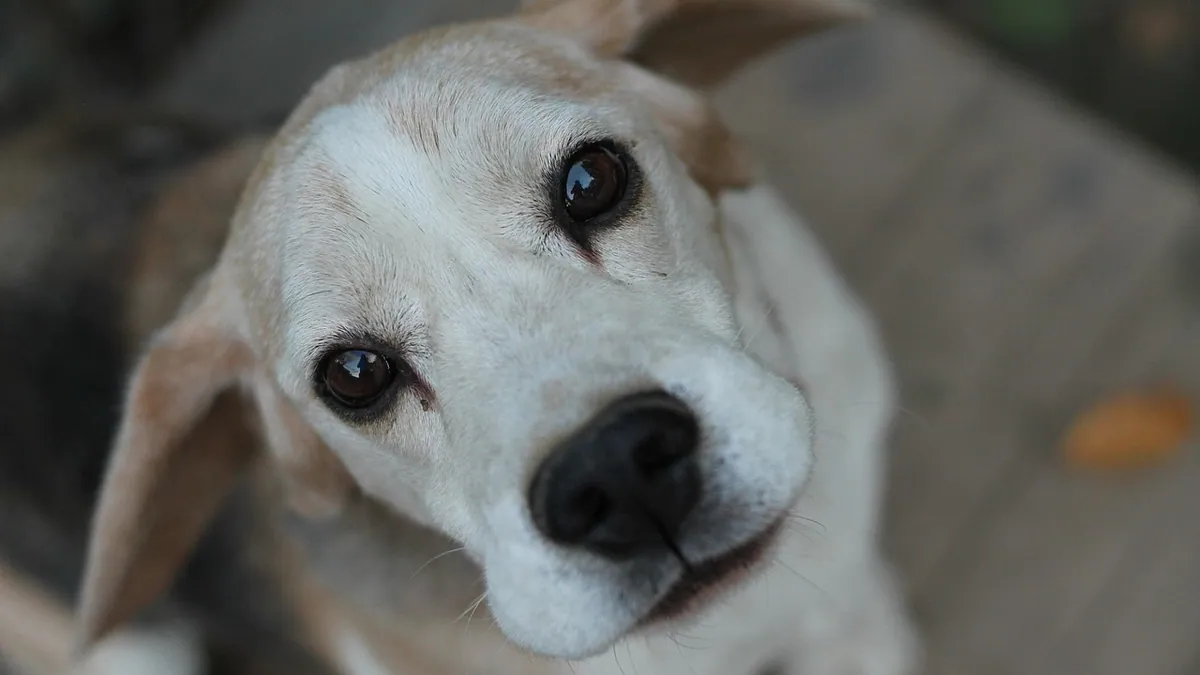
A dog eye flush is a gentle rinse of the eye surface with a sterile, pet-safe solution to remove dust, sand, pollen, shampoo, or other irritants. You can do it at home with the right supplies and a calm, steady hand. This article is educational and is not a substitute for veterinary diagnosis or treatment.
Quick Answer
- Use only sterile saline (0.9% sodium chloride) made for eyes, or a veterinarian-approved ophthalmic rinse. Never use contact lens solution, tap water, or homemade salt water.
- Flush from the inner corner (near the nose) toward the outer corner so debris drains away from the tear duct.
- Use room-temperature solution and a clean syringe or squeeze bottle. Aim a gentle stream, never a hard jet.
- Flush for several minutes if a chemical or soap got in the eye. Thorough lavage is the main treatment for chemical burns of the cornea [1].
- Stop and call your vet if the eye looks cloudy, the dog keeps squinting, or the eye does not improve within a few hours.
What a Dog Eye Flush Is and Why It Is Done
A dog eye flush is exactly what it sounds like. You rinse the surface of the eye and the inside of the eyelids with a sterile liquid to wash away something that does not belong there. It is one of the few eye treatments owners can safely do at home, as long as the eye is not injured.
Vets recommend flushing for a few common reasons:
- Debris removal. Sand, dirt, grass seeds, and grit can sit under the eyelids and scratch the cornea every time the dog blinks.
- Chemical exposure. Soap, shampoo, cement dust, and mortar dust are common sources of alkali burns in dogs, and alkali burns are more common than acid burns [1]. Alkali burns tend to be worse because the chemical keeps damaging tissue after contact.
- Irritant rinse. Pollen, smoke, pool water, and cleaning sprays can leave the eye red and teary. A flush clears the irritant so the surface can settle.
- Pre-flush before a vet visit. If your dog got something in the eye and you cannot get to the clinic right away, flushing buys time and may reduce damage.
Flushing is not a treatment for infection, ulcers, or dry eye. Those need a diagnosis and specific medication. If your dog has a red, squinting eye with discharge, read Dog Eye Infection Home Care: What Is Safe and When to See a Vet before you start rinsing.
How to Flush a Dog's Eye: Step by Step
Step 1: Check the Eye Before You Touch It
Look at the eye in good light. Note the size of the pupil, whether the eye looks cloudy, and whether the dog is squinting or holding the eye closed. Squinting, cloudiness, or a blue-gray haze on the cornea are signs of corneal damage, not simple irritation. Do not flush an eye like that at home. Call your vet.
Also check for a foreign object stuck to the eye surface. If you can see something embedded in the eyeball, leave it alone. That is a same-day veterinary problem.
Step 2: Gather Your Supplies
You need:
- Sterile saline for eyes (single-use vials or a sealed bottle labeled for ophthalmic use)
- Clean gauze pads or cotton balls
- A towel
- Someone to help hold your dog if it is wiggly
Warm the saline by holding the vial in your hand for a minute. Room temperature or slightly warm feels better than cold.
Step 3: Pick a Safe Solution
This is where most home mistakes happen. The only solutions that belong in a dog's eye are:
- Sterile saline (0.9% sodium chloride) with no preservatives if you can find it
- A commercial ophthalmic rinse sold for pets or people and labeled for eye use
- A veterinarian-prescribed flush
Do not use tap water, distilled water, contact lens solution, homemade salt water, breast milk, honey, or human redness-relief drops. Do not use a medicated drop unless your vet prescribed it for this eye. A saline eye flush for a dog is about mechanical rinsing, not medication.
If you are not sure what to use, call your vet's office and ask. It takes two minutes and prevents a much bigger problem.
Step 4: Restrain Your Dog Gently
Have a helper kneel beside the dog and hold the head steady with both hands, one under the chin and one on the back of the head. Do not squeeze the neck or cover the nose. A dog that cannot breathe freely will panic.
For a small dog, you can wrap a towel around the body and tuck the front legs, leaving the head free. For a large dog, sit on the floor with the dog between your knees, facing away from you, and reach around to the head.
Stay calm and use a soft voice. If the dog fights hard, stop. Forcing it risks scratching the eye with a claw.
Step 5: Flush From the Inside Out
Hold the syringe or bottle about half an inch from the eye. Rest the side of your hand on the dog's cheek so the tip cannot jab the eye if the dog moves.
Aim the stream at the inner corner of the eye, near the nose, and let the liquid run across the eye toward the outer corner. This direction pushes debris away from the tear duct instead of into it. Use a gentle, steady stream, not a hard squirt.
Let the eyelids blink naturally in the flow. Blinking helps move fluid under the lids and float debris out. If the dog holds the eye shut, gently part the lids with clean fingers or lift the upper lid slightly.
Step 6: Repeat and Wipe
Flush for 30 to 60 seconds for simple debris. For chemical exposure, flush much longer. Thorough ocular lavage is the foundation of treatment for chemical burns of the cornea [1], and that means rinsing with a large volume of fluid over several minutes. If soap or a cleaning product got in the eye, keep flushing on the way to the vet.
Wipe away drainage with a clean gauze pad, working from the inner corner outward. Use a fresh pad for each wipe so you do not drag debris back across the eye. If you also need to clean around the eye, the technique in How to Safely Clean Your Dog's Eyes at Home covers the surrounding skin and lashes.
Step 7: Watch for a Few Minutes
After flushing, watch your dog for 10 to 15 minutes. A normal eye should stop tearing, open fully, and look clear. Mild redness that fades is fine. Squinting that continues, or gets worse, is not.
Recovery Timeline and Home Care
| Time After Flush | What to Expect | What to Do |
|---|---|---|
| First 10 to 15 minutes | Tearing, blinking, mild redness | Keep the dog calm, dim the lights, no rubbing |
| 1 to 4 hours | Eye should look close to normal | Check every hour, watch for squinting |
| 12 to 24 hours | Full comfort if the irritant is gone | No repeat flush unless your vet says so |
| 24 to 48 hours | Any redness should be fading | Call the vet if it is not improving |
| 3 to 5 days | Healed if there was a mild surface scratch | Follow vet instructions, keep rechecks |
Home care after a flush is simple. Keep your dog from pawing at the eye. An Elizabethan collar helps if the dog keeps rubbing. Avoid dusty areas, car rides with the window down, and swimming for a few days. Do not start any eye drop or ointment unless your vet prescribed it.
If your dog has a chronic eye condition, your vet may recommend ongoing tear support. One study of dogs with evaporative dry eye found that a compounded tacrolimus and cross-linked hyaluronate formulation improved tear film stability over 45 days of twice-daily use [2]. That is a prescription product, not something you can mix at home, but it shows why some dogs need more than a rinse.
Possible Complications and Warning Signs
A flush done correctly is low risk. Problems come from the wrong solution, too much pressure, or flushing an eye that was already injured.
Watch for these signs after a flush:
- Cloudy or blue-gray cornea. This suggests corneal edema or an ulcer. Corneal ulceration and corneal edema are common signs of chemical burns in dogs [1].
- Continued squinting or pawing. Pain that does not settle within an hour means the surface is damaged.
- Thick yellow or green discharge. This points to infection, not simple irritation.
- New blood vessels on the clear part of the eye. Marked corneal neovascularity is a sign of significant chemical injury [1].
- Swelling around the eye or bulging. A dog can develop exophthalmos (a bulging eye) from disease behind the eye, and that condition can come with a corneal ulcer and pain when the mouth is opened [3]. This is not a flushing problem.
If any of these appear, stop home care and call your vet.
Questions to Ask the Veterinarian
Bring these to your next call or visit:
- Which specific solution should I use, and how often can I flush?
- Does this eye need a stain test to check for a corneal ulcer?
- Is there an underlying cause, such as dry eye, allergies, or an eyelid problem?
- What medication do you want me to use, and for how long?
- What signs mean I should come back before the recheck?
If your dog has a breed known for eye disease, ask about screening too. A survey of veterinary ophthalmologists found cataracts across most popular breeds and progressive retinal atrophy in Miniature Dachshunds [4]. Breed-related eye problems often need monitoring, not just rinsing.
Limitations and When to Contact a Veterinarian
Flushing only helps when the problem is on the surface and the eye is otherwise healthy. It cannot fix an ulcer, an infection, a foreign body stuck in the eye, or disease behind the eyeball. Every case is different, so your dog needs a veterinarian to examine the eye and decide on treatment.
Call now, today, or go to an emergency clinic for:
- A chemical or soap burn. Rinse continuously on the way and call ahead. Alkali sources like soap, cement, and mortar dust cause serious corneal damage [1].
- A visible object stuck in or on the eyeball.
- A cloudy eye, a blue-gray haze, or a pupil that looks different from the other eye.
- Squinting that lasts more than an hour after flushing.
- A bulging eye, swelling around the eye, or pain when your dog opens its mouth [3].
- Sudden vision loss or a dog that bumps into things. See How to Make Your Home Safe for a Blind or Visually Impaired Senior Dog for safety steps while you wait for the appointment.
Call for a routine visit within a day or two for:
- Mild redness that comes and goes
- Watery discharge without squinting
- Repeated episodes of eye irritation
- Any eye problem that keeps coming back
If your dog is also uncomfortable elsewhere, such as straining to pass stool, that is a separate issue. See How To Help My Dog Poop At Home. And if you are cleaning the ears during the same grooming session, use the steps in How To Safely Clean Dog's Ears At Home.
Frequently Asked Questions
Can I use tap water to flush my dog's eye?
No, tap water is not a good choice for routine flushing. It is not sterile, and it can irritate the eye surface. Use sterile saline or a rinse labeled for eye use instead. Tap water is only a last resort in a chemical emergency when nothing else is available, and you should still get to a vet right away.
How often can I flush my dog's eye at home?
For a one-time irritant, one flush is usually enough. Do not repeat it many times a day unless your vet tells you to. Over-flushing can wash away the natural tear film that protects the eye. If the eye still looks irritated after one or two flushes, that is a sign to call your vet.
Is saline eye flush for dogs the same as human saline?
Often yes, if it is plain sterile 0.9% sodium chloride with no added medication. Check the label for preservatives and for any drug ingredient. Do not use products made for contact lens storage or for red-eye relief. When in doubt, ask your vet which product to buy.
What if my dog will not hold still for a flush?
Stop and try again later with help. Have one person hold the head steady while you flush. A towel wrap can help with small dogs. If your dog still will not tolerate it, or if the eye looks painful, let your vet do the flush. A struggling dog can scratch its own eye.
Can a flush make an eye problem worse?
A gentle flush with the right solution rarely makes things worse. Problems come from hard pressure, dirty equipment, or the wrong liquid. Flushing an eye that already has an ulcer can add pain and delay real treatment. If your dog is squinting or the eye is cloudy, skip the flush and call your vet.
Related Articles
- How to Safely Clean Your Dog's Eyes at Home
- How To Safely Clean Dog's Ears At Home
- How to Make Your Home Safe for a Blind or Visually Impaired Senior Dog
- Dog Eye Infection Home Care: What Is Safe and When to See a Vet
- How To Help My Dog Poop At Home
- How To Help Dog Poop At Home
- Dog Eye Wash and Wipes: Safe Cleaning and Tear Stain Care
- Dog Conjunctivitis Treatment: What You Can Use at Home
- Foreign Body in a Dog's Eye: Signs and Safe Removal
References
- Management of chemical burns of the canine cornea. The Canadian veterinary journal = La revue veterinaire canadienne, 1991.
- Compounded 0.03% Tacrolimus in Cross-Linked Hyaluronate Improves Ocular Surface Health in Dogs With Evaporative Dry Eye Disease. Veterinary ophthalmology, 2026.
- Zygomatic Sialadenitis as a Rare Cause of Exophthalmos in a Dog. Veterinary ophthalmology, 2026.
- Common Ophthalmic Conditions in Popular Dog Breeds in Japan: Insights From a Survey of 105 Veterinarians Practicing Ophthalmology. Veterinary ophthalmology, 2026.