Foreign Body in a Dog's Paw or Leg: Signs and Care
By Dr. Zubair Khalid, DVM, MS, PhD ·
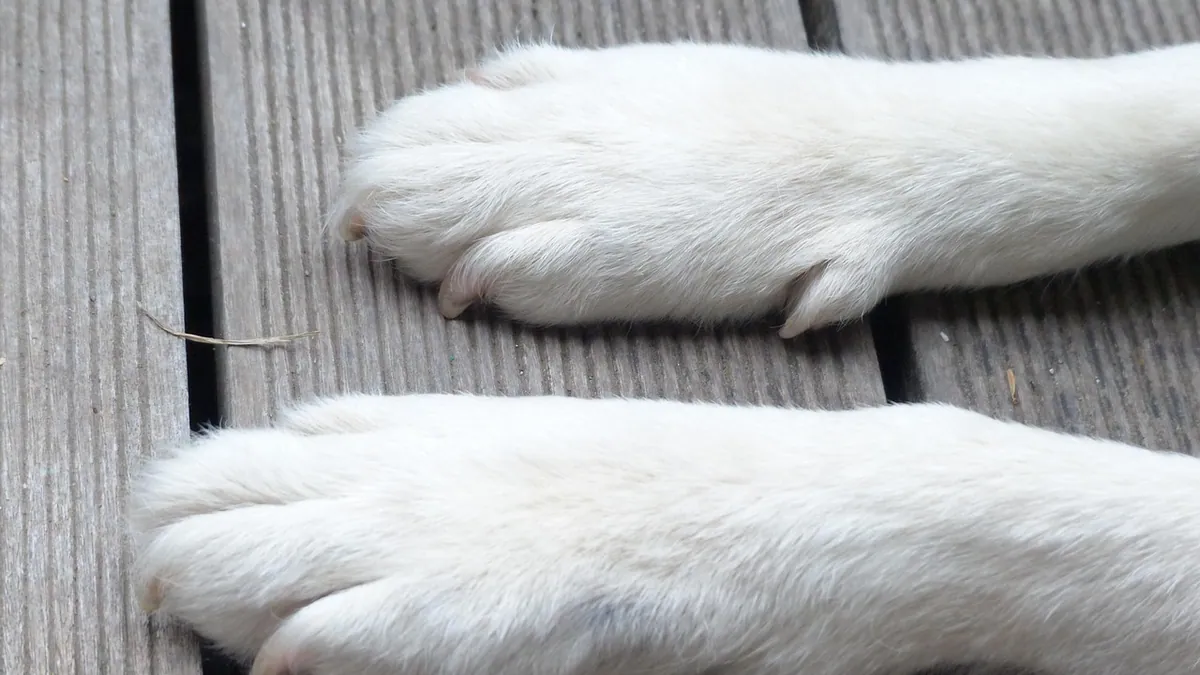
A foreign body in a dog's paw is any object stuck in or under the skin of the foot or leg, such as a thorn, grass seed, splinter, or piece of glass. Most dogs show sudden limping, constant licking at one spot, or swelling between the toes. Some objects work their way deeper over days and turn into an abscess, so early checking matters.
This article is educational and is not a substitute for veterinary diagnosis or treatment.
Quick Answer
- A dog that suddenly holds up one leg or licks one paw obsessively likely stepped on something.
- Grass seeds (foxtails) are the most common culprit in warm months because they burrow forward through skin.
- Small surface thorns and splinters can sometimes be removed at home with tweezers if your dog stays still.
- Any object that is deep, near a joint, bleeding heavily, or already causing swelling needs same-day veterinary care.
- Never cut into swollen tissue or dig around blindly with a needle, since this pushes debris deeper and causes infection.
What a Foreign Body in a Dog's Foot Looks Like
The classic sign is a dog that was fine an hour ago and now will not put weight on one leg. Your dog may hold the paw up, hop, or refuse to walk. Many dogs lick and chew at one specific toe or pad, sometimes until the fur is stained brown from saliva.
Look for a small puncture, a red or swollen area between the toes, a visible dark speck, or a tiny scab. Sometimes there is nothing obvious to see, especially with grass seeds that slip under the skin. Swelling that feels warm, a bad smell, or a soft squishy lump often means an abscess has formed.
Normal paws are dry, cool, and even in color. A little dirt is fine. What is not normal is a paw that is suddenly painful, puffy, or oozing.
Main Causes of a Foreign Body in a Dog's Leg or Paw
Dogs walk barefoot on surfaces we would never touch. That is why foot and leg injuries are so common.
| Cause | Typical clues | How urgent |
|---|---|---|
| Grass seed (foxtail) | Small entry wound between toes, swelling days later, seasonal | Same-day vet visit if you cannot see or pull it out |
| Thorn or splinter | Visible object, sudden limp, dog licks one spot | Home removal if shallow, vet if deep |
| Glass or metal shard | Bleeding, cut pad, object may be sharp | Emergency if bleeding is heavy or object is embedded |
| Bee sting or insect bite | Rapid swelling, pain, sometimes hives | Emergency if face swells or breathing changes |
| Torn nail or nail bed injury | Bleeding at the nail, nail bent sideways | Same-day vet visit |
| Foreign body that migrated deeper | Swelling, abscess, fever, lethargy | Same-day to emergency depending on severity |
Grass seeds deserve special attention. They are shaped so they move forward through tissue and cannot easily back out. In one reported case, a grass seed traveled all the way into a 4-month-old puppy's brain, causing seizures and neck pain, and required surgery to remove it [1]. That is an extreme outcome, but it shows how far these seeds can travel when they are not removed early.
Objects can also end up in places far from the foot. A dog can inhale a foreign body, as happened in one case where a grasshopper lodged in a bronchus and caused a persistent cough [2]. Another dog developed a penetrating foreign body in the heart after something entered the chest wall, which caused life-threatening cardiac tamponade [3]. These cases are rare, but they show why a wound that seems minor can become serious.
Red Flags That Make It an Emergency
Some signs mean you should stop reading and call an emergency clinic now.
- Bleeding that will not stop after five minutes of firm pressure.
- A deep object you cannot see the end of, especially near a joint, tendon, or the chest.
- A swollen leg that is hot, tight, or spreading upward.
- Your dog is pale, weak, breathing fast, or collapsing.
- A wound that goes all the way through the pad or into the leg.
- Sudden severe pain when you touch the leg, or a leg that looks bent the wrong way.
A broken bone can look like a foreign body injury at first. If the leg is unstable, swollen, or your dog will not let you touch it, treat it as a possible fracture and see our guide on Dog Broken Leg: Signs, First Aid, and Transport.
Why Paw Foreign Bodies Often Become Abscesses
A foreign body is a piece of dirt, plant material, or glass that does not belong in the body. Bacteria ride along with it. The body walls off the area with pus, and that collection of pus is an abscess.
Abscesses are common in paws because the tissue between the toes is soft and full of small pockets. A thorn or seed can sit there for days before swelling appears. By the time you see a lump, the object may be buried under a layer of pus and scar tissue.
This is why a dog paw abscess from a thorn often needs more than antibiotics. The object has to come out, or the infection keeps coming back. Your veterinarian may need to open and flush the area, and sometimes take an X-ray or ultrasound to find the object.
Constant licking makes everything worse. A dog that licks a sore paw can create a moist, infected wound on its own. If your dog will not stop licking, see Dog Licking Paw Causing Infection.
Safe Things You Can Do at Home While Waiting
You can help your dog without making the injury worse. Stay calm and go slowly.
Restrain gently
Use a muzzle if your dog might snap from pain. Even the sweetest dog can bite when a sore paw is touched. A towel wrapped around the body can help keep a small dog still.
Look, do not dig
Part the fur and look at the paw in good light. If you can clearly see a thorn or splinter sticking out, you can try to pull it with clean tweezers. Pull in the same direction the object entered. If it does not come easily, stop.
Do not squeeze the area hard, do not use a needle to dig, and do not cut the skin. These moves push debris deeper and can cause a serious infection.
Clean and cover
Rinse a minor wound with plain lukewarm water or saline. Pat dry. You can apply a thin layer of plain antibiotic ointment if your dog will not lick it off. Cover the paw with a clean sock or a light bandage, then tape it loosely. Check the toes for swelling every few hours, since a bandage that is too tight can cut off circulation.
Prevent licking
An Elizabethan collar (cone) is the simplest way to stop licking. A soft inflatable collar works for some dogs. Licking keeps the wound wet and introduces more bacteria.
Do not give human pain pills
Never give ibuprofen, acetaminophen, naproxen, or aspirin to a dog unless your veterinarian tells you to. These can cause serious harm. Your veterinarian will calculate the right dose of a safe pain medication based on your dog's weight and health.
What Your Veterinarian Will Check and Test
Your veterinarian will start with a hands-on exam. They will compare both paws, check the leg for swelling, and look between every toe. They may use a bright light and a magnifying lens.
If the object is not visible, imaging helps. X-rays show metal, glass, and some dense objects, but many plant materials like grass seeds do not show up well on plain X-rays. Ultrasound can find soft-tissue objects and fluid pockets. In one reported case, a splenic foreign body was found and removed with ultrasound guidance, which avoided major surgery [4]. The same imaging principles apply to paws and legs.
Blood work may be recommended if your dog is lethargic or if infection is suspected. If an abscess is present, your veterinarian may flush it, place a drain, and send you home with antibiotics and pain medication. Some wounds need to be opened and explored under sedation or anesthesia.
If your dog has a deep wound and you are worried about a larger object, our article on Dog Ate a Foreign Object: Signs of Obstruction and When to Go to the Vet covers swallowed objects, which are a different but related problem.
Preventing Foreign Body Injuries in Dogs
You cannot wrap your dog's paws every day, but you can lower the risk.
- Check paws after every walk, especially in tall grass, fields, and wooded areas.
- Keep the fur between the toes trimmed short so seeds and burrs cannot catch.
- Avoid foxtail season areas when the seeds are dry and ready to fall.
- Use protective booties on rough terrain, hot pavement, or sharp gravel.
- Keep nails trimmed so they do not catch and tear.
- Look at the paws during regular grooming, and treat small cuts early.
If your dog has a nail injury, it can look like a foreign body problem. See Dog Nail Infection: Signs, Causes, and Treatment for more on nail bed infections.
For general paw anatomy and care, our Dog Paw article explains the pads, nails, and common conditions.
Limitations and When to Contact a Veterinarian
No article can tell you whether the object in your dog's paw is shallow or deep. Only a hands-on exam and sometimes imaging can do that. Individual cases need a veterinarian.
Call your veterinarian the same day if:
- Your dog is limping and you cannot find or remove the object.
- There is swelling, warmth, or a bad smell.
- Your dog is licking one spot constantly.
- The wound is bleeding but controlled.
- Your dog had a previous paw abscess in the same spot.
Go to an emergency clinic now if:
- Bleeding is heavy or does not stop with pressure.
- Your dog is weak, pale, or breathing fast.
- The leg looks deformed or your dog cannot bear any weight at all.
- The object is deep, near a joint, or you cannot see its end.
- Your dog is vomiting, has a fever, or seems disoriented.
Schedule a routine visit if:
- The limp is mild and comes and goes.
- You found a small object and removed it, but the area stays red.
- Your dog keeps getting seeds or burrs stuck in the same paw.
Frequently Asked Questions
Can a dog walk on a paw with a foreign body?
Some dogs will keep walking on a sore paw, especially if the object is small or dull. Others will refuse to put any weight on it. If your dog is limping, assume there is pain and check the paw.
How do I know if my dog stepped on glass?
You may see a small cut, blood on the pad, or a shiny speck in the wound. Glass can be very sharp and may break into tiny pieces. Do not squeeze the area. Cover the paw and see a veterinarian, since glass often needs to be removed under sedation.
Will a grass seed work its way out on its own?
Usually no. Grass seeds are shaped to move forward, so they tend to burrow deeper instead of coming out. If you can see the seed near the surface, a veterinarian may remove it quickly. If it has already disappeared under the skin, imaging and possibly surgery are needed.
Can I use hydrogen peroxide on a dog's paw wound?
No. Hydrogen peroxide damages healthy tissue and slows healing. Rinse with plain lukewarm water or saline instead. If the wound looks infected, call your veterinarian.
How long does a paw abscess take to heal?
With proper treatment, many paw abscesses improve within a few days and heal over one to two weeks. Healing depends on whether the foreign body was fully removed, the size of the wound, and your dog's overall health. Your veterinarian will give you a specific timeline after examining your dog.
Related Articles
- Dog Ate a Foreign Object: Signs of Obstruction and When to Go to the Vet
- Dog Broken Leg: Signs, First Aid, and Transport
- Dog Paw
- Dog Licking Paw Causing Infection
- Dog Nail Infection: Signs, Causes, and Treatment
- Infected Dog Wound: Signs, Safe Cleaning, and Vet Treatment
- Paw Burns in Dogs: Signs, First Aid, and When to See a Vet
- Bump on Your Dog's Paw or Paw Pad: Causes and Care
- Dog Paw or Leg Injury: How to Tell If It's Sprained or Broken
References
- Successful intraoperative ultrasound-guided retrieval of intracranial grass seed foreign body in a 4-month-old puppy. Veterinary radiology & ultrasound : the official journal of the American College of Veterinary Radiology and the International Veterinary Radiology Association, 2023.
- Bronchial foreign body caused by a grasshopper in a dog. Veterinary research communications, 2025.
- Surgical management of a penetrating cardiac foreign body causing tamponade in a dog: case report. Australian veterinary journal, 2026.
- Ultrasound-guided removal of a splenic foreign body in a dog. The Canadian veterinary journal = La revue veterinaire canadienne, 2024.