Do Cats Jump Out of Windows? High-Rise Fall Risks Explained
By Dr. Zubair Khalid, DVM, MS, PhD ·
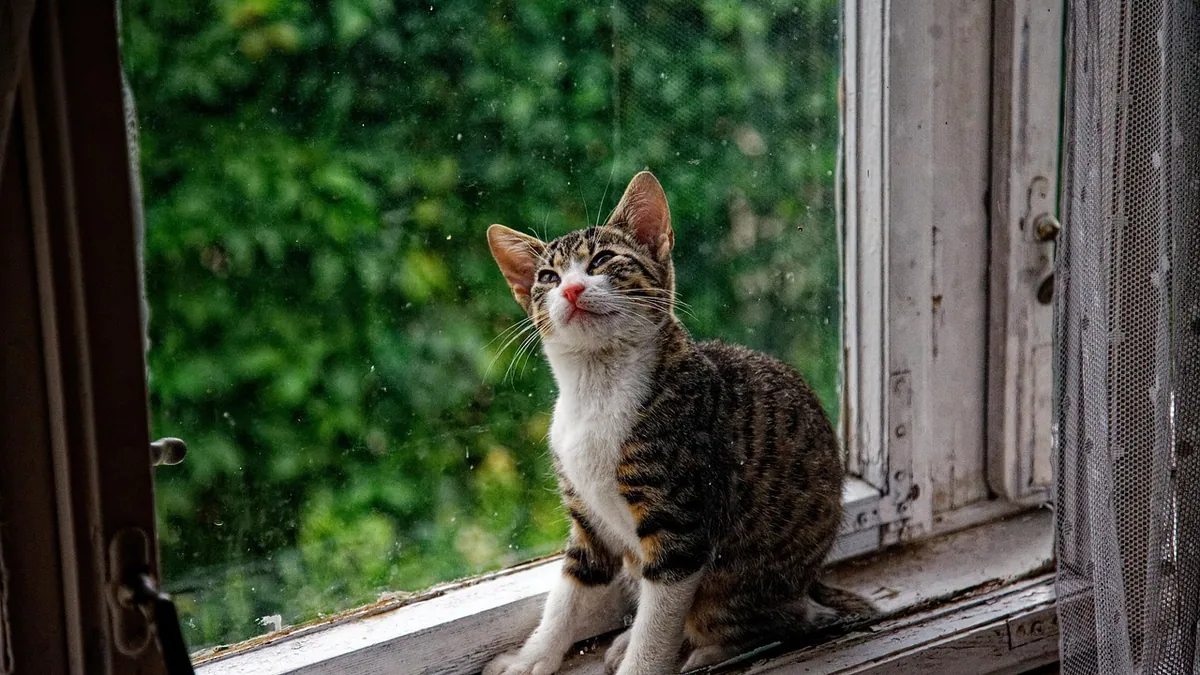
Cats do not usually jump out of windows on purpose. Most falls happen when a cat pushes against an open or unscreened window, loses footing, or lunges at a bird or bug and slips [1]. The result is a well-known veterinary emergency called high-rise syndrome, and it is almost always preventable.
This article is educational and is not a substitute for veterinary diagnosis or treatment.
Quick Answer
- Cats most often fall while stalking prey, playing, or leaning on a screen or open window, and about 75% of cats in one study had a history of high-risk behavior reported by their owners [1].
- Falls from as low as the third floor are common, and most cats in one large case series were under 1 year old [1].
- Cats that fall can look fine at first, then develop breathing trouble, shock, or internal bleeding within hours [2][3].
- Survival is often good with fast treatment, but injuries like lung contusions, broken femurs, and spinal damage are frequent [1].
- A secure window screen or a window that opens no more than a few inches is the single most effective prevention step.
What Is High-Rise Syndrome in Cats?
High-rise syndrome is the pattern of injuries a cat gets after falling from a height, usually from a window, balcony, or roof. Vets use the term for any fall from at least 4 meters, which is roughly 13 feet or about one and a half stories [2].
The injuries are not random. Cats tend to land feet-first, which concentrates force on the legs, chest, and face. That is why the classic pattern includes limb fractures, chest trauma, and head or mouth injuries [2]. In one large review of 1,125 cases, thoracic trauma appeared in 58.3% of cats and circulatory shock in 48.6% [2].
The name can be misleading. It sounds like the cat chose to jump. In reality, most falls are accidents, and the cat often had no clear intention of leaving the window at all [1].
Do Cats Jump Out of Windows on Purpose?
Rarely. Cats are drawn to windows because of the light, warmth, smells, and movement outside. A cat watching a bird may lean forward, shift weight onto a loose screen, or step onto a sill that is narrower than it looks.
A screen that pops out, a window with no screen, or a gap a cat can squeeze through turns normal curiosity into a fall. Owners in one study reported high-risk behaviors in about 75% of cats that fell, which means the warning signs were often visible before the accident [1].
Kittens are especially vulnerable. In one analysis, most affected cats were under 1 year old [1]. Young cats are lighter, faster, more reckless, and less experienced at judging distance and footing. If you have a kitten and an open window, treat that combination as an emergency waiting to happen.
Signs Owners Notice After a Fall
Some cats cry or limp right away. Others walk off the fall and seem normal for a while, which is one of the most dangerous parts of this condition. Internal injuries can worsen over the first hours.
Watch for:
- Fast, noisy, or open-mouth breathing
- Panting or a blue tint to the gums or tongue
- Pale or white gums
- Weakness, wobbling, or collapse
- Bleeding from the nose, mouth, or ears
- A broken tooth, split lip, or swollen face
- Limping or a leg held at an odd angle
- A rigid or painful belly
- Hiding, yowling, or refusing food
Breathing problems deserve special attention. In a study of 14 cats with high-rise syndrome, point-of-care ultrasound found pneumothorax (air trapped around the lungs) in 5 of the 14 cats, and the 2 cats in respiratory distress had it on both sides [3]. That kind of injury can be invisible to you at first.
If your cat is not eating after a fall, that is a separate warning sign worth taking seriously. Cats that stop eating can develop liver problems quickly, which is covered in Cat Not Eating for One Day: Why Cats Are at Higher Risk.
Causes and Risk Factors
The causes are simple and boring, which is good news because they are easy to fix.
Open or unscreened windows. This is the leading cause. A screen that is not secured can give way under a cat's weight.
Screens that are not locked or reinforced. A screen that fits loosely can pop out with a single push.
Balconies and railings. Cats can slip between bars or jump onto a railing and lose balance.
Young age. Cats under 1 year old made up most cases in one study [1].
Prey drive. Birds, squirrels, and insects at eye level trigger a lunge.
Heat and fresh air seeking. Cats lean into open windows on warm days.
High floors. Falls from the third floor were most common in one case series [1]. Higher floors are not always worse, which surprises many owners.
That last point matters. In one study, fall height, ground type, and injury type did not reliably predict survival [4]. Another study found no significant link between fall height and injury severity [1]. A cat can be badly hurt from a low floor and walk away from a high one. This is why vets do not use height to decide how worried to be.
How Veterinarians Diagnose High-Rise Syndrome
Diagnosis starts with the story. Tell your vet the height of the fall, what the cat landed on, how much time has passed, and whether the cat has been treated anywhere else [2].
Your vet will then do a full physical exam, checking breathing, gum color, heart rate, pulses, belly pain, and limb stability. They may use the Animal Trauma Triage Score, a standardized scoring system, to grade severity. In one study of 60 cats, that score predicted death much better than fall height or ground type [5]. A separate study reached the same conclusion: only the trauma score was significant for predicting survival, while height, injury type, and ground type were not [4].
Imaging usually follows. X-rays are used to look for fractures, lung bruising, and air around the lungs. Ultrasound is used to check the chest and belly. In the 14-cat study, abdominal ultrasound was normal in every cat, while lung ultrasound picked up pneumothorax, B-lines, and lung consolidation [3]. Blood work helps assess shock, organ function, and blood loss.
The table below summarizes the most common injuries reported in high-rise syndrome cases.
| Injury Type | Reported Frequency | Source |
|---|---|---|
| Thoracic (chest) trauma | 58.3% | [2] |
| Circulatory shock | 48.6% | [2] |
| Pulmonary contusion or hemorrhage | 45% | [1] |
| Femoral fracture | 17.5% | [1] |
| Craniocerebral (head) injury | 2.8% | [2] |
| Thoracolumbar spinal injury (among spinal cases) | 50% | [1] |
Treatment Options
Treatment depends on what is injured, and it often happens fast. Cats in shock need intravenous fluids, pain control, oxygen, and warmth. Cats with pneumothorax may need the trapped air removed with a needle or chest tube [3].
Fractures may need surgery, splinting, or cage rest. Spinal injuries may need advanced imaging and, in some cases, surgery. Head injuries need close monitoring for swelling and seizures. Mouth and facial wounds may need cleaning, stitching, or tooth extraction.
Your vet calculates every drug dose from your cat's weight, pain level, and overall health. There is no safe at-home dose for a cat that has fallen, and human pain medications can be toxic to cats.
Some cats need referral to a specialty hospital for surgery or intensive care. Ask your vet what level of care your cat needs and what the likely costs are before treatment begins.
Recovery, Outlook, and Long-Term Management
Survival rates in recent reports are encouraging. One study of 120 cats found an overall survival rate of 92.5% [1]. Another study of 60 cats reported that 13% did not survive to discharge [5]. In the 14-cat ultrasound study, 12 cats survived to discharge and 2 were euthanized because of poor prognosis or financial limits [3].
Recovery time depends on the injuries. Simple fractures and bruises may heal in weeks. Spinal or head injuries can take months and may leave lasting weakness or behavior changes. Some cats need physical therapy, restricted activity, or help reaching favorite spots.
If your cat is older or has arthritis, jumping down from furniture or cat trees can become risky on its own. A ramp, steps, or a low perch can help. See How to Help Your Senior Cat Get Up and Down from High Places Safely for practical setup ideas.
After a fall, some cats become anxious or hide more than usual. If your cat is hiding after a move or a stressful event, this guide may help: Cat Hiding After Moving: How to Help Your Cat Adjust.
Limping that starts after a jump or fall is common and can mean anything from a sprain to a fracture. Cat Limping After a Jump: Is It a Sprain or a Break? explains what to watch for.
Prevention: Window Safety and Screens
Prevention is the part you control, and it works.
Use sturdy screens on every window you open. A screen that is screwed or locked into the frame is far safer than one that sits loosely.
Open windows only a few inches. A gap too narrow for a cat's head and shoulders prevents most escapes.
Check screens regularly. Push on them with your hand. If they flex, pop, or rattle, fix or replace them.
Skip the balcony. Cats can slip through railings or jump onto ledges. If you use a balcony, block access entirely.
Use window stops or locks. These keep a window from opening wider than you intend.
Give cats safe window time. A cat tree or perch placed a few feet back from the glass lets your cat watch the outdoors without leaning on a screen.
Keep screens closed during spring and summer. Open-window season is high-rise season.
Neuter and enrich. Bored, restless cats seek stimulation at windows. Play sessions, puzzle feeders, and vertical space indoors reduce that drive.
Consider a catio. A screened outdoor enclosure gives fresh air and views with no fall risk.
If you live in an apartment above the first floor, treat every open window as a hazard. The third floor was the most common fall height in one study, and cats under 1 year old were most affected [1]. A single loose screen is all it takes.
Limitations and When to Contact a Veterinarian
No article can tell you how badly your cat is hurt. Only a veterinarian who examines your cat can do that. Individual cases need a veterinarian, and the timing of care often matters more than anything else.
Call an emergency clinic now if your cat:
- Is breathing fast, hard, or with an open mouth
- Has pale, white, or blue gums
- Is limp, unresponsive, or having trouble standing
- Is bleeding from the nose, mouth, or ears
- Has a swollen or rigid belly
- Fell from any height and is now hiding or crying
Contact your vet the same day if your cat:
- Fell but seems normal, since internal injuries can appear later [2][3]
- Is limping or holding up a leg
- Has a broken tooth, split lip, or facial swelling
- Is vomiting or refusing food
- Seems painful when touched
Schedule a routine visit if your cat:
- Had a minor slip from a low surface and is eating, playing, and moving normally
- Needs a general checkup or help with arthritis and jumping
Frequently Asked Questions
Do kittens jump out of windows?
Kittens are the highest-risk group for window falls. They are curious, fast, and poor at judging edges, and most cats in one case series were under 1 year old [1]. Keep screens locked and windows barely open in any home with a kitten.
Can a cat survive a fall from a high floor?
Many cats do survive, and reported survival rates are often above 90% with treatment [1]. Survival depends more on the injuries and the trauma score than on the height of the fall [4][5]. Fast veterinary care gives your cat the best chance.
How long after a fall can symptoms appear?
Symptoms can show up within minutes or develop over several hours. Breathing problems and internal bleeding may not be obvious at first [2][3]. If your cat fell, have a vet check it the same day even if it seems fine.
Is a screen enough to stop a cat from falling?
A screen helps only if it is secure and cannot pop out. Loose screens give way under a cat's weight. Use locked or reinforced screens, window stops, and open windows no more than a few inches.
What should I do right after my cat falls?
Keep your cat calm and confined, do not give any medication, and call your vet or an emergency clinic right away. Tell them the height of the fall and what your cat landed on [2]. Bring your cat in even if it looks normal, because hidden injuries are common.
Related Articles
- How to Help Your Senior Cat Get Up and Down from High Places Safely
- Cat Overgrooming: Why It Happens and What to Do
- Cat Limping After a Jump: Is It a Sprain or a Break?
- Cat Not Eating for One Day: Why Cats Are at Higher Risk
- Cat Hiding After Moving: How to Help Your Cat Adjust
- Why Is My Dog Suddenly Scared of the Stairs?
- Why Cats Jump Off Balconies: High-Rise Syndrome Risks
- Is It Safe for Cats to Jump from High Places?
- How Far and High Can a Cat Jump? Facts and Safety
References
- Radiographic and Ultrasonographic Study of the Etiology of High-Rise Syndrome in Cats: A Retrospective Analysis. Veterinary medicine and science, 2026.
- High-rise syndrome in cats (part 2): injury patterns and survival rate. Journal of feline medicine and surgery, 2025.
- Point-of-Care Ultrasound and Clinical Findings in 14 Cats With High-Rise Syndrome. Journal of veterinary emergency and critical care (San Antonio, Tex. : 2001), 2026.
- Survival Rate of High-Rise Syndrome Cases Using Animal Trauma Triage Score in Cats. Veterinary and comparative orthopaedics and traumatology : V.C.O.T, 2025.
- The Animal Trauma Triage Score outperforms the VetCOT score in cats with high-rise syndrome. The Journal of small animal practice, 2026.