How to Tell If My Puppy Needs to Poop: Constipation Signs
By Dr. Zubair Khalid, DVM, MS, PhD ·
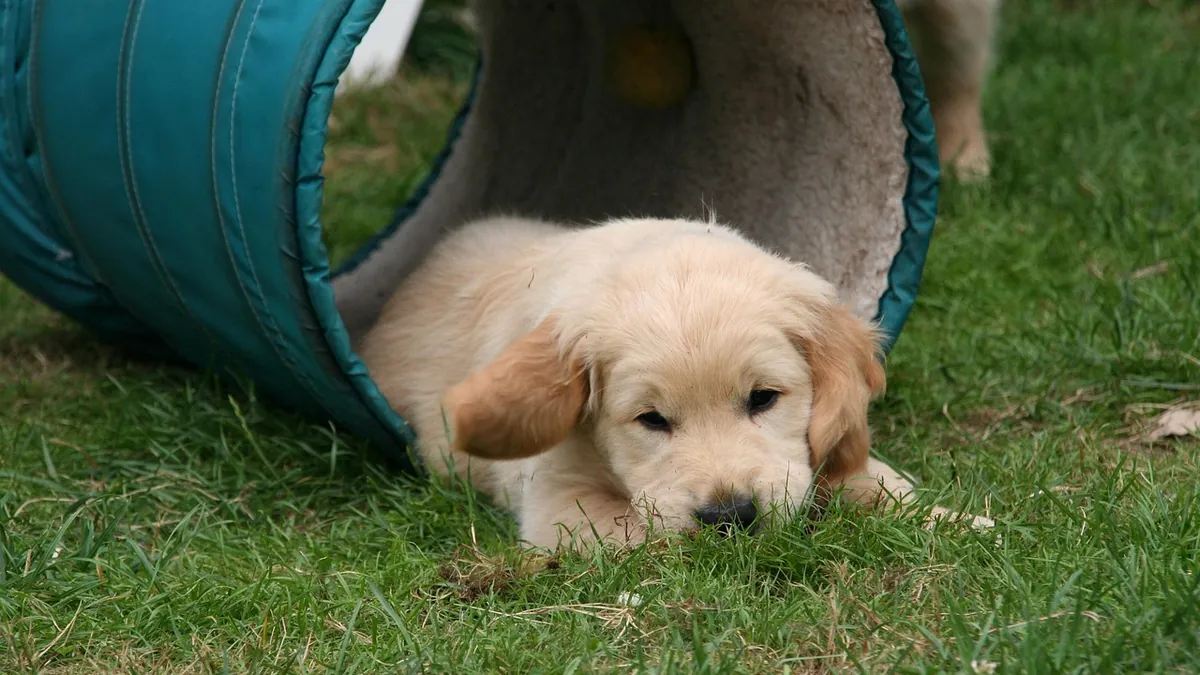
Puppies usually signal a need to poop with circling, sniffing the ground, squatting, whining at the door, or restlessness right after eating or waking. If your puppy strains, cries, or goes more than a day or two without a bowel movement, that points to constipation. This article is educational and is not a substitute for veterinary diagnosis or treatment.
Quick Answer
- A healthy puppy typically poops one to five times a day, often within 5 to 30 minutes of eating, waking, or playing.
- Common potty signals include circling, sniffing the floor, squatting, pacing, whining, or heading to the door.
- Straining for more than a few minutes, crying while squatting, or passing dry, hard pellets are constipation signs.
- A puppy that has not pooped in 24 to 48 hours, or is vomiting or lethargic, needs a veterinarian.
- Never give human laxatives, enemas, or fiber supplements without veterinary guidance, because the dose depends on your puppy's weight and health.
What a Potty Signal Looks Like and What Is Normal
Puppies are creatures of habit, and their bodies run on a schedule. Most puppies need to poop shortly after a meal because eating triggers a reflex that moves stool through the colon. They also tend to go right after waking up, after a nap, and after a burst of play.
Watch for these behaviors, which are the clearest signs your puppy has to go:
- Circling in place, sometimes several times
- Sniffing the ground intently and walking with a lowered head
- Squatting with the back rounded
- Pacing, whining, or scratching at the door
- Sudden restlessness or leaving the room to find a corner
Some puppies give almost no warning at all, especially under 12 weeks old. That is normal. Their bladders and bowels are small, and the nerve signals that tell them "I need to go" are still maturing.
What normal puppy poop looks like
Normal stool is firm but not hard, log shaped, and easy to pick up. Color ranges from chocolate brown to tan. A little mucus on the surface can be normal. What you do not want to see is stool that comes out as small dry pellets, or a puppy that postures to poop and nothing comes out.
Frequency matters too. A young puppy on a regular feeding schedule often poops two to five times daily. An adult dog may go once or twice. If your puppy's pattern suddenly drops to once a day or less, pay attention.
How constipation looks different
Constipation is the infrequent or difficult evacuation of feces, and the stool is typically dry and hard [1]. The classic signs are straining (called tenesmus) and passing firm, dry feces [1]. As stool sits in the colon longer, it becomes drier, harder, and more difficult to pass [1].
That last point explains a lot. A puppy who holds stool because of stress, a new environment, or a painful bowel movement can quickly make the problem worse. The longer it waits, the harder it gets to go.
Why Puppies Get Constipated
There are many possible reasons, and they range from harmless to serious. Large intestinal disease in dogs can come from infections, parasites, inflammatory disease, tumors, blood vessel problems, and motility disorders [2]. That is a wide list, which is why a physical exam matters.
| Cause | Typical clues | How urgent |
|---|---|---|
| Diet change or too little fiber | Recent food switch, dry hard stool, normal energy | Routine visit if it lasts more than 2 days |
| Not enough water | Dry gums, small hard stool, hot weather | Same day if the puppy seems dull |
| Swallowed foreign material (toy, bone, hair) | Straining, vomiting, painful belly, no stool | Emergency now |
| Parasites or intestinal infection | Diarrhea alternating with straining, mucus, weight loss | Same day to routine, depending on energy |
| Stress or a new routine | Only happens after travel, boarding, or a move | Routine, watch closely |
| Enlarged prostate (older male dogs) | Straining to poop, blood in urine, changes in prostate size [3] | Routine visit soon |
| Colonic narrowing or stricture | Long history of straining, thin ribbon-like stool | Same day |
A few notes on that table. Benign prostatic hyperplasia is the most common disease in older male dogs, and an enlarged prostate can cause tenesmus and constipation [3]. It rarely causes life-threatening problems, but it does affect quality of life [3]. That is a problem for adult dogs, not young puppies, but it is worth knowing if you also have an older male dog at home.
Parasites deserve a mention because they are so common in puppies. If you see anything that looks like rice grains or spaghetti in the stool, read How To Tell If Dog Has Worms In Poop and How To Tell If Dog Has Worms In Stool.
Red Flags That Make It an Emergency
Call an emergency clinic right away if your puppy has any of these:
- A swollen, hard, painful belly
- Vomiting, especially repeated vomiting
- Unproductive straining for more than 10 to 15 minutes
- Crying or yelping when trying to poop
- No bowel movement for more than 48 hours
- Blood in the stool or black tarry stool
- Collapse, weakness, or extreme lethargy
- A suspected swallowed object
Obstipation is the severe form of constipation, where the colon is impacted and enemas become necessary [1]. When the colon is irreversibly stretched and loses its ability to contract, that is called megacolon, and surgery may be required [1]. These are the cases you never want to wait out at home.
Safe Things You Can Do at Home While You Wait
If your puppy is bright, playful, eating, and drinking, and the only issue is a missed bowel movement, a few gentle steps are reasonable.
Encourage water intake
Dehydration makes stool harder. Offer fresh water often. You can add a splash of water to kibble or offer a little plain unsalted broth. Do not force fluids.
Add moisture and gentle fiber to the meal
Increasing dietary fiber has been shown to improve fecal scores in dogs with chronic intestinal disease [4]. In one study, median total dietary fiber rose from 1.7 g per 100 kcal to 4.7 g per 100 kcal, and fecal scores improved over a median of 21 weeks [4]. That was a long-term dietary change in dogs with chronic enteropathy, not a quick fix for a constipated puppy, so treat it as background instead of a home remedy.
A spoonful of plain canned pumpkin is a common, low-risk addition. Keep it small. Too much fiber can cause gas and loose stool.
Keep the routine steady
Take your puppy out on the same schedule every day, especially after meals, naps, and play. Praise calmly when they go. Stress and schedule changes are common triggers for a missed poop.
Gentle activity
A short, calm walk can help move things along. Avoid intense exercise right after a big meal.
What not to do
Do not give human laxatives, stool softeners, mineral oil, or enemas. Do not use a rectal thermometer as a "treatment." Do not give any medication without a veterinarian's guidance. Doses depend on your puppy's weight and health, and the wrong product can cause serious harm.
If home steps do not work within 24 hours, or if your puppy seems uncomfortable at all, call your vet. For more on this, see Dog Constipation: Signs, Home Remedies, and When to See a Vet and Dog Constipation: What Should You Do?.
What Your Veterinarian Will Check and Test
Your vet will start with a full history. Be ready to answer:
- When did your puppy last poop, and what did it look like?
- How many times a day does your puppy normally go?
- Any diet changes, new treats, or possible swallowed objects?
- Any vomiting, appetite change, or energy change?
- What deworming and vaccines are up to date?
Next comes a physical exam. The vet will feel your puppy's abdomen and may perform a rectal exam to check for impacted stool, a mass, or a narrowed area. Constipation is confirmed by an impacted colon on physical examination and radiographs [1].
Depending on what they find, your vet may recommend:
- Fecal testing for parasites and infection
- X-rays to look for stool burden, foreign objects, or masses
- Blood work to check hydration, electrolytes, and organ function
- Ultrasound or colonoscopy with biopsy if large intestinal disease is suspected [2]
Treatment depends on the cause. Adding to or changing the diet is usually successful for simple constipation [1]. More severe cases may need enemas [1]. If the colon has lost its ability to contract, surgery may be needed [1]. For large intestinal disease, treatment is directed at the underlying cause along with diet changes and supportive care [2].
How to Prevent Constipation and Monitor Your Puppy
Prevention is mostly about routine, hydration, and paying attention.
- Feed a consistent, balanced diet made for puppies. Sudden food switches are a common trigger.
- Keep water available at all times and refresh it daily.
- Stick to a potty schedule. Take your puppy out after every meal, nap, and play session.
- Keep up with parasite prevention and wellness visits.
- Track poop frequency and appearance for the first few months. A simple note on your phone works.
- Introduce new treats or foods one at a time so you can spot the culprit.
If your puppy has repeated episodes of straining, or if the stool is consistently dry and hard, that is worth a routine visit even if your puppy seems fine. Chronic constipation can lead to a stretched, poorly contracting colon over time [1]. Catching it early is much easier to manage than treating it late.
For a deeper look at when straining crosses the line, read Dog Constipation and Straining: How to Tell If It's Serious.
Limitations and When to Contact a Veterinarian
This article cannot tell you what is happening inside your specific puppy. Only a veterinarian who examines your puppy can do that. Individual cases need a veterinarian, and the timing below is a general guide, not a diagnosis.
Contact your veterinarian the same day if:
- Your puppy has not pooped in 24 to 48 hours
- Straining lasts more than a few minutes or happens repeatedly
- You see dry, hard pellets, mucus, or a small amount of blood
- Your puppy is eating less or seems uncomfortable
- Home steps have not helped within 24 hours
Go to an emergency clinic now if:
- The belly is swollen, hard, or painful to touch
- Your puppy is vomiting, especially repeatedly
- There is unproductive straining with crying or yelping
- Your puppy is weak, collapsed, or unresponsive
- You suspect your puppy swallowed a toy, bone, or other object
Schedule a routine visit if:
- Constipation keeps coming back
- Stool is always dry and hard despite a good diet
- Your puppy strains during most bowel movements
- You want help building a better potty and feeding schedule
Frequently Asked Questions
How often should a puppy poop each day?
Most puppies poop two to five times a day, usually within half an hour of eating, waking, or playing. Frequency drops as puppies grow and their meals become more spaced out. A sudden drop from several times a day to once or not at all is the signal to watch.
Can a puppy be constipated and still have diarrhea?
Yes, this happens more often than people expect. Straining can produce small amounts of soft or mucus-coated stool even when the colon is backed up. Parasites and intestinal infections are common causes of this pattern, so a fecal test is a smart next step.
Is it normal for a puppy to strain a little before pooping?
A brief squat and a small push is normal. What is not normal is straining for several minutes, crying, circling without producing stool, or producing only tiny dry pellets. Those are constipation signs and should be checked.
Can I give my puppy a human laxative?
No. Do not give human laxatives, stool softeners, or enemas to a puppy without veterinary guidance. The dose depends on your puppy's weight and health, and some products can cause serious harm in young dogs. Call your vet first.
Does pumpkin really help a constipated puppy?
Plain canned pumpkin is a common low-risk addition because it adds moisture and gentle fiber. Keep the amount small, since too much fiber can cause gas or loose stool. If your puppy does not improve within 24 hours, or seems uncomfortable, call your vet.
Related Articles
- How To Tell If Dog Has Worms In Poop
- How To Tell If Dog Has Worms In Stool
- Dog Constipation: Signs, Home Remedies, and When to See a Vet
- Dog Constipation: What Should You Do?
- Dog Constipation and Straining: How to Tell If It's Serious
- How Do I Know If My Dog Has A Uti
- Puppy Not Pooping as Much: Causes and When to Call the Vet
- Puppy Only Pooping Once a Day? Normal or Constipated?
- Why Is My Puppy Having a Hard Time Pooping? Causes and Help
References
- Constipation, Obstipation, and Megacolon in Small Animals - Digestive System. Merck Veterinary Manual.
- Large-Intestinal Disorders in Dogs and Cats: Diagnosis, Management, and Clinical Outcomes. The Veterinary clinics of North America. Small animal practice, 2026.
- Diagnosis and Treatment of Benign Prostatic Hyperplasia in Dogs: New Approaches. Veterinary medicine international, 2025.
- Increased dietary fiber intake improves fecal and clinical activity scores in dogs with chronic enteropathy. Journal of the American Veterinary Medical Association, 2026.