How to Tell If Your Dog Needs to Pee: 7 Signs to Watch
By Dr. Zubair Khalid, DVM, MS, PhD ·
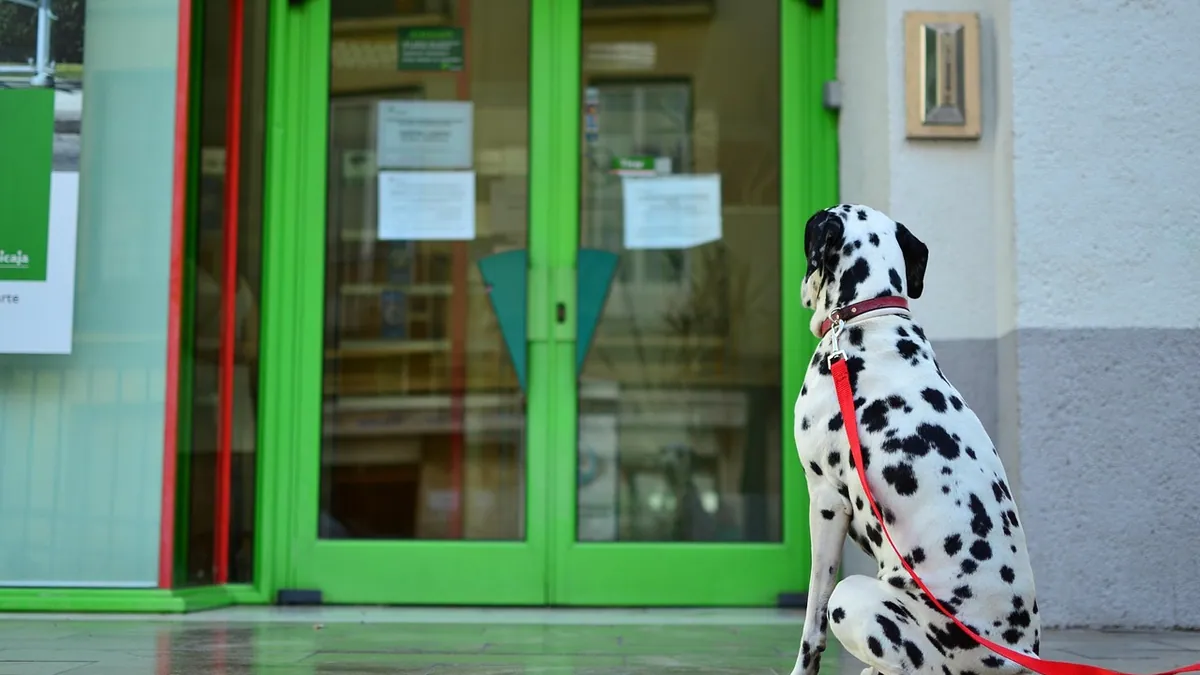
Most dogs signal a full bladder with circling, sniffing the floor, pacing, or standing by the door. Learning these signals helps you get your dog outside in time and helps you spot the difference between a normal potty request and a medical problem. This guide covers how to tell if my dog needs to pee, what each sign means, and when to call your veterinarian.
This article is educational and is not a substitute for veterinary diagnosis or treatment.
Quick Answer
- A dog who needs to pee usually circles, sniffs the ground, paces, whines, or waits near the door.
- Puppies and senior dogs give shorter, less obvious warnings and need more frequent trips outside.
- Sudden urgency, accidents in a house-trained dog, or straining with little urine are medical signs, not training problems.
- Never withhold water to reduce peeing unless your veterinarian tells you to.
- If your dog strains and produces no urine, or the belly looks swollen and painful, treat it as an emergency.
What Normal Potty Signals Look Like
A healthy adult dog who needs to go out often shows a predictable set of behaviors. You may see circling in one spot, intense sniffing of the floor or ground, pacing near the door, or staring at you. Some dogs whine, bark, or scratch at the door. Others simply stand quietly by the exit and wait.
The signal can change with age and training. A dog who was taught to ring a bell may ring it. A dog with no formal training may just get restless. The important point is that the pattern repeats and your dog settles down after going outside.
Normal urine in a healthy dog is usually yellow and clear to slightly cloudy. Most adult dogs can hold their bladder for several hours, though the exact time depends on size, age, water intake, and routine. Puppies have much smaller bladders and far less control, so they need to go out far more often.
How to tell if my puppy has to pee
Puppies often give very short warnings. You may see sudden sniffing, a quick circle, or a squat with almost no preamble. Some puppies just stop playing and wander off. Because their bladder control is still developing, take them out after waking, after eating, after play, and before bed. If your puppy pees indoors, clean it with an enzymatic cleaner so the spot does not keep attracting them back.
How to tell if my dog peed
If you are not sure whether your dog actually went, check the usual spots. Look for wet patches, a stronger urine smell, or damp fur around the belly and rear. On carpet, urine may leave a dark ring or a stiff patch once dry. A blacklight can help you find dried spots. If you keep finding new wet spots but never see your dog go, that is worth a vet visit.
How to tell if my dog peed on my bed
Bed accidents are often found by smell first. Urine on a mattress leaves a distinct ammonia odor and a damp or stiff patch, sometimes with a yellow stain on sheets. If your dog has been reliably house-trained and suddenly wets the bed, think medical cause first. It can also happen with anxiety, a change in routine, or a dog who cannot get to the door in time.
7 Signs Your Dog Needs to Pee
- Circling or turning in place, often while sniffing the floor.
- Pacing or restlessness, especially near the door or in the room where you usually take them out.
- Sniffing the ground or floor intensely and repeatedly.
- Whining, barking, or pawing at you or the door.
- Standing at the door or staring at you and then at the exit.
- Squatting frequently with little or no urine produced.
- Licking the genital area or showing a sudden change in posture.
Signs 1 through 5 are usually normal communication. Signs 6 and 7 lean toward a medical problem, especially if they are new. Frequent squatting with small amounts can point to inflammation or irritation in the lower urinary tract. Licking at the vulva or prepuce can also signal discomfort.
What the Sign Looks Like and What Is Normal
It helps to sort what you see into three buckets: normal potty requests, urgency, and incontinence.
A normal potty request is a dog who signals, goes outside, urinates a normal amount, and comes back in comfortably. The behavior is consistent with their routine.
Urgency looks different. Your dog may ask to go out constantly, squat many times, or rush to the door and then only pass a small amount. Straining to urinate, passing blood, or crying while going are signs of lower urinary tract disease. In one study of dogs with polypoid cystitis, the most common presenting signs were blood in the urine (38%), straining to urinate (25%), and frequent urination (22%) [1].
Incontinence means urine leaks out without your dog choosing to go. You may find wet spots where your dog was sleeping or notice dribbling when they stand up. This is different from a house-training lapse. It is also different from marking, which is a deliberate small spray, usually on vertical surfaces, and is more common in intact males.
Main Causes Behind These Signs
| Cause | Typical clues | How urgent |
|---|---|---|
| Normal full bladder | Circles, sniffs, waits at door, settles after going out | Not urgent |
| Urinary tract infection | Frequent small pees, straining, blood, licking | See vet within a day or two |
| Bladder stones | Straining, blood in urine, pain, sometimes retention | See vet promptly |
| Incontinence (leaking) | Dribbling while resting or sleeping, no posturing | Routine visit |
| Marking behavior | Small sprays on vertical surfaces, often intact males | Training issue, not urgent |
| Anxiety or routine change | Accidents after stress or schedule shifts | Behavior plan, routine visit if unsure |
| Neurologic or spinal pain | Leaking plus back pain or stiffness | See vet soon |
Urinary tract infections and bladder stones often overlap in signs. In a study of working dogs, dogs with bladder stones showed abdominal pain, painful urination, blood in the urine, and urinary retention, and urinalysis showed protein and blood with calcium oxalate or struvite crystals [2]. Those findings are why a urine sample and imaging matter so much.
Incontinence has several possible causes. One report described a young spayed dog with urethral sphincter mechanism incontinence that did not respond to standard medication, and the signs resolved after treatment for lower back pain [3]. That case shows that not every leak is a bladder problem alone, and a full workup can matter.
Less common causes exist too. Bladder masses can cause straining and frequent urination, and one dog with a bladder mass was found to have parasite larvae in the urine along with cancer [4]. These are uncommon, but they are why persistent signs deserve testing.
If your dog is drinking and peeing more than usual overall, see Why Is My Dog Peeing So Much?. If you suspect an infection, How Do I Know If My Dog Has A Uti walks through the common clues.
Red Flags That Make It an Emergency
Some urinary signs cannot wait. Get emergency care right away if you see any of these:
- Your dog strains and strains but produces no urine at all.
- The belly looks swollen, tight, or painful to touch.
- Your dog cries out or cannot settle while trying to urinate.
- There is a large amount of blood in the urine.
- Your dog collapses, seems weak, or vomits along with urinary signs.
- Your dog cannot walk or seems to have lost control of the back legs.
A complete blockage is life threatening and can become fatal within hours to a day. Do not wait to see if it passes. If your dog is straining but still passing urine, that is urgent too, and same-day care is the safer choice. Dog Straining to Pee: Emergency or Urgent? explains how to judge the difference.
Safe Things You Can Do at Home While Waiting
While you wait for your appointment, keep things simple and low risk.
- Offer free access to fresh water. Do not restrict water unless your veterinarian specifically tells you to.
- Take your dog out more often, including a late-night trip, to reduce accidents.
- Keep a log of when your dog pees, how much, and what it looks like.
- Note any straining, blood, accidents, or leaking, and bring the log to the visit.
- Use an enzymatic cleaner on accident spots to remove odor.
- Keep your dog calm and avoid long, strenuous activity if they seem uncomfortable.
- Do not give human medications. Never give human pain relievers, which can be toxic to dogs.
If your dog seems dehydrated, look for tacky gums, skin that stays tented when gently pinched, or unusual lethargy. Dog Dehydration Symptoms: How to Tell and What to Do covers the signs and what to do next.
What Your Veterinarian Will Check and Test
Your veterinarian will start with a full history and physical exam. They will ask about frequency, urgency, accidents, water intake, and any changes in behavior. They will feel your dog's abdomen and may check the back and spine for pain.
Testing usually includes:
- Urinalysis to look for infection, crystals, blood, and concentration.
- Urine culture and sensitivity if infection is suspected.
- Blood work to check kidney values, blood sugar, and other causes of increased drinking and urination.
- Imaging such as ultrasound or X-rays to look for stones, masses, or bladder wall changes.
- A neurologic or orthopedic exam if leaking or back pain is part of the picture.
In the polypoid cystitis case series, ultrasound findings included polypoid structures in 44% of dogs, broad-based masses in 26%, and bladder wall thickening in 25% [1]. That is the kind of detail imaging can reveal when simple tests are not enough.
Treatment depends on the cause. Infections are treated with antibiotics chosen from a culture. Stones may need a special diet or surgery. Incontinence may respond to medication, and in some cases other problems such as back pain need treatment too [3]. Your veterinarian calculates any medication dose from your dog's weight and health, so never guess at a dose yourself.
Prevention and Monitoring
Good habits prevent a lot of accidents and catch problems early.
- Keep a consistent potty schedule, including first thing in the morning and right before bed.
- Take puppies out often and reward them immediately after they go outside.
- Watch water intake. A sudden increase in drinking is a common early clue.
- Check urine color and smell when you can, and note any change.
- Keep senior dogs on a routine visit schedule, since incontinence and other issues become more common with age.
- Ask your veterinarian about baseline urine testing at annual exams, especially for older dogs.
- If your dog has a seizure disorder, know that urination during or after a seizure is common. In a survey of owners of epileptic dogs, 79.1% reported urination as an autonomic sign [5]. That is different from a house-training problem.
If your dog's signals change suddenly, treat it as new information. A dog who used to sleep through the night and now asks to go out twice may be telling you something.
Limitations and When to Contact a Veterinarian
This article cannot tell you what is wrong with your individual dog. Only a veterinarian who examines your dog can do that. Use the timing below as a guide.
Call for a same-day or next-day visit if your dog has frequent small pees, straining with some urine produced, blood in the urine, new accidents in a house-trained dog, or leaking while resting.
Go to an emergency clinic now if your dog strains with no urine produced, has a painful or swollen belly, cries while trying to urinate, passes a large amount of blood, or seems weak or collapsed.
Schedule a routine visit if the problem is mild, long-standing, or mainly a training concern, such as marking or occasional accidents after a schedule change.
Frequently Asked Questions
How often should an adult dog pee?
Most healthy adult dogs urinate roughly three to five times a day, though this varies with size, diet, water intake, and routine. Puppies and senior dogs usually need more trips. A sudden change from your dog's normal pattern is more meaningful than the exact number.
Why is my dog asking to go out so often but barely peeing?
Frequent trips with small amounts often point to irritation or inflammation in the lower urinary tract. Infection, stones, and other bladder problems can all cause this pattern. Collect a urine sample if you can and call your veterinarian.
Can a dog hold its pee all day?
Most adult dogs can hold their bladder for several hours, but holding it all day is not healthy and raises the risk of accidents and urinary problems. Arrange a midday break if you are gone long hours. Puppies cannot hold it that long at all.
Is it normal for a dog to pee during a seizure?
Yes, urination is a commonly reported sign around seizures. In one owner survey, 79.1% of dogs with epilepsy were reported to urinate as part of the seizure event [5]. Mention it to your veterinarian, since it can help with seizure tracking.
Does leaking urine mean my dog is just getting old?
Age alone does not explain leaking, and there is often a treatable cause. Hormone-related incontinence, back pain, infection, and other conditions can all play a role. A veterinary exam and testing can sort out which one applies to your dog.
Related Articles
- Why Is My Dog Peeing So Much?
- How Do I Know If My Dog Has A Uti
- Dog UTI Symptoms: How to Recognize and What to Do
- Dog Dehydration Symptoms: How to Tell and What to Do
- Dog Straining to Pee: Emergency or Urgent?
- How Do You Know If Your Dog Has Worms Symptoms
- Dog Not Holding Pee: Causes and When to See a Vet
- How Often Should Dogs Poop and Pee?
- Clear Dog Pee: Is It Normal or a Warning Sign?
References
- Polypoid Cystitis: A Retrospective Case-Series of 112 Dogs. Journal of veterinary internal medicine, 2025.
- Comprehensive diagnostic evaluation of urolithiasis and cystitis in K9 dogs in Iraq: Clinical, laboratory, and imaging correlates. Open veterinary journal, 2025.
- Treatment of lower back pain to resolve symptoms of canine urethral sphincter mechanism incontinence. Open veterinary journal, 2025.
- Microfilaria in the Urine of a Dog with Concurrent Urinary Bladder Sarcoma. Journal of the American Animal Hospital Association, 2025.
- Owner reported prevalence of autonomic signs in epileptic dogs. Frontiers in veterinary science, 2026.