Why Is My Kitten's Belly Bloated?
By Dr. Zubair Khalid, DVM, MS, PhD ·
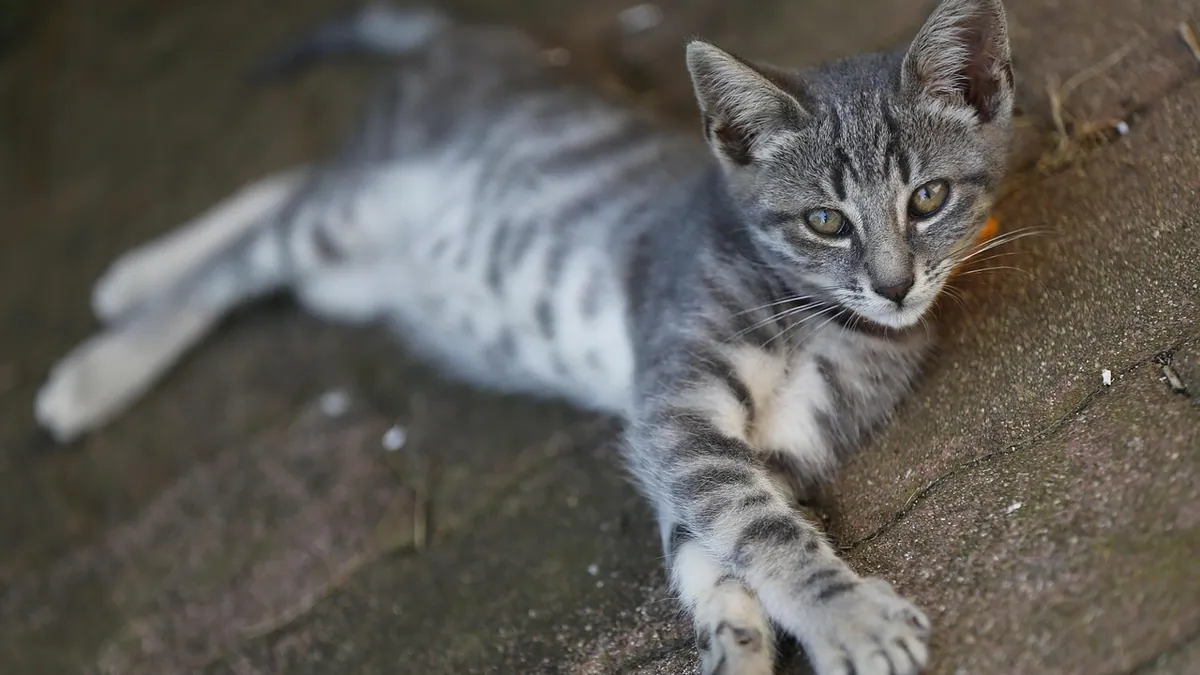
A kitten with a round, tight belly often has a simple explanation, such as intestinal worms, gas from a recent meal, or a diet change. Sometimes, though, a bloated belly signals something serious, like fluid in the abdomen or a bowel obstruction. This guide explains why does my kitten look bloated, what is normal, and when to call your veterinarian.
This article is educational and is not a substitute for veterinary diagnosis or treatment.
Quick Answer
- A slightly rounded belly in a well-fed, playful kitten is often normal, especially right after eating.
- Intestinal worms are one of the most common causes of a bloated kitten belly, and kittens with worms may also have diarrhea or a dull coat.
- A belly that is tight, painful to touch, or growing quickly is not normal and needs a veterinary exam.
- Vomiting, refusing food, crying when picked up, or straining to poop are emergency signs.
- Never give your kitten human dewormers or leftover pet medications. Your veterinarian calculates the correct dose from your kitten's weight and health.
What a Bloated Kitten Belly Looks Like and What Is Normal
Kittens are built a little differently from adult cats. Their abdominal muscles are thin, their intestines take up a lot of space, and their livers are relatively large. A young kitten who has just eaten a big meal can look potbellied for an hour or two. That belly feels soft, and the kitten acts normal: playing, nursing or eating, and passing stool.
A normal round belly also comes with a normal body condition. You should be able to feel the ribs and spine without pressing hard. The belly should not feel like a water balloon, and it should not be so tight that you cannot gently press it.
What is not normal:
- A belly that keeps getting bigger over days
- A belly that feels hard, taut, or fluid-filled
- Pain when you touch the belly
- A kitten who stops eating, hides, or stops playing
If your kitten's belly looks swollen along with other changes, our article on why is my cat's belly swollen covers similar signs in cats of all ages.
Why Is My Kitten Bloated? The Main Causes
The table below lists the most common reasons a kitten's belly looks bloated, along with clues that point to each one.
| Cause | Typical clues | How urgent |
|---|---|---|
| Intestinal worms (roundworms, hookworms) | Potbelly, dull coat, diarrhea, visible worms in stool or vomit, poor growth | Routine visit soon |
| Gas from diet or overeating | Soft belly, happens after meals, kitten otherwise bright | Monitor at home |
| Diet change or food intolerance | Diarrhea, gas, bloating after switching food | Routine visit if it persists |
| Constipation | Straining, small hard stools, belly discomfort | Same-day call if no stool |
| Intestinal obstruction (foreign object, intussusception) | Vomiting, no appetite, pain, no stool, sudden decline | Emergency now |
| Abdominal fluid (ascites) | Belly feels like a water balloon, weight loss, lethargy | Emergency now |
| Abdominal mass or tumor | Slow belly enlargement, vomiting, weight loss | Urgent visit |
Worms and Other Parasites
Worms are the classic reason a kitten has a potbelly. Kittens can get roundworms from their mother's milk, and the worms live in the intestine, where they cause inflammation and gas. A heavily wormed kitten may look fat in the belly while the rest of the body stays thin.
Worms are common in kittens and are usually easy to treat once diagnosed. Your veterinarian will confirm the diagnosis with a stool sample and prescribe a dewormer at the correct dose for your kitten's weight. Do not guess at a dose from a store product, because kitten doses depend on weight and age.
Diet, Overeating, and Food Changes
Kittens have small stomachs and fast metabolisms. A kitten who eats too fast, eats too much, or switches foods abruptly can swallow air and develop gas. This kind of bloating is usually soft and comes and goes.
Chronic diarrhea and gas can also point to a food intolerance or a long-term intestinal problem. Nutritional management is a major part of treating chronic diarrhea in cats, and your veterinarian may recommend a specific diet based on your kitten's signs [1]. If your kitten has ongoing loose stool along with a bloated belly, ask about a diet trial.
Constipation
Constipation can make the lower belly look full and feel firm. A constipated kitten may strain in the litter box, pass small hard stools, or skip a day. Mild constipation often responds to more water and the right diet, but a kitten who has not passed stool for a day or more needs a call to your veterinarian.
Intestinal Obstruction
This is one of the most dangerous causes of a bloated belly. Kittens chew on string, yarn, hair ties, toys, and fabric. A long, thin object such as string or yarn can become attached at the base of the tongue. If the object trails into the intestines, normal intestinal movement causes a sawing or cutting motion on the gut, which can lead to intestinal perforation and abdominal infection [2].
Obstruction can also come from intussusception, where the intestine telescopes on itself, from a hernia that traps the bowel, or from a tumor [2]. Signs include vomiting, no appetite, pain, and no stool. This is an emergency.
Fluid in the Abdomen
A belly that feels tight and fluid-filled is called ascites. In cats, ascites can have several causes, including cancer. In one reported case, a 2-year-old cat with abdominal distension and loss of appetite had severe ascites along with an underlying cancer of the pancreas that had spread through the abdomen [3]. Other cats with abdominal distension have been found to have large cystic masses in the liver, including a biliary cystadenoma, a benign tumor of the bile ducts [4][5]. These cases are uncommon, but they show why a fluid-filled or rapidly growing belly needs imaging.
Other Causes
Rare causes of abdominal distension in cats include uterine torsion, a twisting of the uterus that causes severe pain and a distended abdomen [6]. This applies to pregnant or recently bred cats, not to young kittens. If your kitten is losing weight while the belly looks big, see our guide on why is my cat losing weight.
Red Flags That Make It an Emergency
Call an emergency veterinary hospital right away if your kitten has any of these:
- A belly that is hard, tight, or painful to touch
- Repeated vomiting or dry heaving
- Refusing to eat for more than a few hours
- No stool for a day or more, or straining with nothing coming out
- Crying, hiding, or refusing to be picked up
- Pale gums, weakness, or collapse
- Fast or labored breathing
- A belly that has grown quickly over hours
String and yarn are especially dangerous. If you saw your kitten swallow a string, do not pull it if any part is visible at the mouth or rear. Pulling can cut the intestine. Go to the veterinarian now.
Safe Things You Can Do at Home While You Wait
You cannot diagnose a bloated belly at home, but you can keep your kitten safe and gather useful information.
- Stop free feeding for now and offer only small amounts of the food your kitten normally eats.
- Remove string, yarn, hair ties, rubber bands, and small toys from reach.
- Check the litter box and note whether your kitten passed stool and what it looked like.
- Take a photo of the belly and a short video of your kitten walking and breathing.
- Keep your kitten warm and quiet, and do not press or massage a painful belly.
- Do not give human medications, dewormers, or leftover prescriptions.
If you have questions about a possible poisoning, contact poison control. The ASPCA Animal Poison Control Center is available at (888) 426-4435, and the Pet Poison Helpline is available at (855) 764-7661. A consultation fee may apply.
What Your Veterinarian Will Check and Test
Your veterinarian will start with a full physical exam. They will weigh your kitten, feel the belly gently, check hydration, and listen to the heart and lungs. They will also ask about appetite, stool, vomiting, and what your kitten might have eaten.
Common next steps include:
- A stool sample to check for worms and other parasites
- Blood work to look at organ function and blood cell counts
- X-rays to look for obstruction, masses, or fluid
- Ultrasound to look at the intestines, liver, and other organs
- A fluid sample if ascites is present
Imaging is often the fastest way to tell the difference between gas, fluid, and a blockage. In cats with abdominal distension from a mass, ultrasound and CT can show the size and structure of the lesion, though a tissue sample is often needed to confirm the diagnosis [4][5]. If your kitten has skin or coat problems along with the belly, our article on why is my cat losing hair may help you spot related signs.
Treatment depends on the cause. Worms are treated with deworming medication. Gas and diet-related bloating may improve with a diet change. Obstruction usually needs surgery. Fluid in the abdomen needs treatment of the underlying disease.
Prevention and Monitoring
You can lower the odds of a bloated belly in several ways.
- Deworm your kitten on the schedule your veterinarian recommends.
- Feed a high-quality kitten diet and change foods slowly over several days.
- Keep string, yarn, dental floss, hair ties, and small toys out of reach.
- Feed small meals more often instead of one large meal.
- Weigh your kitten weekly and write down the number.
- Watch the litter box and note stool quality.
A kitten who is growing well, playing, and eating normally with a soft round belly is usually fine. A kitten whose belly is changing quickly, who is in pain, or who stops eating needs to be seen.
Limitations and When to Contact a Veterinarian
No article can tell you what is causing your kitten's bloated belly. Only a veterinarian who examines your kitten can do that. Individual cases need a veterinarian, and the timing matters.
Emergency now: hard or painful belly, repeated vomiting, no stool, trouble breathing, collapse, or a known or suspected string swallow.
Same day: a belly that has grown over a day, a kitten who is eating less, or a kitten who seems uncomfortable.
Routine visit: a soft potbelly with normal energy, or a kitten due for deworming and a stool check.
If you are not sure which category fits, call your veterinarian and describe what you see. It is always reasonable to ask.
Frequently Asked Questions
Is it normal for kittens to look bloated?
A soft, slightly round belly is common in healthy kittens, especially after eating. It is not normal for the belly to feel hard, look fluid-filled, or grow quickly. A kitten with a painful or tight belly should be seen by a veterinarian.
Can worms really make a kitten's belly look big?
Yes. Roundworms and other intestinal parasites are a leading cause of a potbellied look in kittens. The worms cause inflammation and gas in the gut, so the belly looks full while the rest of the kitten may look thin. A stool sample and the right dewormer usually fix it.
How can I tell if my kitten's bloated belly is an emergency?
Emergency signs include a hard or painful belly, repeated vomiting, refusing food, no stool for a day or more, and trouble breathing. If your kitten swallowed string, yarn, or a small object, treat it as an emergency even if the kitten seems fine right now.
Should I give my kitten a dewormer from the pet store?
It is safer to let your veterinarian choose the product and dose. Kitten deworming doses depend on weight and age, and the wrong product or dose can be harmful. A stool sample also tells your veterinarian which parasite to target.
Will a bloated belly go away on its own?
Mild gas from a meal or a fast food change often settles within a few hours. A belly that stays bloated, gets bigger, or comes with vomiting, pain, or poor appetite will not fix itself. Those signs need a veterinary exam.
Related Articles
- Why Is My Cat's Belly Swollen?
- Cat Swollen Belly Causes
- Why Is My Cat Losing Weight?
- Why Is My Cat Gaining Weight?
- Why Is My Cat Losing Hair?
- Why Does My Cat Have Gas?
- Bloat in Cats: Causes of a Bloated Belly and What to Do
- Why Do Kittens Have Big Bellies? Normal or Worms?
- Do Kittens Overeat? Causes and How to Prevent It
References
- Feline chronic diarrhea: causes and nutritional management. Veterinary and animal science, 2026.
- Disorders of the Stomach and Intestines in Cats - Cat Owners. Merck Veterinary Manual.
- Postmortem diagnosis of exocrine pancreatic adenocarcinoma mimicking encapsulating peritoneal sclerosis in a cat: Clinical and histopathological insights. Open veterinary journal, 2025.
- Giant Hepatobiliary Cystadenoma Requiring Biliary Reconstruction in a Cat: A Case Report. Veterinary medicine and science, 2026.
- Multimodality imaging characteristics and surgical management of a biliary cystadenoma in a cat. Veterinary research communications, 2026.
- Doppler Ultrasonography for Assessing Uterine Viability and Fetal Vitality in Uterine Torsion in a Domestic Cat (Felis catus): A Case Report. Animals : an open access journal from MDPI, 2026.