Do Kittens Overeat? Causes and How to Prevent It
By Dr. Zubair Khalid, DVM, MS, PhD ·
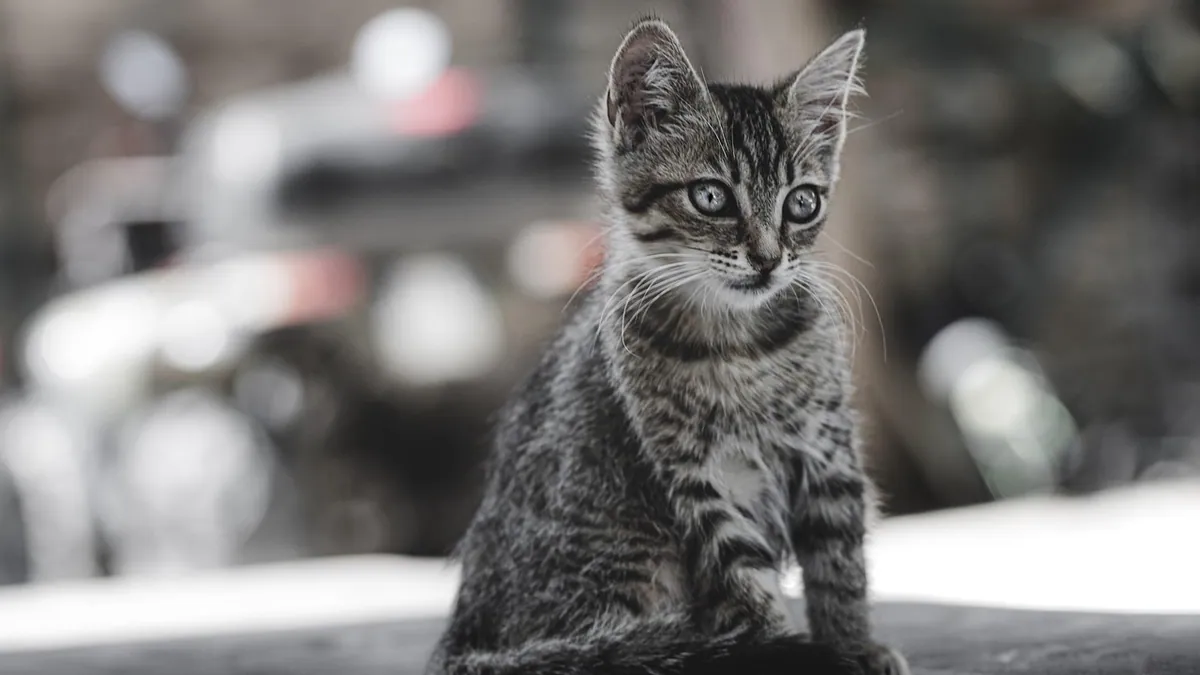
Yes, kittens can overeat, and many do. A kitten's appetite is driven by fast growth, but free-feeding and oversized portions let that appetite outrun actual calorie needs. Do kittens overeat because they are always hungry? Sometimes, but the bigger issue is usually how much food is put in front of them and how often.
This article is educational and is not a substitute for veterinary diagnosis or treatment.
Quick Answer
- Kittens eat more than adult cats because they are growing, but "more" still has a limit. Portion by age and body condition, not by how loudly they ask.
- Free-feeding dry food is the most common cause of overeating in kittens. Measured meals work better.
- Overweight and obesity are the most common nutritional disorder in domestic cats, and the problem often starts young [1].
- Feeding instructions on cat food labels do not always match a cat's true energy needs, so treat the bag as a starting point, not a rule [2].
- A sudden, dramatic increase in appetite in a kitten who is not gaining weight can be a medical red flag. Call your veterinarian.
What Kitten Overeating Actually Means
Overeating means a kitten takes in more calories than their body needs for growth and activity. That extra energy gets stored as fat. In young kittens, the line between "eating enough to grow" and "eating too much" can be hard to see, because healthy kittens gain weight quickly and look round.
The problem is that this roundness can persist. Overweight and obesity in cats is a chronic, low-grade inflammatory state linked to insulin resistance, endocrine changes, and higher cholesterol and triglyceride levels [1][3]. Cats carrying extra weight face higher risks of diabetes, arthritis, urinary tract problems, skin disease, heart disease, and breathing problems, and their life expectancy can be shortened [1].
So the question is not only whether your kitten overeats today. It is whether today's habits set up a lifetime of weight problems. If your adult cat is already heavy, see Why Is My Cat Gaining Weight? and Pet Obesity Signs: How To Tell If Your Dog or Cat Is Overweight.
Signs Your Kitten May Be Eating Too Much
Kittens are not subtle about hunger. They may cry, climb your legs, or inhale food in seconds. Those behaviors alone do not prove overeating. Look at the body instead.
Signs worth watching:
- A rounded belly that stays round between meals
- Ribs that are hard to feel under a layer of fat
- No visible waist when viewed in published veterinary research
- Slow, strained movement or less play than expected
- Vomiting soon after eating, especially with fast eating
- Diarrhea or soft stool after large meals
- Begging constantly even after a full portion
Some of these overlap with other problems. A kitten who eats a lot but stays thin, or who vomits repeatedly, needs a veterinary exam. Weight loss in a cat with a good appetite is a different concern, covered in Why Is My Cat Losing Weight?.
Why Do Kittens Overeat? Causes and Risk Factors
Growth and appetite biology
Kittens need more calories per pound than adult cats. Their bodies are building bone, muscle, and organ tissue. A hungry kitten is often a normal kitten. The trouble starts when the food supply is unlimited and the kitten never learns a meal rhythm.
Free-feeding
Leaving a full bowl out all day is the single biggest driver of overeating in kittens. It removes portion control entirely. Many owners do this because it seems kind and convenient, but it lets a kitten eat past their needs.
Owner behavior and attachment
Owner factors matter more than most people expect. In a study of 192 privately owned adult cats, owners of heavy or obese cats were significantly more attached to their cat, and they perceived their cat as less active [4]. Feeding is often how owners show love. That emotional link can make it hard to say no.
Indoor lifestyle
The same study found that indoor confinement increased the risk of obesity at an early age in domestic shorthaired cats [4]. Indoor cats burn fewer calories and have less opportunity to roam, hunt, and climb.
Neutering, age, and genetics
Neutering status, age, sex, and genetic predisposition all shape a cat's risk of becoming overweight [1]. Neutered cats generally need fewer calories than intact cats. If you keep feeding the same amount after neutering, weight gain follows.
Label confusion
Cat food labels are not a perfect guide. A study of cat food labels in Belgium found that most individual labels recommended daily energy intake within the average range set by industry guidance, and instructions given in grams aligned more closely with those recommendations [2]. Still, label advice is written for a broad population, not your specific kitten. Your kitten's age, activity, and body condition matter more than the bag.
Medical causes
True medical overeating is less common in kittens than simple overfeeding, but it happens. Intestinal parasites, malabsorption, and endocrine conditions can drive appetite up. A kitten who is ravenous and losing weight, or who has a potbelly with poor coat quality, needs testing.
Do Cats Overeat Too?
Yes. Adult cats overeat for many of the same reasons kittens do, plus a few of their own. Boredom, stress, multi-cat household competition, and habit all play a role. An adult cat who suddenly eats much more than usual deserves a veterinary check, because appetite changes can signal thyroid disease, diabetes, or other conditions.
The stakes are higher in adults. Overweight and obese cats show measurable metabolic changes, including elevated cholesterol, and obese cats in one study also showed lymphopenia and higher triglycerides [3]. Obesity in cats is linked to diabetes, osteoarthritis, urinary tract disorders, skin problems, heart disease, and respiratory disease [1]. Managing weight early is far easier than reversing years of gain.
If your cat is already overweight, How To Get An Overweight Cat To Lose Weight walks through a practical plan.
How Vets Tell Whether a Kitten Is Overeating
Veterinarians use body condition scoring, a hands-on scale that rates fat cover over the ribs, spine, and hips. Most scales run from 1 to 9, with 4 to 6 considered ideal for adult cats. In the Danish study, 65% of cats scored 4 to 6 out of 9, and 35% scored 7 to 9, meaning roughly a third were heavy or obese [4].
Your vet will also:
- Weigh your kitten and track the trend over visits
- Ask exactly what, how much, and how often you feed
- Review treats, table food, and multi-pet feeding
- Check for parasites or other medical causes if appetite seems abnormal
- Look at activity level and home environment
| What owners notice | What it often means | What to do |
|---|---|---|
| Round belly, ribs hard to feel | Portions too large or free-feeding | Measure meals, switch to scheduled feeding |
| Constant begging after meals | Habit, boredom, or too few meals | Split daily calories into more small meals |
| Ravenous but thin | Possible medical cause | Book a vet visit soon |
| Vomiting after fast eating | Eating too fast | Use a slow feeder or spread food out |
| Weight gain after neutering | Calorie needs dropped | Ask your vet to recalculate portions |
Treatment Options for Kitten Overeating
Treatment starts with portion control. Your veterinarian can calculate a daily calorie target based on your kitten's weight, age, and body condition. Do not guess at this number, and do not use a dose or calorie figure from a bag, a website, or a friend. Your vet does the math for your individual kitten.
Practical steps that work:
- Measure food with a kitchen scale or a proper measuring cup. Eyeballing is unreliable.
- Feed scheduled meals, typically several small meals a day for kittens.
- Transition off free-feeding gradually if your kitten is used to it.
- Cap treats. Treats count toward daily calories.
- Use food puzzles or slow feeders to stretch mealtime.
- Feed kittens separately in multi-cat homes.
- Increase play with wand toys, laser pointers, and climbing time.
Weight management in pets has limited success outside research settings, partly because the non-diet barriers (owner habits, home setup, communication) are so powerful [5]. That is why a plan you can actually follow beats a perfect plan you abandon in a week.
If your kitten has a medical cause, treatment targets that condition. Parasites get deworming. Other conditions get specific care. Your vet will explain what applies to your kitten.
Recovery, Outlook, and Long-Term Management
Kittens who learn to eat measured meals usually stay at a healthy weight into adulthood. The habits you build now, like scheduled feeding and active play, carry forward for years.
Long-term management looks like this:
- Weigh your cat regularly and check body condition monthly
- Recalculate portions as your kitten grows and after neutering
- Keep activity high with daily play sessions
- Watch for weight creep and adjust early
- Keep vet visits on schedule so trends get caught
Overweight and obesity are manageable, but they are easier to prevent than to reverse. Early detection of excess body weight is central to both treatment and prevention [1]. A cat at a healthy weight lives longer and avoids a long list of painful conditions.
Prevention
Prevention is mostly about structure.
- Start measured meals from day one.
- Do not leave food down all day.
- Feed by age stage, and switch to adult portions at the right time.
- Keep your kitten active with play and climbing.
- Limit treats and account for them.
- Watch body condition, not just the scale.
- Ask your vet to confirm portions at each visit.
If you notice your cat grooming far more than usual, which can sometimes accompany stress or discomfort, see Cat Overgrooming: Why It Happens and What to Do.
Limitations and When to Contact a Veterinarian
No article can assess your individual kitten. Body condition, growth rate, and calorie needs vary, and only a veterinarian who examines your kitten can give you a real answer.
Contact your veterinarian:
- Same day: sudden ravenous appetite with weight loss, repeated vomiting, diarrhea lasting more than a day, or a kitten who stops eating.
- Emergency now: a bloated, painful abdomen, unproductive retching, collapse, or difficulty breathing.
- Routine visit: gradual weight gain, a body condition score above ideal, or any question about how much to feed.
If you suspect your kitten ate something toxic, call the ASPCA Animal Poison Control Center at (888) 426-4435 or the Pet Poison Helpline at (855) 764-7661 right away.
Frequently Asked Questions
Should I free-feed my kitten?
Free-feeding makes overeating much more likely because it removes all portion control. Scheduled, measured meals are the better approach for most kittens. Your veterinarian can help you set the right amount and frequency.
How many times a day should a kitten eat?
Kittens generally do best with several small meals spread through the day. Your vet can tailor the schedule to your kitten's age and growth. The exact number matters less than the total daily calories.
Can overeating make a kitten sick?
Yes. Eating too much or too fast can cause vomiting, diarrhea, and stomach discomfort. Repeated overeating also leads to excess weight gain and the health risks that come with it.
Will my kitten grow out of overeating?
Some kittens settle into normal eating once growth slows, but many do not if free-feeding continues. Habits formed early tend to stick. Starting portion control young gives your cat the best chance at a healthy weight.
Are treats part of the problem?
Treats can be a major hidden source of extra calories. They add up quickly, especially in small kittens. Count treats within the daily total and keep them modest.
Related Articles
- Why Is My Cat Losing Weight?
- Cat Overgrooming: Why It Happens and What to Do
- Why Is My Cat Gaining Weight?
- Pet Obesity Signs: How To Tell If Your Dog or Cat Is Overweight
- How To Get An Overweight Cat To Lose Weight
- How To Make An Overweight Cat Lose Weight
- Is It Normal for Kittens to Eat a Lot? Appetite Guide
- Do Kittens Know When to Stop Eating? Fullness Explained
- Why Is My Kitten Always Hungry and Eating So Fast?
References
- From pathogenesis to prevention: an update on the management of obesity and its associated comorbidities in cats. Frontiers in veterinary science, 2026.
- An investigation of feeding instructions on cat food labels in Belgium and comparison with European industry energy intake recommendations. The Veterinary record, 2026.
- Metabolic and cardiovascular effects of obesity in domestic cats. Veterinary research communications, 2025.
- Feline obesity is associated with stronger owner attachment, while indoor confinement increases risk of obesity at an early age in domestic shorthaired cats. Frontiers in veterinary science, 2026.
- Overweight and Obesity in Dogs and Cats: An Exploration of Animal Welfare and Behaviour Impacts, and Recommendations for Management in Veterinary Primary Care. Animals : an open access journal from MDPI, 2026.