Gastroenteritis in Cats and Dogs: Causes and Care
By Dr. Zubair Khalid, DVM, MS, PhD ·
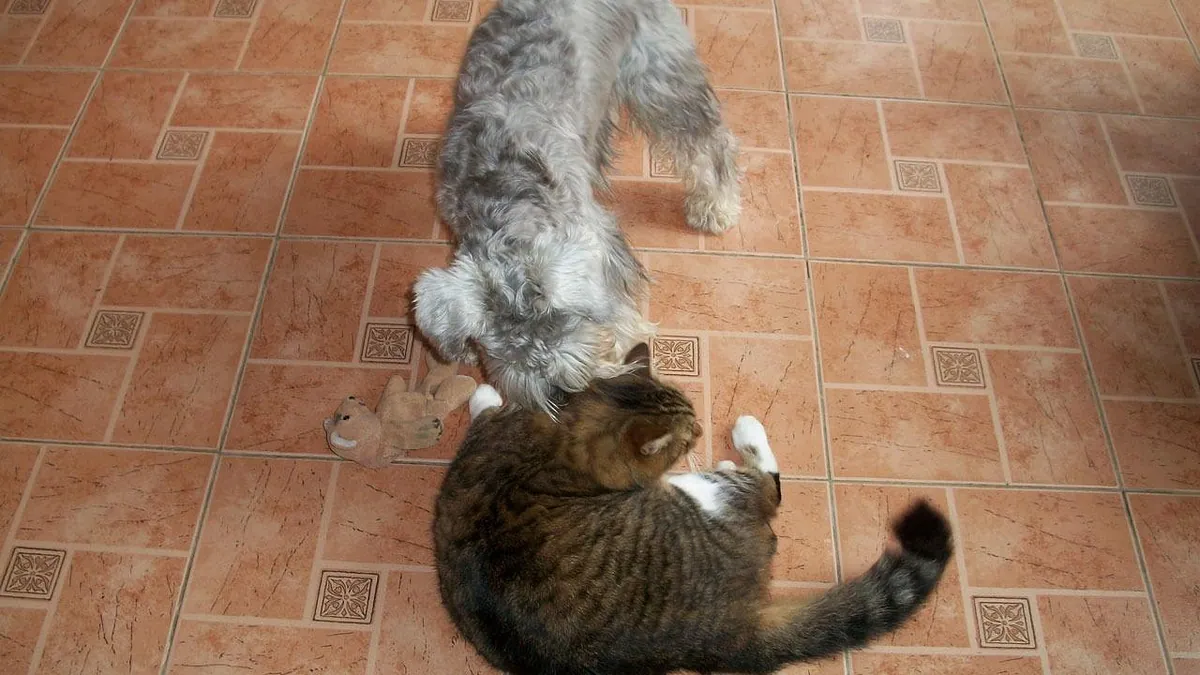
Gastroenteritis in cats and dogs is inflammation of the stomach and the intestines, and it shows up most often as vomiting, diarrhea, or both. The word covers a wide range of problems, from a mild upset that settles in a day to a severe illness that needs hospital care. Dogs and cats share many of the same triggers, but a few causes and risks are unique to each species, which matters in a multi-pet home.
This article is educational and is not a substitute for veterinary diagnosis or treatment.
Quick Answer
- Gastroenteritis means stomach and intestinal inflammation. Signs range from one soft stool to repeated vomiting, bloody diarrhea, and collapse.
- Most mild cases in adult pets improve with short-term supportive care, but young, old, or weak pets can decline fast.
- Causes differ by species. Dogs are at higher risk from viral agents like parvovirus, while cats commonly carry intestinal parasites such as coccidia [1].
- Diagnosis usually starts with history, physical exam, and fecal testing, then moves to bloodwork, imaging, or endoscopy if signs persist [2].
- Any pet with blood in the stool, repeated vomiting, or a swollen painful belly needs a veterinarian the same day.
What Gastroenteritis Means in Plain Words
The stomach and intestines form one long tube. The stomach holds and starts digesting food. The small intestine absorbs most nutrients. The large intestine (also called the colon or large bowel) helps maintain fluid and electrolyte balance, absorbs nutrients, and temporarily stores feces while providing an environment for healthy intestinal bacteria [2].
When any part of that tube becomes inflamed, it cannot do its job well. Food and fluid move too fast or get absorbed poorly. The result is the classic pattern owners see: vomiting from stomach involvement, diarrhea from intestinal involvement, and sometimes both at once. When the large intestine is damaged by illness, parasites, or other causes, diarrhea is often the result [2].
Vets split diarrhea into two rough types based on where the problem sits. Small bowel diarrhea tends to be large in volume, and pets may lose weight. Large bowel diarrhea tends to come with urgency, mucus, and small frequent stools. That distinction guides testing and treatment.
Gastroenteritis Dog and Cat Symptoms: What You Will Notice
Signs can be sudden (acute) or long lasting (chronic). Acute gastroenteritis in pets often starts within hours to a couple of days of a trigger.
Watch for:
- Vomiting, once or many times
- Diarrhea that is soft, watery, or bloody
- Loss of appetite
- Dullness or low energy
- Fever
- Abdominal pain, seen as pacing, a tucked belly, or crying when picked up
- Weight loss with long-term disease
Some infections begin with vague signs. In one viral disease of dogs, initial signs may be dullness, loss of appetite, and fever, with progression to vomiting and bloody diarrhea within 1 to 2 days [3]. Clinical signs generally develop within 5 to 7 days of exposure but can range from 2 to 14 days [3].
Abdominal pain can be a sign that the intestines have become blocked, which requires emergency treatment [3]. That is one reason a painful belly is never something to watch at home for long.
Cats with chronic colon inflammation tend to be middle-aged and are often purebred [2]. If your cat has had soft stool or straining for weeks, that pattern points toward a different workup than a one-day upset.
Causes and Risk Factors
This is where dogs and cats part ways most. Some triggers overlap, and some are strongly tied to one species.
Infectious causes
Viruses, bacteria, protozoa, and parasites can all inflame the gut. Infectious colitis can cause large intestinal diarrhea and, in severe cases, systemic illness in dogs and cats [4]. Causative agents include bacteria, protozoa, helminths, trematodes, fungi, oomycetes, and algae, and how common each one is depends on the pet's age, immune status, and environment [4].
Parasites are a major and often overlooked cause. In one study of young dogs and cats with diarrhea, 33.9 percent of cats tested positive for coccidia, mostly Cystoisospora felis, while infections in dogs were far less common [1]. Watery or hemorrhagic diarrhea was detected in some cats infected with these coccidia [1]. Other parasites found in the same group included Giardia, hookworms, roundworms, and tapeworms [1].
Bacterial involvement is real but often overtreated. Diarrheagenic E. coli had a higher prevalence in diarrheic cats (64.3 percent) than in diarrheic dogs (48.4 percent) in one study [5]. Management of bacterial colitis should prioritize supportive care and addressing underlying causes instead of routine antimicrobials [4]. That is an important shift, because giving antibiotics for every bout of diarrhea can do more harm than good.
Astrovirus is an RNA virus that causes gastroenteritis in humans and various mammal species, including dogs and cats [6]. In a survey of domestic pets, the positive rate was 4.2 percent in dogs and 10.8 percent in cats [6]. This is one example of how a shared virus can behave differently across species.
Diet, allergies, and the immune system
Sudden diet changes, spoiled food, food intolerance, and foreign material can all inflame the gut. In cats with chronic colitis, the cause is unknown in most cases, and bacterial, parasitic, traumatic, kidney-related, and allergic causes are suspected [2]. Inflammation may result from a defect in immune function in the colon, an exaggerated reaction to dietary or bacterial factors, genetic predisposition, or the aftereffects of previous infectious or parasitic disease [2].
Gut bacteria and the intestinal barrier
The mix of bacteria in the gut matters. In one study, microbes from the feces of diarrheic cats caused weight loss and colon inflammation when transferred into mice, with neutrophil and macrophage aggregation in the colon, possibly driven by Gram-negative bacteria [7]. This supports what vets see in practice: disrupted gut flora and a leaky intestinal barrier go hand in hand with diarrhea.
Structural problems
Rarely, the gut folds in on itself, a condition called intussusception. Gastric intussusception in dogs and cats is uncommon, and in one case series of 25 dogs and one cat, 22 of the animals presented with vomiting [8]. These cases were diagnosed by ultrasound, CT, or surgery [8]. This is a surgical problem, not a diet problem.
Risk factors to keep in mind
- Age: puppies and kittens are at higher risk from viruses and parasites [3][1]
- Environment: crowded settings, shelters, and multi-pet homes raise exposure risk [4]
- Immune status: weak or suppressed immune systems allow more severe disease [4]
- Breed: purebred cats appear more often in chronic colitis cases [2]
- Diet and stress: both can trigger or worsen gut signs
If your pet also has a tender abdomen and poor appetite with no diarrhea, other organs may be involved. Problems in the pancreas can look similar, and you can read more about Causes Of Pancreatitis In Dogs And Cats.
How Veterinarians Diagnose It
Your vet will ask detailed questions about your pet's history and conduct a physical examination [2]. Expect questions about diet, treats, garbage access, travel, other pets, vaccination status, and how long signs have lasted.
Trials with specific foods can also be used to diagnose some causes of colitis [2]. That means the food itself becomes part of the test, and the results depend on you feeding only what is prescribed.
Additional testing may include blood, urine, and fecal samples, abdominal x-rays or ultrasonography, endoscopy, or biopsies [2]. Fecal testing is especially important because parasites such as Trichuris vulpis and Tritrichomonas blagburni are common and should be routinely screened for [4].
Imaging helps find structural causes. In the intussusception case series, most pets were diagnosed by ultrasound, with a few by CT or surgery [8]. If your vet recommends imaging, it is usually to rule out a blockage, a mass, or a folding of the bowel that will not respond to medicine.
Treatment Options
Treatment depends on the cause, the severity, and the species. There is no single protocol.
Supportive care
Fluids and electrolytes are the backbone of care for vomiting and diarrhea. Pets who cannot keep water down often need intravenous fluids. Anti-nausea medication and gut protectants may be used. Your veterinarian calculates the dose from your pet's weight and health, so never give human medications on your own.
Parasite and infection treatment
When fecal testing finds a parasite, targeted deworming or antiprotozoal treatment follows. This is one of the most rewarding parts of care because the fix can be quick and specific. For more on this topic, see Intestinal Parasites in Dogs and Cats: Signs and Prevention.
Bacterial colitis is handled carefully. Management should prioritize supportive care and addressing underlying causes instead of routine antimicrobials [4]. Some severe bacterial conditions, such as E. coli-associated granulomatous colitis, need histopathologic diagnosis and susceptibility-guided antimicrobials [4]. Disseminated fungal, oomycete, and algal infections often require prolonged, multiagent therapy [4].
Diet and nutrition
Nutrition is a core treatment, especially for chronic disease. Nutritional management is indispensable for the long-term treatment of chronic diarrhea in cats [9]. Your vet may choose a highly digestible diet, a novel protein diet, or a fiber-modified diet depending on whether the small or large bowel is involved.
Surgery
Structural problems like intussusception need surgical correction. If imaging shows a blockage or a folded bowel, surgery is often the only option.
| Situation | Typical first step | What owners should know |
|---|---|---|
| Mild, one or two soft stools, pet still bright | Bland diet and monitoring | Call your vet if it lasts more than a day or two |
| Vomiting with diarrhea, still drinking | Vet visit, fecal test, fluids | Parasites are common and treatable [4][1] |
| Bloody diarrhea or repeated vomiting | Same-day veterinary care | Viral and severe bacterial disease can progress fast [3] |
| Painful or swollen abdomen | Emergency care | Blockage or intussusception needs urgent treatment [3] |
| Weeks of soft stool in a cat | Full workup, diet trial | Chronic colitis often needs food and immune management [2][9] |
Recovery, Outlook, and Long-Term Management
Most dogs recover within a few days with appropriate supportive care, though some can die within hours of the onset of signs [3]. That wide range is why early care matters so much. Inapparent infection is also common, meaning some exposed pets never show signs at all [3].
Prognosis varies with the infectious agent and whether the disease has spread beyond the gut [4]. Pets with simple dietary upset usually bounce back quickly. Pets with chronic colitis or long-term diarrhea need ongoing management, often including prescription food and regular check-ins [2][9].
For long-term cases, keep a simple log. Note stool consistency, appetite, vomiting, and any diet changes. This record helps your vet adjust treatment faster.
If your cat is the one with ongoing soft stool, more detail is available in Cat Diarrhea: Causes, Home Care, and When to Worry.
Prevention
You cannot prevent every case, but you can lower the odds.
- Keep vaccinations current, especially for puppies and kittens [3]
- Deworm on your vet's schedule and test feces regularly, since parasites are common and should be routinely screened for [4]
- Transition foods slowly over several days
- Keep garbage, spoiled food, and small objects out of reach
- Limit contact with unknown or sick animals in high-exposure settings [4]
- Manage stress in multi-pet homes, since stress can trigger gut signs
In a multi-pet household, if one pet has diarrhea, wash food and water bowls separately and clean litter boxes and yard areas often. Some causes spread between pets, and some do not. Your vet can tell you which precautions fit the diagnosis.
Limitations and When to Contact a Veterinarian
This article gives general information only. Individual cases need a veterinarian who can examine your pet, run tests, and set treatment.
Contact a veterinarian the same day if your pet:
- Vomits more than two or three times
- Has blood in the stool or black, tarry stool
- Refuses water for more than a few hours
- Seems dull, weak, or wobbly
- Has diarrhea lasting more than 24 to 48 hours
Go to an emergency clinic now if your pet:
- Collapses or cannot stand
- Has a swollen, painful, or hard abdomen [3]
- Has repeated unproductive retching
- Is a puppy or kitten with vomiting and diarrhea, since young animals can decline within hours [3]
- Shows pale gums, cold limbs, or heavy breathing
Schedule a routine visit if your pet has soft stool for more than a week, is losing weight, or has chronic signs that come and go [2][9].
Frequently Asked Questions
Can I treat gastroenteritis at home?
Mild cases in bright adult pets sometimes settle with rest, small amounts of water, and a bland diet for a day. If vomiting repeats, if there is blood, or if your pet seems dull, stop home care and call your vet. Young, old, and weak pets should be seen early.
Is gastroenteritis contagious between my dog and my cat?
Some causes spread between species and some do not. Bacteria like Salmonella and Campylobacter can be carried by both dogs and cats, and parasites such as Giardia can pass between pets in a shared home [5]. Others, like parvovirus, are mainly a dog problem. Ask your vet which precautions fit your diagnosis.
How long does gastroenteritis last in pets?
Simple dietary upset often improves within a day or two. Infectious cases can run longer, and most dogs with one severe viral disease recover within a few days with supportive care, though some worsen within hours [3]. Chronic diarrhea in cats can last weeks or months without a full workup and diet plan [9].
Should I give my pet human anti-diarrhea medicine?
No. Human medications can be toxic to dogs and cats, and dosing is not the same. Your veterinarian calculates any medication dose from your pet's weight and health. Giving the wrong drug or amount can make the illness worse.
Can my pet get gastroenteritis from something in the house?
Yes. Garbage, spoiled food, table scraps, string, toys, and bones are common household triggers. Stress from a new pet or a move can also set off gut signs. Keeping food and trash secured and making changes slowly lowers the risk.
Related Articles
- Causes Of Pancreatitis In Dogs And Cats
- Cat Diarrhea: Causes, Home Care, and When to Worry
- Intestinal Parasites in Dogs and Cats: Signs and Prevention
- Dog Excessive Gas and Diarrhea: Causes and Relief
- Kitten Diarrhea: Causes, Safe Home Care, and Emergency Signs
- Gastroenteritis in Cats: Causes and Diet Choices
- Cat Gastroenteritis: Home Treatment and Medicines
- IBD and Gastroenteritis in Dogs: Treatment Options
- Intestinal Parasites in Dogs and Cats: Identification, Symptoms, and Treatment Options
- Intestinal Parasites in Dogs and Cats: Zoonotic Potential and Public Health Considerations
References
- Occurrence of Cystoisospora spp. and other intestinal parasites in dogs and cats with diarrhea. Veterinary parasitology, 2025.
- Disorders of the Stomach and Intestines in Cats - Cat Owners. Merck Veterinary Manual.
- Disorders of the Stomach and Intestines in Dogs - Dog Owners. Merck Veterinary Manual.
- Infectious Colitis in Dogs and Cats: Diagnosis, Management, and Clinical Outcomes. The Veterinary clinics of North America. Small animal practice, 2026.
- Detection, identification, and co-carriage patterns of different bacterial and yeast pathogens isolated from diarrheic and apparently healthy dogs and cats. Comparative immunology, microbiology and infectious diseases, 2026.
- Monitoring and characterization of canine and feline astroviruses in domestic dogs and cats in Thailand. Scientific reports, 2025.
- Gram-Negative Bacterial Overgrowth Predominated by: Potential Association with Intestinal Barrier Impairment and Inflammatory Diarrhea in Cats. Veterinary sciences, 2026.
- Imaging Characteristics of Pylorogastric, Duodenogastric, and True-Gastrogastric Intussusception in 25 Dogs and One Cat. Veterinary radiology & ultrasound : the official journal of the American College of Veterinary Radiology and the International Veterinary Radiology Association, 2026.
- Feline chronic diarrhea: causes and nutritional management. Veterinary and animal science, 2026.