Bull Terrier Pitbull Mix: Traits and Care
By Dr. Zubair Khalid, DVM, MS, PhD ·
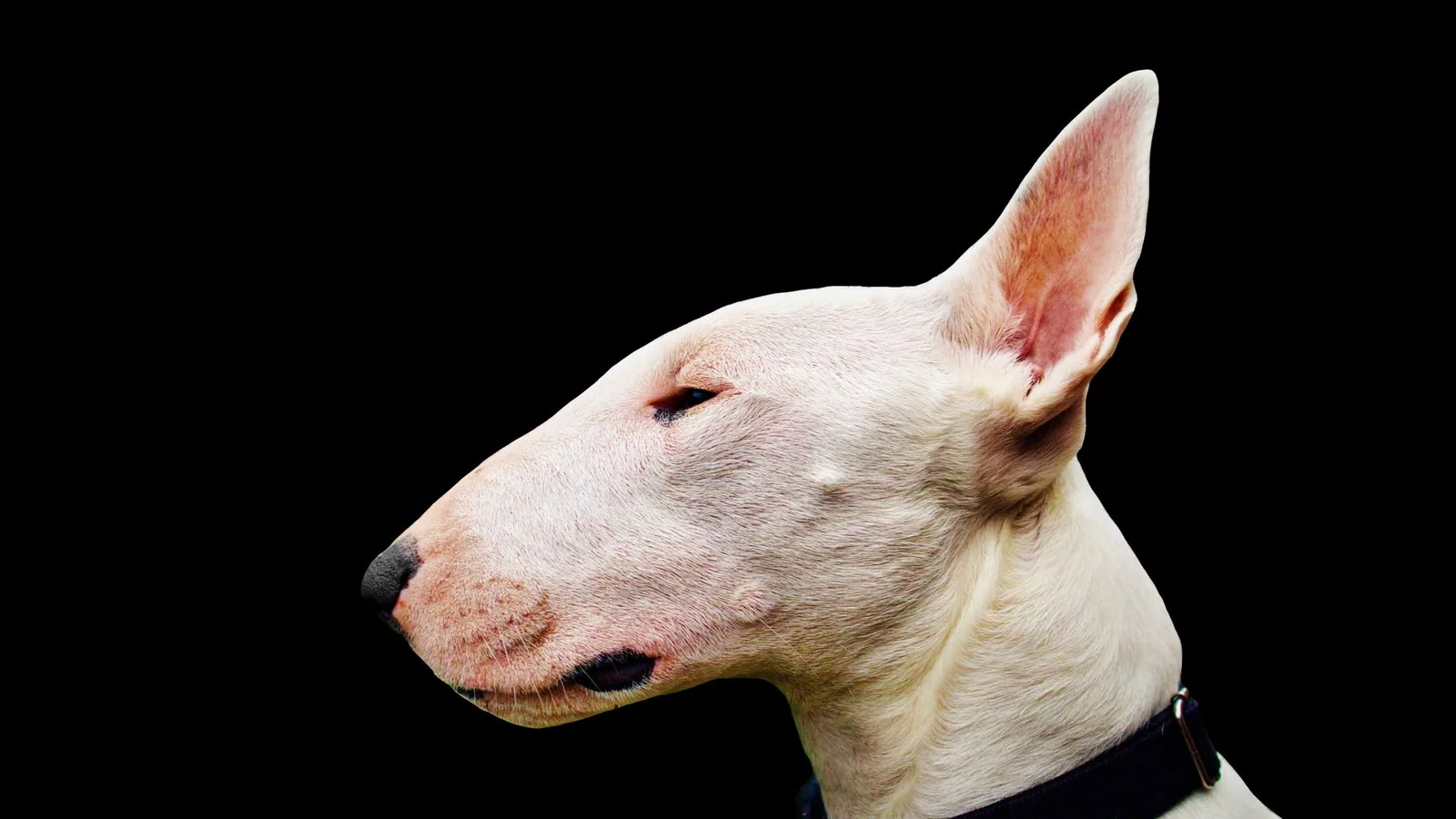
A Bull Terrier Pitbull mix combines the Bull Terrier with a pit bull-type dog, usually an American Pit Bull Terrier or American Staffordshire Terrier. The result is a muscular, athletic, and highly energetic companion that needs consistent training, early socialization, and a preventive health plan built around the conditions that affect these breeds most. This guide summarizes what the veterinary literature says about the traits, health risks, daily care, safety, and legal issues that matter for this cross.
At a Glance
| Category | What to Expect |
|---|---|
| , - | , - |
| Build | Medium to large, muscular, and athletic [1] |
| Energy level | High. Needs regular structured exercise |
| Coat | Short. Grooming needs are minimal for most individuals |
| Training priority | Early socialization and consistent, reward-based methods |
| Key health screenings | Babesia PCR, heartworm and intestinal parasite testing, eye examination [2][3][4][5] |
| Vaccination priority | Core vaccines including canine parvovirus, starting in puppyhood [6] |
| Child safety | Constant supervision. Most bites happen at home with familiar dogs [7] |
| Legal status | Some cities restrict pit bull-type dogs. Check local laws [8][9] |
| First steps for new owners | Veterinary visit, core vaccines, parasite screening, secure containment, and a local law check [6][4][8] |
What Is a Bull Terrier Pitbull Mix?
A Bull Terrier Pitbull mix is a first-generation or multi-generation cross between a Bull Terrier and a dog that fits the visual category called "pit bull-type." The term pit bull-type is used in veterinary research to describe dogs with similar physical traits, even when their exact ancestry is unknown [2][4]. In studies, pit bull-type dogs are often described as large and muscular, with a powerful build [1].
Because this is a cross, not a recognized pure breed, individual dogs vary. Littermates can differ in size, coat color, ear shape, and temperament. Some puppies look more like the Bull Terrier parent, with the distinctive egg-shaped head and a longer muzzle. Others look more like the pit bull-type parent, with a broader skull and a more athletic silhouette.
The evidence base for this mix comes from studies of pit bull-type dogs, since that is how these animals are classified in most veterinary research. When you read about "pit bull-type" dogs in this article, the findings apply to the Bull Terrier Pitbull mix as well.
This matters in practice. When a shelter or rescue labels a dog as a pit bull-type, that label is based on appearance, not on a DNA test. The same is true for a dog labeled as a Bull Terrier mix. The dog's actual ancestry may include several breeds. What the veterinary literature shows is that dogs that look like this, with a muscular build and a broad head, are the ones included in the pit bull-type category in health and bite studies [2][4][1]. For that reason, the health risks and management needs described in this article are the right starting point for any Bull Terrier Pitbull mix.
Temperament and Behavior
A High-Energy, Athletic Dog
The veterinary literature consistently describes pit bull-type dogs as large, muscular breeds [1]. Owners should expect a dog with substantial physical strength and stamina. This is not a sedentary lapdog. Daily exercise, structured play, and mental enrichment are necessary to keep the dog physically healthy and behaviorally balanced.
Dog-to-Dog Behavior and Responsible Management
Pit bull-type dogs are overrepresented in studies of dog bites, and this fact deserves honest discussion [10][1][11][7][12]. At the same time, the research shows that most dog bites happen in specific circumstances: with familiar dogs, in the home, and often with young children present [7]. Aggression is not an inevitable trait of any breed. It develops from a combination of genetics, socialization, training, and management.
Owners of a Bull Terrier Pitbull mix should plan for careful management around other dogs, especially unfamiliar dogs. Dogfighting operations have historically used pit bull-type dogs, and dogs from those operations show high rates of blood-borne infections transmitted through bites, which tells us that dog-to-dog conflict has real health consequences in this population [2][4]. Responsible ownership means preventing those conflicts in the first place.
Training and socialization should start in puppyhood and continue for life. A powerful dog that has not learned to walk calmly on a leash, to respond to basic cues, and to tolerate handling is harder to manage at the veterinary clinic and in public. The bite studies show that injuries often happen at home with familiar dogs, which means that even a well-loved family dog can bite under the wrong circumstances [10][7]. Structured training reduces those risks by building predictable behavior.
Children and Family Life
Pediatric dog bites are a serious public health issue. In one 5-year review of 1,252 pediatric bite injuries, the head and neck region was the most common injury site, and the dog breed most commonly associated with severe bites was the pit bull [10]. Another study found that 48.2% of dog bites with an identified breed involved pit bulls, and 47.8% of those bites required surgery in the operating room [11].
The pattern is consistent across studies. Preschool-aged children are at the highest risk [11][7]. Most attacks happen in the evening, at home, with the family dog, and while the child is petting or playing with the dog [7]. Parental presence was reported in only 43.6% of cases [7]. The clear takeaway is that a Bull Terrier Pitbull mix should never be left unsupervised with a young child, no matter how gentle the dog seems.
Health Conditions to Plan For
Blood-Borne and Vector-Borne Infections
Babesia gibsoni
Babesia gibsoni is a blood parasite that infects red blood cells and can cause anemia, fever, and lethargy. It is unusually common in pit bull-type dogs. In a study of 157 dogs confiscated from dogfighting operations, 53 dogs (33.8%) tested positive for B. gibsoni [2]. Dogs with scars on the face, head, and forelimbs were 5.5 times as likely to be infected, which suggests the parasite spreads through bite wounds [2].
In a separate study of 269 pit bull-type dogs seized in a multi-state investigation, 39% were infected with B. gibsoni [4]. Anemia was present in 63% of infected dogs, and infected dogs were 2.5 times as likely to be anemic [4]. The parasite can also pass from a mother to her puppies.
For the Bull Terrier Pitbull mix, the practical implication is clear. If you adopt a dog with unknown history, especially one that came from a fighting investigation or a shelter in an area with known cases, ask your veterinarian about PCR testing for Babesia [2][3].
Babesia vulpes
Babesia vulpes is a related parasite that has been reported in North American foxes and, less commonly, in domestic dogs. In a study of 9,367 dog samples submitted for Babesia testing, 48 dogs were infected with B. vulpes, and 43 of those 48 were American Pit Bull Terrier-type breeds [3]. Of those 43 dogs, 36 had a history of involvement in dog fights [3]. Coinfections with Mycoplasma, heartworm, and other vector-borne organisms were common in these dogs [3].
Hemotropic Mycoplasmas and Heartworm
Dogs from fighting operations also show high rates of hemotropic mycoplasmas, which are bacteria that attach to red blood cells. In the multi-state seizure study, 32% of dogs were infected with "Candidatus Mycoplasma haematoparvum" and 30% with Mycoplasma haemocanis [4]. Heartworm (Dirofilaria immitis) was found in 12% of the same dogs, and hookworms (Ancylostoma) in 23% [4].
The study authors recommend that dogs from dogfighting cases receive broad-spectrum internal and external parasiticides and monitoring for anemia [4]. The same logic applies to any Bull Terrier Pitbull mix adopted from a shelter or rescue with an unknown background.
Canine Parvovirus
Canine parvovirus is a highly contagious and often fatal viral disease, and pit bull-type dogs are the most commonly affected breed in the United States. In a retrospective study of 78,977 parvovirus cases diagnosed at more than 1,000 primary care hospitals between 2010 and 2023, pit bull-type dogs were the most commonly affected breed [6]. Together with Chihuahuas, Labrador Retrievers, German Shepherd Dogs, and mixed breeds, they made up 54.3% of the study population [6].
The disease is most dangerous in young puppies. Nearly half of all cases (46.3%) occurred in dogs aged 8 to 16 weeks [6]. The mortality rate was high: 43.6% of dogs with known 14-day outcomes died or were euthanized [6]. Hypoproteinemia and being underweight significantly increased the odds of death [6].
Two findings from this study matter directly for owners of a Bull Terrier Pitbull mix. First, puppies need core vaccination starting early in life, because the median age at diagnosis has declined to 14 weeks [6]. Second, neutered or spayed dogs had dramatically lower odds of dying from parvovirus (odds ratio 0.04) [6]. This is one more reason to follow through with spay or neuter surgery at the age your veterinarian recommends.
Inherited Retinal Degeneration
The pit bull-type parent lines often carry mutations that cause early-onset retinal degeneration. In a genetic study of two closely related terrier breeds, researchers identified two distinct forms of cone-rod dystrophy: crd1, caused by a deletion in the PDE6B gene, segregating in American Staffordshire Terriers, and crd2, caused by an insertion in the IQCB1 gene, segregating in Pit Bull Terriers [5].
The disease is severe and progressive. In crd1-affected dogs, structural photoreceptor abnormalities were visible as early as 11 weeks of age [5]. In crd2-affected dogs, rod and cone abnormalities appeared as early as 3 weeks of age, progressing to severe loss of the outer segments and thinning of the outer nuclear layer by 12 weeks [5].
For the Bull Terrier Pitbull mix, this means that vision loss in puppyhood is a real possibility. Ask your veterinarian about a thorough eye examination and about genetic testing for these mutations if you are considering breeding or if you notice signs of vision problems, such as bumping into objects, reluctance to move in dim light, or dilated pupils.
Routine Preventive Care
Every Bull Terrier Pitbull mix should have a wellness plan that includes core vaccinations, heartworm prevention, intestinal parasite screening, and flea and tick control. For dogs with unknown histories, the veterinary literature supports broad-spectrum internal and external parasite treatment at intake [4].
Spay or neuter deserves special attention. Pit bull-type dogs have the lowest rate of surgical castration among commonly reported dog breeds in the United States, at 27% [13]. The same study found that many young adult dogs, 1 to 4 years old, were still uncastrated, and the authors called for outreach to promote earlier castration [13]. Neutering prevents unwanted litters and was also associated with dramatically lower parvovirus mortality in the large retrospective study [6].
Build a relationship with a veterinarian before a problem develops. A wellness examination gives your veterinary team a baseline for your dog's weight, heart, eyes, and blood work. That baseline makes it easier to spot the early signs of the conditions described above, such as anemia from Babesia or vision loss from retinal degeneration [4][5]. For a newly adopted dog with an unknown past, the first visit should include a full physical examination, fecal testing, heartworm testing, and a conversation about Babesia PCR testing [2][3][4].
Daily Care and Management
Exercise and Enrichment
A Bull Terrier Pitbull mix is a powerful, athletic dog. There is no single exercise formula that fits every dog. A reasonable starting point is two structured activity sessions each day, plus training and play, adjusted for your dog's age, health, and energy level. Discuss an exercise plan with your veterinarian, especially for puppies whose bones are still growing.
Leash walks, fetch, tug, and structured training sessions all count as exercise. The goal is to tire the body and the mind. A dog that gets enough physical and mental activity is calmer at home and easier to handle in public. If you are unsure how much exercise is right for your dog, ask your veterinarian. Puppies, senior dogs, and dogs recovering from illness all have different needs.
Nutrition and Body Condition
There is no single feeding formula that fits every Bull Terrier Pitbull mix. The general principle from the parvovirus study is that body condition matters: underweight dogs had significantly higher odds of dying from parvovirus [6]. Work with your veterinarian to keep your dog at a healthy body condition score, and avoid both underfeeding and obesity.
Grooming and Handling
Most Bull Terrier Pitbull mixes have a short, smooth coat that requires minimal grooming. The exact coat type depends on which parent the dog takes after. A professional groomer or your veterinary team can advise you on coat care for your individual dog. More important than coat care is regular handling and examination at home, so that you notice early signs of illness such as pale gums, which can indicate anemia from Babesia infection [4].
Spay and Neuter
As noted above, pit bull-type dogs are the least likely breed group to be surgically castrated [13]. Discuss the timing of spay or neuter with your veterinarian. The procedure prevents unwanted litters, reduces the risk of certain reproductive diseases, and was associated with a dramatic reduction in parvovirus mortality in the large retrospective study [6].
Safety, Bite Prevention, and Children
The statistics on dog bites are sobering, and owners of a Bull Terrier Pitbull mix need to know them.
In a 30-month review of 475 adult dog bites presenting to emergency departments, pit bull-type dogs were the most frequently implicated breed, accounting for 27% of bites [1]. A pediatric study in central Texas found that pit bulls were the most identified breed, responsible for 36.2% of bites, and 72.5% of injuries were of major severity [7]. A third study, covering 1,252 pediatric injuries, found that pit bulls had a relative risk of severe bites that was 8.53 times that of German Shepherds [10]. And in a Louisiana review of animal exposures, pit bull-type dogs were the most frequently involved in dog bite exposures [12].
Fatal attacks are rare but follow a pattern. In a 20-year review of 238 human dog bite-related fatalities in the United States, pit bull-type dogs and Rottweilers were involved in more than half of the deaths [14]. Most of those fatal attacks involved unrestrained dogs on their owners' property [14]. The authors noted the difficulty of determining a dog's breed with certainty and questioned the enforcement of breed-specific ordinances [14].
What should an owner do with this information?
First, never leave a young child unsupervised with any dog, and especially not with a powerful, muscular breed like the Bull Terrier Pitbull mix. The pediatric literature is consistent: preschool children are the most common victims, injuries most often involve the head and neck, and most bites happen at home with the family dog [10][11][7].
Second, manage the dog's environment. Keep the dog securely contained on your property, use a leash in public, and prevent interactions with unfamiliar dogs. Unrestrained dogs on their owners' property account for most fatal attacks [14].
Third, socialize and train the dog from puppyhood. Early, consistent, reward-based training builds the kind of reliable behavior that keeps everyone safe. If you have concerns about your dog's behavior around people or other animals, seek help from a veterinarian or a qualified professional behavior consultant.
A common mistake is assuming that a dog that has never bitten cannot bite. The pediatric data show that most bites involve the family dog at home [7]. The core precautions are the same for every breed: supervise all interactions between children and dogs, teach children to respect a dog's space, and never approach an unfamiliar dog. These precautions apply with extra force to a powerful mix like the Bull Terrier Pitbull.
Legal and Housing Considerations
Breed-Specific Legislation
Some cities and countries restrict or ban pit bull-type dogs. The evidence on whether these laws work is mixed.
In Manitoba, Canada, the city of Winnipeg banned pit bull-type dogs in 1990. A study comparing jurisdictions with and without breed-specific legislation found a significant reduction in dog-bite injury hospitalization rates at the provincial level, from 3.47 to 2.84 per 100,000 person-years [8].
In Missouri, a propensity score-matched study compared municipalities with and without breed-specific legislation and found no association between the laws and emergency department visits for dog bite injuries [9]. The authors noted that aggressive behavior is not associated with any particular dog breed and that more than a dozen Missouri municipalities repealed their breed-specific laws after 2018 [9].
The practical takeaway is that the legal status of your Bull Terrier Pitbull mix depends entirely on where you live. Before adopting, check your local ordinances. Some municipalities ban pit bull-type dogs outright, which means your mix could be subject to restrictions, confiscation, or mandatory muzzling in public.
If you already own a Bull Terrier Pitbull mix and your city passes or enforces a breed ban, the consequences can be serious. Some jurisdictions require muzzling in public, others require special permits, and a few require the dog to leave the city. The research on whether these laws work is mixed, but the legal reality is local [9]. A conversation with your veterinarian, your local animal control agency, or a lawyer who handles animal law can clarify your obligations.
Housing and Relinquishment
Housing issues are a major reason that dogs end up in shelters. In an analysis of 1,021,204 shelter intake records from 21 shelters across the United States, housing issues accounted for 14% of all intakes [15]. Pit bull-type dogs comprised 12% of all housing-related relinquishments, and they were at the highest risk of euthanasia or other shelter death [15].
This is a practical concern for anyone considering this mix. Renting with a pit bull-type dog is harder than renting with many other breeds. Landlord pet restrictions were a major subtype of housing relinquishment [15]. Before you bring a Bull Terrier Pitbull mix home, confirm that your housing allows the dog, and consider that finding future housing may be more difficult.
Limitations and When to Contact a Veterinarian
This article is educational and is not a substitute for veterinary diagnosis or treatment. Every dog is an individual, and breed-level information cannot predict what any single Bull Terrier Pitbull mix will be like. The right veterinarian is your partner in interpreting these risks for your specific dog.
Contact a veterinarian promptly if you notice any of the following:
- Pale gums, weakness, dark urine, or yellowing of the eyes, which can indicate anemia from Babesia or other blood-borne infections [2][4]
- Vomiting, diarrhea, lethargy, or loss of appetite in a puppy, especially one that is not fully vaccinated. Canine parvovirus is a medical emergency with a high mortality rate [6]
- Signs of vision loss, such as bumping into objects, difficulty navigating in low light, or dilated pupils, which can indicate early-onset retinal degeneration [5]
- Any dog bite wound, especially on a child. Bites to the head and neck are common and often require surgical care [10][11]
- Unexplained weight loss or poor body condition, which is associated with worse outcomes in parvovirus infection [6]
- A positive test result for Babesia, Mycoplasma, heartworm, or intestinal parasites in a newly adopted dog, so that treatment can be planned [3][4]
If you adopt a Bull Terrier Pitbull mix with an unknown history, schedule a veterinary examination within the first week. Ask about PCR testing for Babesia, heartworm testing, fecal examination, and a vaccination plan. Early detection and treatment are the best protection for your dog's health.
How to Choose Between a Puppy and an Adult Rescue
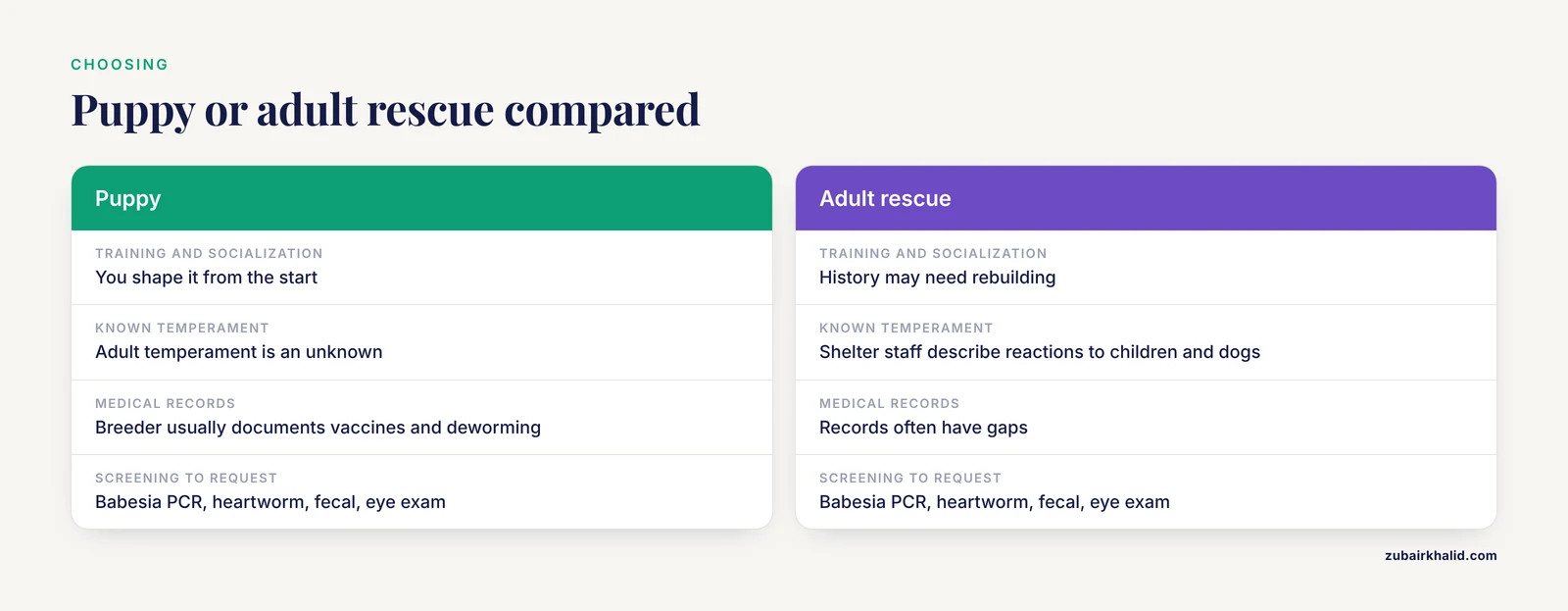
A puppy lets you shape training and socialization from the start, but adult temperament is an unknown. An adult rescue offers observable behavior: shelter staff can describe how the dog reacts to children, other dogs, and handling. The trade-off is medical history. A puppy from a breeder usually has documented vaccination and deworming dates; a shelter puppy or adult often has gaps in records, and parentage may be unknown.
Ask the shelter about temperament screening, known bite history, and any medical records. For both age groups, request Babesia PCR, heartworm and fecal testing [2][3][4], and an eye examination. Schedule a veterinary examination within the first week to establish a baseline and update core vaccinations if records are incomplete [6].
Recognizing Pain and Knowing When to Seek Emergency Care
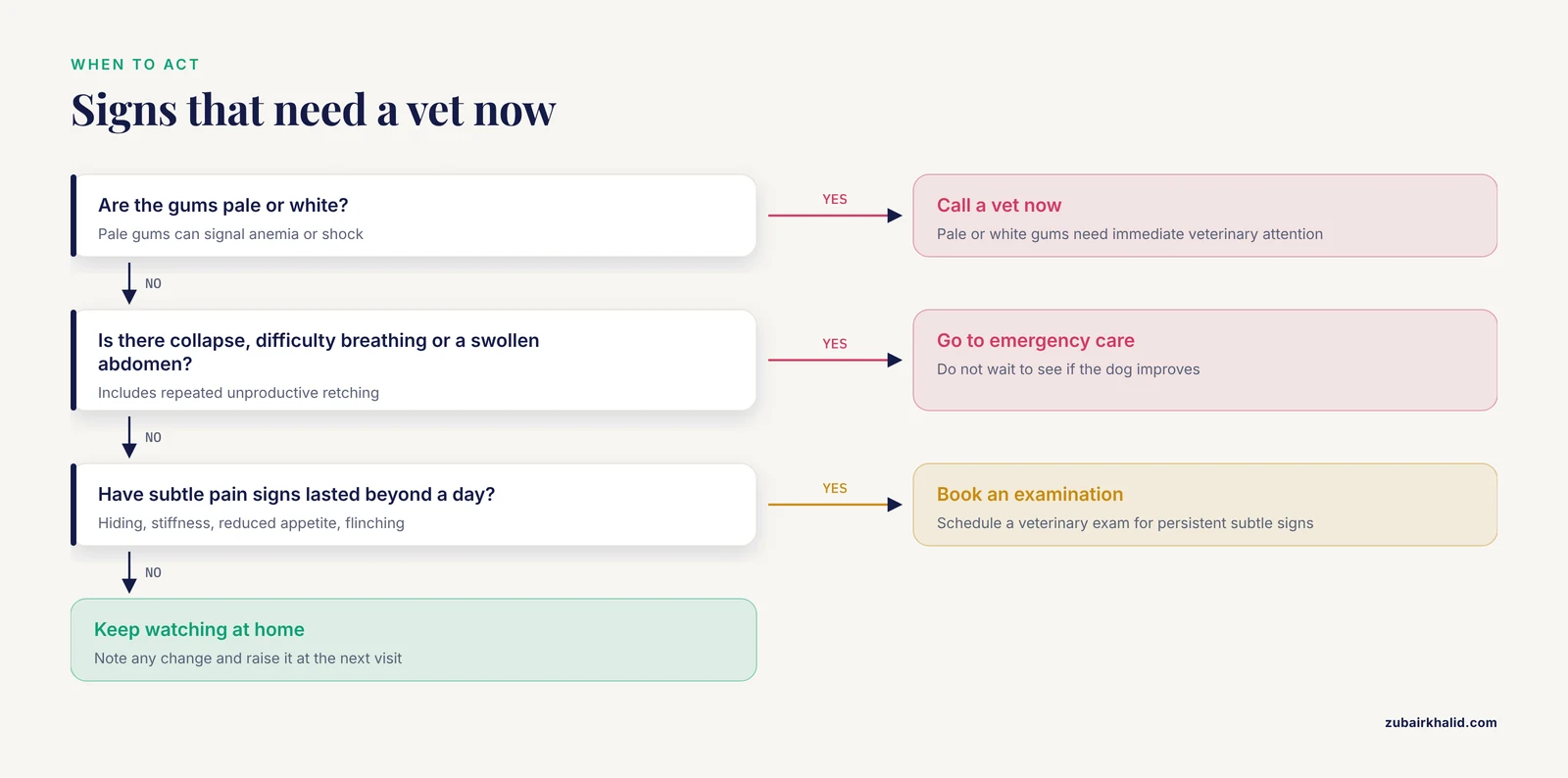
Bull Terrier Pitbull mixes are often stoic. They may hide pain rather than cry out. Watch for subtle changes: hiding or avoiding interaction, a reduced appetite, stiffness when rising, or reluctance to climb stairs or jump. A dog in pain may also flinch, pant, or resist handling. These signs can indicate musculoskeletal pain or internal illness.
Emergency red flags require immediate veterinary attention:
- Pale or white gums, which can signal anemia or shock
- Collapse or sudden weakness
- Difficulty breathing
- A swollen, tense, or bloated abdomen, which can indicate gastric dilatation-volvulus
- Repeated unproductive retching
If you see any of these signs, contact a veterinarian immediately. Do not wait to see if the dog improves. For subtle pain signs that persist beyond a day, schedule a veterinary examination.
Enrichment, Training Classes, and Canine Sports
A muscular, athletic dog like this mix needs more than leash walks [1]. Mental work tires a dog as effectively as running and builds the handler focus that keeps a powerful dog manageable in public.
- Puzzle feeders and scatter feeding at mealtimes
- Shaping tricks and simple scent games at home
- Short, frequent reward-based sessions
Group obedience classes provide controlled exposure to other dogs and people, and a good trainer will steer you away from harsh corrections. Nose work and low-impact rally or trick titles suit this mix well.
Wait until growth plates close before agility, jumping, or repeated sprint-and-turn work, and ask your veterinarian for a timing estimate. Get veterinary clearance, including an eye examination, before starting any competitive sport.
Related Guides
- Staffordshire Bull Terrier Dog Breed Guide: Temperament, Size, Lifespan, Health Problems and Care: Compare this related Staffordshire Bull Terrier breed guide with the mix
- Bully Pit Mix: Breed Traits, Health, and Care: Useful comparison for other bully breed crosses and their care needs
Frequently Asked Questions
Is a Bull Terrier Pitbull mix a good family dog?
A Bull Terrier Pitbull mix can be a loving and loyal family companion, but it is a powerful, high-energy dog that needs consistent training and supervision. The veterinary literature shows that most dog bites happen at home with familiar dogs and that preschool children are at the highest risk [7]. This mix is best for a family that can commit to training, exercise, and never leaving the dog unsupervised with young children.
What health problems are common in Bull Terrier Pitbull mixes?
The most documented health problems in pit bull-type dogs are Babesia gibsoni and Babesia vulpes infections, hemotropic mycoplasmas, heartworm, hookworms, canine parvovirus, and inherited retinal degeneration [2][6][3][4][5]. A veterinary wellness plan should include screening for these conditions, especially in adopted dogs with unknown histories.
How much exercise does a Bull Terrier Pitbull mix need?
A Bull Terrier Pitbull mix needs regular daily exercise, but there is no single minute count that fits every dog. These are large, muscular, athletic dogs [1]. Work with your veterinarian to design an exercise plan appropriate for your dog's age and health.
Are Bull Terrier Pitbull mixes aggressive?
Aggression is not an inevitable trait of any breed. However, pit bull-type dogs are overrepresented in dog bite statistics, and fatal attacks most often involve unrestrained dogs on their owners' property [10][1][14]. Early socialization, consistent training, secure containment, and supervision around children are essential.
What is Babesia and why does it matter for this mix?
Babesia is a blood parasite that infects red blood cells and causes anemia. It is unusually common in pit bull-type dogs, especially those with a history of dogfighting [2][4]. PCR testing can detect the parasite, and infected dogs often need treatment and monitoring for anemia [2][3][4].
Do Bull Terrier Pitbull mixes need special eye testing?
Yes, eye examination and genetic testing should be discussed with your veterinarian. Pit Bull Terriers carry a mutation in the IQCB1 gene that causes early-onset retinal degeneration, and American Staffordshire Terriers carry a related PDE6B mutation [5]. Both cause severe vision loss in puppyhood.
Are Bull Terrier Pitbull mixes banned anywhere?
Some municipalities and countries restrict or ban pit bull-type dogs. The evidence on whether these laws reduce bite injuries is mixed, with one Canadian study showing a reduction in hospitalizations and a Missouri study finding no association [8][9]. Check your local laws before adopting.
Should I adopt a Bull Terrier Pitbull mix from a shelter?
Adoption can be a great option, but be prepared for the challenges. Pit bull-type dogs are overrepresented in shelter relinquishment and are at higher risk of euthanasia [15]. Ask the shelter about the dog's history, and schedule a veterinary examination and infectious disease screening within the first week [4].
Sources
- Dog bites in the emergency department: a descriptive analysis.
- Detection of Babesia gibsoni and the canine small Babesia 'Spanish isolate' in blood samples obtained from dogs confiscated from dogfighting operations.
- Prevalence of Babesia spp. and clinical characteristics of Babesia vulpes infections in North American dogs.
- Infectious diseases in dogs rescued during dogfighting investigations.
- IQCB1 and PDE6B mutations cause similar early onset retinal degenerations in two closely related terrier dog breeds.
- Canine parvovirus cases (2010-2023): a retrospective study of 78,977 cases demonstrates declining incidence, but mortality risk remains.
- Pediatric Dog Bite Injuries in Central Texas.
- Effectiveness of breed-specific legislation in decreasing the incidence of dog-bite injury hospitalisations in people in the Canadian province of Manitoba.
- Emergency department visits for dog bite injuries in Missouri municipalities with and without breed-specific legislation: a propensity score-matched analysis.
- Surgical Treatment of Pediatric Dog-bite Wounds: A 5-year Retrospective Review.
- An Algorithmic Approach to Operative Management of Complex Pediatric Dog Bites: 3-Year Review of a Level I Regional Referral Pediatric Trauma Hospital.
- The epidemiology of animal bite, scratch, and other potential rabies exposures, Louisiana.
- Epidemiology of surgical castration of dogs and cats in the United States.
- Breeds of dogs involved in fatal human attacks in the United States between 1979 and 1998.
- Housing-related companion animal relinquishment across 21 animal shelters in the United States from 2019-2023.