Pit Bull Training: Obedience, Socialization, and Tips
By Dr. Zubair Khalid, DVM, MS, PhD ·
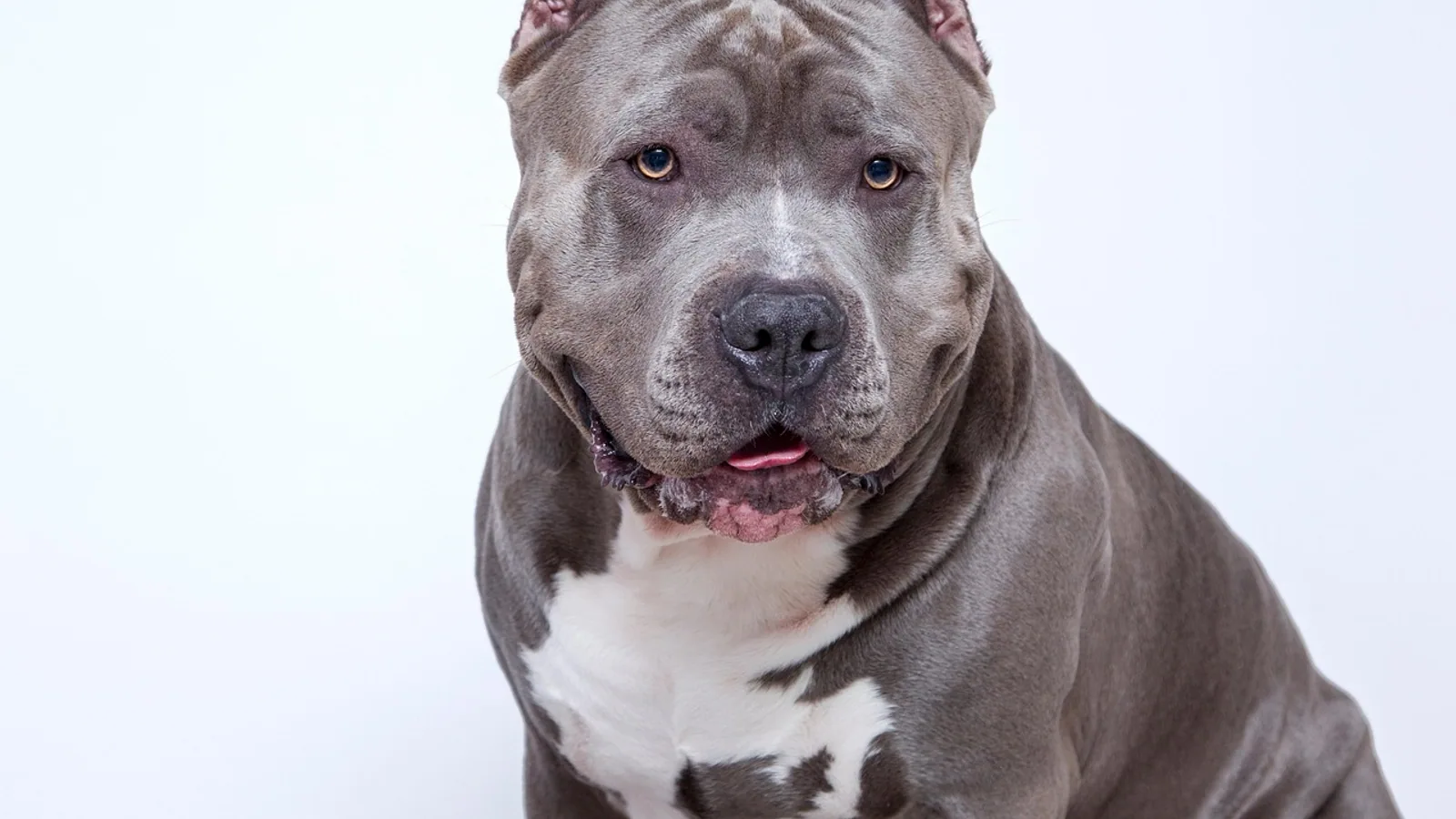
Pit bull training works the same way good training works for any dog. You mark the behavior you want, you pay it immediately, you repeat it in gradually harder places, and you never rely on fear to get compliance. By the end of this guide you will be able to build a marker system, teach sit, down, stay, come, and loose-leash walking, run a controlled socialization plan through the puppy window, and troubleshoot the four problems owners ask about most: pulling, reactivity, resource guarding, and jumping.
Have these items on hand before you start:
- A marker. A clicker or a short word like "yes" used the same way every time.
- Small, high-value food rewards cut to pea size. Soft food works faster than crunchy kibble.
- A 6-foot leash, a flat collar or well-fitted harness, and a long line for recall work.
- A treat pouch you can open with one hand.
- A quiet room for the first sessions and a written log of what you practiced.
This article is educational and is not a substitute for veterinary diagnosis or treatment.
Breed Does Not Determine Trainability
The single most useful fact for anyone starting pit bull training is that breed labels are weak predictors of how a dog learns. A 2024 study of 1,309 dog owners measured five behavioral traits across conventional breed clusters, including a group the public labels "potentially aggressive." That group scored lower on aggression toward people and other animals than guarding breeds and mixed-breed dogs [1]. Mixed-breed dogs showed the highest fearfulness of the six clusters [1]. The stereotype and the data point in different directions.
That finding matters for training. If you walk into a session expecting a pit bull to be stubborn or hard-headed, you will misread normal learning behavior as defiance and reach for punishment too early. A 2025 qualitative study of veterinary clinical training found that breed stereotypes about canine pain sensitivity get transmitted during clinical rotations and do not align with experimental measures of pain across breeds [2]. The same logic applies to behavior. Breed beliefs shape how people treat dogs, and those beliefs are not reliable guides.
What does predict trainability is the individual dog's learning history, current emotional state, and the quality of reinforcement you deliver. A study of 105 dogs across five breed clades used a hand-touch learning task and found that most breed-clade differences in average performance disappeared by the second test session [3]. Initial differences reflected how dogs engaged with a novel task, not a fixed ceiling on what they could learn. Training pit bulls, like training any dog, is a process of building a reinforcement history rather than working around a genetic limit.
How Dogs Learn: Markers and Positive Reinforcement
Positive reinforcement means you add something the dog wants immediately after the behavior, and the behavior gets stronger. A 2026 study of 35 professional trainers with different methodological orientations found that trainers across both reward-based and mixed-methods groups identified positive reinforcement as their most frequently used and most effective method [4]. Reward-based trainers grounded their practice in behavioral science and raised concerns about intentionally using fear or pain [4].
Marker training is the delivery system for positive reinforcement. The marker is a precise signal that fires at the exact moment the behavior happens, then you deliver the food. The marker bridges the gap between the behavior and the reward.
Why aversive methods backfire
Aversive methods include leash jerks, shock, prong pressure used to punish, alpha rolls, and shouting. These techniques increase the risk of fear and aggression. The evidence is consistent across settings. Puppy owners who attended structured classes used fewer punishment-based discipline techniques than owners who did not attend [5]. Herding dog research found that positive reinforcement, early socialization, and trust-building with the handler increased performance and reduced stress behavior [6]. Punishment suppresses behavior in the moment and teaches the dog that the handler is a source of threat.
The marker mechanics
Follow this sequence every time:
- Load the marker. Say "yes" or click, then immediately feed. Repeat 10 times in a quiet room. No behavior required yet.
- Capture a behavior. Wait for the dog to sit. Mark the instant the rear touches the floor. Feed.
- Add a cue. Say "sit" once, just before the dog sits naturally. Mark and feed.
- Fade the food. Move to variable reinforcement, paying after one correct response, then three, then one, then five.
- Add duration, distance, and distraction one at a time, never two at once.
Expected output
After three 5-minute sessions you should see the dog offer the behavior without a cue, which trainers call offering. That is the sign the marker is loaded and the dog understands the game.
Session log example
Day 1: marker loading, 10 reps, dog orienting to hand
Day 2: captured sit 8/10 trials, no cue yet
Day 3: added cue "sit", 9/10 correct, food still every rep
Day 4: added 2-second duration, 7/10 correct
Day 5: moved to kitchen, 6/10 correct, returned to living room for 3 easy wins
The Core Obedience Plan
Run this plan in 5-minute blocks, two or three times a day. Short sessions beat long ones because attention and reinforcement value drop as the dog tires.
Sit
Capture it, then cue it. Sit is the default behavior you will use at doors, curbs, and vet clinic scales. Once the dog sits reliably in the quiet room, practice at the front door before every walk. The dog sits, you open the door. The dog breaks the sit, the door closes. The environment does the teaching.
Down
Lure from a sit by moving food from the nose straight down to the floor, then out along the ground. Mark the moment the elbows touch. Down is a vulnerable position for many dogs, so pay generously and never push the shoulders down.
Stay
Build stay with three separate variables: duration, distance, and distraction. Increase only one per session.
- Duration: 2 seconds, 5 seconds, 10 seconds, 20 seconds.
- Distance: one step, three steps, six steps, then return before the dog breaks.
- Distraction: a toy on the floor, a person walking past, a door opening.
Return to the dog to pay during early stay work. If you always call the dog out of a stay, the dog learns that stay ends with movement toward you, which weakens the position.
Come
Recall is the most important behavior you will teach and the easiest to poison. Never call the dog to punish it. Never call the dog for something it dislikes, like a bath or nail trim.
- Start indoors at 3 feet. Say the dog's name, then "come." Mark and pay when the dog reaches you.
- Pay at your feet, not in your hand held out. You want the dog to come all the way in.
- Add distance slowly. Use a long line outdoors so the dog cannot rehearse ignoring you.
- Practice in the yard, then on a quiet sidewalk, then near mild distractions.
- Pay with a jackpot (several treats in a row) for fast, enthusiastic recalls.
A study of 142 dogs found that dogs in puppy classes and adult obedience classes responded significantly better to commands than dogs with no formal training or only a puppy party [7]. Structured practice, not age, drove the improvement.
Loose-leash walking
Teach the dog that a tight leash stops the walk and a loose leash continues it.
- Stand still the moment the leash tightens. Wait.
- The instant the leash slackens, mark and pay, then walk.
- Change direction often so the dog learns to watch you.
- Reward the dog for walking beside you, not for being dragged into position.
Expect the first week to cover very little ground. That is normal. You are paying for slack, not for distance.
Socialization: The Window and the Rules
Socialization is controlled, positive exposure to the people, animals, sounds, surfaces, and situations the dog will meet across its life. It is not flooding. Flooding means overwhelming the dog with an intense version of a trigger and waiting for it to stop reacting. Flooding teaches helplessness and increases fear.
The timeline
Age-appropriate socialization practices should begin within a few days of birth and extend well into adulthood [8]. The practical puppy window runs to about 16 weeks, which is when many owners are told to keep the puppy home. That advice conflicts with the behavior evidence. A study of 279 puppies that attended socialization classes and were vaccinated at least once found none were suspected of or diagnosed with canine parvovirus infection, and vaccinated puppies attending classes were at no greater risk than vaccinated puppies that did not attend [9]. Talk with your veterinarian about your puppy's vaccination status and local disease risk, then make a plan that balances infection risk against behavior risk.
What good socialization looks like
A cross-sectional study of 296 puppy owners found that owners who attended puppy classes exposed their puppies to more people, more dogs, more noises, and more situations than owners who did not attend [5]. Puppies of attendees were less likely to show fear in response to thunder, vacuum cleaners, and crates [5]. Almost one-third of puppies in that study received only minimal exposure to people and dogs outside the home [5]. That last number is the one to avoid.
Dogs that are appropriately socialized as puppies are less likely to show behavioral problems as adults, including aggression and fearfulness, and are more likely to engage in positive social behavior with humans [8].
The socialization checklist
Work through these categories at the puppy's pace. One new item per session, always paired with food and a relaxed body.
- People: different ages, heights, hats, uniforms, beards, voices, and gaits.
- Dogs: calm adult dogs first, then polite puppies of similar size.
- Sounds: thunder recordings at low volume, vacuum, blender, doorbell, traffic.
- Surfaces: tile, grass, gravel, metal grates, stairs, wobble boards.
- Handling: ears, paws, mouth, tail, collar grabs, gentle restraint for vet exams.
- Environments: car rides, parking lots, pet store entrances, vet lobby.
- Objects: umbrellas, wheelchairs, strollers, shopping carts, bicycles.
The rule of three
For every new experience, watch the dog's body. If the dog takes food, sniffs, and returns to a neutral posture, the exposure was positive. If the dog freezes, tucks the tail, yawns repeatedly, or refuses food, you went too far too fast. Reduce intensity, add distance, and try again later. Never drag a frightened puppy toward a trigger.
Puppy classes
Puppy socialization classes teach puppies to interact well with children, adults, and other dogs while also teaching basic obedience exercises, and they build a bond between the puppy, the owner, and the veterinary clinic [10]. Class structure varies widely between providers, so visit before enrolling and watch how the instructor handles a shy puppy [5].
The evidence on classes is not uniform. A study of 142 dogs found that puppy class and adult class attendance improved obedience, and puppy class attendance improved positive responses to strangers compared with adult class and no class [7]. A separate study of 248 adopted dogs found higher retention in the home for dogs that attended humane society puppy socialization classes, were handled frequently as puppies, were more responsive to commands, and lived in homes without young children [11]. The retention finding in homes with children points to a real need: help owners set realistic expectations and manage child-dog interactions [11].
Socialization does not stop at 16 weeks
Continue structured exposure into adolescence and adulthood [8]. Adolescent dogs go through fear periods and may react to things they ignored as puppies. Treat those reactions as information, not as failure.
Troubleshooting Table: Pulling, Reactivity, Guarding, Jumping
Use this table as a decision guide. The trigger column tells you what sets the behavior off. The response column tells you what to do in the moment and over the next two weeks. The reward column tells you what you are paying for.
| Problem | Trigger | Response | Reward |
|---|---|---|---|
| Pulling on leash | Dog reaches the end of the leash and the walk continues | Stop moving the instant the leash tightens. Wait for slack. Change direction when the dog surges. Practice in a low-distraction area first. | Mark and pay for a loose leash, for checking in, and for walking beside you. The walk itself is a reward when the leash stays loose. |
| Reactivity (barking, lunging at dogs or people) | Trigger appears at a distance where the dog notices but can still take food | Find the threshold distance where the dog can eat and respond to you. Mark and pay for looking at the trigger, then looking back at you. Add distance the moment the dog stops eating. Never close the gap to "show" the dog the trigger. | High-value food for a calm look and a voluntary check-in. Increase distance as a reward when the dog is over threshold. |
| Resource guarding (food bowl, chews, toys, resting spots) | A person or animal approaches the guarded item | Do not reach for the item. Do not punish growling. Trade up: toss a better treat away from the item, then pick the item up while the dog eats the treat, then return the item. Practice approach-and-toss dozens of times before you attempt a hand near the bowl. | The dog learns that a human approaching the item predicts a better reward, not a loss. Pay with food tossed away from the bowl and with the return of the item. |
| Jumping on people | Person enters the room or the dog greets someone at the door | Turn away, cross your arms, and remove attention the instant paws leave the floor. Ask for a sit before any greeting. Have guests do the same. Keep greetings low-key for high-arousal dogs. | Mark and pay for four paws on the floor and for a sit. Attention and calm greeting are the reward. |
Working the pulling problem in detail
Pulling is a reinforcement problem. The dog pulls because pulling has worked. Every step you take while the leash is tight pays the pulling.
- Fit the gear. A flat collar or a well-fitted harness. Head halters were associated with higher retention in one adoption study, but introduce them slowly with food [11].
- Pick a low-distraction route. A quiet sidewalk or a parking lot at an off hour.
- Walk. The instant the leash tightens, stop. Do not yank. Wait.
- The instant the leash slackens, mark, pay, and walk.
- If the dog surges repeatedly, turn 180 degrees and walk the other way.
- Add a cue. Say "let's go" when you change direction so the dog learns the word.
- Build duration. Five minutes of loose leash, then ten, then twenty.
Working the reactivity problem in detail
Reactivity is not aggression. It is a dog that has learned that barking and lunging makes the trigger go away or that the trigger is frightening. The fix is distance plus reinforcement for calm behavior.
- Find the threshold. Walk toward the trigger until the dog notices but still takes food. That distance is your starting point.
- Mark and pay for a glance at the trigger, then a glance back at you.
- If the dog stops eating, you are too close. Add 10 feet and try again.
- Practice "find it" by tossing food on the ground when a trigger appears, so the dog learns to put its nose down instead of staring.
- Keep sessions short. Three to five trigger exposures per session is enough.
- Track progress in a log. Note the distance at which the dog stayed calm. That number should grow over weeks.
Working the resource guarding problem in detail
Resource guarding is normal dog behavior. It becomes a problem when the dog escalates to growling, snapping, or biting. Punishing the growl removes the warning and leaves the bite. The trade-up protocol teaches the dog that people approaching valuable items predict something better.
- Start with a low-value item. Toss a high-value treat away from the item. Let the dog eat the treat.
- Pick up the item while the dog is eating the treat. Return the item.
- Repeat 20 times over several days.
- Move to a higher-value item only when the dog shows relaxed body language at step 3.
- Add a hand near the bowl only after the dog is relaxed at the toss-and-return stage.
- If the dog has bitten or snapped, stop and contact a veterinarian or a board-certified veterinary behaviorist.
Working the jumping problem in detail
Jumping is a greeting behavior that gets reinforced by attention, even negative attention. The fix is to make jumping produce nothing and sitting produce everything.
- Decide on a greeting rule. The dog sits before anyone pets it.
- Practice with a family member first. Walk in the door. Ignore the dog until it sits. Mark, pay, and pet.
- Repeat with a guest who will follow instructions.
- Keep greetings calm. High-pitched greetings raise arousal and make jumping more likely.
- If the dog jumps, turn away and remove attention. Do not push the dog down. Pushing is attention.
Training Pit Bulls in Real Life: Environment and Equipment
Set up the environment before you train
A 2026 study of agility training found that baseline cortisol was significantly lower than pre-training and post-training levels, meaning dogs were physiologically activated from anticipation through the session [12]. Beginner dogs showed more stress-related behaviors like licking and panting [12]. The lesson transfers to any training: arousal management is part of the job. Train when the dog is rested, not right after a high-energy play session. Keep sessions short. Watch for lip licking, yawning, and disengagement as signs to stop.
Use the right gear
- Flat collar or well-fitted harness for walking.
- 6-foot leash for daily walks, long line for recall practice in safe areas.
- Head halter if the dog pulls hard, introduced with food and short sessions [11].
- Treat pouch and a variety of food rewards so the dog does not get bored.
Use food that the dog actually wants
Food motivation varies between dogs and between breeds. A study of Labrador Retrievers and German Shepherd Dogs found that Labradors reached significantly higher breakpoints on a progressive ratio task than German Shepherds, meaning they worked harder for food [13]. Find your dog's currency. Some dogs work for food, some for a toy, some for a sniff. Pay with whatever the dog will work for.
Keep the training log
Write down the date, the behavior, the number of correct responses, the location, and the distraction level. The log tells you when to add difficulty and when to back off. If correct responses drop below about 70 percent, you moved too fast.
Add enrichment
Training is one form of enrichment. A 2026 study of nose work training found that more formal nose work training was associated with less giving up on an unsolvable task, suggesting that training quality can affect task persistence [14]. Puzzle feeders, sniff walks, and scent games build the same persistence you want in obedience work.
Common Training Errors and Fixes
| Error | What it looks like | Fix |
|---|---|---|
| Paying too late | The dog sits, then you reach for food two seconds later | Mark the instant the behavior happens, then deliver food within one second |
| Adding two variables at once | You add distance and distraction in the same session and the dog fails | Add one variable per session, hold the others constant |
| Repeating the cue | "Sit, sit, sit" while the dog stares | Say the cue once. If the dog does not respond, reset and make it easier |
| Training too long | Sessions run 20 minutes and the dog disengages | Cap sessions at 5 minutes, two or three times a day |
| Punishing growling | The dog growls over a bone and gets scolded | Stop. Trade up instead. Growling is information, not defiance |
| Flooding during socialization | You hold a scared puppy near a loud trigger until it stops struggling | Reduce intensity and add distance. Pair the trigger with food |
| Skipping the log | You cannot remember what the dog did last week | Write it down. The log drives your next session |
| Using the recall as punishment | You call the dog to clip its nails or end the park visit | Call the dog often, pay, and release back to fun |
Checking That Training Is Working
Use these markers to confirm the plan is on track.
- The dog offers the behavior before you cue it.
- Correct responses stay at or above 70 percent in a new location.
- The dog takes food in the presence of a mild trigger.
- The dog recovers from a startle in under 30 seconds.
- The dog checks in with you on walks without being asked.
- The dog's body language stays loose: soft eyes, relaxed tail, normal breathing.
If two or more of these markers are missing for more than two weeks, reduce difficulty and rebuild the foundation.
Next Steps After the Basics
Once sit, down, stay, come, and loose-leash walking are reliable in three locations, add:
- Distance and duration in combination, one at a time.
- Real-world distractions: a busy sidewalk, a pet store, a friend's yard.
- A release cue so the dog knows when the behavior ends.
- Impulse control games like waiting for a food bowl to be set down.
- Continued socialization with calm adult dogs and new people [8].
A 2023 study of 270 training sessions with socialized wolves and dogs found that tail wagging occurred more often in sessions with longer durations of nice speech and less often in sessions with reprehensive speech [15]. For dogs, the duration of reprehensive speech was negatively related to correct responses [15]. Your tone is part of the training. Keep it warm and brief.
Limitations and When to Contact a Veterinarian
This article is educational and is not a substitute for veterinary diagnosis or treatment. Individual dogs need individual assessment.
Contact a veterinarian or a board-certified veterinary behaviorist if any of these apply:
- The dog has bitten a person or another animal.
- The dog shows resource guarding that has escalated to snapping.
- The dog shows sudden behavior changes, including new aggression, in a dog that was previously calm. Sudden change can signal pain or illness.
- The dog cannot eat or take treats in the presence of a trigger, even at a distance.
- The dog shows fear that does not improve after two weeks of controlled, positive exposure.
- The dog shows signs of separation-related distress when left alone.
- You feel unsafe handling the dog or walking it in public.
A veterinarian can rule out medical causes and refer you to a qualified behavior professional. Puppy classes and structured training programs are one of the most important services a veterinary clinic can offer, and your clinic can help you find a class that fits your dog [10].
Frequently Asked Questions
Are pit bulls harder to train than other breeds?
No. Breed labels are weak predictors of trainability. A study of 1,309 dogs found that breeds the public labels "potentially aggressive" scored lower on aggression than guarding breeds and mixed-breeds [1], and a study of 105 dogs found most breed-clade differences in learning performance disappeared on the second test session [3].
What age should I start training a pit bull puppy?
Start marker loading and basic cues as soon as you bring the puppy home, often around 8 weeks. Socialization should begin within days of birth and continue into adulthood [8]. Puppy classes are commonly recommended for puppies in the 7- to 12-week range [11].
Is it safe to take an unvaccinated puppy to socialization class?
Talk with your veterinarian first. A study of 279 puppies that attended socialization classes and had at least one vaccination found none were diagnosed with parvovirus, and attendees were at no greater risk than non-attendees [9]. Your veterinarian can weigh your puppy's specific risk.
Should I use a prong collar or shock collar on my pit bull?
No. Aversive methods increase fear and aggression risk. Trainers across methodological orientations identify positive reinforcement as their most used and most effective method [4], and puppy owners who attended classes used fewer punishment-based techniques than those who did not [5].
How long does it take to train a pit bull?
Basic cues often come together in four to eight weeks of short daily sessions. Reliable behavior in distracting environments takes months. A study of 142 dogs found that six weeks of weekly classes improved command response significantly compared with no training [7].
What do I do if my pit bull growls over a bone?
Do not punish the growl. Trade up: toss a high-value treat away from the item, then pick up the item and return it. Repeat many times before you attempt to touch the item. If the dog has snapped or bitten, contact a veterinarian or veterinary behaviorist.
Can I socialize an adult pit bull that was never socialized as a puppy?
Yes, with realistic expectations. Socialization should extend well into adulthood [8]. Adult dogs can learn new associations, but progress is usually slower and requires controlled, positive exposure at a distance the dog can handle.
How do I stop my pit bull from pulling on the leash?
Stop walking the instant the leash tightens. Mark and pay the moment the leash slackens, then walk. Change direction when the dog surges. The walk itself is the reward for a loose leash, so a tight leash must end forward motion every time.
Related Articles
- Puppy Socialization and Preventive Behavior: Early Training and Handling
- Dog Training Tips Uk
- Dog Training Tips
- Dog Training Tip
- Puppy Training Tips Biting
- Dog Training Tips For Puppies
- Pitbull Labrador Mix: Traits, Health, and Care
- Bully Pit Mix: Breed Traits, Health, and Care
Sources
- Variations in Canine Behavioural Characteristics across Conventional Breed Clusters and Most Common Breed-Based Public Stereotypes.
- Qualitative Exploration of the Hidden Curriculum in Communicating Dog Breed Stereotypes During Veterinary Clinical Training.
- Changes in cognitive performance following repeated exposure to a hand-touch learning task across breed clades of domestic dogs (Canis familiaris).
- Professional dog trainers' perspectives on training methods: ethical and evidentiary insights.
- Puppy socialization practices of a sample of dog owners from across Canada and the United States.
- The Influence of Environmental and Genetic Factors and Training Background on the Welfare of Herding Dogs.
- Importance of puppy training for future behavior of the dog.
- Puppy parties and beyond: the role of early age socialization practices on adult dog behavior.
- Frequency of CPV infection in vaccinated puppies that attended puppy socialization classes.
- Puppy socialization classes.
- Evaluation of association between retention in the home and attendance at puppy socialization classes.
- Behavioral and Cortisol-Based Evaluation of Stress in Dogs During Agility Training.
- Variation in food-maximizing behaviour as a function of context, breed, and individual characteristics: A study of Labrador Retrievers and German Shepherd Dogs.
- Does Nose Work Training Affect Dog Executive Function and Physical Fitness in Humans and Dogs?
- The Power of Discourse: Associations between Trainers' Speech and the Responses of Socialized Wolves and Dogs to Training.