Why Is My Cat Knocking Over His Water Bowl? Solutions
By Dr. Zubair Khalid, DVM, MS, PhD ·
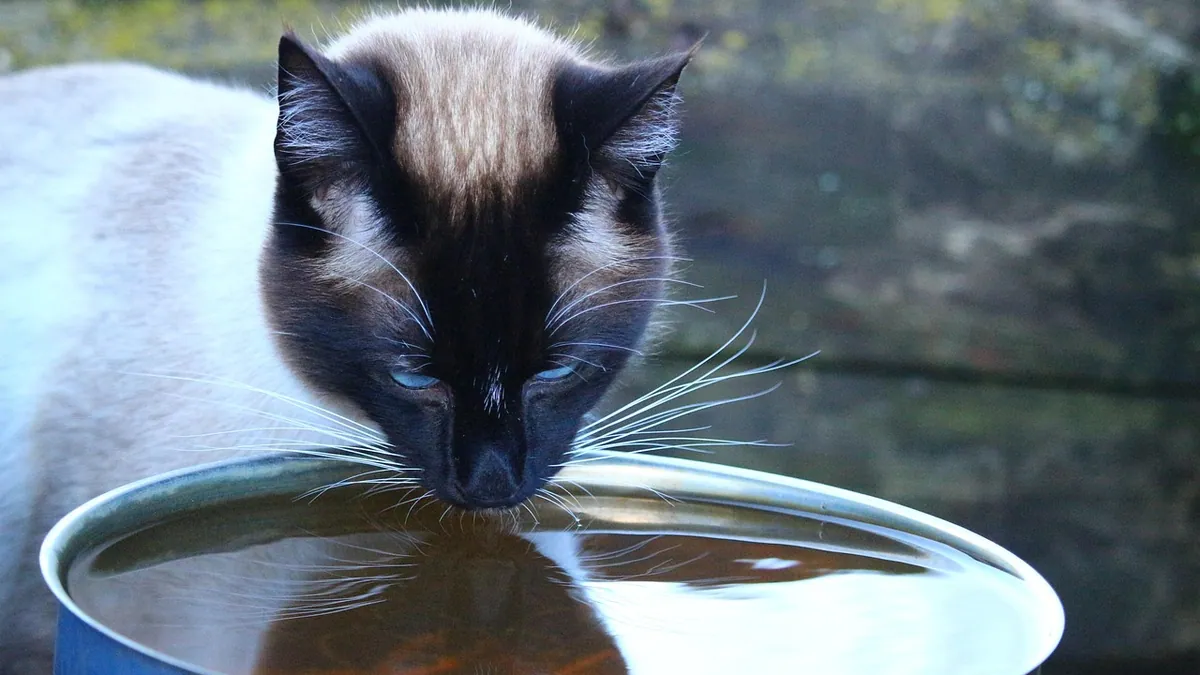
Cats knock over water bowls for many reasons, and most of them are normal cat behavior. Some cats tip a bowl to see the water move, some dislike a narrow bowl that presses on their whiskers, and some are simply bored. A smaller number of cats tip bowls because of a medical problem, so it helps to know the difference. This article is educational and is not a substitute for veterinary diagnosis or treatment.
Quick Answer
- Most bowl tipping is normal play, curiosity, or a dislike of the bowl itself, not a sign of illness.
- Whisker fatigue, a dirty bowl, or water that tastes off can all push a cat to tip or paw at the bowl.
- Cats on dry food drink very little, so a tipped bowl can quickly mean a thirsty cat with no water [1][2].
- Try a wide, heavy, ceramic or stainless steel bowl, a bowl with a rubber base, or a weighted bowl that resists tipping.
- If tipping starts suddenly along with more drinking, more peeing, or weight loss, call your veterinarian.
Why Is My Cat Knocking Over His Water Bowl? The Normal Reasons First
Most cats who tip their water bowl are not sick. They are doing something cats naturally do. Here are the everyday explanations.
Play and curiosity
Water moves. That is often enough. A cat who bats at the surface sees ripples, and the bowl becomes a toy. Kittens and young cats do this most, but any bored cat can start. If your cat is alone most of the day and has little to chase, a water bowl can become entertainment.
Whisker discomfort
A cat's whiskers are sensitive. A deep, narrow bowl forces the whiskers to press against the sides while he drinks. Many cats avoid that feeling by pawing at the water or tipping the bowl to get a better angle. Wide, shallow bowls are easier on the face.
The bowl itself
Some cats dislike plastic because it can hold onto odors and scratches. Others dislike a bowl that slides, rings, or smells like soap. A cat may tip a bowl to move it away from a spot he does not like, such as next to a noisy appliance or a litter box.
Freshness and temperature
Cats often prefer cool, fresh water. Water that has sat out, collected dust, or picked up food crumbs may get a paw swipe or a full tip. Some cats also seem to enjoy moving water, which is one reason fountains appeal to them.
Food bowl tipping
If your cat is also knocking over his food bowl, the cause is often similar. He may be trying to get the last bits out, he may dislike the bowl, or he may be signaling that he wants more. Tipping a food bowl is usually a feeding routine issue, not a medical one, unless it comes with a drop in appetite.
Medical Causes to Rule Out
Sometimes bowl tipping is a side effect of a health problem. The tipping is not the disease. It is a clue that your cat is uncomfortable, thirsty, or in pain.
Increased thirst
A cat who suddenly drinks much more may paw at or tip the bowl in his eagerness. Increased thirst can point to kidney disease, diabetes, and other conditions. If your cat is drinking far more than usual, read Why Is My Cat Drinking So Much Water? and call your veterinarian.
Dental pain or mouth discomfort
A cat with a sore mouth may drink oddly, drop water, or paw at the bowl. Watch for drooling, bad breath, dropping food, or chewing on one side. These signs deserve a veterinary exam.
Arthritis or neck pain
An older cat with a stiff neck or sore joints may struggle to reach into a deep bowl. He may hook the rim with a paw to pull the bowl closer or tip it to reach the water. A shallow bowl raised slightly off the floor often helps.
Vision or balance problems
A cat who cannot see well or feels unsteady may misjudge the bowl and knock it over. If tipping starts suddenly in an older cat, mention it to your veterinarian.
Cognitive changes
Senior cats can develop changes in memory and awareness. A cat who seems confused, yowls at night, or forgets routines may also handle his bowl differently. Your veterinarian can help sort out what is normal aging and what needs treatment.
When Bowl Tipping Becomes a Problem
Tipping is a behavior issue when it causes harm or stress. It becomes a problem if:
- Your cat has no water for hours because the bowl is empty on the floor.
- The mess damages floors, rugs, or electronics.
- Your cat is on dry food and drinks very little to begin with [1][2].
- The behavior starts suddenly in an adult cat who never did it before.
- It comes with changes in appetite, weight, urine, or energy.
Hydration matters. Cats on dry food take in less water from their food and depend more on drinking [1]. A scoping review of 32 publications found healthy cats consumed roughly 23 to 51 mL of total water per kilogram of body weight per day, though individual needs vary [2]. If your cat tips his only water source, he may not meet that need.
Urinary health is part of the picture. Diet affects urine pH, urine concentration, and the risk of stone formation, and urinary tract disease is a common reason cats see a veterinarian [3]. Good hydration supports urinary health. If you notice straining, blood in the urine, or peeing outside the box, see Why Is My Cat Peeing Outside the Litter Box? and contact your veterinarian.
How to Stop My Cat From Knocking Over the Water Bowl: Step by Step
You can usually reduce or stop the behavior with a few changes. Work through these in order.
Step 1: Change the bowl
- Choose a wide, shallow bowl so whiskers do not touch the sides.
- Pick ceramic or stainless steel. Both are easy to clean and do not hold odors like plastic can.
- Look for a bowl with a rubber ring or non-slip base.
- Try a weighted bowl or a bowl that sits inside a heavy stand.
- Wash the bowl daily with hot water. Rinse well so no soap residue remains.
Step 2: Change the placement
- Put the bowl on a non-slip mat or a towel.
- Keep it away from the litter box, noisy appliances, and busy walkways.
- Offer more than one water station. A cat who tips one bowl still has another.
- Keep water away from food if your cat seems to prefer that. Many cats drink more when water is separate from the food bowl.
Step 3: Try moving water
Many cats prefer water that moves. A fountain can help, but some cats knock over a fountain too. If your cat is knocking over his water fountain, check that the base is heavy and stable, that the cord is secured, and that the fountain is not too tall or narrow for him. Place it against a wall or in a corner so it is harder to tip. Clean fountains often, since slimy pumps and stale water can put a cat off.
Step 4: Add moisture to the diet
Wet food is one of the easiest ways to raise water intake. In a study of colony and home cats, dietary moisture changed how much water cats drank and how often they drank [1]. Cats fed wet food took in more water from food and drank less from the bowl. If your cat tips his bowl often, adding wet food reduces how much he depends on the bowl.
Lickable treats can also help. In one study, cats fed dry food plus high-moisture treats with amino acids, osmolytes, and added sodium had higher total water intake and lower urine specific gravity than cats fed dry food alone [4]. Ask your veterinarian whether these products fit your cat's health needs, especially if he has heart or kidney disease.
Water texture may matter too. A study found that cats given water with increased viscosity drank more of it [5]. This is a research finding, not a home remedy. Do not add thickeners to your cat's water on your own. Ask your veterinarian first.
Step 5: Add enrichment and play
If boredom is the driver, more play can fix it. Set aside two short play sessions a day with a wand toy. Rotate toys so they stay interesting. Offer puzzle feeders, cat trees, and window perches. A tired, busy cat has less reason to turn his bowl into a toy.
Step 6: Make the bowl harder to tip
- Set the bowl inside a larger, heavier container.
- Use a bowl with a suction base or a weighted base.
- Place the bowl in a sink or on a tray with a lip.
- For cats who paw at water, a shallow bowl with just an inch or two of water can reduce splashing.
Step 7: Track what happens
For one week, note when your cat tips the bowl, how much he drinks, how often he urinates, and whether anything else changed. This record helps your veterinarian if the behavior does not improve.
What Not to Do
Punishment does not work for this behavior. Do not yell, spray water, or tap your cat's nose. Cats do not connect punishment to a behavior that happened minutes ago. They learn to fear you or to tip the bowl when you are not looking.
Other things to skip:
- Do not take the water bowl away to stop the mess. That risks dehydration.
- Do not assume it is just a bad habit if the behavior is new. Sudden changes need a veterinary look.
- Do not add anything to the water (flavoring, thickener, broth) without asking your veterinarian first.
- Do not rely on a single bowl. Offer at least two water sources.
- Do not ignore litter box changes. If your cat is also peeing or pooping outside the box, read Why Is My Cat Pooping Outside the Litter Box? Causes and Solutions and Why Is My Cat Suddenly Peeing on the Wall?, then call your veterinarian.
When to Involve a Veterinarian or Behavior Professional
Call your veterinarian if the tipping is new, if your cat is drinking or urinating more, if he is losing weight, or if he seems painful or stiff. A physical exam and basic lab work can rule out kidney disease, diabetes, dental disease, and arthritis.
Ask for a referral to a veterinary behaviorist or a certified cat behavior consultant if:
- Your cat is healthy but the behavior continues after you have tried bowl, placement, and enrichment changes.
- The behavior comes with anxiety, hiding, aggression, or house soiling.
- You feel frustrated or are considering giving up the cat.
A behavior professional can build a plan that fits your cat and your home.
Limitations and When to Contact a Veterinarian
This article covers common causes and general steps. It cannot tell you what is happening with your individual cat. Only a veterinarian who examines your cat can do that.
Contact your veterinarian the same day if your cat:
- Has vomited several times or seems weak.
- Is straining to urinate, crying in the litter box, or producing little or no urine.
- Has a swollen, painful belly.
- Is drooling, dropping food, or refusing to eat.
Go to an emergency clinic now if your cat:
- Cannot urinate at all, especially a male cat.
- Is collapsed, breathing hard, or unresponsive.
- Has had a seizure or sudden severe pain.
- May have swallowed a piece of a broken bowl or fountain.
Call a routine visit if your cat:
- Drinks noticeably more or less than before.
- Has lost weight or has a dull coat.
- Has bad breath, drooling, or trouble eating.
- Tips the bowl daily and you cannot keep water available.
Frequently Asked Questions
Is it normal for a cat to knock over his water bowl?
Yes, it is common and usually normal. Cats tip bowls out of play, curiosity, or dislike of the bowl. It only becomes a concern when it starts suddenly or comes with other changes.
Why does my cat knock over his water bowl but not his food bowl?
Water moves, and that movement is interesting to cats. A food bowl holds still, so there is less to chase. Some cats also dislike the feel of a deep water bowl on their whiskers.
Do cats prefer running water?
Many cats do seem drawn to moving water. A fountain can encourage drinking, but some cats tip fountains too. Choose a heavy, stable fountain and clean it often.
Can a cat get enough water from wet food alone?
Many cats get most of their water from wet food, and that is fine for healthy cats. Cats on dry food depend more on drinking, so they need reliable access to fresh water [1][2].
Will a heavier bowl stop my cat from tipping it?
A heavy, wide bowl with a non-slip base stops many cats, but not all. Some cats still paw at the water or push the bowl. Pair a heavy bowl with more than one water station and more play.
Related Articles
- Why Is My Cat Drinking So Much Water?
- Why Is My Cat Peeing on My Clothes? Causes and Solutions
- Why Is My Cat Pooping Outside the Litter Box? Causes and Solutions
- Why Is My Cat Peeing Outside the Litter Box?
- Why Is My Cat Suddenly Peeing on the Wall?
- Cat Overgrooming: Why It Happens and What to Do
- Why Your Cat Knocks Things Over and How to Stop It
- Why Is My Cat Drinking Out of the Toilet?
- Why Is My Cat Peeing in the Bathtub? Causes and Solutions
References
- Water intake and consumption behavior of colony and privately-owned healthy domestic cats fed 100% dry, 50% dry and 50% wet, and 100% wet diets: a comparison of research and home environments. Journal of animal science, 2026.
- Diet format, protein, amino acids, salt, and osmolytes, as well as water viscosity, affect water consumption in domestic cats: a scoping review of 32 publications (published from 1975 to 2025) on water intake, hydration status, and related health outcomes. Journal of animal science, 2026.
- Revisiting feline urinary tract health: the role of diet and acidifying agents in urolith prevention and long-term cat health. Journal of animal science, 2026.
- Consuming treats with amino acids, osmolytes and sodium increased total water intake and decreased urine specific gravity of healthy cats. Journal of feline medicine and surgery, 2026.
- Increased Water Viscosity Enhances Water Intake and Reduces Risk of Calcium Oxalate Stone Formation in Cats. Animals : an open access journal from MDPI, 2021.