Why Is My Dog Obsessed With Water? Play, Instinct, or Illness
By Dr. Zubair Khalid, DVM, MS, PhD ·
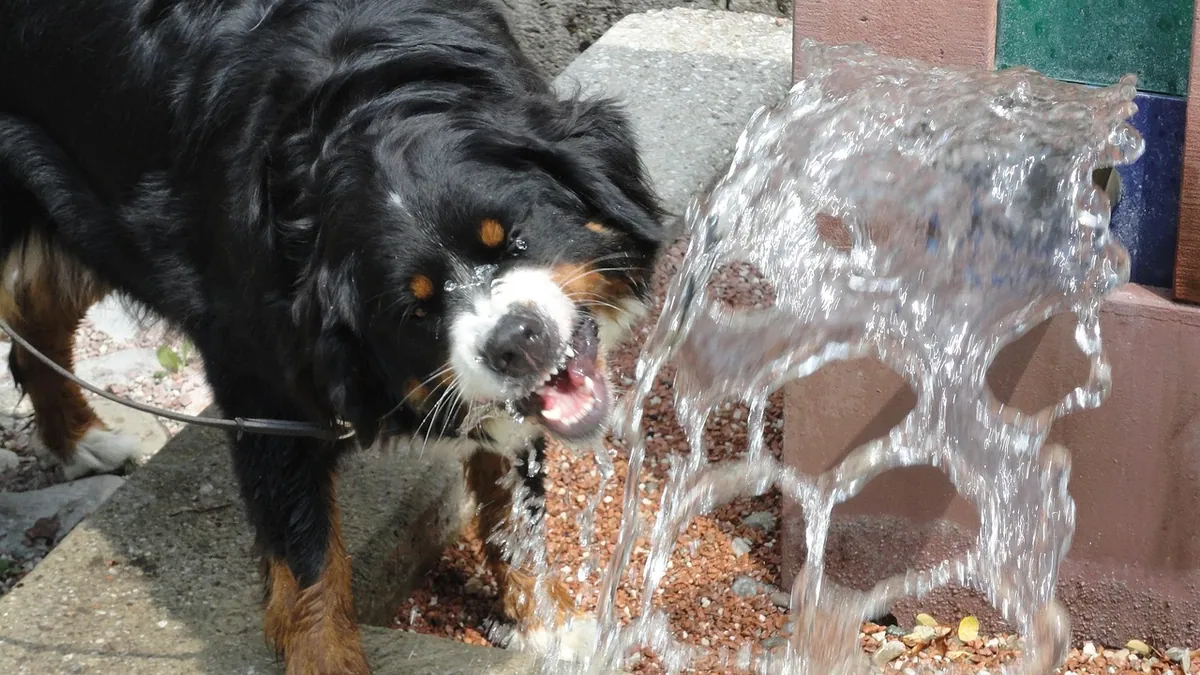
Why is my dog obsessed with water? Most of the time, it is normal. Some dogs love to splash, bite at the hose, or lie in the kiddie pool because water is fun and cooling. Other dogs drink far more than usual, and that can point to a medical problem or a behavior disorder that needs veterinary attention.
This article is educational and is not a substitute for veterinary diagnosis or treatment.
Quick Answer
- Water play (biting the hose, digging in the bowl, swimming) is usually normal dog behavior, especially in water-loving breeds.
- Drinking a lot is measured, not guessed. A rough guide is more than about 1 ounce per pound of body weight per day, but your veterinarian can help you set a normal range for your dog.
- Sudden heavy drinking with heavy urination is the pattern that matters most. It can signal diabetes, kidney disease, or a hormone problem.
- Compulsive water drinking (psychogenic polydipsia) is a real diagnosis, most often seen in young, healthy, anxious dogs with large urine volumes [1].
- Never restrict water as a home treatment. Water restriction is a medical decision your veterinarian makes, not a guess.
Why Is My Dog Obsessed With Water? Normal Reasons First
Before you worry, look at what your dog is actually doing with the water. Playing and drinking are two different behaviors with two different sets of causes.
Water play and sensory fun
Many dogs treat water as a toy. Hoses spray, sprinklers move, and bowls splash when a paw hits them. That movement triggers chasing and biting, which is normal predatory play. Pools and puddles offer cooling and texture. A puppy obsessed with water often just discovered a new, exciting toy. Puppies explore with their mouths, so biting at a stream of water is common and usually fades as they mature.
Breed and instinct
Some breeds were developed to work in water. Retrievers, water spaniels, Portuguese Water Dogs, and Newfoundlands often take to water naturally. Terriers may dig at water the same way they dig at dirt. If your dog is one of these breeds and the behavior is playful, you are likely seeing instinct, not illness.
Heat and thirst
Dogs drink more in hot weather, after hard exercise, and after eating dry food. A dog that has been running in July will drink more than the same dog in January. This is normal.
Learning and attention
If you laugh, chase, or spray back when your dog attacks the hose, the behavior gets rewarded. Dogs repeat what gets attention. A dog that splashes the bowl and gets you to refill it has learned a quick way to start a game.
Medical Causes of Excessive Water Drinking
If your dog is drinking and urinating far more than usual, the behavior is not about fun. It is about thirst, and thirst that will not quit has physical causes.
Diabetes mellitus
Diabetes causes high blood sugar, and the body tries to flush that sugar out through urine. The result is heavy drinking and heavy urination. Weight loss despite a good appetite is a common companion sign. Your veterinarian can check this with a simple blood and urine test.
Kidney disease
Kidneys that cannot concentrate urine well force the body to lose water. The dog drinks to replace it. This is more common in older dogs, and it is one of the first things your veterinarian will screen for in a dog that suddenly drinks a lot.
Hormone disorders
Cushing's disease, diabetes insipidus, and adrenal disorders all change how the body handles water. One case report described a 7-year-old toy poodle with heavy drinking and urination caused by a rare adrenal problem called hypothalamic hypoadrenocorticism, confirmed with specialized hormone testing [2]. These conditions need blood work to sort out.
Psychogenic polydipsia
This is compulsive water drinking with no physical disease driving it. Dogs with this diagnosis are often young, systemically healthy, and have large urine volumes [1]. Many have a nervous or anxious disposition and may show repetitive or hyperactive behaviors [1]. There is no single test that proves it. Your veterinarian has to rule out every other cause first [1].
Seizure-related thirst
Some dogs drink heavily around seizures. In a survey of owners of epileptic dogs, 78.4 percent reported polydipsia, meaning excessive thirst, as part of the signs they saw [3]. If your dog has seizures and drinks in clusters, tell your veterinarian.
The opposite problem
A dog that stops drinking entirely is also a medical emergency. Adipsia, the complete absence of thirst, is rare and has been linked to brain lesions affecting the thirst center [4]. If your dog refuses water and seems dull or wobbly, call your veterinarian right away. You can read more about that pattern in Dog Not Drinking Water: Causes and How to Encourage Hydration.
When Water Obsession Becomes a Problem
The line between quirky and concerning comes down to amount, timing, and what comes out the other end.
Measure the intake
Fill a measuring cup and use it to refill the bowl for 24 hours. Write down the total. A dog that drinks several times the normal amount, day after day, needs a veterinary visit. Guessing from a bowl level is not accurate enough.
Watch the urine
Heavy drinking almost always comes with heavy urination. If your dog asks to go out at night when it never used to, has accidents indoors, or floods the yard, that is a pattern worth testing. A dog that drinks a lot but urinates a normal amount is less likely to have a physical cause.
Look at the whole dog
Weigh your dog or check its body condition. Unexplained weight loss, a dull coat, vomiting, or low energy alongside the drinking points toward illness. A bright, playful dog that just loves the hose is a different picture.
Check the behavior pattern
Compulsive water drinking tends to happen whether or not the dog is thirsty, often at times of stress, and may come with other repetitive behaviors like pacing or licking. If your dog also licks surfaces obsessively, that can have its own causes, which are covered in Why Is My Dog licking carpet obsessively? Nausea-Related Licking Disorder.
What to Do: A Step-by-Step Plan
Step 1: Rule out medical causes first
Book a veterinary visit before you try any training plan for excessive drinking. Your veterinarian will likely run blood work, a urinalysis, and possibly a water deprivation test or imaging. Do not skip this step. Behavior plans do not fix diabetes.
Step 2: Track water and urine for 3 to 5 days
Write down how much your dog drinks each day, how often it urinates, and whether accidents happen. Bring these notes to the appointment. This data helps your veterinarian decide which tests matter most.
Step 3: Manage water play safely
If your dog loves water, keep the fun but set rules. Use a sprinkler instead of a hose your dog can bite. Teach a "leave it" cue and reward your dog for backing away from the water. End the game before your dog gets frantic, not after. Offer shade and breaks so play does not turn into overheating.
Step 4: Add enrichment that is not water
A dog that is bored will invent its own entertainment. Puzzle feeders, sniff walks, tug, and training games can absorb that energy. Rotate toys so they stay interesting. A tired, mentally satisfied dog is less likely to fixate on the bowl.
Step 5: Reduce stress if anxiety is part of the picture
Anxious dogs are overrepresented among compulsive drinkers [1]. Keep a predictable routine. Give your dog a quiet place to rest. If your dog startles easily around water or baths, that fear has its own playbook, covered in Why Is My Dog Suddenly Scared of the Water?.
Step 6: Follow your veterinarian's water plan exactly
If a diagnosis like psychogenic polydipsia is confirmed, treatment may combine water restriction, environmental and behavioral changes, and medication [1]. Water restriction is done under veterinary supervision because cutting water too fast can harm your dog. Never do it on your own.
What Not to Do
Do not punish the behavior
Punishment does not fix thirst. If your dog has a medical problem, scolding it for drinking is unfair and ineffective. If the behavior is compulsive, punishment adds stress and can make it worse. Redirect and reward instead.
Do not restrict water on your own
This is the most dangerous mistake owners make. Limiting water without veterinary guidance can cause dehydration and serious harm. Water restriction is a medical tool, and your veterinarian decides the amount and timing [1].
Do not assume it is "just a phase"
A puppy obsessed with water may grow out of splashing. A dog drinking bowls of water every day may not grow out of anything. Puppies can develop diabetes and kidney problems too. If the intake is high, get it checked.
Do not trust internet cures
No home remedy replaces blood work. Do not add salt, flavorings, or supplements to water to change drinking behavior. That can make things worse.
Do not ignore the urine
Owners often notice the drinking but dismiss the accidents as stubbornness. Heavy urination is a symptom, not a training failure. Mention both to your veterinarian.
When to Involve a Veterinarian or Behavior Professional
Same-day veterinary visit
Call today if your dog is drinking far more than usual for more than a day or two, has new indoor accidents, is losing weight, or seems tired and dull. These signs need blood work and a urinalysis.
Emergency now
Go to an emergency clinic if your dog cannot keep water down, is weak or wobbly, has a swollen belly, collapses, or stops drinking completely. Severe dehydration and electrolyte problems can become life threatening quickly.
Routine visit
If your dog is otherwise bright and playful but you want to confirm the drinking is normal, a routine exam with a measured water log is reasonable. Your veterinarian can compare your numbers to a healthy range for your dog's size.
Certified behavior help
If medical causes are ruled out and the drinking is tied to anxiety, compulsion, or stress, ask your veterinarian for a referral to a veterinary behaviorist or a certified applied animal behaviorist. A multimodal plan works best for these cases [1].
Limitations and When to Contact a Veterinarian
This article cannot tell you what is causing your dog's behavior. Only a veterinarian who examines your dog and reviews test results can do that. Individual cases need individual veterinary care.
Watch for these red flags. Contact your veterinarian the same day for a sudden increase in drinking, new nighttime urination, weight loss, vomiting, or a dog that seems off. Go to an emergency clinic now for collapse, weakness, a distended abdomen, repeated vomiting, or a complete refusal to drink. If your dog has a known seizure disorder and the drinking pattern changes, mention it at your next visit, since thirst is a commonly reported sign in epileptic dogs [3]. When in doubt, call. A phone call is cheaper than a crisis.
Frequently Asked Questions
Is it normal for my puppy to be obsessed with water?
Yes, water play is normal for many puppies. They explore with their mouths, and moving water is exciting. Watch the drinking amount instead of the splashing. If your puppy drains the bowl daily and urinates constantly, see your veterinarian.
Can a dog drink too much water?
Yes. Drinking far beyond normal can dilute the body's sodium and cause serious problems. It can also be the first sign of diabetes, kidney disease, or a hormone disorder. If your dog's intake has jumped, get it checked instead of waiting.
How much water should my dog drink per day?
A common rough guide is about 1 ounce per pound of body weight per day, though size, diet, activity, and weather all shift that number. Your veterinarian can give you a target range for your dog. Measuring the bowl for a few days gives you real data.
Does water obsession mean my dog has a behavior problem?
Not usually. Most water-loving dogs are simply playing or following breed instinct. Compulsive drinking is a separate pattern, seen more in young, anxious dogs with heavy urination [1]. A veterinarian can help you tell the two apart.
Should I take away the water bowl to stop the drinking?
No. Never remove water as a home remedy. Restricting water is a medical decision that requires veterinary supervision because it can cause dehydration [1]. If you are worried about intake, measure it and call your veterinarian instead.
My dog drools a lot around water. Is that related?
Drooling around water can be excitement or a sign of nausea, dental pain, or another issue. It is worth mentioning to your veterinarian, especially if it comes with lip smacking or appetite changes. You can read more about that sign in Why Is My Dog Drooling?.
My dog drinks a lot but seems fine. Should I still worry?
Yes, get it checked. Dogs are good at hiding illness, and heavy drinking is often the first visible clue. Early testing catches problems like diabetes and kidney disease while they are easier to manage. If you want to understand the drinking pattern more deeply, see Why Is My Dog Drinking So Much Water?.
Related Articles
- Why Is My Dog Suddenly Scared of the Water?
- Why Is My Dog Drinking So Much Water?
- Why Is My Dog licking carpet obsessively? Nausea-Related Licking Disorder
- Why Is My Dog Drooling?
- Dog Not Drinking Water: Causes and How to Encourage Hydration
- Dog Licking Feet Obsessively
- Why Does My Dog Drink Water So Fast? How to Slow Them Down
- How to Get Your Dog to Drink More Water (and When Not To)
- Dog Not Keeping Water Down: Causes and When to Worry
References
- Psychogenic polydipsia in dogs - a review of pathogenesis, diagnosis and treatment. The Journal of small animal practice, 2026.
- A dog with suspected hypothalamic hypoadrenocorticism classified by corticotropin-releasing hormone (CRH) testing. The Journal of veterinary medical science, 2026.
- Owner reported prevalence of autonomic signs in epileptic dogs. Frontiers in veterinary science, 2026.
- Severe Hypernatraemia Secondary to Adipsia Associated With a Pituitary Macroadenoma in a Dog: A Case Report. Veterinary medicine and science, 2026.