Why Do Puppies Hump? Normal Behavior and When to Stop
By Dr. Zubair Khalid, DVM, MS, PhD ·
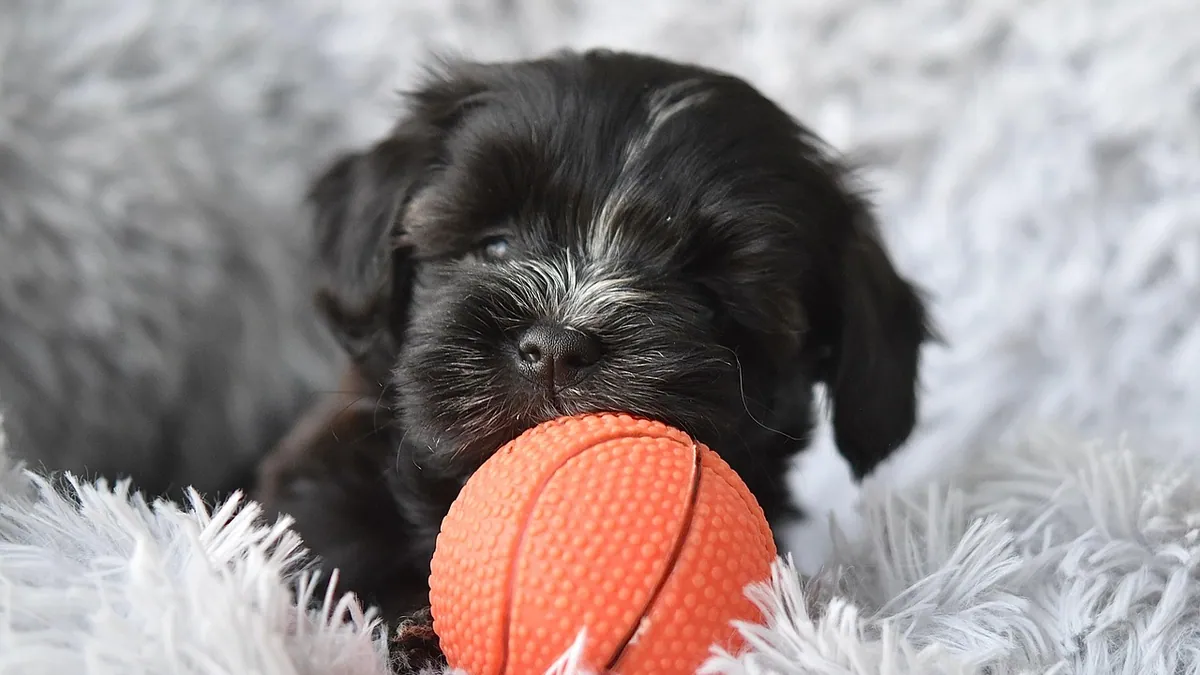
Puppies hump for many reasons, and most of them have nothing to do with dominance or sex. Humping is common in young puppies, and it often shows up during play, excitement, or stress. This article is educational and is not a substitute for veterinary diagnosis or treatment.
Quick Answer
- Humping is normal in puppies and can start before puberty, often during play or when a puppy is overexcited or tired.
- Common triggers include play, arousal, stress, boredom, and sometimes underlying medical discomfort.
- Most puppy humping is not about dominance. It is a normal behavior that can be redirected.
- Do not punish or yell at your puppy. Redirect to a toy, a chew, or a short break instead.
- See a veterinarian if humping is constant, painful, or comes with other symptoms like licking the genitals, straining to urinate, or skin irritation.
Why Do Puppies Hump?
Humping, also called mounting, is a normal behavior in dogs. It appears in play, social contact, and times of excitement. In puppies, it is often part of normal social and play development [1]. Puppies use body postures, facial expressions, and physical contact to interact with each other and with people [1]. Mounting can be one of those contact behaviors.
Play and excitement
Puppies explore the world with their mouths, paws, and bodies. Object play develops early, and social play develops a little later [2]. Humping often happens during social play, especially when play gets intense. A puppy may mount a littermate, another dog, a stuffed toy, a pillow, or a person's leg. This is often a sign that play has become over-aroused instead of a sign of sexual intent.
Arousal and overstimulation
Arousal means a state of high excitement or alertness. A puppy who is having a great time may hump because the body is already revved up. The same puppy may also hump when tired, because tired puppies often lose impulse control. If you watch closely, you may notice humping happens at the end of a play session, during greetings, or when guests arrive.
Stress, anxiety, and uncertainty
Humping can also be a displacement behavior. That means a puppy does it when they feel conflicted, anxious, or unsure. A puppy who is overwhelmed by a new place, a new person, or a lot of noise may hump as a way to release tension. This is different from happy play, and the puppy's body language usually looks tense or shut down.
Boredom and lack of enrichment
A puppy with too much energy and too little to do may hump out of boredom. Puppies need physical activity, mental work, and appropriate chew outlets. When those needs are not met, normal behaviors can become repetitive.
What about dominance and sex?
Dominance is often blamed for humping, but it is rarely the main reason in puppies. Dominance is not a simple personality trait, and humping is not a reliable sign of it. Sexual humping becomes more common after puberty, but young puppies can hump long before they are sexually mature. In one study, dogs who had gonadectomy (spay or neuter) showed less mounting behavior over time, but the research on surgery and behavior is still mixed [3].
Medical Causes to Rule Out
Most puppy humping is behavioral, but a veterinarian should check for medical reasons when humping is new, sudden, or excessive.
Skin and genital irritation
Itching, allergies, fleas, or a skin infection can make a puppy lick, chew, or rub the genital area. That irritation can lead to humping or mounting objects. If you see redness, hair loss, scabs, or a bad smell, schedule a veterinary visit.
Urinary or reproductive problems
Urinary tract infections, bladder stones, and other urinary problems can cause discomfort. A puppy may strain, lick the penis or vulva, or scoot. If your puppy is scooting after pooping, that can also point to anal sac or intestinal irritation. Read more about Puppy Scooting Bottom On Floor After Pooping.
Pain or orthopedic discomfort
A puppy with hip, knee, or back pain may mount or hump because of discomfort or because movement feels odd. Watch for limping, stiffness, reluctance to climb stairs, or yelping during play.
Neurologic or compulsive behavior
Rarely, repetitive humping can be part of a compulsive disorder. Compulsive behaviors are repetitive and hard to interrupt, and they can interfere with normal life. A veterinarian or veterinary behaviorist can help evaluate this.
When Puppy Humping Becomes a Problem
Humping is not automatically a problem. It becomes a concern when it affects safety, health, or quality of life.
Signs it is a problem
- Your puppy cannot be redirected and humps for long periods.
- Humping happens constantly, even when your puppy is alone.
- Your puppy humps other dogs who are trying to get away.
- Your puppy becomes frustrated, growls, or snaps when interrupted.
- Humping causes skin wounds, hair loss, or self-injury.
- Your puppy seems uncomfortable, painful, or distressed.
- Humping interferes with sleep, eating, or training.
Why it matters
If humping is driven by stress or anxiety, ignoring it can make the underlying problem worse. If it is driven by over-arousal, repeated practice can make the habit stronger. If it is driven by a medical issue, the behavior will not improve until the medical issue is treated.
What to Do Step by Step
You can usually reduce humping with a mix of training, enrichment, and environment changes. The goal is not to punish the behavior but to teach your puppy what to do instead.
Step 1: Identify the trigger
Keep a simple log for a week. Write down when humping happens, who or what is involved, and what happened right before. You may see a pattern, such as humping during evening play, after guests arrive, or when your puppy is overtired. Patterns help you prevent the behavior before it starts.
Step 2: Interrupt gently and redirect
When humping starts, stay calm. Clap once, say a cheerful cue like "let's go," and move your puppy to a different activity. Offer a toy, a chew, or a quick training game. Do not grab, yell, or push your puppy away. That can increase arousal or create fear.
Step 3: Teach an incompatible behavior
Teach your puppy to sit, lie down, or go to a mat on cue. Reward those behaviors often. A puppy who is lying on a mat cannot hump at the same time. Practice these cues when your puppy is calm, then use them during high-energy moments.
Step 4: Manage play and arousal
Shorten play sessions before they get wild. End play with a calm activity like chewing or sniffing. If your puppy humps during play with another dog, separate them for a short break. Allow play to resume only when both dogs are calm.
Step 5: Increase appropriate enrichment
Puppies need outlets for energy and natural behavior. Provide daily walks, sniff time, puzzle feeders, chew toys, and training sessions. Socialization also matters. Early and frequent socialization with many different dogs and people helps puppies learn to interact well [1]. For a full plan, see Puppy Socialization and Preventive Behavior: Early Training and Handling.
Step 6: Reduce stress
If humping happens during stressful events, remove your puppy from the situation or give a safe space. Use a crate or pen with a chew toy if your puppy is comfortable there. Avoid crowded, noisy events until your puppy is more confident.
Step 7: Consider spay or neuter timing
Spay or neuter may reduce mounting in some dogs, but the evidence is mixed [3]. Your veterinarian can discuss timing based on your puppy's breed, size, health, and lifestyle. Surgery is not a guaranteed fix for a behavior that has become a habit.
Step 8: Be consistent
Everyone in the household should respond the same way. If one person laughs and another scolds, your puppy gets mixed information. Consistency makes training faster and kinder.
What Not to Do
Some common responses make humping worse. Avoid these.
Do not punish
Yelling, hitting, squirting water, or scruffing can increase fear, anxiety, and arousal. Punishment can also damage your relationship with your puppy and may lead to defensive aggression. If aggression appears, seek veterinary help early because aggression can worsen without treatment [4].
Do not assume dominance
Humping is not a simple dominance display. Treating it as a power struggle can lead to harsh training methods that do not address the real cause.
Do not laugh or encourage it
Laughing may seem harmless, but it can reward the behavior with attention. If humping is funny to you, your puppy learns that humping gets a reaction.
Do not let it continue unchecked around other dogs
Some dogs dislike being mounted. A puppy who humps the wrong dog may get snapped at or injured. Supervise play and step in early.
Do not ignore sudden changes
If a calm puppy suddenly starts humping a lot, that is a change worth checking. Sudden behavior changes can signal pain, illness, or stress. For a broader look at behavior changes, see Why Is My Dog Having Behavior Problems.
When to Involve a Veterinarian or Behavior Professional
Talk with your veterinarian if humping is frequent, hard to redirect, or paired with other behavior changes. Your veterinarian can check for medical causes and discuss behavior treatment.
Ask for a referral to a veterinary behaviorist or certified applied animal behaviorist if:
- Your puppy humps constantly despite redirection and enrichment.
- Your puppy shows aggression when interrupted.
- Your puppy seems anxious, fearful, or panicked.
- Humping is causing skin injury or self-trauma.
- You feel overwhelmed or unsure how to proceed.
Aggression in dogs is a common behavior problem, and early help matters because of the risk of injury and worsening behavior [4]. A professional can build a safe plan for your puppy and your household.
Limitations and When to Contact a Veterinarian
This article covers general information. It cannot diagnose your puppy or replace an exam. Individual cases need a veterinarian who can see your puppy, ask questions, and run tests if needed.
Contact your veterinarian the same day if:
- Your puppy is straining to urinate, crying when urinating, or producing no urine.
- Your puppy is licking or biting the genital area until it bleeds.
- Your puppy has swelling, discharge, or a bad odor from the genital area.
- Your puppy is limping, yelping, or reluctant to move.
- Humping started suddenly and is constant.
Seek emergency care now if:
- Your puppy cannot urinate at all.
- Your puppy is vomiting, collapsed, or very weak.
- Your puppy has a swollen, painful abdomen.
- Your puppy is bleeding heavily or has a deep wound.
- Your puppy is having trouble breathing.
Schedule a routine visit if:
- Humping is frequent but your puppy is otherwise healthy.
- You want to discuss spay or neuter timing.
- You need help with training or behavior.
- Your puppy has mild itching, redness, or scooting.
If you are not sure whether it is an emergency, call your veterinarian or an emergency clinic for guidance.
Frequently Asked Questions
Do young puppies hump?
Yes, young puppies can hump. It often starts during play or when a puppy is excited, tired, or stressed. It is not a sign that your puppy is sexually mature.
What do puppies hump?
Puppies may hump other puppies, adult dogs, people's legs, pillows, blankets, stuffed toys, and furniture. The target is usually whatever is nearby during a moment of arousal or play.
Is humping always about dominance?
No, humping is usually not about dominance. In puppies, it is more often linked to play, arousal, stress, or boredom. Dominance is a poor explanation for most humping.
Will neutering stop my puppy from humping?
Neutering may reduce mounting in some dogs, but it does not always stop it. Research on surgery and behavior is mixed, so your veterinarian can help you decide based on your puppy's situation [3].
Can I just ignore puppy humping?
You can ignore mild humping if it is not harmful, but redirection works better. Ignoring does not teach your puppy what to do instead, and it does not address stress or medical causes.
Related Articles
- Puppy Behavior Problems
- Why Is My Dog Having Behavior Problems
- Puppy Scooting Bottom On Floor After Pooping
- Puppy Socialization and Preventive Behavior: Early Training and Handling
- Why Is My Dog Coughing And Gagging Non Stop
- Why Does My Dog Cough And Gag Often
- Why Is My Puppy Humping Me? Causes and Solutions
- Is It Normal for Puppies to Fight? Play vs Real Aggression
- Why Does My Puppy Jump on Me? Stopping Jumping Up
References
- Normal Social Behavior in Dogs - Dog Owners. Merck Veterinary Manual.
- A Descriptive Methodology for Studying the Ontogeny of Object Play and Breed Differences in Dogs (Canis lupus familiaris). Animals : an open access journal from MDPI, 2023.
- Influence of Gonadectomy on Canine Behavior. Animals : an open access journal from MDPI, 2021.
- Behavior Problems in Dogs - Dog Owners. Merck Veterinary Manual.