Cat Attacking Its Own Tail: Normal Play or a Problem?
By Dr. Zubair Khalid, DVM, MS, PhD ·
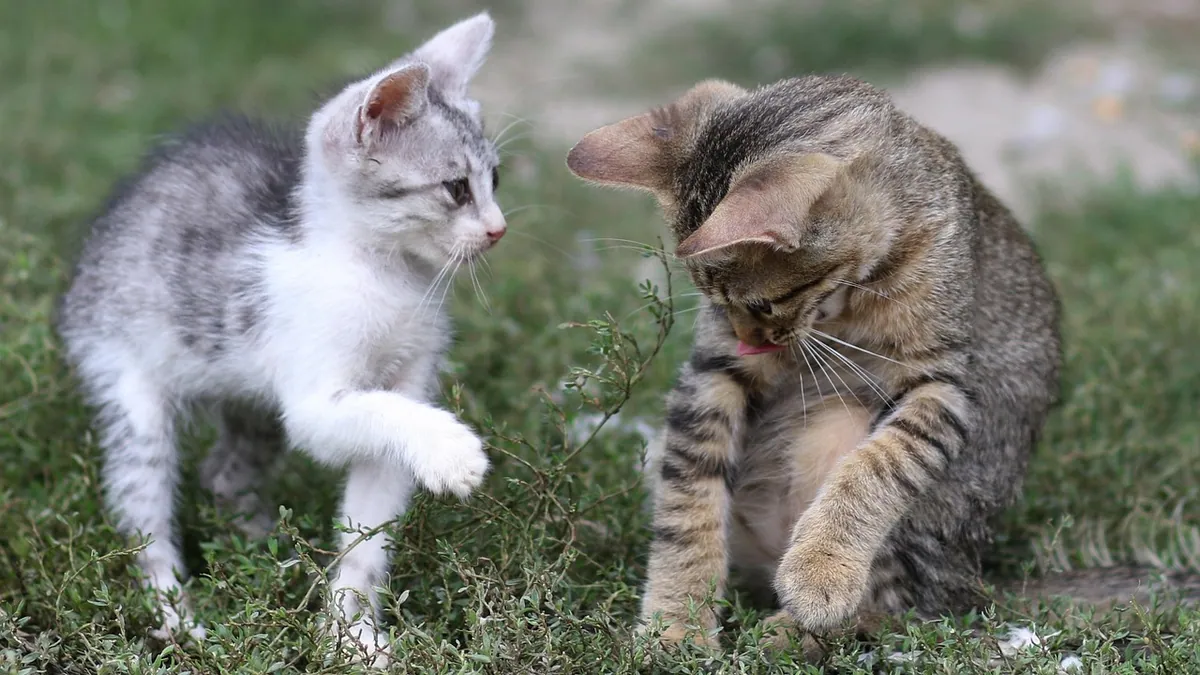
Is it normal for cats to attack their own tail? For kittens and young cats, chasing and pouncing on the tail is usually normal play and a way to practice hunting skills. For adult cats, occasional tail chasing can still be play, but frequent, intense, or self-injuring episodes point to something more. This article is educational and is not a substitute for veterinary diagnosis or treatment.
Quick Answer
- Occasional tail chasing in kittens and young cats is normal play behavior and usually fades with age.
- In adult cats, tail chasing that happens daily, lasts a long time, is hard to interrupt, or causes hair loss, wounds, or bleeding is not normal.
- Medical causes such as pain, fleas, allergies, anal gland problems, and nerve irritation should be ruled out before assuming it is behavioral.
- Feline hyperesthesia syndrome is a specific condition that causes skin rippling, tail chasing, vocalizing, and self-trauma to the tail [1].
- Punishment makes tail chasing worse. Enrichment, play, and a veterinary exam are the right first steps.
Why Cats Attack Their Own Tail
Normal play in kittens and young cats
Kittens learn to hunt by chasing, stalking, pouncing, and biting. A moving tail is an easy target, especially their own. This is normal predatory play, and it is one of the main behavioral needs of cats, along with eating, drinking, elimination, security, exploration, climbing, perching, and scratching [2].
If your kitten attacks its tail in short bursts, looks relaxed afterward, and can be redirected to a toy, this is normal. Most kittens grow out of it as their play skills mature and they find better outlets.
Boredom and unmet hunting needs
Adult cats that spend long hours alone indoors with little to chase can turn that energy inward. Cats need opportunities to chase, pounce on, and bite toys that you dangle or pull in front of them [2]. When those chances are missing, a twitching tail becomes the most interesting thing in the room.
Stress and environmental change
A new pet, a move, a new baby, or a change in schedule can raise a cat's stress level. Some cats respond with overgrooming, some hide, and some redirect that tension into tail chasing. Aggression and abnormal behaviors in cats often reflect underlying anxiety or frustration [3].
Attention-seeking
If tail chasing has ever earned your cat a reaction (laughter, a treat, a shout), the behavior can become a habit. Cats repeat what works.
Medical Causes to Rule Out First
Before treating tail chasing as a behavior problem, your veterinarian needs to look for physical causes. A cat cannot tell you its tail hurts, so it may bite or chase the tail instead.
Skin and parasite problems
Fleas, mites, ringworm, and skin infections cause intense itching. Allergies to food or environmental triggers can do the same. A cat may chew the base of the tail or the tail tip until hair loss and sores appear. If you notice thinning hair or bald patches, see our guide to cat hair loss on tail: causes and solutions.
Pain and nerve problems
Arthritis, a slipped disc, a tail injury, impacted anal glands, or a urinary problem can all cause a cat to focus on the rear end. Nerve pain in the tail or lower spine can trigger sudden biting and running.
Feline hyperesthesia syndrome
Feline hyperesthesia syndrome (FHS) is a poorly understood disorder. It causes rippling of the skin over the lower back, episodes of jumping and running, excessive vocalization, tail chasing, and self-trauma to the tail [1]. In one case series, most affected cats were young, with a median age of 1 year at the start of signs, and most were male [1]. Many had multiple daily episodes, and some mutilated their tails badly enough to need treatment [1].
FHS is diagnosed partly by ruling out other conditions. Blood work, imaging, and other tests often come back normal, which is frustrating but typical [1]. If your cat has rippling skin along the back plus tail attacks, read more in our article on feline hyperesthesia syndrome: rippling skin, tail attacks, and what helps.
Compulsive disorder
Compulsive behaviors are repetitive actions that seem to serve no purpose and are hard to stop. In dogs, tail chasing is a well-recognized compulsive behavior, and it often starts young, around 3 to 6 months of age [4]. Cats can develop similar repetitive patterns. Compulsive tail chasing is more common in cats under stress or in barren environments.
When Tail Chasing Becomes a Problem
Occasional play is fine. These signs suggest a real problem:
- Episodes happen daily or many times a day.
- Your cat cannot be distracted during an episode.
- The behavior lasts longer than a few seconds and seems trance-like.
- Your cat vocalizes, runs, or jumps during episodes [1].
- The skin along the back ripples before or during episodes [1].
- Hair loss, scabs, wounds, or bleeding appear on the tail.
- Your cat avoids being touched near the tail or back.
- The behavior starts suddenly in a middle-aged or older cat.
Any of these warrant a veterinary visit. Self-trauma to the tail is a serious sign, and in the FHS case series, several cats injured themselves severely enough that tail amputation was considered [1].
What to Do: Step by Step
Step 1: Book a veterinary exam
Start here. Your veterinarian will check the skin, tail, anal glands, spine, and nerves, and may recommend blood work, urine testing, or imaging. If a medical cause is found, treating it often stops the behavior.
Step 2: Increase daily play
Set aside two or three short play sessions each day. Use wand toys that mimic prey, and let your cat chase, pounce, and bite. Cats are motivated by a variety of toys, so rotate them and stop when interest fades [2]. End each session with a small meal or treat to complete the hunt-catch-kill-eat sequence.
Step 3: Feed the hunting drive
Instead of one large bowl of food, offer small portions through the day. Food puzzles and treat-dispensing toys that require batting, chasing, rolling, or pawing satisfy hunting and feeding needs [2]. This gives your cat something to do besides stare at its tail.
Step 4: Build a richer environment
Provide boxes to explore, cat trees to climb and perch on, scratching posts, and a few catnip toys. About 50% to 75% of cats respond to catnip [2]. Window perches with a view of birds or squirrels add mental stimulation.
Step 5: Manage stress
Keep routines predictable. Feed, play, and clean the litter box at the same times each day. If a new pet or family member has joined the household, give your cat a quiet room and slow introductions. If tension exists between cats, see cat aggression towards other cats: how to manage multi-cat households.
Step 6: Interrupt gently and redirect
When an episode starts, do not grab your cat. Toss a toy or a soft blanket nearby to break the focus, then start a play session. If episodes are frequent, keep a log of when they happen, how long they last, and what happened just before. This history helps your veterinarian diagnose the problem [3].
Step 7: Follow the treatment plan
If a behavior problem is diagnosed, treatment usually combines changes to the environment, behavior modification, and sometimes medication to help your cat return to a calmer mental state and learn new habits [3]. Medications for anxiety or compulsion are prescribed by your veterinarian, who calculates the dose from your cat's weight and health. Never give human medication to a cat.
What Not to Do
Do not punish your cat
Yelling, spraying water, or tapping your cat's nose will not stop tail chasing. Punishment increases fear and stress, which can make compulsive and aggressive behaviors worse [3]. It also damages your relationship with your cat.
Do not assume it is just a phase in adult cats
Tail chasing that starts or continues past kittenhood deserves a closer look. In dogs, many owners and viewers see tail chasing as funny or cute, and clinical signs often go unrecognized [5]. The same blind spot happens with cats.
Do not ignore wounds
A small bald spot can become an open, infected wound quickly. Check your cat's tail weekly if it has episodes. If you see broken skin, call your veterinarian.
Do not rely on quick fixes
Collars, scented sprays, or herbal calmers sold online are not proven to treat compulsive tail chasing. Some can be harmful. Ask your veterinarian before using any product.
Do not skip the medical workup
Jumping straight to behavior training when your cat has fleas, arthritis, or nerve pain wastes time and leaves your cat uncomfortable. Medical causes must be excluded first [3].
When to Involve a Veterinarian or Behavior Professional
Call your veterinarian if tail chasing happens most days, if your cat seems distressed, or if you see hair loss or skin changes. A board-certified veterinary behaviorist or a certified applied animal behaviorist can help when medical causes are ruled out and the behavior continues. These specialists design treatment plans that combine environmental change, behavior modification, and medication when needed [3].
If your cat's tail attacks come with aggression toward people, our article on cat aggression towards people: why and what to do covers safe handling and next steps.
Limitations and When to Contact a Veterinarian
This article cannot diagnose your cat. Tail chasing has many possible causes, and only a veterinarian who examines your cat can sort them out. Individual cases need a veterinarian's hands-on assessment.
Contact your veterinarian the same day if:
- Your cat has an open wound, bleeding, or swelling on the tail.
- Your cat is crying out or panting during episodes.
- Your cat stops eating or drinking.
- Your cat cannot be calmed for hours.
Go to an emergency clinic now if:
- Bleeding will not stop.
- Your cat is dragging a hind leg or cannot walk normally.
- Your cat collapses, has a seizure, or seems disoriented.
- Your cat is straining to urinate, especially a male cat.
Schedule a routine visit soon if:
- Episodes are increasing in frequency or intensity.
- Hair loss or scabbing appears on the tail or lower back.
- Your cat flinches when you touch its back or tail base.
- The behavior started suddenly in an adult or senior cat.
Frequently Asked Questions
Is it normal for kittens to attack their own tail?
Yes, tail chasing is normal play for most kittens. They are practicing hunting skills, and a moving tail is an easy target. Most kittens grow out of it as they mature and find better outlets for play.
Can tail chasing be a sign of pain?
Yes. Fleas, allergies, anal gland problems, arthritis, and nerve pain can all make a cat focus on its tail. A cat that suddenly starts biting its tail or flinches when touched should be examined by a veterinarian.
What is feline hyperesthesia syndrome?
It is a poorly understood condition marked by rippling skin over the lower back, episodes of running and jumping, vocalizing, tail chasing, and self-trauma to the tail. It is diagnosed largely by ruling out other diseases, since routine testing often comes back normal.
Will my cat grow out of tail chasing?
Kittens usually do. Adult cats that chase their tails daily, seem trance-like, or hurt themselves are unlikely to stop without treatment. Behavior plans and sometimes medication are needed in those cases.
Should I punish my cat for chasing its tail?
No. Punishment raises stress and can worsen compulsive and aggressive behavior. Redirect your cat to a toy instead, and talk to your veterinarian if episodes are frequent or intense.
Related Articles
- Why Is My Cat Suddenly Aggressive Towards Other Cats?
- Feline Hyperesthesia Syndrome: Rippling Skin, Tail Attacks, and What Helps
- Cat Hair Loss on Tail: Causes and Solutions
- Cat Aggression Towards People: Why and What to Do
- Cat Aggression Towards Other Cats: How to Manage Multi-Cat Households
- My Cat Ate String: Why You Must Not Pull It and What to Do
- Why Do Cats Chase Their Tails? Normal or a Problem?
- Do Cats Control Their Tails? Feline Tail Language
- Play Aggression in Cats: Why It Happens and How to Stop It
References
- Feline hyperaesthesia syndrome with self-trauma to the tail: retrospective study of seven cases and proposal for an integrated multidisciplinary diagnostic approach. Journal of feline medicine and surgery, 2019.
- Behavior Problems in Cats - Cat Owners. Merck Veterinary Manual.
- Behavior Problems of Cats - Behavior. Merck Veterinary Manual.
- Environmental effects on compulsive tail chasing in dogs. PloS one, 2012.
- A vicious cycle: a cross-sectional study of canine tail-chasing and human responses to it, using a free video-sharing website. PloS one, 2011.