Do Cats Control Their Tails? Feline Tail Language
By Dr. Zubair Khalid, DVM, MS, PhD ·
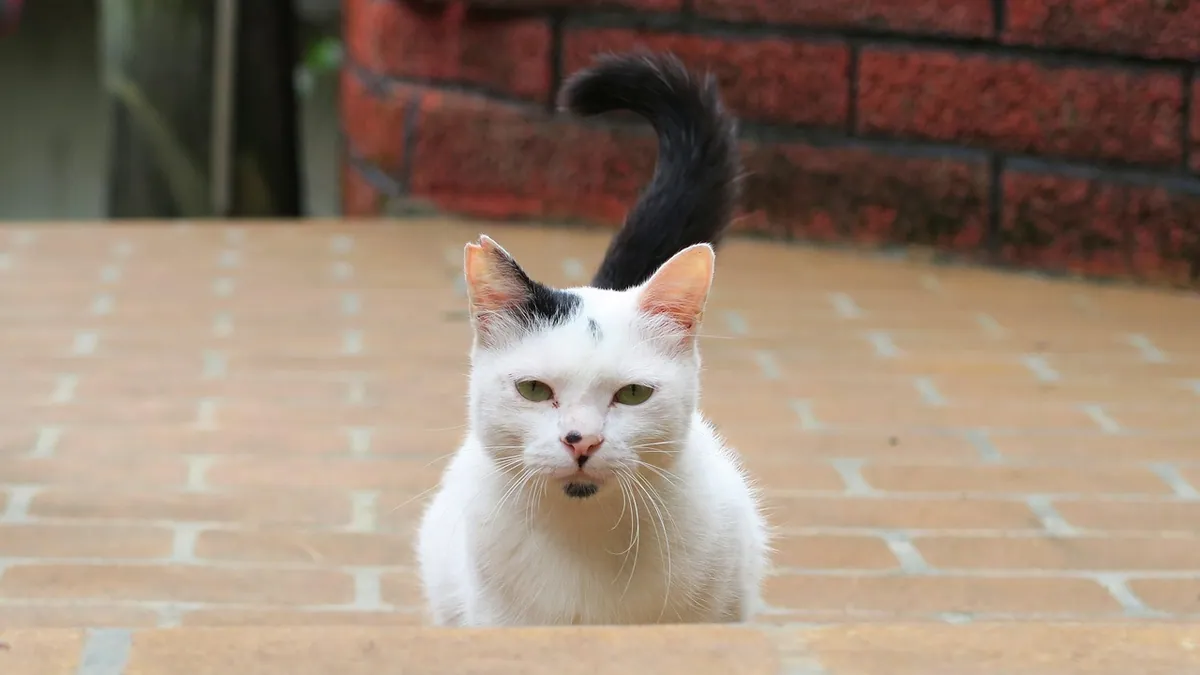
Yes, cats control their tails. The tail is an extension of the spine, packed with muscles and nerves the cat uses on purpose for balance, communication, and hunting [1]. Some movements are reflexes, though, and a few tail changes signal injury or nerve damage. This article is educational and is not a substitute for veterinary diagnosis or treatment.
Quick Answer
- Cats have voluntary control of the tail through muscles attached to the vertebrae, and they use it deliberately for balance and signaling [1].
- Tail position and motion are key parts of feline body language, and people are often poor at reading them correctly [2].
- Some tail movement is involuntary, such as the reflexive flick when something touches the fur or the tail curls during sleep.
- A tail that drags, hangs limp, or cannot move at all points to nerve or muscle damage and needs a veterinary exam.
- Never punish a cat for tail movement or pull the tail, since the tail connects to the spine and can be seriously injured.
How Much Control Do Cats Have of Their Tails?
A cat's tail contains roughly 19 to 23 vertebrae, plus a complex set of muscles, tendons, and nerves. That anatomy gives cats fine, deliberate control over the tail's position, curve, and speed of movement [1]. Behavior in animals is controlled by the nervous system, and cats have a well-developed one, which is why their tail movement looks so intentional [1].
Cats use the tail as a counterweight. When a cat walks along a narrow ledge or leaps, the tail shifts side to side to help the body stay balanced. When a cat stalks prey, the tail often stays low and still so it does not give away the cat's position. These are learned, purposeful uses of the tail, not random motion.
Cats also use the tail to communicate. Feline social interaction is regulated through distancing, friendly displays like rubbing and grooming, and antagonistic behaviors like hissing and swatting [3]. The tail is part of that system. A tail held high is one of the friendliest signals a cat gives. A puffed tail is a fear or threat display. A slow, curling tail tip often means the cat is mildly interested or slightly annoyed.
So how do cats control their tails? Mostly the same way you control your hand. The brain sends signals through nerves to the tail muscles, and the cat moves the tail on purpose. Reflexes handle the rest, such as the quick flick when a fly lands on the tail.
What Different Tail Positions Mean
Tail language is not a code you can memorize perfectly. The same tail position can show up with more than one emotion, and cats can switch emotional states quickly [4]. Still, some patterns are reliable enough to be useful.
Tail held straight up
This is a friendly, confident greeting. A cat approaching you with a vertical tail is usually relaxed and open to contact. A slight quiver at the base often means excitement, especially at feeding time.
Tail curved like a question mark
This is a softer version of the upright tail. The cat is interested and comfortable but not highly aroused.
Tail low or tucked
A tail tucked between the legs or wrapped tight against the body usually signals fear, stress, or submission. If your cat holds the tail low most of the time and also hides or avoids you, that is worth a closer look.
Tail puffed up
A puffed tail makes the cat look bigger. It appears with fear, surprise, or a defensive threat. This is a stress response, not aggression for its own sake.
Tail thrashing or whipping
Fast, wide tail swings usually mean the cat is agitated or overstimulated. If you are petting your cat and the tail starts whipping, stop petting and give the cat space.
Tail wrapped around the body while resting
This is normal and relaxed. Cats also curl the tail around themselves while sleeping to conserve warmth.
Reading these signals is harder than most owners assume. In one study, 1,950 people watched videos of cats in relaxed, tense, and fearful states and tried to identify the state. Accuracy was better than chance but still low, and prior cat ownership and identifying as female improved performance [2]. In other words, even experienced owners misread cats often. Watch your own cat's whole body, not the tail alone.
Medical Causes of Tail Problems
When a tail stops working normally, the cause is often physical. The tail is a direct extension of the spine, so injuries there can affect the nerves that control the tail, the bladder, and the back legs.
Common medical causes include:
- Tail pull injuries. A tail caught in a door, stepped on, or yanked can stretch or tear nerves. This is one of the most common tail injuries in cats.
- Fractures. A broken tail vertebra can cause pain, a kink, or loss of movement below the break.
- Nerve damage. Damage to the nerves at the base of the tail can cause a limp tail, incontinence, or weakness in the back legs.
- Abscesses and bite wounds. Fight wounds near the tail base swell, hurt, and can become infected.
- Skin problems. Hair loss, scabbing, or chewing at the tail can point to allergies, parasites, or a skin infection. If you notice this, see Cat Hair Loss on Tail: Causes and Solutions and Cat Hair Loss on Back Near Tail: What It Means.
- Pain elsewhere. Cats with pain in the back, hips, or abdomen may hold the tail oddly or stop grooming it.
A cat that cannot move its tail at all, or that drags the tail, needs to be seen. Nerve damage from a tail pull can improve with time, but only a veterinarian can assess how serious it is and whether the bladder is affected.
When Tail Behavior Becomes a Problem
Tail movement itself is not a behavior problem. The problem is what the movement tells you about the cat's emotional state.
Signs that your cat's tail language reflects real distress:
- The tail stays tucked or low for long periods, along with hiding, crouching, or a flattened ear position.
- The cat thrashes the tail whenever you approach, or swats when touched.
- The cat overgrooms the tail base until the hair is thin or the skin is raw.
- The cat hisses, growls, or avoids other pets in the home.
- The cat stops jumping or climbing, which can mean tail or back pain.
Cats regulate their relationships with other cats and with people through distance, friendly contact, and conflict signals [3]. A cat that is constantly sending conflict signals is stressed, and stress affects health, appetite, and behavior. If your cat's tail language has changed along with more vocalizing, see Cat Excessive Meowing: What Is Your Cat Trying to Say?.
What to Do Step by Step
1. Observe before you act
Watch your cat for a few days. Note when the tail is up, tucked, thrashing, or still. Note what happens right before each change. This log helps your veterinarian or behavior professional.
2. Rule out pain and injury first
Any sudden change in tail use, especially after a fall, a door accident, or a fight, needs a veterinary exam. Do not wait to see if it improves on its own.
3. Give your cat control over contact
If the tail whips when you pet, stop. Let the cat come to you. Cats with better relationships spend more time close together, and that closeness is built on choice [3].
4. Add enrichment
Provide vertical space, scratching posts, puzzle feeders, and quiet hiding spots. A cat with more outlets for normal behavior is less likely to live in a stressed state.
5. Keep a predictable routine
Feed, play, and clean the litter box at consistent times. Predictability lowers arousal for most cats.
6. Separate resources in a multi-cat home
Use one litter box per cat plus one extra, and place food and water stations apart. This reduces the low-grade conflict that shows up in tail tension and staring.
7. Use gentle handling
Support the whole body when you pick up your cat, and never lift a cat by the tail.
What Not to Do
- Do not punish tail movement. Yelling, spraying, or tapping a cat for a thrashing tail teaches fear, not calm. Punishment also damages the trust that makes handling easier.
- Do not pull or grab the tail. The tail connects to the spine. Pulling can stretch nerves and cause lasting damage.
- Do not assume a wagging tail means happiness. A fast-thumping or whipping tail in a cat usually means irritation or overstimulation, which is very different from a dog's wag.
- Do not ignore a limp tail. "It will probably heal" is a risky bet when nerves are involved.
- Do not rely on tail position alone. People misread feline stress from visual cues at high rates [2]. Look at the ears, eyes, whiskers, and body posture together.
- Do not skip the vet because the cat is still eating. Cats hide pain well, and appetite can stay normal with a significant tail injury.
When to Involve a Veterinarian or Behavior Professional
Call your veterinarian if the tail is limp, kinked, swollen, bleeding, or painful to touch. Call the same day if your cat cannot urinate, cannot move the back legs, or has lost bladder control, since these are signs of serious nerve injury.
For ongoing behavior concerns, such as tail thrashing with aggression, overgrooming, or constant hiding, ask your veterinarian for a referral to a veterinary behaviorist or a certified cat behavior consultant. A behavior professional can build a plan that fits your home. Your veterinarian can also check for medical causes first, which is the right order of steps.
Limitations and When to Contact a Veterinarian
Tail language is useful but imperfect. Cats can show the same tail position with different emotions, and they can shift states quickly [4]. No article can tell you what your individual cat is feeling at a given moment. Your veterinarian evaluates your cat in person and sets any treatment plan for your pet.
Contact a veterinarian the same day for:
- A tail that hangs limp or drags on the ground.
- A tail that cannot move at all.
- Swelling, an open wound, or a bad smell at the tail base.
- Crying, flinching, or biting when the tail area is touched.
- Sudden hair loss or raw skin on the tail.
Go to an emergency clinic now for:
- Inability to urinate or dribbling urine with a limp tail.
- Weakness or dragging in the back legs.
- A tail injury with heavy bleeding.
- A cat that cannot stand or walk after a fall or accident.
If you suspect your cat ate something toxic, call the ASPCA Animal Poison Control Center at (888) 426-4435 or the Pet Poison Helpline at (855) 764-7661 right away.
For routine concerns, such as a mild change in tail carriage with no pain, book a regular visit. A wellness exam is also a good time to review behavior, weight, and preventive care. For a broader look at preventive decisions, see OR Cat: Understanding Logical Health Decisions for Your Feline.
Frequently Asked Questions
Do cats control their tails on purpose?
Yes, most tail movement is voluntary. Cats use tail muscles to balance, signal, and stalk, and the nervous system directs those movements [1]. Reflexes handle quick reactions, such as a flick when the tail is touched.
Why does my cat's tail twitch when she is resting?
A small twitch during rest is usually normal and often happens during light sleep or dreaming. A fast, constant twitch with a tense body can mean irritation or pain. If the twitch comes with hiding, pacing, or overgrooming, have your cat checked.
Can a cat break its tail and still walk?
Yes, a cat can often walk with a broken tail, especially if the break is near the tip. Breaks closer to the base are more serious because they can affect nerves to the bladder and back legs. Any suspected break needs a veterinary exam.
Does a wagging tail mean my cat is happy?
Usually not. A slow, gentle tail curl can mean interest or mild pleasure, but fast wagging or thumping in cats more often signals annoyance or overstimulation. Stop petting and give your cat space when the tail speeds up.
Will a limp tail heal on its own?
Sometimes, mild nerve injuries improve over weeks with rest and veterinary care. A completely limp tail, or one with loss of bladder control, needs prompt treatment and may not fully recover. Only your veterinarian can judge the severity and set the plan.
Why do cats hold their tails straight up when they greet you?
An upright tail is a friendly, confident greeting signal. It often appears when a cat approaches a person or another cat it trusts. A slight quiver at the base adds excitement, common at mealtime.
Related Articles
- Cat Hair Loss on Tail: Causes and Solutions
- Cat Hair Loss on Back Near Tail: What It Means
- Why Are Cats So Cute? The Science Behind Feline Adorableness
- Cat Excessive Meowing: What Is Your Cat Trying to Say?
- OR Cat: Understanding Logical Health Decisions for Your Feline
- Cat Scooting and Licking Bottom: Causes and When to Call
- Cat Tail Movements and What They Really Mean
- Why Do Cats Chase Their Tails? Normal or a Problem?
- Cat Attacking Its Own Tail: Normal Play or a Problem?
References
- Introduction to Behavior of Cats - Cat Owners. Merck Veterinary Manual.
- Human recognition of feline stress-related behavioral states from visual cues depends on observer characteristics. Scientific reports, 2026.
- Social Behavior of Cats - Behavior. Merck Veterinary Manual.
- Recognising and assessing feline emotions during the consultation: History, body language and behaviour. Journal of feline medicine and surgery, 2018.