Why Does My Puppy Only Bite Me? Understanding Puppy Mouthing
By Dr. Zubair Khalid, DVM, MS, PhD ·
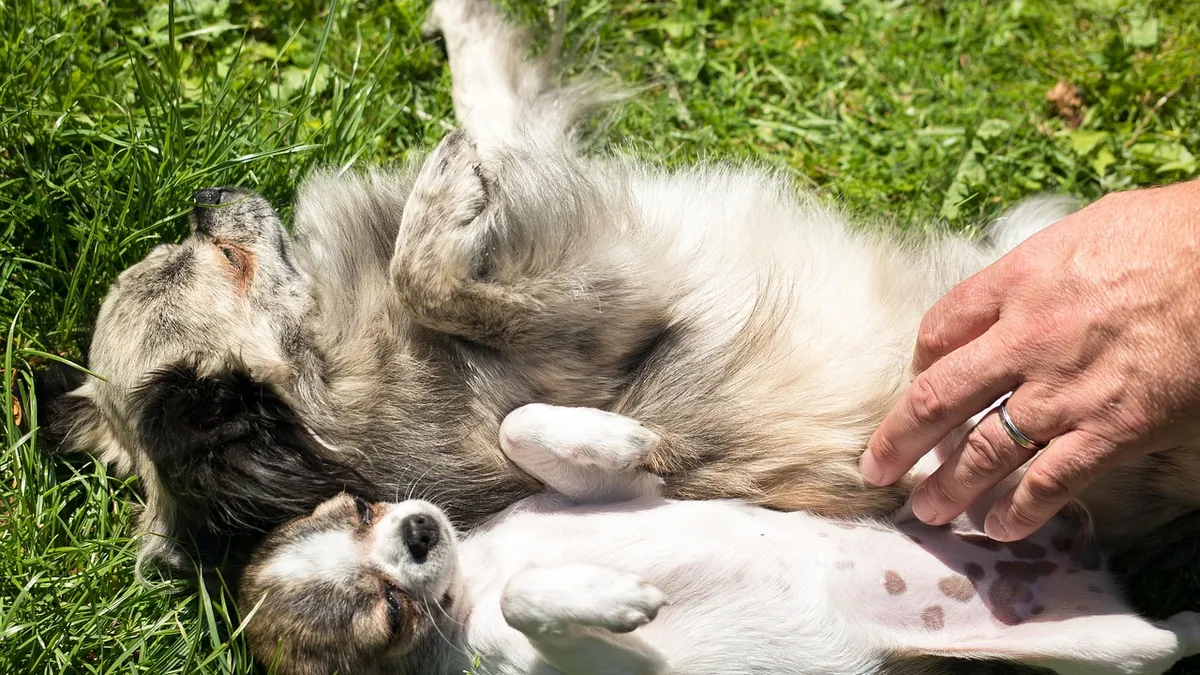
Puppies often bite their main caregiver the most because that person is their favorite playmate, their safest target, and the one who spends the most time interacting with them. Your puppy is not being mean or holding a grudge. This article explains why the behavior happens and how to teach gentle mouthing, and it uses the phrase my puppy only bites me because that is exactly what worried owners type into search bars.
This article is educational and is not a substitute for veterinary diagnosis or treatment.
Quick Answer
- Puppy mouthing is normal, and the first goal is teaching your puppy that human skin is sensitive and must be treated gently [1].
- Puppies usually bite their primary caregiver most because that person plays with them, feeds them, and handles them the most.
- Bite inhibition means your puppy learns to control the force of his mouth, which may reduce the chance of a hard bite later in a fearful or painful situation [1].
- Provide appropriate chew toys and enrichment so your puppy has an acceptable outlet for natural chewing and mouthing behavior [2].
- Never hit, slap, or alpha-roll your puppy. Punishment-based methods can create fear and make biting worse.
Why Your Puppy Bites You and Not Other People
You Are the Main Source of Play and Attention
Your puppy bites you more than your partner, your kids, or your guests because you are the person who plays with him the most. Mouthing is a normal part of how puppies explore the world and interact with their social partners. When you wave your hands during play, tug on a toy, or pet your puppy, you are offering moving targets that trigger his natural oral behavior.
Guests usually sit still and stay calm. You are the one on the floor wrestling, petting, and moving around. That difference alone explains a lot of the "only me" pattern.
Your Puppy Feels Safe With You
Puppies tend to mouth the people they trust most. Biting during play is a social behavior, and your puppy is treating you like a littermate. This is not aggression. A playful puppy usually has a relaxed body and face, and playful mouthing is typically less painful than serious aggressive biting [3].
You May Be Accidentally Rewarding It
If you squeal, pull your hand away fast, or push your puppy back, you may be giving him exactly the reaction he wants. To a puppy, that looks like more play. Inappropriate mouthing is often reinforced unintentionally by the owner's response [4]. This is one of the most common reasons the behavior seems to target one person.
Your Puppy Is Tired, Overstimulated, or Teething
Young puppies have short attention spans and get overtired fast. A puppy who has been playing for 20 minutes may suddenly bite harder and more often. That is often a sign he needs a nap, not more play. Teething also drives chewing and mouthing, and appropriate chew items help meet that need [2].
Breed and Temperament Play a Role
Some breeds and individual dogs are more mouthy or energetic than others. Breed contributes to variability in traits like energy level and fear-related behavior [5]. That does not mean biting is acceptable, but it does mean some puppies need more training repetitions than others.
Medical Causes to Rule Out Before Training
Most puppy mouthing is behavioral, but a veterinarian should check for medical problems when biting starts suddenly or comes with other changes.
Pain is a common driver of irritability in dogs. A puppy with a broken tooth, an ear infection, a sore joint, or a gastrointestinal problem may bite when handled. If your puppy growls or snaps when you touch a specific area, that is a reason to book a veterinary visit. See Dog Growling When Touched: Pain or Behavior Problem? for more on that pattern.
Neurologic and metabolic disease can also change behavior. In one reported case, a 9-month-old dog with escalating aggression toward familiar and unfamiliar people had a full medical workup that found no underlying abnormalities, and the diagnosis was behavioral [6]. That case shows why a veterinarian needs to examine your puppy before anyone assumes the problem is purely training-related.
Early life factors matter too. Puppies removed from the dam at 6 weeks of age, with minimal early socialization, are at higher risk for later behavior problems [6]. Puppies adopted at 1 or 2 months of age showed more signs of fear, anxiety, and attention-seeking than puppies adopted later [7]. If your puppy came home very young, tell your veterinarian so you can build a plan that accounts for it.
When Puppy Mouthing Becomes a Real Problem
Puppy mouthing is normal. The question is when it crosses a line.
Watch for these signs that the behavior is becoming a problem:
- Bites are getting harder instead of softer over weeks of training.
- Your puppy bites when he is frustrated, restrained, or told "no."
- He guards food, toys, or resting spots.
- His body looks stiff, his muzzle wrinkles, and his lips pull back to expose teeth [3].
- Bites are quick, painful, and happen outside of play [3].
- He has broken skin or left bruises.
Aggressive biting is different from play mouthing. A playful dog usually has a relaxed body, while an aggressive dog often looks stiff and tense [3]. If you are not sure which one you are seeing, get professional eyes on it.
Mouthing that is not addressed in puppyhood can be harder to fix in adult dogs. Adult jaws cause more pain, adults are less sensitive to owner reactions, and they are harder to control physically [3]. Starting now is easier than starting at two years old.
Step-by-Step Bite Inhibition Training
Step 1: Teach Gentle First, Then Teach Stop
The first goal is not to stop all mouthing. The first goal is to teach your puppy that people have very sensitive skin and he must be gentle when using his mouth [1]. Bite inhibition is the ability to control the force of mouthing, and it is the foundation of everything else [1].
Step 2: React to Hard Bites, Then Pause
When your puppy bites hard, make a sharp, high-pitched yelp, then stop all play for 10 to 20 seconds. Turn away. Cross your arms. Do not talk, look at, or touch him. This mimics how littermates respond when play gets too rough.
If he bites hard again when play resumes, end the session. Walk away or step over a baby gate for a minute. The message is simple: teeth on skin ends the fun.
Step 3: Reward Gentle Mouthing, Then Raise the Bar
When your puppy mouths softly or licks instead of biting, keep playing and praise him. Over days and weeks, gradually react to lighter and lighter pressure. This is how bite inhibition is built. You are slowly teaching him that even gentle pressure is too much.
Step 4: Redirect to Appropriate Chew Items
Keep a toy within reach at all times. When your puppy starts mouthing, offer the toy instead of your hand. Chewing and mouthing are natural oral behaviors in puppies, and providing appropriate enrichment items is a common recommendation to reduce unwanted chewing and mouthing [2]. A study of puppies found that engagement with chew toys varied between individual dogs, so try a few types and textures to see what your puppy actually likes [2].
Rotate toys so they stay interesting. Frozen chew toys can help during teething. See Destructive Chewing in Puppies: Teething Relief vs Separation Anxiety if your puppy is chewing furniture or walls as well as hands.
Step 5: Manage the Environment
Management means preventing the behavior when you cannot actively train. Good management stops your puppy from practicing the unwanted behavior, which makes training easier [4]. Options include:
- A crate or pen for downtime and naps.
- Baby gates to block off rooms.
- A dragline (a light leash left attached) so you can guide your puppy away without grabbing his collar.
- No-go zones where your puppy is never allowed to practice mouthing.
Step 6: Watch for Warning Signs
Learn what your puppy does right before he mouths. Common signs include a stiff body, a hard stare, a wagging tail that slows down, or a sudden freeze [4]. When you see those signs, redirect or end the interaction before teeth land on skin.
Step 7: Keep Sessions Short and Consistent
Puppies learn in short bursts. Five-minute training sessions several times a day work better than one long session. Everyone in the household must respond the same way. If one person thinks mouthing is cute and another yells, your puppy gets mixed messages.
For more foundational help, see Puppy Training Tips Biting and Puppy Behavior Problems.
What Not to Do
Do Not Punish With Physical Force
Hitting, slapping, pinching the muzzle, or alpha-rolling your puppy is not recommended. These methods can create fear, damage your relationship, and make biting worse. A puppy who is afraid of hands may bite harder and faster the next time a hand comes near.
Do Not Hold Your Puppy's Mouth Shut
Grabbing and holding the muzzle teaches your puppy that hands near his face predict unpleasant things. That can lead to defensive biting.
Do Not Yell or Chase
Chasing your puppy around the room turns biting into a game. Yelling raises arousal. Both can increase mouthing.
Do Not Assume It Is Just a Phase
Many puppies do improve with age and training, but mouthing that is ignored can persist into adulthood, when it is harder to fix [3]. Take it seriously now.
Do Not Believe These Myths
- "He will grow out of it." Some do, many do not without training.
- "He is trying to dominate me." Puppy mouthing is usually play, exploration, or overarousal, not a power struggle.
- "He only bites me because he hates me." The opposite is usually true. You are his favorite person and his safest play partner.
When to Involve a Veterinarian or Certified Behavior Professional
Call your veterinarian if:
- Biting starts suddenly in a puppy who was previously gentle.
- Your puppy bites when you touch a specific body part.
- Biting comes with limping, head shaking, scratching, or changes in appetite.
- Your puppy seems painful, lethargic, or unwell.
Ask for a referral to a veterinary behaviorist or a certified applied animal behaviorist if:
- Bites are breaking skin or leaving bruises.
- Your puppy shows stiff posture, lip curling, or growling before biting [3].
- Biting happens during handling, restraint, or resource guarding.
- You have tried the steps above for several weeks with no improvement.
- You feel afraid of your puppy or are considering rehoming him.
Severe early-onset aggression in a young dog is a serious problem that needs a full medical and behavioral evaluation, not just a training tip [6]. A board-certified veterinary behaviorist can build a multimodal treatment plan that includes management, behavior modification, and sometimes medication.
Limitations and When to Contact a Veterinarian
This article covers common puppy mouthing. It cannot tell you what is happening with your individual puppy. Every case needs a veterinarian who can examine your dog, ask about his history, and rule out medical causes.
Contact your veterinarian the same day if:
- Your puppy bites and breaks human skin.
- Your puppy shows sudden aggression toward you or family members.
- Your puppy is limping, crying, or refusing food along with the biting.
- Your puppy has a swollen face, eye, or jaw.
Go to an emergency clinic now if:
- A bite from your puppy caused a deep wound, heavy bleeding, or nerve damage in a person.
- Your puppy is having a seizure, collapsing, or showing sudden neurologic signs.
- Your puppy cannot close his mouth, has a swollen tongue, or is struggling to breathe.
If a person is bitten and the wound is serious, that person should seek medical care. Animal bites can become infected, and human medical providers manage that, not your veterinarian.
Schedule a routine visit if:
- Mouthing has not improved after several weeks of consistent training.
- You want help choosing chew toys or enrichment for your puppy.
- Your puppy came home before 8 weeks of age or had limited socialization [7].
- You want a professional to watch your puppy's body language and confirm whether the behavior is play or something more.
Frequently Asked Questions
Why does my puppy only bite me and not my partner?
Your puppy likely bites you because you are his main play partner and the person who interacts with him most. He may also have learned that biting you gets a fun reaction, while your partner stays calm and still. This is a training pattern, not a sign that your puppy dislikes you.
Is puppy mouthing the same as aggression?
No, most puppy mouthing is normal play behavior. Aggression looks different, with a stiff body, wrinkled muzzle, pulled-back lips, and quicker, more painful bites [3]. If you cannot tell the difference, have a veterinarian or behavior professional evaluate your puppy.
How long does it take to stop puppy biting?
There is no fixed timeline, and it depends on your puppy's age, breed, and how consistently everyone responds. Bite inhibition is built gradually by rewarding gentler and gentler mouthing [1]. Some puppies improve in a few weeks, while others need months of steady work.
Should I yelp when my puppy bites me?
A sharp yelp followed by a short pause in play can work well for many puppies, because it mimics how littermates react. The pause matters more than the sound. If yelping excites your puppy and makes him bite harder, skip it and simply end the interaction instead.
Can I use a muzzle to stop my puppy from biting?
A muzzle is a management tool, not a training solution, and it should only be used under guidance from a veterinarian or behavior professional. It can prevent bites in specific situations, but it does not teach bite inhibition. Your veterinarian can help you decide if a muzzle is appropriate and how to fit one safely.
Related Articles
- Puppy Training Tips Biting
- Dog Growling When Touched: Pain or Behavior Problem?
- Destructive Chewing in Puppies: Teething Relief vs Separation Anxiety
- Puppy Behavior Problems
- Why Does My Dog Lick My Feet and Legs? Common Reasons
- Why Is My Dog Licking Everything?
- Why Does My Puppy Mouth My Hand? Causes and Training
- Why Is My Puppy Attacking Me? Play Biting vs Aggression
- Do Puppies Outgrow Biting? What to Expect
References
- Mouthing, Nipping and Biting in Puppies. ASPCA Animal Poison Control Center.
- To chew or not to chew? Exploring the influence of scented chew toys on puppy chewing. Frontiers in behavioral neuroscience, 2025.
- Mouthing, Nipping and Play Biting in Adult Dogs. ASPCA Animal Poison Control Center.
- Inappropriate Mouthing. ASPCA Animal Poison Control Center.
- Participation in Breed-Specific Cynological Activities Is Associated with Behavioral Variation in Terrier-Type Dogs: A C-BARQ Study. Animals : an open access journal from MDPI, 2026.
- Evaluation of a Young Dog for Escalating Aggression Toward Both Familiar and Unfamiliar People. Case reports in veterinary medicine, 2026.
- The Puppies' Age at Adoption Time Influences the Behavioral Responses of Adult Dog. Veterinary sciences, 2025.