Do Puppies Outgrow Biting? What to Expect
By Dr. Zubair Khalid, DVM, MS, PhD ·
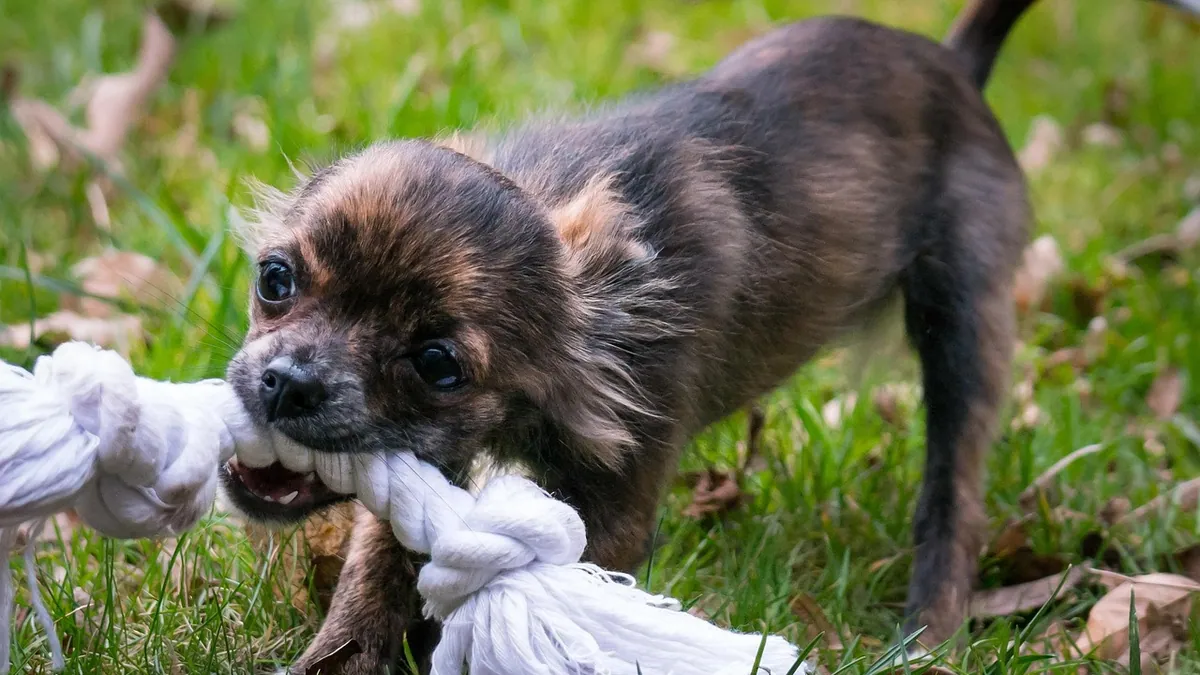
Most puppies do outgrow biting, but not on a fixed schedule and not without help. Bite inhibition, the learned ability to control how hard the mouth closes, usually develops through play and training during the first several months of life [1]. Some puppies stop biting on their own, and others keep mouthing well past teething if no one teaches them what to do instead.
This article is educational and is not a substitute for veterinary diagnosis or treatment.
Quick Answer
- Puppy biting is normal. Mouthing, nipping, and chewing are natural puppy behaviors, and puppies use their mouths and sharp teeth to play and explore [1].
- Most puppies learn bite inhibition from other puppies during play, and they can learn the same lesson from people [1].
- Biting usually fades as puppies mature and finish teething, but the timeline varies by dog, breed, and how much training happens along the way.
- Chew toys and other enrichment items can redirect mouthing, and scented chew toys are commonly recommended to reduce undesirable chewing [2].
- Punishment and harsh corrections can make biting worse. Focus on redirection, short training sessions, and consistent responses.
Why Puppies Bite in the First Place
Biting is not a sign that your puppy is mean or broken. It is a normal part of how puppies interact with the world. They play, chew, and investigate objects with their mouths, and their needle-sharp teeth make those behaviors painful for human skin [1].
Bite inhibition: the lesson puppies learn from each other
Watch a litter of puppies play and you will see chasing, pouncing, wrestling, and plenty of biting. When one puppy bites a playmate too hard, the bitten puppy yelps and stops playing. The biter is startled and pauses too. Then play resumes. Over many repetitions, puppies learn to control bite intensity so play can continue without anyone getting hurt [1].
That is bite inhibition. Puppies who learn it from littermates can also learn it from people [1]. This is why your reaction to a bite matters. If you yelp, pause the interaction, and then resume calmly, you are mimicking the lesson puppies teach each other.
Teething and mouthing
Teething adds a second layer to biting. Puppies chew to relieve gum discomfort, and they also chew simply because it is rewarding. Chewing and mouthing are natural oral behaviors in dogs, especially during puppyhood, even though owners often find them annoying [2].
Play, boredom, and overarousal
Some biting is about energy, not teething. A puppy who has been crated all day, missed a nap, or had no chance to run and sniff may bite more during play. Puppies also bite when they are overtired, which looks a lot like a toddler melting down.
Medical Causes to Rule Out Before You Blame Training
Most puppy biting is behavioral, but a veterinarian should check for physical causes when biting starts suddenly or comes with other changes.
Pain is the big one. A puppy with a broken tooth, an ear infection, a sore joint, or a gastrointestinal problem may bite when handled or may chew more than usual. If your puppy was fine last week and is now snapping when touched in a specific spot, that pattern points toward discomfort.
Nutrition and hunger can also play a role. A puppy on an inappropriate diet or one who is genuinely hungry may chew and mouth more. Your veterinarian can review your puppy's diet and growth curve.
Early-life factors matter too. Puppies removed from the dam too early, with minimal early socialization or a history of chronic illness during development, can show higher rates of fear, anxiety, and behavior problems later [3][4]. Puppies adopted at 1 or 2 months of age showed more behavioral signs of fear, anxiety, and attention-seeking than puppies adopted later [4]. If your puppy came home very young, expect to put extra work into socialization and gentle handling.
Resource-related experiences during sensitive periods also shape adult behavior around food, toys, and other items [5]. If your puppy guards food or toys, mention it at your next visit.
When Puppy Biting Becomes a Problem
Biting is a problem when it causes injury, when it is getting worse instead of better, or when it happens in situations that suggest fear or aggression instead of play.
Play biting has a loose, bouncy quality. The puppy's body is relaxed, the tail may wag, and the bites are mouthy instead of clamped. Problem biting looks different. A puppy who stiffens, freezes, stares, growls, or snaps when you approach a toy or food bowl is showing something beyond normal mouthing.
Escalating aggression in a young dog is a serious concern. One case report described a 9-month-old dog with escalating aggression toward familiar and unfamiliar people, including multiple bites that injured people, across handling, play, resource guarding, and visitor contexts [3]. Risk factors in that case included early removal from the dam at 6 weeks, minimal early socialization, chronic illness during early development, and aggressive traits in both parents [3]. That is an extreme example, but it shows why early intervention matters when biting is not improving.
Age matters for how you read the behavior. A 10-week-old puppy who mouths during play is normal. A 7-month-old who is still leaving bruises and breaking skin needs a plan.
Do Puppies Outgrow Biting? What Actually Speeds It Up
Yes, most puppies outgrow biting, but "outgrow" is misleading. What really happens is that puppies learn bite inhibition and find better outlets for their mouths. You can speed that process up with training, enrichment, and a consistent environment.
Step 1: Teach bite inhibition with your reactions
When your puppy bites too hard during play, yelp or say "ouch" in a sharp, high tone, then stop the interaction for a few seconds. Withdraw your hands and turn away. When your puppy pauses, calmly resume play. This mirrors what littermates do [1].
Keep sessions short. Puppies have short attention spans, and long training sessions turn into biting sessions. Five minutes at a time, several times a day, works better than one long block.
Step 2: Redirect to appropriate chew items
Keep a chew toy within arm's reach at all times. The moment your puppy's mouth lands on your hand or clothing, replace your hand with the toy. Praise when your puppy chews the toy instead.
Chew toys are not just a distraction. Providing appropriate enrichment items, including scented chew toys, is commonly recommended to reduce undesirable chewing and mouthing [2]. A study of puppies interacting with rubber chew toys found that owners reported on chewing and mouthing behavior at home before and after a week of toy access [2]. The takeaway for owners is simple: give your puppy something legal to chew, and give it often.
Rotate toys so they stay interesting. Freeze a few dampened toys for teething relief. For more ideas, see Destructive Chewing in Puppies: Teething Relief vs Separation Anxiety.
Step 3: Build a routine that prevents biting
A tired, under-exercised puppy bites more. So does an over-tired one. Aim for a predictable daily rhythm with:
- Structured play and walks appropriate for your puppy's age and vaccination status
- Short training sessions that reward calm behavior
- Scheduled naps in a quiet crate or pen
- Chew time built into the day, not saved for emergencies
Puppies also need socialization. The socialization phase runs roughly from 3 to 12 weeks, when puppies form primary social bonds and adapt to new sights, sounds, and people [4]. Positive experiences during this window reduce the odds of fear and aggression later [4]. Ask your veterinarian how to socialize safely before your puppy is fully vaccinated.
Step 4: Manage the environment
Put away shoes, cords, and anything you do not want chewed. Use baby gates to limit access when you cannot supervise. Keep a leash on your puppy indoors during high-risk times, like when guests arrive, so you can guide behavior without grabbing.
If your puppy guards food or toys, do not test it by reaching in. Manage the situation and get professional help. Breeder practices around resource access during early development vary widely, and those early experiences can influence how puppies behave around resources later [5].
Step 5: Train alternate behaviors
Teach your puppy what to do instead of biting. "Sit" and "touch" are useful because they are incompatible with mouthing. Reward your puppy for sitting when people approach. Reward four paws on the floor during greetings.
For step-by-step training plans, see Puppy Training Tips Biting and Dog Training Tips For Puppies.
What Not to Do About Puppy Biting
Punishment is the most common mistake. Hitting, holding the mouth shut, alpha rolls, and scruff shakes can increase fear and defensive biting. They also damage the relationship you are trying to build. A puppy who is punished for growling may stop growling and go straight to biting, which is more dangerous.
Other myths to drop:
- "He will grow out of it with no training." Some puppies do improve on their own, but many do not, and the ones who do not become adolescents with a bite history.
- "Let him bite my hand so he learns." This teaches your puppy that hands are chew toys.
- "Yelp every single time." Yelping for every soft mouth contact can overstimulate some puppies and make play more exciting. Save your strongest reaction for hard bites, and use redirection for the rest.
- "It is just teething, so ignore it." Teething explains some chewing, but it does not excuse biting people.
If your puppy is showing aggression instead of play mouthing, do not use aversive methods. Seek professional help. Participation in structured activities and training is associated with behavioral differences in dogs, and non-participation has been linked to higher scores in owner-directed aggression, fear, and attention-seeking in one study of terrier-type dogs [6]. That does not prove training prevents aggression, but it supports the value of consistent, structured engagement.
When to Call a Veterinarian or Certified Behavior Professional
Get help sooner instead of later if any of these apply:
- Biting that breaks skin or leaves bruises
- Biting that is getting more frequent or more intense over weeks
- Growling, snapping, or freezing when you approach food, toys, or resting spots
- Biting directed at children, guests, or strangers
- Sudden change in behavior in a puppy who was previously gentle
- Biting along with limping, head shaking, appetite changes, or other physical signs
A veterinarian can rule out pain and medical causes and can refer you to a certified behavior professional. Look for a veterinarian who specializes in behavior or a certified applied animal behaviorist. Ask about their credentials and experience with puppy aggression.
For general behavior concerns, see Puppy Behavior Problems.
Limitations and When to Contact a Veterinarian
This article covers typical puppy biting. It cannot tell you what is happening with your individual puppy, and individual cases need a veterinarian who can examine your dog, take a history, and see the behavior in context.
Contact your veterinarian the same day if your puppy bites a person hard enough to break skin, if the bite was unprovoked, or if your puppy seems painful or unwell.
Go to an emergency clinic now if your puppy has a wound from a bite, is bleeding heavily, is having trouble breathing, or has sudden weakness, collapse, or a seizure.
Schedule a routine visit if biting is not improving after a few weeks of consistent training, if your puppy is guarding resources, or if you feel overwhelmed. Early help is easier than fixing a long-standing pattern.
Frequently Asked Questions
Do puppies stop biting on their own?
Some do, especially if they had plenty of playtime with littermates and learn bite inhibition early [1]. Others keep mouthing into adolescence if no one teaches them alternatives. You can speed things up with redirection, chew toys, and consistent reactions to hard bites.
Is it normal for puppies to keep biting at 4 or 5 months?
Yes, it is common. Many puppies are still teething and still testing their mouths at that age. What matters is the trend. If biting is getting softer and less frequent, you are on track. If it is getting harder or more frequent, get help.
How long does puppy biting usually last?
There is no single number that fits every puppy. Bite inhibition develops through repeated play and training, and teething adds chewing urges on top of that [1][2]. Most owners see clear improvement by the time the adult teeth are in, but the exact timeline depends on breed, temperament, and how much training happens.
Does yelping really stop puppy biting?
Yelping can help because it mimics what littermates do when a bite is too hard [1]. It works best when you follow it with a brief pause in play. If yelping revs your puppy up instead, switch to calmly removing your attention for a few seconds.
Should I use a muzzle or punishment for puppy biting?
Do not use punishment for normal puppy mouthing. It can increase fear and defensive biting. A muzzle is a training tool that should only be introduced with guidance from a veterinarian or certified behavior professional, and it is not a fix for biting on its own.
Related Articles
- Puppy Training Tips Biting
- Puppy Behavior Problems
- Destructive Chewing in Puppies: Teething Relief vs Separation Anxiety
- Dog Training Tips Puppy
- Dog Training Tips For Puppies
- How to Tell If Your Dog's Aggression Is Pain-Related
- Why Does My Puppy Only Bite Me? Understanding Puppy Mouthing
- Why Is My Puppy Attacking Me? Play Biting vs Aggression
- Do Puppies Lose Teeth? Teething Timeline and What to Expect
References
- Mouthing, Nipping and Biting in Puppies. ASPCA Animal Poison Control Center.
- To chew or not to chew? Exploring the influence of scented chew toys on puppy chewing. Frontiers in behavioral neuroscience, 2025.
- Evaluation of a Young Dog for Escalating Aggression Toward Both Familiar and Unfamiliar People. Case reports in veterinary medicine, 2026.
- The Puppies' Age at Adoption Time Influences the Behavioral Responses of Adult Dog. Veterinary sciences, 2025.
- Resource management practices of Canadian and American domestic dog breeders and associations with puppy competitive behaviour: A cross-sectional study. Animal welfare (South Mimms, England), 2026.
- Participation in Breed-Specific Cynological Activities Is Associated with Behavioral Variation in Terrier-Type Dogs: A C-BARQ Study. Animals : an open access journal from MDPI, 2026.