Why Does My Kitten Bite Everything? Play Biting Explained
By Dr. Zubair Khalid, DVM, MS, PhD ·
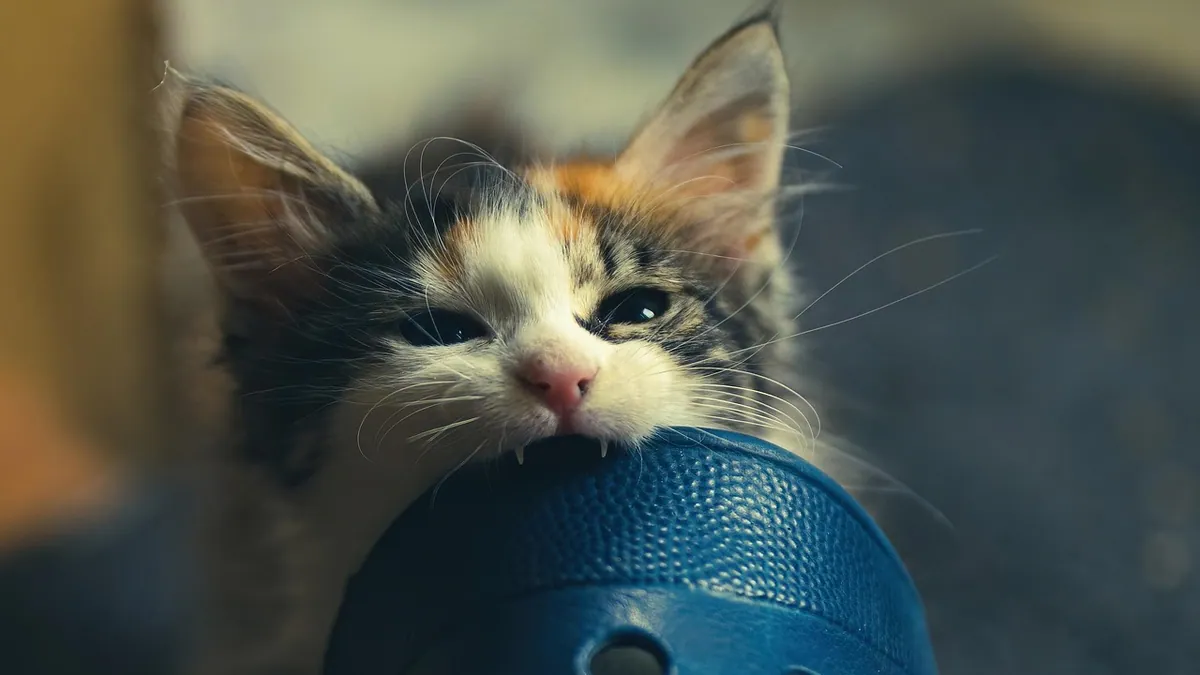
Kittens bite everything because biting is how they explore the world, test their jaws, and practice hunting skills. For most kittens under six months old, mouthing hands, ankles, cords, and toys is normal play behavior, not aggression. The goal is not to stop biting overnight but to teach your kitten what is acceptable to bite and what is not.
This article is educational and is not a substitute for veterinary diagnosis or treatment.
Quick Answer
- Play biting is normal in kittens and usually peaks between 8 and 16 weeks of age as they learn bite inhibition from littermates and people.
- Never hit, flick, or yell at your kitten for biting. Punishment increases fear and can make biting worse.
- Redirect every bite to a toy, then pause play for 10 to 20 seconds so your kitten learns that teeth on skin end the fun.
- Rule out pain, dental problems, and illness if biting starts suddenly in an older kitten or comes with hiding, drooling, or appetite changes.
- Contact your veterinarian the same day if a bite breaks your skin, if your kitten bites hard and will not release, or if biting appears with limping, vomiting, or breathing changes.
Why Does My Kitten Want to Bite Everything?
Kittens are born with a strong drive to mouth and chew. This is how they learn the force of their jaws and how to control a bite. In the wild, this same behavior would become hunting skill. In your home, it becomes play.
Normal reasons kittens bite
Play biting is the most common reason. Kittens wrestle, pounce, and bite their littermates during play. When they bite too hard, a sibling yelps or stops playing. That feedback teaches bite inhibition, which is the ability to control how hard they bite. Kittens who stay with their mother and littermates until at least 8 weeks usually learn this faster.
Socialization also shapes biting behavior. A survey of 2,238 US cat owners found that most had not heard of kitten socialization programs, but half would be interested in enrolling in one [1]. Socialization is important for normal social and behavioral development in companion animals [1]. Kittens who miss early positive experiences with people and other cats may bite more often out of fear or uncertainty.
Teething is another normal cause. Kittens lose their baby teeth around 3 to 4 months of age and chew more during this time. Chewing soothes sore gums.
Play and predation share a common basis in cats [2]. That means a kitten chasing your ankles is doing something deeply wired, not plotting against you. Cats also meow more in highly motivating contexts like feeding and play, which shows how strongly these drives shape behavior [2].
Why your kitten bites you specifically
Hands and feet move like prey. Wiggle your fingers under a blanket and you look like a mouse. Ankles move fast and low to the ground. To a kitten, that is a target.
Kittens also bite when they are overstimulated. Petting can feel good, then suddenly feel like too much. The bite is a signal to stop.
Some kittens bite for attention because it works. If biting gets a reaction, even a yelp, the behavior gets reinforced.
Medical Causes to Rule Out
Most kitten biting is behavioral, but pain and illness can trigger or worsen it. Aggression in cats has both genetic and environmental causes, and the full picture is still not completely understood [3]. That is why a veterinary exam matters when biting is new, intense, or out of character.
Pain and dental problems
A kitten with a broken tooth, an infected gum, or an injured paw may bite when handled. Mouth pain is a common trigger. If your kitten drops food, drools, or chews on one side, dental disease is possible.
Skin and parasite problems
Itchy skin can make a kitten restless and nippy. If your kitten scratches, chews its own fur, or has bald patches, read Why Is My Cat So Itchy? for possible causes.
Limping and hidden injury
A kitten that bites when you pick it up may be protecting a sore leg or belly. If you notice limping or reluctance to jump, see Why Is My Cat Limping?.
Neurologic and systemic illness
Rarely, biting is a sign of neurologic disease, seizures, or metabolic problems. These cases usually come with other signs like circling, head pressing, confusion, or sudden behavior change.
When Kitten Biting Becomes a Problem
Play biting is normal. Problem biting is different. It becomes a concern when:
- Bites break skin or draw blood.
- Your kitten bites hard and does not let go.
- Biting happens with hissing, growling, flattened ears, or a puffed tail.
- Biting is directed at guests, children, or other pets.
- Biting starts suddenly in a kitten older than 6 months.
- Biting comes with hiding, appetite loss, or litter box changes.
Aggression at the veterinary clinic is common and is linked to behavior problems at home. In one US survey, 42.6% of cats showed aggression during veterinary visits, and clinic aggression was positively associated with problems at home, including stranger-directed aggression, owner-directed aggression, and resistance to restraint [4]. This does not mean your kitten will become aggressive. It means early behavior support matters.
If your kitten is hissing at a new cat in the home, that is a different situation. See Cat Hissing at New Kitten: How Long Will It Last?.
How to Teach Bite Inhibition Step by Step
Bite inhibition training works best when it is consistent. Every person in the home should follow the same rules.
Step 1: Stop the fun the moment teeth touch skin
Say "ouch" in a calm, low voice. Then freeze. Do not pull your hand away fast, because that looks like prey. After 10 to 20 seconds, offer a toy. If your kitten bites the toy, play resumes. If it bites you again, end the session and walk away.
Step 2: Redirect to appropriate toys
Keep a toy within reach at all times. Wand toys, plush kickers, and crinkle balls all work. When your kitten stalks your ankles, toss a toy instead of running.
Step 3: Use your hands only for gentle petting
Never use your hands as toys. If your kitten attacks hands during petting, stop petting and let it settle. Hands should predict calm touch, not wrestling.
Step 4: Build a routine with play and feeding
Cats meow more when they want food or play, which shows how motivating these activities are [2]. Schedule two or three play sessions a day, each 10 to 15 minutes. Follow play with a meal or a treat. This mimics the natural hunt-eat-groom-sleep cycle and reduces biting from boredom.
Step 5: Add enrichment
Bored kittens bite more. Provide:
- Vertical space like cat trees and shelves.
- Food puzzles and scatter feeding.
- Window perches for bird watching.
- Rotating toys so novelty stays high.
- Safe chew items for teething kittens.
Step 6: Manage the environment
Put cords in hard plastic covers. Close doors to rooms you cannot supervise. Trim your kitten's nails every 1 to 2 weeks to reduce scratch injuries during play.
Step 7: Handle gently and often
Short, positive handling sessions help kittens learn that hands are safe. Touch paws, ears, and mouth for a few seconds, then give a treat. This builds tolerance for veterinary exams and grooming.
What Not to Do
Punishment does not teach bite inhibition. It teaches fear.
- Do not hit, flick, or squeeze your kitten.
- Do not yell or spray water. These can increase anxiety and defensive biting.
- Do not hold your kitten's mouth shut.
- Do not scruff an older kitten or adult cat as punishment.
- Do not play with bare hands and then expect your kitten to know the difference later.
- Do not isolate your kitten for long periods. Short time-outs of 10 to 20 seconds are enough.
One common myth is that a kitten who bites will grow into an aggressive cat. Most kittens outgrow hard play biting with consistent training and enrichment. Another myth is that you should bite your kitten back to show it how it feels. This is unsafe and damages trust.
If your kitten is suddenly aggressive toward other cats in the home, that is a separate issue. Read Why Is My Cat Suddenly Aggressive Towards Other Cats?.
When to Involve a Veterinarian or Behavior Professional
Call your veterinarian if:
- Biting starts suddenly after 6 months of age.
- Your kitten bites hard enough to break skin.
- Biting comes with pain signs like limping, drooling, or refusing food.
- Your kitten hides, vocalizes, or avoids touch.
- You have children, elderly adults, or immunocompromised people in the home.
- Biting does not improve after 2 to 3 weeks of consistent training.
Your veterinarian can check for medical causes and discuss behavior support. In some cases, medications may help reduce fear and anxiety. The dose is calculated by your veterinarian based on your kitten's weight and health, so never give human medication or leftover pet medication on your own.
A certified behavior professional can build a plan for severe or complex cases. Ask your veterinarian for a referral.
Limitations and When to Contact a Veterinarian
This article covers common kitten play biting. It cannot diagnose your individual kitten. Every case needs a veterinarian who can examine your pet in person.
Contact your veterinarian the same day if:
- A bite breaks human skin. Cat bites can become infected quickly.
- Your kitten bites and will not release.
- Biting appears with vomiting, diarrhea, or refusal to eat.
- Your kitten seems painful when touched.
Go to an emergency clinic now if:
- Your kitten has trouble breathing.
- Your kitten collapses, seizes, or seems disoriented.
- Your kitten has a swollen, hot, or bleeding wound.
- Your kitten cannot walk or use a limb.
Schedule a routine visit if:
- Biting is new or getting worse over weeks.
- You see drooling, bad breath, or chewing on one side.
- Your kitten is not gaining weight or is losing weight.
- You feel overwhelmed and need a behavior plan.
Frequently Asked Questions
Should I let my kitten bite my hand during play?
No. Hands should never be toys. Letting your kitten bite your hand teaches it that skin is fair game, and that habit gets harder to break as your kitten grows.
Will my kitten grow out of biting?
Most kittens do grow out of hard play biting, especially with consistent redirection and plenty of play. Kittens who miss early socialization or who are rewarded for biting may keep the habit longer.
Does a kitten bite mean it is aggressive?
Usually no. Play biting, teething, and overstimulation are far more common than true aggression in kittens. Aggression is more likely when biting comes with growling, hissing, flattened ears, or a stiff body.
Can I use a spray bottle when my kitten bites?
No. Spray bottles and other punishment tools increase fear and can lead to defensive biting. They also damage the trust your kitten needs to feel safe around people.
How long does bite inhibition training take?
Most kittens show clear improvement within 2 to 4 weeks of daily, consistent training. Some kittens need longer, especially if they were separated from their mother and littermates early or if they have a medical issue.
Related Articles
- Why Was My Cat Choking
- Why Is My Cat So Itchy?
- Why Is My Cat Suddenly Aggressive Towards Other Cats?
- Why Is My Cat Limping?
- Cat Hissing at New Kitten: How Long Will It Last?
- Why Is My Cat Suddenly Aggressive? Medical Causes to Rule Out
- Why Does My Kitten Chew and Bite My Fingers?
- Why Does My Kitten Keep Biting Me? Causes and Training Tips
- Do Kittens Outgrow Biting? Play Aggression Timeline
References
- Socialising kitties: A quantitative survey of US cat owner attitudes towards kitten and adult cat socialisation programmes. Animal welfare (South Mimms, England), 2025.
- Vocal signals produced by the domestic cat (Felis silvestris catus) in highly motivating contexts. Journal of comparative psychology (Washington, D.C. : 1983), 2026.
- Genetic and Environmental Causes of Aggression in the Domestic Cat. Veterinary sciences, 2026.
- Correlation between aggression at the veterinary clinic and problem behaviors at home for cats in the USA. Journal of feline medicine and surgery, 2024.