Why Does My Puppy Move Around So Much in His Sleep?
By Dr. Zubair Khalid, DVM, MS, PhD ·
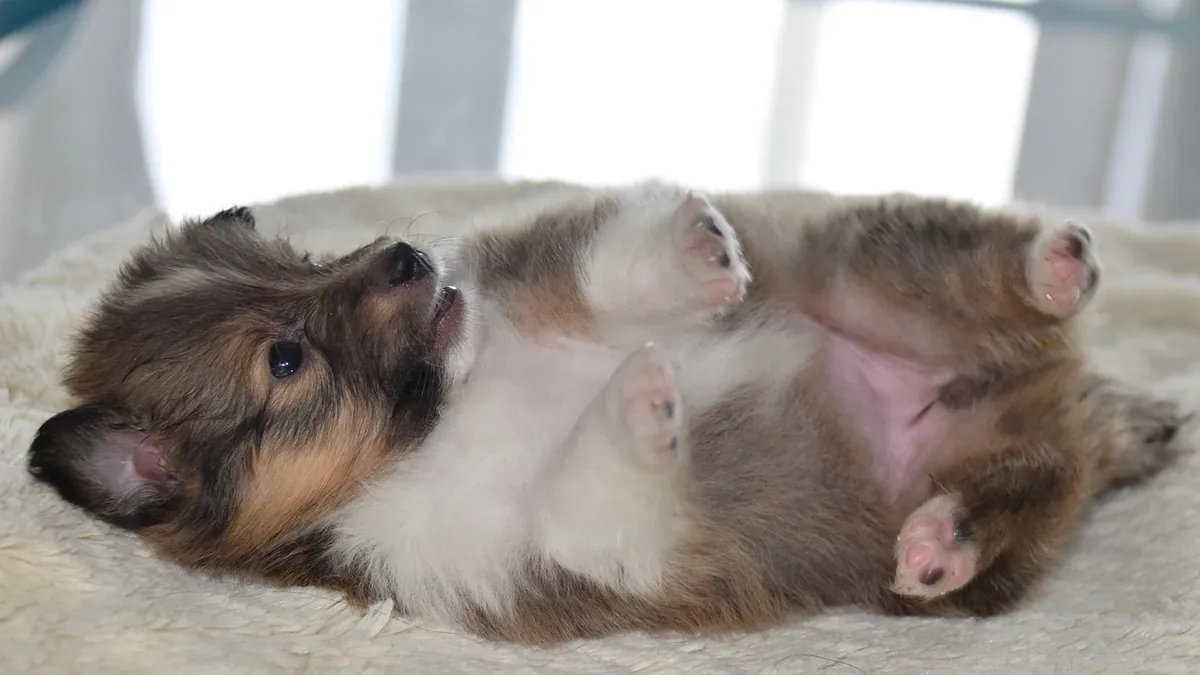
Puppies move around a lot in their sleep because they cycle through REM (dreaming) sleep more often than adult dogs, and their young nervous systems are still learning to quiet the body during dreams. Most twitching, paddling, and shifting is completely normal. This article is educational and is not a substitute for veterinary diagnosis or treatment.
Quick Answer
- Puppies spend a large share of sleep in REM, the stage linked to dreaming and body movement, so twitching and paddling are expected.
- Movement that stays inside sleep, stops when you call your puppy's name, and leaves him normal when awake is almost always benign.
- Movements that start within about 20 to 180 seconds of REM sleep onset and involve paddling or chewing can reflect a REM sleep behavior disorder, which has been documented in dogs and is not epilepsy [1].
- True seizures look different: stiffening, loss of consciousness, drooling, urination, and a confused recovery period. Those need same-day veterinary care.
- Keep a phone video of the episodes. It is the single most useful thing you can bring to your veterinarian.
Why Does My Puppy Move Around So Much When Sleeping?
Puppies sleep differently than adult dogs
Sleep in dogs is not one flat state. It moves through drowsiness, non-REM sleep, and REM sleep, and researchers can map these stages with brain wave recordings [2]. Puppies cycle through these stages quickly and spend more total time asleep than adult dogs, so you simply catch more movement on camera or in the crate.
REM sleep is the moving stage
REM sleep is when the brain is highly active while the body's muscles are mostly, but not perfectly, switched off. Small leaks of muscle activity show up as leg paddling, lip smacking, whisker twitching, and whole-body shifting. In one documented case, a young dog's paddling and chewing movements happened only within 20 to 180 seconds of REM sleep onset and never during other sleep stages or wakefulness [1]. That timing pattern is a hallmark of normal dream-related movement.
Puppies are processing a lot
Sleep is not wasted time. It supports memory and learning, and dogs are a recognized model for studying this because their sleep and learning patterns resemble ours in key ways [3]. A puppy who spent the day meeting new people, learning "sit," and exploring the yard has a lot of new information to sort through at night. More learning often means more active dreaming.
Development plays a role
Young animals show more sleep-related movement than adults. In a study of 2-month-old calves, a posture linked to REM sleep took up roughly 221 minutes per day across about 35 bouts, with each bout lasting around 7 minutes [4]. That is a lot of REM time in a young animal, and it helps explain why your puppy seems to be running marathons in his sleep.
Where he sleeps matters too
Dogs sleep differently depending on who is nearby. In a study of family dogs, sleep quality was worse when dogs slept without their owners compared to sleeping in their owner's company [5]. A puppy alone in a new crate may sleep lighter, wake more, and shift position more often. If crate nights are rough, see Puppy Crate Training For Sleep.
Is It Normal for Dogs to Move a Lot While Sleeping?
Yes, in most cases. Normal sleep movement has a few predictable features:
- It happens in short bursts, often 20 seconds to a few minutes.
- The eyes may move under closed lids, and the paws may paddle as if running.
- Gentle noise or your voice often interrupts it, and your puppy wakes normally.
- He is completely normal within seconds to a minute of waking.
- There is no drooling, no loss of bladder control, and no stiffening.
If your puppy checks all five boxes, you are almost certainly watching normal dreaming. Puppies also sleep a great deal in general, which is expected for their age and stage of development. For more on that, read Why Do Dogs Sleep So Much? Understanding Canine Sleep Patterns.
Medical Causes to Rule Out
Seizures
Seizures are the main worry owners bring up, and the concern is reasonable. The good news is that seizures have a fairly distinct look. They typically involve stiffening or rhythmic jerking of the whole body, loss of awareness, drooling, sometimes urination or defecation, and a period of confusion or pacing afterward. They can happen while awake too, which sleep twitching does not.
Brain wave testing is the tool veterinarians use to separate sleep-related movement disorders from seizure activity. In the documented puppy case, EEG with video recorded the movements and found no epileptiform (seizure-type) activity at all [1]. That is exactly why a video and, when needed, a specialist workup matter.
REM sleep behavior disorder
REM sleep behavior disorder (RBD) is when the normal muscle paralysis of REM sleep fails, letting the dog act out dreams. It has been confirmed in dogs using EEG, and it can look dramatic, with paddling, chewing, and vocalizing during REM sleep specifically [1]. It is a parasomnia, meaning a sleep disorder, not epilepsy. It can also be triggered by other health problems, so it still deserves a veterinary look.
Pain or discomfort
A puppy who shifts, stretches, and repositions constantly may be uncomfortable instead of dreaming. Hip or joint pain, an upset stomach, a full bladder, or skin irritation can all disrupt sleep. If your puppy also has changes in appetite, bathroom habits, or willingness to move when awake, that points away from simple dreaming. Frequent urination at night is a separate issue worth checking, covered in Why Is My Dog Peeing So Much?.
Breathing problems
Flat-faced breeds and puppies with narrow airways can sleep restlessly because they are working to breathe. Snoring, gasping, or long pauses in breathing during sleep are not normal dreaming and should be evaluated.
Medication effects
Some medications change sleep architecture. Trazodone, a drug sometimes used for anxiety and sleep problems in dogs, alters brain dynamics across wakefulness, drowsiness, non-REM, and REM sleep [2]. If your puppy started a new medication and his sleep changed, tell your veterinarian.
When Sleep Movement Becomes a Problem
Movement is worth investigating when it:
- Happens during the day or while your puppy is awake.
- Comes with drooling, urination, defecation, or a dazed recovery.
- Lasts longer than a few minutes or repeats many times a night.
- Prevents your puppy from getting restful sleep, so he is tired and cranky the next day.
- Causes injury, such as hitting the crate wall hard enough to hurt himself.
- Comes with vomiting, diarrhea, limping, coughing, or appetite changes.
One more thing to watch: sleep quality affects mood and learning. Dogs whose sleep is disrupted show measurable changes in sleep structure [5], and sleep is tied to memory and cognitive performance in dogs [3]. A puppy who never sleeps deeply may be harder to train and more irritable, which is a welfare issue, not just an inconvenience.
What to Do Step by Step
1. Record the episodes
Use your phone. Get the whole event, including what happens right before and right after. Note the time, how long it lasted, and whether your puppy responded to his name. This single step saves your veterinarian a lot of guesswork.
2. Build a wind-down routine
Puppies need help switching off. Keep the hour before bed calm: no wild play, no new training, dim lights, quiet voices. A predictable routine signals that sleep is coming.
3. Give enough daytime exercise and enrichment
A tired puppy sleeps more deeply. Sniff walks, puzzle feeders, chew toys, and short training sessions all burn mental energy. Mental work is often more tiring than physical work for a young dog.
4. Set up a comfortable sleep space
A crate or bed in your bedroom often helps, since dogs sleep better near their owners [5]. Keep the room cool, dark, and quiet. Add a familiar blanket that smells like home.
5. Keep a simple sleep log
Write down bedtime, wake-ups, episode times, and how your puppy acted the next day. Patterns jump out fast, and your veterinarian will want this information.
6. Do not wake him during normal twitching
If the movement is mild and he settles on his own, let him sleep. Waking a dreaming puppy repeatedly can make sleep worse, not better.
7. Rule out physical causes with your vet
A basic exam, weight check, and history review can catch pain, breathing issues, or medication effects. If episodes look unusual, your veterinarian may refer you to a specialist for brain wave testing, which is how RBD and seizure activity get separated [1].
What Not to Do
- Do not punish your puppy for moving in his sleep. He has no control over it, and punishment damages trust.
- Do not assume every twitch is a seizure. Most sleep movement is normal, and mislabeling it leads to unnecessary worry and testing.
- Do not assume it is always harmless either. Dramatic, repetitive episodes deserve a look.
- Do not give human sleep medications or supplements. Doses for dogs are calculated by a veterinarian from your pet's weight and health, and some human products are toxic to dogs.
- Do not skip the video. "He twitches at night" is hard to work with. A 30-second clip is not.
- Do not ignore other symptoms. Vomiting, diarrhea, limping, or house soiling alongside sleep changes point to a physical problem. Scooting or licking at the rear, for example, is a separate issue covered in Why Is My Dog Scooting?.
When to Call a Veterinarian or Behavior Professional
Call your veterinarian if episodes are frequent, dramatic, or changing, if your puppy seems tired or unwell during the day, or if you are unsure whether what you are seeing is a seizure. A certified veterinary behaviorist can help if sleep problems are tangled up with anxiety, crate stress, or separation distress.
Limitations and When to Contact a Veterinarian
This article covers common patterns, but every puppy is different. Individual cases need a veterinarian who can examine your dog, ask questions, and watch your video.
Contact your veterinarian the same day if:
- An episode lasts longer than 5 minutes.
- Episodes cluster, with several in one day.
- Your puppy is disoriented, wobbly, or not himself after waking.
- He stops eating or drinking normally.
Go to an emergency clinic now if:
- A seizure lasts more than 5 minutes or repeats without full recovery in between.
- Your puppy has trouble breathing, collapses, or turns blue.
- He is unresponsive or cannot stand.
Schedule a routine visit if:
- Movements are increasing over weeks.
- Sleep is disrupted most nights.
- You notice new symptoms like coughing, limping, or appetite changes.
Frequently Asked Questions
Should I wake my puppy if he is twitching in his sleep?
No, not if the twitching is mild and he settles on his own. Waking a dreaming puppy repeatedly can fragment his sleep and make him more restless. Only intervene if he seems distressed, is at risk of injury, or the episode does not stop.
Can puppies have nightmares?
Yes, dogs experience REM sleep, the stage linked to dreaming, and young animals spend a lot of time in it. A puppy who whines or paddles may be acting out a dream. If he wakes calm and settles quickly, there is usually nothing to worry about.
Does twitching in sleep mean my puppy will develop epilepsy?
No. Sleep twitching by itself is not a sign of epilepsy. In a documented case, a young dog with dramatic sleep paddling and chewing had no seizure-type brain activity on testing [1]. Epilepsy is diagnosed from seizures that happen while awake, plus other findings.
How much should a puppy sleep each day?
Puppies sleep far more than adult dogs, often 16 to 20 hours a day in total, spread across naps and nighttime. Young animals also show long stretches of REM-linked posture, with one study measuring about 221 minutes per day in 2-month-old calves [4]. If your puppy seems unable to settle at all, that is worth a veterinary visit.
Can sleeping alone make my puppy more restless?
It can. In a study of family dogs, sleep quality was worse when dogs slept without their owners compared to sleeping near them [5]. If your puppy is restless in a separate room, try moving his bed into your bedroom and see whether the nights settle down.
Related Articles
- Why Do Dogs Sleep So Much? Understanding Canine Sleep Patterns
- Why Is My Dog Peeing So Much?
- Puppy Crate Training For Sleep
- Why Is My Dog Panting So Much?
- Why Is My Dog Scooting?
- Why Is My Dog peeing in sleep? Urinary Incontinence and Hormone Deficiency
- Why Is My Puppy Jumping in His Sleep? Is It Normal?
- Why Does My Puppy Jerk in Their Sleep? What's Normal
- Why Do Puppies Shake in Their Sleep? Normal vs. Concerning
References
- Electroencephalography of rapid eye movement sleep behavior disorder in a dog with generalized tetanus. Journal of veterinary internal medicine, 2023.
- Study of changes in brain dynamics during sleep cycles in dogs under effect of trazodone. PloS one, 2025.
- The Effect of Targeted Memory Reactivation on Dogs' Visuospatial Memory. eNeuro, 2025.
- Associations Between REM Sleep-like Posture Expression and Cognitive Flexibility in 2-Month-Old Japanese Black Calves. Animals : an open access journal from MDPI, 2025.
- Family Dogs' Sleep Macrostructure Reflects Worsened Sleep Quality When Sleeping in the Absence of Their Owners: A Non-Invasive Polysomnography Study. Animals : an open access journal from MDPI, 2025.