Why Does My Puppy Jerk in Their Sleep? What's Normal
By Dr. Zubair Khalid, DVM, MS, PhD ·
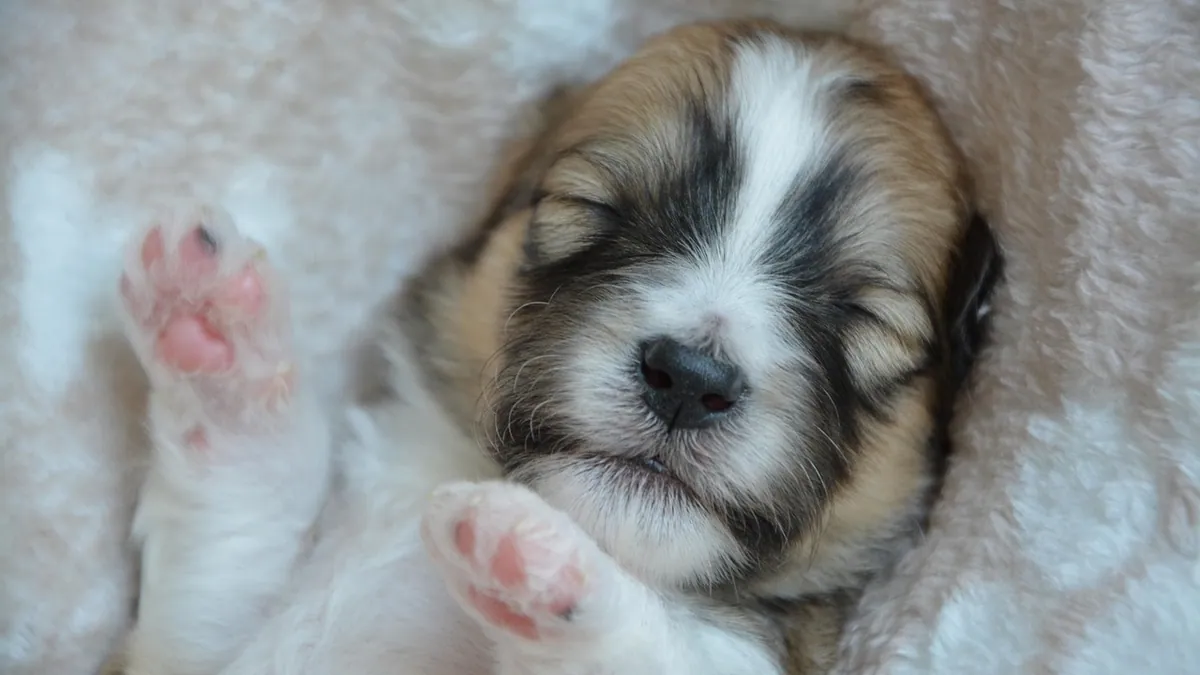
Puppies jerk in their sleep because they are moving through REM sleep, the dreaming stage, when the brain normally switches off muscle tone and small twitches slip through. It is common, it is usually harmless, and most puppies do it. If the jerking is mild, stays during sleep, and your puppy wakes up normal, there is nothing to fix.
This article is educational and is not a substitute for veterinary diagnosis or treatment.
Quick Answer
- Twitching, paddling, lip smacking, and small body jerks during sleep are normal in puppies and adult dogs.
- Normal episodes stop when your puppy wakes up, and your puppy is fully alert and coordinated within seconds.
- Jerking that continues while awake, comes with stiff limbs, loss of bladder or bowel control, drooling, or a dazed recovery is not normal and needs a vet.
- Do not wake a twitching puppy by grabbing or shaking them. Call their name softly and let them come out of sleep on their own.
- Record a short video of the episode. It is one of the most useful things you can bring to a veterinary visit.
What Sleep Jerking Looks Like and What Counts as Normal
Puppies cycle through sleep stages much like people do. During REM sleep, the brain is active and dreaming, but the body is normally held still by a temporary loss of muscle tone, called atonia [1]. When that brake is not perfectly smooth, you see twitching.
Here is what normal looks like:
- Small paw movements, whisker twitches, ear flicks, and tail flicks.
- Paddling legs, like your puppy is running in a dream.
- Lip smacking, sucking, or quiet whimpering.
- Brief whole-body jerks that last a second or two.
- A puppy who wakes up easily, stands up, and acts completely normal.
Puppies sleep a lot, and they spend a large share of that time in active sleep. That is one reason twitching seems so frequent in young dogs. If you want a fuller picture of normal sleep amounts by age, see How Long Do Dogs Sleep.
Sleep is not optional for health. It supports memory, learning, and normal brain function, and poor or broken sleep causes real problems in animals [2][3]. So a puppy who twitches but sleeps soundly is doing something good for their developing brain.
Why Is My Puppy Jerking in His Sleep? The Main Causes
Most jerking has a simple explanation. A smaller number of cases point to a health problem. The table below sorts the common causes by what you would actually see at home.
| Cause | Typical clues | How urgent |
|---|---|---|
| Normal REM sleep twitching | Happens only in sleep, mild to moderate, easy to wake, normal behavior after | Not urgent |
| Dreaming with active movement | Paddling, running motions, quiet noises, settles without help | Not urgent |
| Puppy startle or myoclonus during sleep | Sudden single jerk of a limb or the whole body, no pattern, no distress | Not urgent, mention at next visit |
| Seizure activity | Stiffening, paddling that does not stop, drooling, urination, unresponsive, confused after | Emergency if it lasts or repeats |
| REM sleep behavior disorder | Vigorous movement during REM sleep, sometimes with urination, no normal atonia [1] | See a vet soon |
| Pain or discomfort | Twitching plus restless shifting, whining, trouble settling, limping when awake | See a vet soon |
| Sleep-disordered breathing | Snoring, pauses in breathing, gasping, short-nosed breeds especially [3] | See a vet soon |
| Low blood sugar or metabolic problems | Weakness, wobbling, tremors that also appear when awake, poor appetite | See a vet now |
| Toxin exposure | Tremors, drooling, vomiting, unsteady walking, possible access to a poison | Emergency now |
A few notes on the table.
Seizures in dogs often come with body-wide changes, not just movement. Owners of epileptic dogs report a high rate of signs like drooling, urination, dilated pupils, and increased thirst around seizures [4]. If you see drooling and urination with the jerking, that pattern matters.
REM sleep behavior disorder is a specific problem where the normal muscle shutdown during REM sleep fails [1]. It has been reported in dogs and cats, and it can happen on its own or alongside other neurological disease [1]. Episodes are often more forceful than ordinary twitching.
Breathing problems during sleep are a separate concern, especially in flat-faced breeds. Brachycephaly, the shortened skull and snout, causes sleep-disordered breathing with repeated partial or complete airflow blockage during sleep [3]. That leads to drops in blood oxygen and low-grade inflammation, which is a risk factor for worse outcomes in people [3]. If your puppy snores heavily, gasps, or seems to stop breathing and restart, that is not just cute snoring.
Some medications change sleep architecture. Trazodone, a drug sometimes used for sleep and behavior problems in dogs, alters brain activity across wakefulness, drowsiness, NREM, and REM sleep [2]. If your puppy is on any medication and the twitching is new, tell your vet.
Red Flags That Make It an Emergency
Call an emergency veterinary hospital right away if you see any of these:
- Jerking or stiffening that lasts more than a few minutes, or that keeps restarting.
- An episode where your puppy does not respond to their name, touch, or a firm voice.
- Drooling, vomiting, urination, or defecation during the episode.
- Blue or pale gums, trouble breathing, or a pause in breathing.
- Jerking that continues after your puppy is fully awake.
- A puppy who cannot stand or walk normally 10 to 15 minutes after the episode.
- Known or suspected access to a toxin, including human medications, chocolate, xylitol, or marijuana.
- More than one episode in 24 hours, or episodes that are getting longer or stronger.
If you suspect poisoning, call the ASPCA Animal Poison Control Center at (888) 426-4435 or the Pet Poison Helpline at (855) 764-7661. Both may charge a consultation fee.
What You Can Safely Do at Home While You Wait
Your job during an episode is to keep your puppy safe and gather information. You are not expected to diagnose anything.
- Do not put your hands in or near your puppy's mouth. A dog in a seizure can bite without meaning to.
- Clear hard objects away from your puppy so they do not hit their head or legs.
- Dim the lights and lower the noise. Keep other pets and children back.
- Time the episode. Note the start and end, and what body parts moved.
- Film it on your phone if you can do so safely from a distance.
- After it ends, speak softly and let your puppy orient. Offer a quiet, warm spot to rest.
- Do not give any medication, including human drugs, unless your veterinarian has prescribed it for this exact situation. Your vet calculates the dose from your puppy's weight and health.
- Keep a simple log. Date, time, length, what you saw, and how your puppy acted afterward. Patterns help your vet a lot.
If your puppy is peeing during sleep episodes, that can have causes beyond seizures, including hormone-related incontinence. Our guide on Why Is My Dog peeing in sleep? Urinary Incontinence and Hormone Deficiency covers that separate problem. If your puppy is also drinking and urinating more than usual, see Why Is My Dog Peeing So Much?.
What Your Veterinarian Will Check and Test
Your vet starts with the story you bring. A video is worth more than a description, so bring it if you have one.
History and physical exam. Your vet will ask about age, breed, when episodes happen, how long they last, what happens during and after, diet, medications, and possible toxin access. They will check your puppy's heart, lungs, breathing, gums, belly, and nervous system.
Neurological exam. This checks alertness, posture, gait, reflexes, pupil responses, and how your puppy responds to touch. Findings here help separate sleep twitching from seizure activity.
Blood work. A complete blood count and chemistry panel can find low blood sugar, electrolyte problems, liver or kidney issues, and other metabolic causes of tremors.
Imaging. X-rays or ultrasound may be used if your vet suspects a structural problem. Advanced imaging may be recommended in some cases.
Sleep and breathing evaluation. For puppies with snoring, gasping, or breathing pauses, your vet may focus on the upper airway, especially in flat-faced breeds where sleep-disordered breathing is a known concern [3].
Medication review. If your puppy takes trazodone or another drug that affects sleep, your vet will weigh whether it could be playing a role, since these drugs change sleep-stage brain activity [2].
Referral. If seizures or a movement disorder is suspected, your vet may send you to a veterinary neurologist.
Prevention and Monitoring
You cannot prevent normal sleep twitching, and you do not need to. You can lower the odds of problems and catch real issues early.
- Keep a sleep log for two weeks. Note bedtime, wake time, and any episodes.
- Video any episode that worries you.
- Keep a predictable routine with a quiet, comfortable sleeping spot.
- Avoid waking your puppy abruptly during active sleep.
- Keep all human medications, foods, and household chemicals out of reach.
- Watch for breathing changes during sleep, especially in flat-faced breeds [3].
- Mention any new medication and any change in twitching at your next visit.
- Bring your log and videos to every checkup until the pattern is clear.
If your puppy also shakes when awake, that is a different question with a different list of causes. Our article on Why Is My Dog Shaking? walks through those possibilities.
Limitations and When to Contact a Veterinarian
This article cannot tell you what is happening in your individual puppy. Only a veterinarian who examines your puppy can do that.
Contact a veterinarian the same day if:
- Twitching episodes are getting more frequent or longer.
- Your puppy seems confused, wobbly, or unusually tired after episodes.
- Your puppy is drooling, urinating, or losing bowel control during episodes.
- You notice breathing pauses, gasping, or heavy snoring during sleep.
- Your puppy is on a medication and the twitching is new or worse.
Go to an emergency clinic now if:
- An episode lasts more than a few minutes or repeats without full recovery in between.
- Your puppy is unresponsive, has trouble breathing, or has blue or pale gums.
- Your puppy cannot stand or walk normally after the episode.
- You suspect toxin exposure. Call the ASPCA Animal Poison Control Center at (888) 426-4435 or the Pet Poison Helpline at (855) 764-7661.
Schedule a routine visit if:
- Episodes are mild and only happen in sleep, but you want peace of mind.
- You have video you want reviewed.
- Your puppy has other mild changes like restlessness or occasional accidents at night.
Frequently Asked Questions
Is it normal for puppies to jerk in their sleep?
Yes, mild jerking during sleep is normal in puppies. It happens during REM sleep, when small muscle twitches slip through the normal muscle relaxation of that stage [1]. If your puppy wakes easily and acts normal afterward, there is usually nothing to worry about.
Do puppies jerk in their sleep more than adult dogs?
Puppies often seem to twitch more because they sleep more hours and spend a larger share of sleep in active stages. Their nervous systems are also still maturing. Frequency usually settles as your dog grows, though many adult dogs still twitch during dreams.
Why does my dog jerk in her sleep?
The same REM sleep mechanism applies to adult dogs. Small paw movements, paddling, and brief body jerks during sleep are common and harmless. If the movements become forceful, include urination, or continue after waking, that points toward a problem like REM sleep behavior disorder or seizures [1].
Is it normal for dogs to jerk while sleeping every night?
Yes, many dogs twitch during sleep most nights. What matters is the pattern, not the presence. Normal twitching is brief, stays in sleep, and ends with a normal, alert dog. Twitching that grows stronger over weeks, or that comes with drooling, urination, or a slow, confused recovery, deserves a veterinary visit.
Can sleep twitching be a sign of a seizure?
It can be, but most sleep twitching is not a seizure. Seizures tend to involve stiffening, forceful paddling, drooling, urination, and a period of confusion afterward. Owners of epileptic dogs report drooling, urination, dilated pupils, and thirst changes around seizures at high rates [4]. If you see that cluster of signs, treat it as urgent and call your vet.
Related Articles
- Why Is My Dog Shaking?
- Why Is My Dog peeing in sleep? Urinary Incontinence and Hormone Deficiency
- Why Is My Dog Peeing So Much?
- How Long Do Dogs Sleep
- Dog Sleeping In Bed Behavior Problems
- Why Do Dogs Sleep So Much? Understanding Canine Sleep Patterns
- Why Does My Dog Twitch in His Sleep? What's Normal
- Why Do Puppies Shake in Their Sleep? Normal vs. Concerning
- Why Is My Puppy Jumping in His Sleep? Is It Normal?
References
- A FAM8A1 frameshift variant is associated with REM sleep behavior disorder, urinary retention, and mydriasis in Russian Blue cats. Animal genetics, 2025.
- Study of changes in brain dynamics during sleep cycles in dogs under effect of trazodone. PloS one, 2025.
- Association of brachycephaly, sleep-disordered breathing, and inflammatory response in dogs. Journal of veterinary internal medicine, 2026.
- Owner reported prevalence of autonomic signs in epileptic dogs. Frontiers in veterinary science, 2026.