Why Is My Puppy Jumping in His Sleep? Is It Normal?
By Dr. Zubair Khalid, DVM, MS, PhD ·
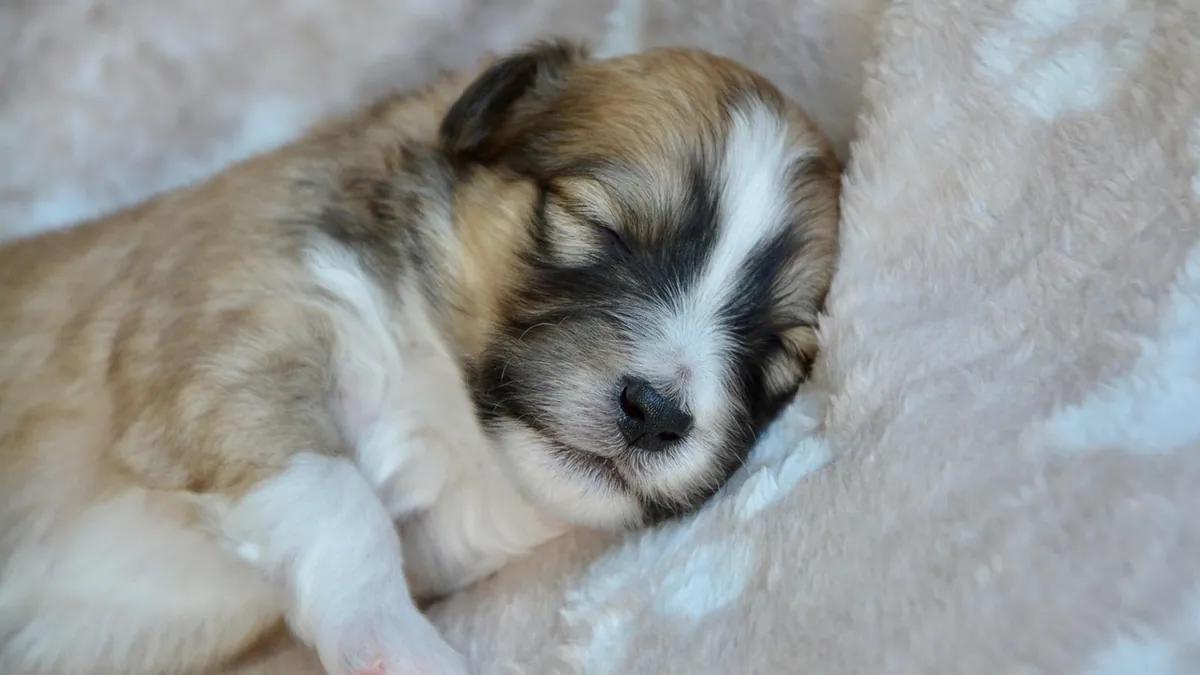
If your puppy is jumping in her sleep, the odds are strong that you are watching normal rapid eye movement (REM) sleep. During REM, the brain is active and dreams are thought to occur, while the body's muscles are mostly relaxed. Small twitches, paddling, and jerking are common and usually harmless. This article is educational and is not a substitute for veterinary diagnosis or treatment.
Quick Answer
- Puppies commonly twitch, paddle, and jerk during REM sleep, and this is usually normal.
- Movements that stay inside sleep and stop when your puppy wakes are the reassuring pattern.
- Movements that happen while awake, or that come with drooling, stiff limbs, or loss of bladder control, need a veterinary exam.
- Video the episodes on your phone, note the time and what happened before, and show your veterinarian.
- Never wake a twitching puppy by grabbing or shaking him, and never punish sleep movements.
Why Is My Puppy Jumping in Her Sleep? The Normal Reasons
Puppies sleep a lot, and a large share of that sleep is REM sleep. In dogs, REM is the stage where the brain is highly active and the body is largely still. That combination is exactly why you see bursts of movement: the brain is running a dream, but the muscles are only partly switched off.
What normal sleep twitching looks like
- Paw paddling, as if running
- Lip smacking, chewing, or suckling motions
- Tail flicks and ear twitches
- Small body jerks or a full-body startle
- Whining, soft barks, or muffled growls
- Eyes rolling under closed lids
These episodes are brief. They come and go in waves. Your puppy settles back into quiet sleep, and he wakes up normally. He is not confused, wobbly, or aggressive when you rouse him.
Why puppies do it more than adult dogs
Young dogs spend more time in REM sleep than adults do, so you notice more movement. Puppies also have immature nervous systems, which can make the twitching look bigger and sillier than it will in a grown dog. This is one reason owners search for "why is my puppy twitching in her sleep" so often. The answer is usually the same: it is a normal part of a young brain at work.
The REM sleep behavior connection
Sometimes the muscle-relaxing system that normally keeps a sleeping body still does not work perfectly. In one documented case, a 3-month-old dog with generalized tetanus showed excessive paddling and chewing movements only during REM sleep, confirmed with an electroencephalogram (EEG) and video monitoring over 31 hours [1]. The movements began within 20 to 180 seconds of REM sleep onset and did not occur in any other sleep or wake state, and no epileptiform (seizure-type) brain activity was seen [1]. That dog's sleep movements resolved about 6 weeks after he was first examined, once the tetanus was treated [1].
The lesson for owners is simple. Movements tied tightly to REM sleep can look dramatic, and they are not automatically seizures. A veterinarian may need testing to tell the difference.
Sleep and learning
Sleep is not wasted time. In horses, shorter REM-like sleep has been linked to weaker performance on a learning test [2]. Dogs are not horses, but the general principle that sleep supports learning and memory is well accepted in veterinary medicine. A puppy who sleeps well is a puppy who learns well.
Medical Causes to Rule Out
Most sleep jerking is benign. A smaller number of puppies have a real medical reason for the movements. Here are the main ones.
Seizures
Seizures can happen during sleep, and they can look like violent jerking. The key differences are timing and recovery. A seizure often has a clear start and stop, may last longer than a few seconds, and can come with drooling, stiff limbs, loss of bladder or bowel control, and a period of confusion afterward. If your puppy's movements happen while he is awake, or if they are followed by disorientation, that is a reason to call your veterinarian.
Myoclonus
Myoclonus is a sudden, brief muscle jerk. It can happen in sleep or while awake, and it has been reported in older dogs with cognitive dysfunction, though that study focused on dogs over 7 years of age and did not find a statistically significant link between the two [3]. Myoclonus can also be triggered by certain medications. In two dogs with hydrocephalus, myoclonus appeared after premedication with butorphanol and remifentanil and resolved after midazolam was given [4]. That is a hospital setting, not something you would manage at home, but it shows that jerking movements have many possible causes.
Other possibilities
- Pain or discomfort that disturbs sleep
- Low blood sugar in very small puppies
- Electrolyte problems
- Neurologic disease
- Reactions to a medication your puppy is taking
Your veterinarian can sort through these with an exam, bloodwork, and sometimes imaging.
When Sleep Twitching Becomes a Problem
Ask yourself three questions.
Does it stay in sleep? If the movements only happen when your puppy is asleep and stop when he wakes, that leans toward normal REM behavior. If they happen while he is awake, playing, or eating, that leans toward a seizure or another neurologic problem.
How does he recover? A normal sleeper wakes up bright and ready. A puppy coming out of a seizure may be dazed, wobbly, or clingy for minutes to hours.
Is it getting worse? Occasional twitching is one thing. Episodes that are longer, more violent, more frequent, or that cluster together deserve a closer look.
If you are unsure, keep a simple log. Write down the date, the time, how long the episode lasted, what body parts moved, and what your puppy did afterward. A phone video is even better. Veterinarians can learn a lot from 30 seconds of footage.
What to Do: Step by Step
Step 1: Watch and record
Do not intervene during a mild episode. Let it pass. Grab your phone and record. Note whether your puppy was asleep or awake when it started.
Step 2: Build a sleep-friendly routine
- Keep a consistent bedtime and wake time.
- Give your puppy a quiet, dark place to sleep.
- Provide a comfortable bed away from household traffic.
- Offer a final potty break right before bed.
Step 3: Meet his exercise and enrichment needs
A tired puppy sleeps more deeply. Puppies need age-appropriate exercise, but they also need mental work. Short training sessions, food puzzles, sniff walks, and chew toys all burn energy. This can reduce restlessness at night and may reduce how much you notice the twitching.
Step 4: Check the sleep environment
Room temperature, noise, and light all affect sleep quality. If your puppy wakes often, he may cycle in and out of REM more, which means more visible twitching. If your dog is breathing fast or heavily while asleep, that is a separate question worth reading about in Dog Breathing Fast While Sleeping: Normal or a Problem?.
Step 5: Talk to your veterinarian about any medications
Some drugs affect sleep architecture. Trazodone, for example, has been studied for its effects on brain activity across wakefulness, drowsiness, non-REM sleep, and REM sleep in healthy dogs [5]. If your puppy takes any medication and you notice new sleep movements, mention it at your next visit.
Step 6: Keep a symptom diary
Bring your log and videos to the appointment. This saves time and helps your veterinarian decide whether testing is needed.
What Not to Do
Do not punish sleep movements
Your puppy has no control over what happens during REM sleep. Scolding or startling him will not stop the behavior. It will only make him anxious about sleeping near you.
Do not grab or shake a twitching puppy
Waking a puppy abruptly during a vivid dream can cause a startle response. Say his name softly from a distance. Let him come out of sleep on his own.
Do not assume every jerk is a seizure
This is the most common myth. Most sleep jerking is normal. Assuming the worst causes unnecessary worry, and it can lead to missed sleep for you.
Do not assume every jerk is harmless
The opposite mistake is also real. If movements happen while your puppy is awake, or if they are getting worse, get help. Do not wait months to see if it passes.
Do not change medications on your own
Never start, stop, or adjust a medication without veterinary guidance. Doses are calculated by your veterinarian based on your puppy's weight and health.
Do not compare your puppy to internet videos
Every dog is different. A video of a severe seizure disorder does not mean your puppy has the same condition.
When to Involve a Veterinarian or Behavior Professional
Call your veterinarian if:
- Movements happen while your puppy is awake
- Episodes last longer than a minute or two
- Your puppy seems confused, wobbly, or aggressive after an episode
- The movements are getting more frequent or more intense
- Your puppy loses bladder or bowel control during an episode
- Your puppy is not growing, eating, or playing normally
- You are losing sleep or feeling worried
A board-certified veterinary behaviorist can help if the problem is mainly about sleep routine, anxiety, or nighttime restlessness. Your primary veterinarian can refer you.
If your puppy is peeing in his sleep, that is a different problem with its own causes. You can read more in Why Is My Dog peeing in sleep? Urinary Incontinence and Hormone Deficiency. If he is drinking and urinating more than usual during the day, see Why Is My Dog Peeing So Much?.
Limitations and When to Contact a Veterinarian
This article cannot tell you what is happening in your specific puppy's brain. Only a veterinarian who examines your puppy can do that. Individual cases need a veterinarian.
Contact your veterinarian the same day if:
- Your puppy has a first episode that looks like a seizure
- He is drooling heavily, vomiting, or not responding to you
- He seems painful or has a fever
- He is a very small breed and seems weak or unsteady
Go to an emergency clinic now if:
- An episode lasts more than 5 minutes
- Episodes repeat back to back without recovery in between
- Your puppy is struggling to breathe
- Your puppy is unconscious and will not wake
- Your puppy collapses or cannot stand
Schedule a routine visit if:
- Sleep twitching is frequent but mild
- You want to rule out seizures
- You need help with sleep routine or nighttime anxiety
- Your puppy has other symptoms like coughing, limping, or appetite changes
If your puppy limps after waking up, that is another pattern worth checking. See Why Is My Dog Limping Front Leg After Sleeping.
Frequently Asked Questions
Is it normal for puppies to jump in their sleep?
Yes, it is normal for most puppies. REM sleep involves an active brain and mostly relaxed muscles, so small jerks and paddling are expected. If the movements stay in sleep and your puppy wakes up normal, there is usually nothing to worry about.
Why do puppies jump in their sleep more than adult dogs?
Puppies spend more time in REM sleep and have less mature nervous systems. Both factors make their sleep movements bigger and more noticeable. Most puppies twitch less as they grow up.
Can sleep twitching be a sign of a seizure?
It can be, but most sleep twitching is not a seizure. Seizures are more likely to happen while awake, last longer, and leave your puppy confused afterward. A veterinarian can help you tell the difference.
Should I wake my puppy during a twitching episode?
No, not unless he seems distressed or the episode is long. Waking a puppy abruptly can cause a startle. Say his name softly and let him wake on his own.
Do puppies dream?
The evidence points that way. REM sleep is when dreaming is thought to happen in mammals, and dogs have REM sleep just like people do. The paddling and lip smacking you see are likely dream-related movements.
Related Articles
- Dog Breathing Fast While Sleeping: Normal or a Problem?
- Why Is My Dog peeing in sleep? Urinary Incontinence and Hormone Deficiency
- Why Do Dogs Sleep So Much? Understanding Canine Sleep Patterns
- Why Is My Dog Peeing So Much?
- Why Is My Dog Limping Front Leg After Sleeping
- How Long Do Dogs Sleep
- Why Does My Puppy Jerk in Their Sleep? What's Normal
- Why Does My Dog Twitch in His Sleep? What's Normal
- Why Does My Puppy Move Around So Much in His Sleep?
References
- Electroencephalography of rapid eye movement sleep behavior disorder in a dog with generalized tetanus. Journal of veterinary internal medicine, 2023.
- Effect of horse sleep behavior on performance in a field-side spatial reversal learning test. Scientific reports, 2026.
- Myoclonus in geriatric dogs and its association with canine cognitive dysfunction: an online survey. Frontiers in veterinary science, 2026.
- Opioid-Induced Myoclonus During Premedication in Two Dogs With Hydrocephalus Proactively Managed With Antiepileptic Medications. Veterinary medicine and science, 2025.
- Study of changes in brain dynamics during sleep cycles in dogs under effect of trazodone. PloS one, 2025.