Why Does My Puppy Eat Everything? Pica and Safety
By Dr. Zubair Khalid, DVM, MS, PhD ·
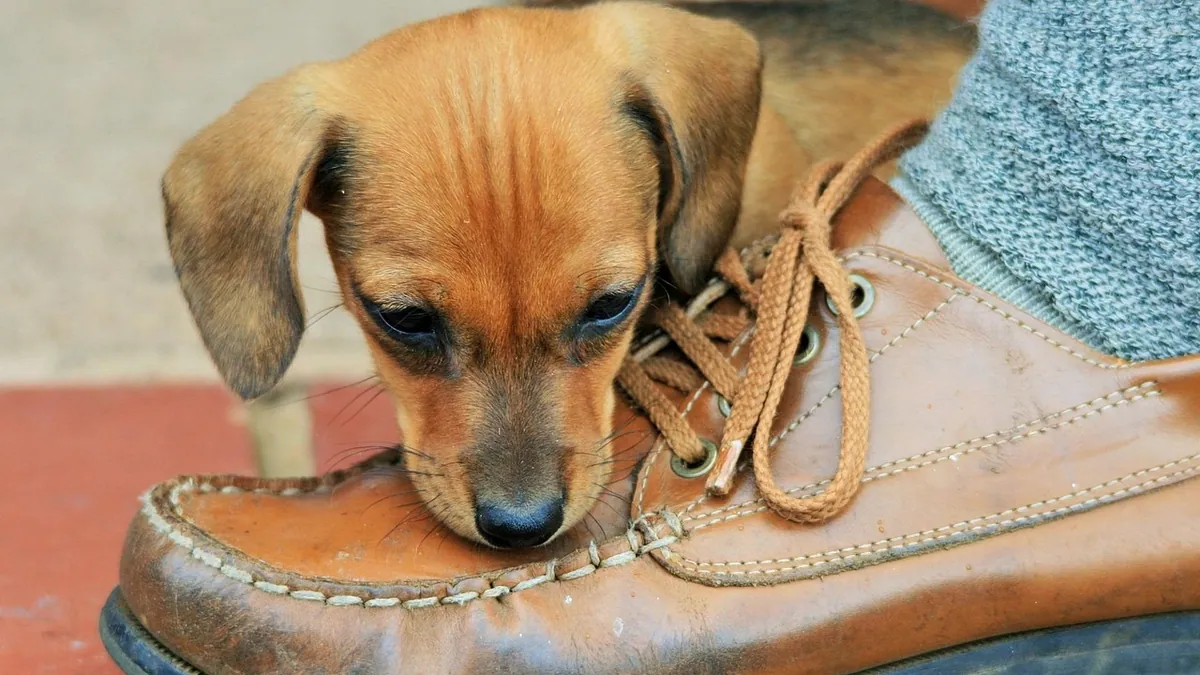
Puppies explore the world with their mouths, so chewing and even swallowing odd items can be normal during teething and development. When a puppy repeatedly eats non-food objects like rocks, dirt, or fabric, it may be a sign of puppy pica, a behavior that carries real risks of intestinal blockage and poisoning. If your puppy eats everything, the first step is to understand why and to remove hazards from their reach.
This article is educational and is not a substitute for veterinary diagnosis or treatment.
Quick Answer
- Normal puppy mouthing is exploratory and usually decreases with age, training, and teething relief.
- Pica is the repeated eating of non-food items and can be linked to gastrointestinal disease, not just boredom.
- Rocks, bones, string, socks, and small toys are common causes of intestinal obstruction in puppies.
- Management means supervising, confining, puppy-proofing, and offering safe chew alternatives.
- Any vomiting, retching, drooling, or abdominal pain after swallowing an object needs same-day veterinary care.
Why Does My Puppy Eat Everything? Normal Reasons First
Puppies put things in their mouths because that is how they learn about texture, taste, and temperature. During teething, usually between three and seven months, gums ache and chewing soothes them. This is normal exploratory behavior, and most puppies grow out of it as training and maturity take over.
Some puppies eat everything outside because the world is new and full of smells. Leaves, mulch, grass, and pebbles all get tested. A puppy who is bored, under-exercised, or left alone for long stretches may chew and swallow more. Hunger can play a role too. If a puppy is on a low-calorie or poorly balanced diet, they may scavenge more.
Diet and gut health matter. A longitudinal study of Labrador Retriever puppies found that dietary indiscretions were among the factors associated with changes in the gut microbiota as puppies grew [1]. That does not prove diet causes pica, but it supports the idea that what a puppy eats and swallows affects gut health.
Fear and stress can also drive mouthing and ingestion. Fearful dogs show measurable differences in blood lipids linked to mood and stress pathways [2]. A stressed puppy may chew and swallow to self-soothe. If your puppy seems anxious, trembling, or hiding, address the emotional side along with the chewing.
Medical Causes to Rule Out
When a puppy eats non-food items repeatedly and persistently, veterinarians consider pica. Pica is not a diagnosis on its own. It can be a sign of an underlying medical problem.
A 2025 review of dogs and cats with gastric foreign bodies found that every animal that had gastrointestinal biopsies showed chronic enteritis, and 80 percent had chronic gastritis [3]. Many of these animals had chronic gastrointestinal signs before the foreign body was found. In other words, some pets eat odd objects because their stomach or intestines are already inflamed.
That means a puppy who eats rocks and dirt, vomits, has diarrhea, or loses weight may have more than a behavior problem. Chronic enteropathy, parasites, and other gastrointestinal conditions can all increase pica. Your veterinarian may recommend bloodwork, fecal testing, and sometimes imaging or endoscopy.
Nutritional gaps are another possibility. A puppy on an incomplete or unbalanced diet may seek out non-food items. Feeding a complete and balanced puppy food, such as Science Diet Puppy Food, supports normal growth and reduces scavenging driven by hunger.
When Does Mouthing Become a Problem?
Mouthing becomes a problem when your puppy swallows things that cannot pass safely. That is when the risk of obstruction, perforation, or toxicity goes up.
Some swallowed objects move through the gut without trouble. Others lodge in the stomach or intestine and require surgery. String, rope, and linear objects are especially dangerous because they can bunch up the intestine like an accordion.
Toxicity is a separate risk. Chocolate, grapes, raisins, xylitol, certain human medications, and some houseplants can poison a puppy. Even a small amount can be serious depending on the puppy's weight and the substance.
Behaviorally, the problem is also about frequency and intensity. A puppy who occasionally picks up a leaf is different from one who hunts for rocks every time they go outside. The second pattern needs a plan.
What to Do Step by Step
Step 1: Puppy-Proof Your Home
Get down on the floor and look at the world from your puppy's height. Pick up small objects, coins, hair ties, rubber bands, and children's toys. Secure trash cans with lids. Move medications, cleaning products, and batteries into locked cabinets.
In the yard, remove rocks, acorns, and mushroom caps. Fence off garden beds and compost piles. If your puppy eats everything outside, walk them on a short leash and scan the ground ahead of them.
Step 2: Supervise and Confine
Supervision is the single most effective tool. When you cannot watch your puppy, use a crate or a puppy-proofed pen. This is not punishment. It is management that keeps your puppy safe while they learn.
Use baby gates to block off rooms with carpets, cords, or furniture your puppy likes to chew. Keep bathroom doors closed. Trash, toilet paper, and dental floss are common culprits.
Step 3: Teach "Leave It" and "Drop It"
These two cues are worth practicing daily. Start with a low-value item and reward your puppy for ignoring it. Build up to higher-value items slowly. Keep sessions short and end on success.
Never chase your puppy to take something away. That turns the object into a prize and teaches them to run. Instead, trade for a treat or a toy, then reward the trade.
Step 4: Provide Appropriate Chew Outlets
Give your puppy legal things to chew. Rubber teething toys, sturdy nylon chews, and food-stuffed toys keep mouths busy. Rotate toys so they stay interesting.
Frozen carrots and safe vegetables can help with teething. Check Safe Veggies For Dogs To Eat and Safe Fruits And Vegetables For Puppies before offering anything new. If you are watching weight, Can Dogs Eat Green beans? Weight Loss & Raw Safety covers green beans in more detail.
Step 5: Increase Exercise and Enrichment
A tired puppy chews less. Aim for age-appropriate walks, play sessions, and training games. Sniff walks, puzzle feeders, and hide-and-seek burn mental energy.
Puppies need social contact. If your puppy is alone all day, consider a midday walk or daycare. Boredom is a common driver of destructive chewing.
Step 6: Manage Stress
If your puppy seems fearful or anxious, talk to your veterinarian. A calm environment, predictable routines, and gradual exposure to new things can help. Fearful dogs have distinct physiological patterns, and stress is a real medical issue, not a training failure [2].
Step 7: Check the Diet
Feed a complete and balanced puppy food in appropriate amounts for your puppy's age and size. Ask your veterinarian whether a change is needed. Sudden diet changes can cause stomach upset, so transition slowly.
What Not to Do
Do not punish your puppy for chewing or swallowing. Punishment after the fact does not work because puppies cannot connect the consequence to an action that already happened. It can also make your puppy hide objects or become fearful.
Do not use aversive sprays or shock collars without professional guidance. These tools can increase anxiety and make ingestion more likely in some puppies.
Do not assume your puppy will "grow out of it" if they are swallowing dangerous items. Some do, but the risk of obstruction is too high to wait.
Do not give human medications for nausea or stomach upset without veterinary direction. Doses depend on your puppy's weight and health, and your veterinarian calculates them.
Do not rely on home remedies to make a puppy vomit. Some objects cause more damage coming up, and some substances are caustic. Call your veterinarian or a poison control service first.
When to Involve a Veterinarian or Behavior Professional
Call your veterinarian if your puppy eats non-food items often, has repeated stomach upset, or is losing weight. Chronic gastrointestinal signs alongside pica can point to underlying disease [3]. A veterinary workup can rule out medical causes before you focus on training.
Ask for a referral to a certified veterinary behaviorist or a certified applied animal behaviorist if the behavior continues despite management and training. These professionals can build a plan for anxiety, compulsive behavior, or pica that does not respond to basic steps.
If your puppy has swallowed something and is vomiting, retching, drooling, or has a painful belly, go to an emergency clinic right away. Do not wait to see if it passes.
Limitations and When to Contact a Veterinarian
This article cannot tell you whether your specific puppy has pica, a gastrointestinal disease, or simple puppy behavior. Only a veterinarian who examines your puppy can do that.
Contact your veterinarian the same day if your puppy swallowed a known toxic item, a sharp object, string, or a large object. Also call if your puppy is vomiting, has diarrhea, refuses food, or seems painful.
Go to an emergency clinic now if your puppy is retching without producing vomit, has a distended abdomen, is pacing and unable to settle, or is collapsing. These can be signs of obstruction or a serious gastrointestinal emergency.
Schedule a routine visit if your puppy eats non-food items regularly, has chronic soft stool or vomiting, or is not gaining weight as expected. Bring a list of what your puppy has eaten and when.
Frequently Asked Questions
Is it normal for a puppy to eat everything?
Yes, some mouthing and chewing is normal, especially during teething. Puppies learn about their world through their mouths. The behavior becomes a concern when your puppy repeatedly swallows non-food items or shows signs of stomach upset.
What is puppy pica?
Pica is the repeated eating of non-food items such as rocks, dirt, fabric, or plastic. It can be behavioral, but it can also be a sign of an underlying gastrointestinal problem. A veterinarian should evaluate persistent pica.
Why does my puppy eat rocks and dirt?
Puppies may eat rocks and dirt out of curiosity, boredom, or hunger. In some cases, pica is linked to chronic gastrointestinal inflammation. If the behavior is frequent, ask your veterinarian to check for medical causes.
Can pica in puppies be cured?
Many puppies improve with management, training, and treatment of any underlying condition. Some need ongoing behavior support. Early intervention gives the best chance of a good outcome.
Should I punish my puppy for eating things?
No. Punishment does not teach your puppy what to chew instead, and it can increase anxiety. Use supervision, redirection, and rewards for appropriate chewing.
Related Articles
- Why Is My Dog Licking Everything?
- Safe Veggies For Dogs To Eat
- Can Dogs Eat Green beans? Weight Loss & Raw Safety
- Safe Fruits And Vegetables For Puppies
- Science Diet Puppy Food
- How Long Should A Puppy Eat Puppy Food
- Pica in Dogs: Causes, Symptoms, and Treatment
- Pica in Dogs and Cats: Why Pets Eat Non-Food Items
- Why Does My Puppy Eat So Fast? Risks and How to Slow It Down
References
- The gut microbiota of Labrador retriever puppies: a longitudinal cohort study. Animal microbiome, 2025.
- Targeted lipidomics showed altered serum phosphatidylcholine levels in fearful dogs. PloS one, 2026.
- Pica as a clinical sign of a chronic enteropathy in dogs and cats. Journal of the American Veterinary Medical Association, 2025.