Play Aggression in Cats: Why It Happens and How to Stop It
By Dr. Zubair Khalid, DVM, MS, PhD ·
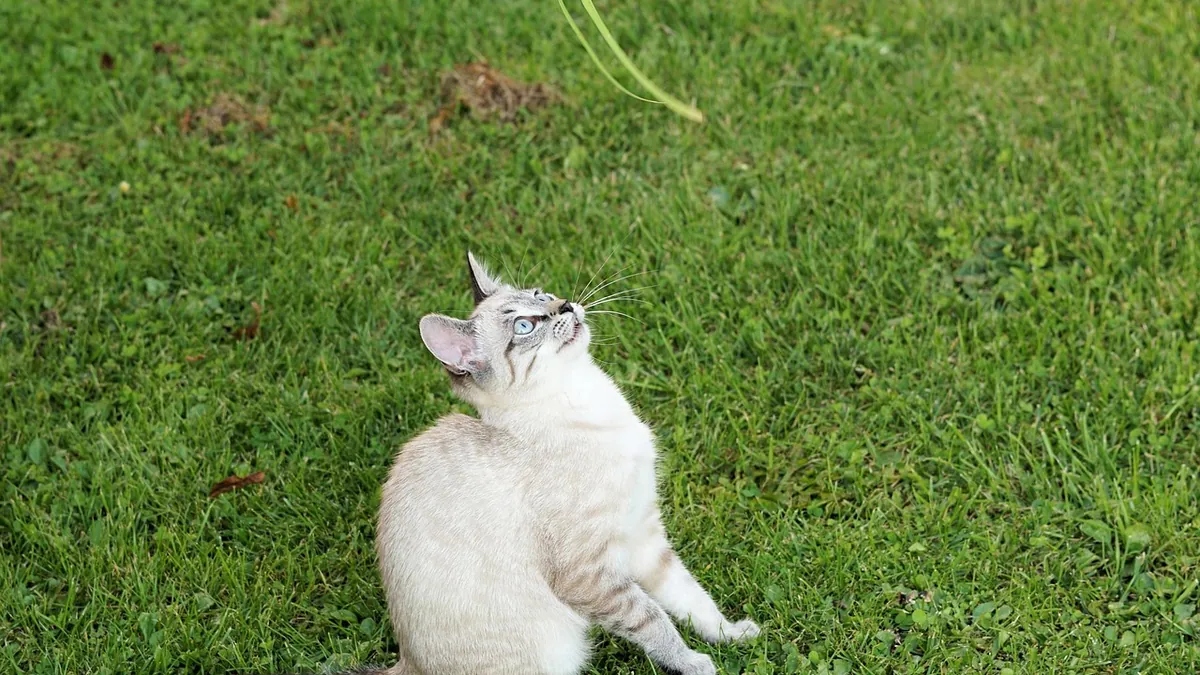
Play aggression in cats is normal hunting behavior that gets directed at hands, ankles, or ambush targets instead of toys. It happens most in young cats, cats raised alone, and cats with too much pent-up energy. You can stop it by redirecting the behavior, changing how you play, and removing the rewards that keep it going.
This article is educational and is not a substitute for veterinary diagnosis or treatment.
Quick Answer
- Play aggression is normal predatory behavior that is aimed at the wrong target, usually your hands, feet, or ankles [1].
- It is most common in young cats and kittens who were raised alone or did not have littermates to teach bite inhibition [2].
- Never use your hands or feet as toys, and never punish the cat. Punishment usually increases fear and makes biting worse.
- Play with your cat using wand toys and other distance toys, and end each session with a treat or meal so the hunt has a finish.
- If biting is sudden, intense, or new in an adult cat, have your veterinarian rule out pain or illness first.
Why Play Aggression in Cats Happens
Cats are predators. Stalking, chasing, pouncing, grabbing, and biting are hardwired behaviors, not signs of a mean cat. When a cat directs those behaviors at a person, we call it play aggression [1].
Normal predatory play
Kittens learn how to play by wrestling with their littermates. When a kitten bites too hard, the sibling yelps, stops playing, or bites back. That feedback teaches the kitten to soften its bite. Cats raised alone during their early lives may never learn that lesson [2]. They keep biting hard because nothing ever taught them to stop.
This is why a single kitten adopted into a quiet home often becomes a hand-biter. The cat has plenty of hunting drive and no outlet for it.
Why your cat attacks your hands and ankles
Moving hands and feet look exactly like prey. They twitch, they disappear under blankets, and they react when grabbed. Ankles are even better because they move away, which triggers the chase.
Some cats also ambush from under furniture. If your cat hides under the bed and then pounces on your feet as you walk by, that is a classic setup. Cornell's behavior guidance suggests denying access to those hiding spots and preempting the pounce with a toy before it happens [2].
Boredom and too much energy
Indoor cats often have more energy than they have ways to spend it. A cat with no hunting outlet will invent one. That outlet is often you.
Arousal and overstimulation
Not all biting during play is play. Some cats bite during petting because they do not enjoy physical contact, or because they want to be left alone while resting, sleeping, or eating [1]. Aggression can also be more intense if you approach a cat that is already aroused [1]. Learn to read the tail flick, the flattened ears, and the skin twitch. Those are warnings, not invitations.
What the research says about risk factors
Aggression is the second most common feline behavior problem seen by animal behaviorists [3]. The genetic and environmental causes are still not fully understood, and the evidence base is limited and mixed [4]. Early socialization matters. Kittens who get more handling and more positive early experiences tend to be better adjusted as adults, and breeders do not always apply the socialization practices they say they value [5]. Socialized cats also tend to be bolder problem solvers, which can look like a cat who is more willing to engage with the world, including with your ankles [6].
If the aggression is aimed at other cats in the home, that is a different problem with different management. See Cat Aggression Towards Other Cats: How to Manage Multi-Cat Households.
Medical Causes to Rule Out First
Before you build a training plan, rule out pain and illness. A cat in discomfort may bite when handled, moved, or approached. Arthritis, dental disease, abdominal pain, and skin problems are common culprits.
Any sudden change in behavior in an adult cat deserves a veterinary visit. If your cat was calm for years and now bites, that is not play aggression until proven otherwise. See Why Is My Cat Suddenly Aggressive? Medical Causes to Rule Out and Cat Sudden Aggression: What Could It Mean?.
Handling is a common trigger. In one study of owner-directed aggression, handling-induced aggression was universal, and grooming was the most common trigger at 56 percent [7]. If your cat only bites during brushing, nail trims, or being picked up, the problem may be handling sensitivity or pain, not play.
When Play Aggression Becomes a Problem
Play behavior crosses into a problem when it causes injury, when it happens daily, when it targets children or guests, or when it makes you avoid your own cat.
Cat bites are not minor. Cats have five weapons (teeth and four clawed paws), and bites can cause deep puncture wounds that become infected [3]. Cat scratch disease is usually mild but can cause flu-like symptoms and, in rare cases, serious illness [3]. Aggressive cats can be a real danger to family members and visitors [3].
Take any bite that breaks the skin seriously. Wash it well and contact a healthcare provider for yourself. Then address the cat's behavior.
How to Stop Play Aggression in Cats: Step by Step
Step 1: Stop using your hands as toys
This is the single most important change. Every time your hand becomes a toy, you teach your cat that biting hands is a fun game. Pull your hand away slowly and go still. Do not jerk, yank, or yell. Then end the interaction for a minute or two.
Step 2: Build a daily play routine
Two or three sessions a day, 10 to 15 minutes each, works for most cats. Use a wand toy, a laser pointer followed by a physical toy to catch, or a stuffed kicker. Mimic prey. Move the toy away from the cat, hide it, let it dart. Let your cat catch and bite the toy, not you.
End each session with a small meal or treat. This completes the hunt, catch, kill, eat sequence and tells your cat the game is over.
Step 3: Preempt the ambush
Find the pattern. Most cats attack at the same times and in the same places. If your cat hides under the bed before pouncing, close the bedroom door or block the space [2]. If your cat attacks your ankles when you walk down the hall at 7 p.m., start a play session at 6:45.
A bell on a breakaway collar can help you track where your cat is before an attack [2]. Never use a elastic or non-breakaway collar on a cat.
Step 4: Change the environment
Give your cat vertical space, scratching posts, window perches, and puzzle feeders. A cat who can climb, scratch, and work for food has less need to hunt your feet.
If you have a multi-cat household, make sure resources are spread out. Aggression toward other cats in the home can stem from play, predatory behavior, redirected behavior, fear, or competition over sleeping areas, common areas, and food [1]. That is a separate problem, but it often overlaps with owner-directed biting.
Step 5: Handle with consent
If your cat bites during petting, stop petting before the bite. Pet in short bursts, then pause. If the tail starts moving or the skin ripples, stop. Passive, calm interaction tends to be better received than forced handling. In one study, passive interactions with owners raised oxytocin and lowered cortisol in cats, while forced interactions did the opposite [8]. Let your cat come to you.
Step 6: Keep a simple log
Write down the time, place, and what happened right before each bite. Patterns show up fast. Once you see the pattern, you can change the trigger instead of reacting to the bite.
What Not to Do
Do not hit, spray, yell at, or scruff your cat. Punishment does not teach a cat what to do instead. It teaches the cat that people are unpredictable and scary. Fear-based aggression often gets worse after punishment.
Do not use your hands to roughhouse, even gently. It feels like play to you and like prey to your cat.
Do not lock your cat in a small room for long periods as punishment. That adds stress and boredom, which fuels the behavior.
Do not assume your cat is "getting back at you." Cats do not plan revenge. They respond to triggers, arousal, and reinforcement.
Do not rely on a squirt bottle. It may interrupt one pounce, but it does not solve the underlying drive, and it can damage your relationship with your cat.
When to Involve a Veterinarian or Behavior Professional
Call your veterinarian if the biting is new, if it is getting worse, if your cat is injuring people, or if you have tried the steps above for several weeks with no improvement.
Your veterinarian will check for pain and illness first. If the cat is medically healthy, your vet may refer you to a board-certified veterinary behaviorist or a certified applied animal behaviorist. These professionals can build a behavior modification plan for your specific cat.
Medication is sometimes part of the plan for severe cases. In one clinical trial, cats with owner-directed aggression were treated with either cannabidiol or fluoxetine, but this is a decision your veterinarian makes based on your cat's health, weight, and history [7]. Never give your cat any medication, supplement, or CBD product without veterinary guidance. Doses are calculated by your veterinarian for your individual cat.
Limitations and When to Contact a Veterinarian
This article covers general principles. Every cat is different, and individual cases need a veterinarian who can examine your cat in person.
Contact your veterinarian the same day if:
- Your cat bites and breaks skin on a person.
- Your cat stops eating, hides, or seems painful.
- Your cat's personality changes suddenly.
- Your cat bites when you touch a specific body area.
Go to an emergency veterinary hospital now if:
- Your cat is biting and cannot be safely handled.
- Your cat shows signs of severe pain, collapse, or difficulty breathing.
- Your cat has a wound, swelling, or discharge that could be infected.
For human bites and scratches, contact your own healthcare provider. Cat bites can become infected quickly [3].
If you are in the United States and you are worried about a possible poisoning or toxin exposure related to your cat's behavior or treatment, call the ASPCA Animal Poison Control Center at (888) 426-4435. For general pet poison questions, the Pet Poison Helpline is (855) 764-7661.
Frequently Asked Questions
Is play aggression in cats normal?
Yes, it is normal predatory behavior that is aimed at the wrong target. Kittens and young cats have a strong drive to stalk, chase, and bite, and they need an outlet for it [1]. The behavior becomes a problem when it causes injury or happens constantly.
Why does my cat attack my hands?
Your hands move like prey, and if you have ever pulled away or pushed back, you rewarded the behavior. Cats raised alone may also never have learned bite inhibition from littermates [2]. Stop using your hands as toys and switch to wand toys.
How do I stop my cat from biting during play?
End the session the moment teeth touch skin. Go still, then walk away for a minute. Redirect to a toy and reward calm play with a treat. Consistency matters more than intensity, so every person in the home has to follow the same rules.
Should I punish my cat for biting?
No. Punishment does not teach your cat what to do instead, and it often increases fear and defensive aggression. It can also damage the bond that makes your cat want to interact with you calmly. Redirect and reward instead.
Will my cat grow out of play aggression?
Many cats do calm down as they mature, especially with consistent play and clear rules. Some cats keep a strong play drive for life and simply need daily outlets. If the behavior is getting worse or causing injuries, ask your veterinarian for help.
Related Articles
- Cat Aggression Towards People: Why and What to Do
- Cat Sudden Aggression: What Could It Mean?
- Why Is My Cat Suddenly Aggressive Towards Other Cats?
- Why Is My Cat Suddenly Aggressive? Medical Causes to Rule Out
- Cat Aggression Towards Other Cats: How to Manage Multi-Cat Households
- Dog Aggression Towards Cats: How to Manage Multi-Pet Households
- Why Does My Kitten Attack My Feet? Play Aggression
- Do Kittens Outgrow Biting? Play Aggression Timeline
- Why Does My Cat Bite Me? Causes and How to Stop It
References
- Behavior Problems in Cats - Cat Owners. Merck Veterinary Manual.
- Feline Behavior Problems: Aggression. Cornell University College of Veterinary Medicine.
- Aggression in Cats. ASPCA Animal Poison Control Center.
- Genetic and Environmental Causes of Aggression in the Domestic Cat. Veterinary sciences, 2026.
- Exploring kitten socialisation practices and welfare implications within a Swedish breeding association. Animal welfare (South Mimms, England), 2026.
- Effects of Socialization on Problem Solving in Domestic Cats. Animals : an open access journal from MDPI, 2024.
- Owner-Directed Feline Aggression in Thailand: Characteristics, Associated Factors, and a Clinical Comparison of Treatments. Life (Basel, Switzerland), 2026.
- EXPRESS: The hormonal effects of owner-cat interactions on pet cats of different potential attachment styles. Journal of feline medicine and surgery, 2026.