How to Tell If Something Is Wrong With Your Kitten
By Dr. Zubair Khalid, DVM, MS, PhD ·
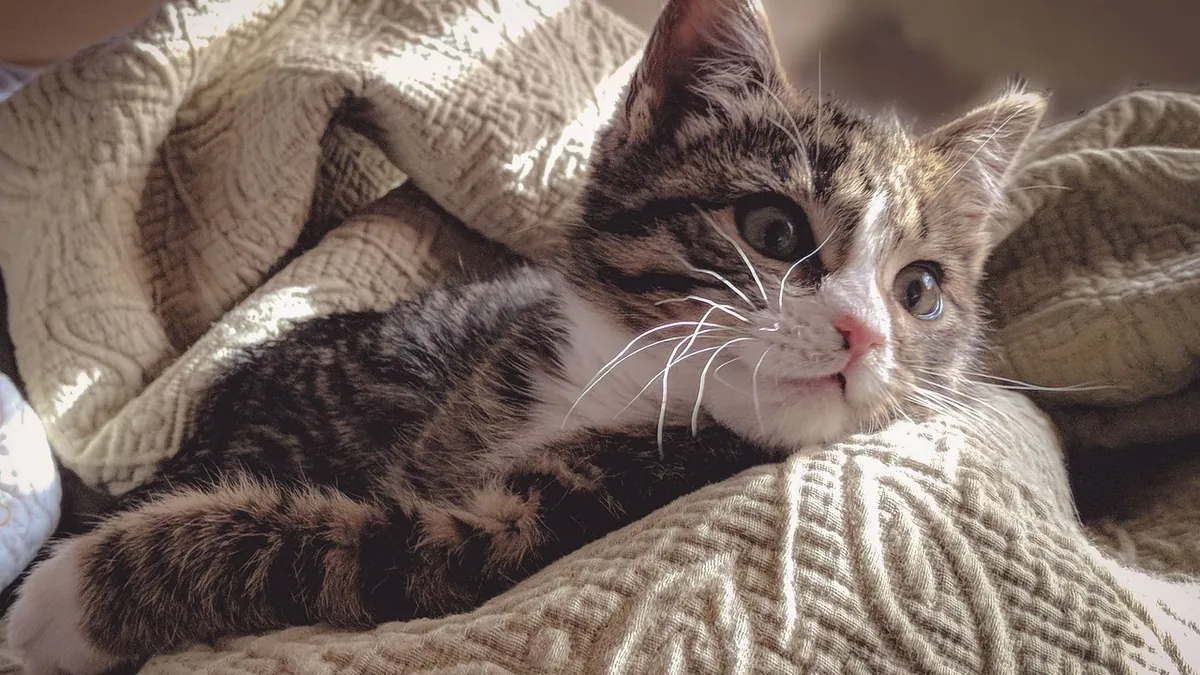
If you are asking yourself "how do I know if something is wrong with my kitten," start with the basics: eating, energy, breathing, stool, and body temperature. Kittens hide illness well and can crash fast, so small changes matter more than they would in an adult cat. Trust your gut if your kitten seems off, and call your veterinarian early.
This article is educational and is not a substitute for veterinary diagnosis or treatment.
Quick Answer
- A kitten that stops eating for more than 12 to 24 hours, or that is limp, cold, or breathing hard, needs to be seen right away.
- Normal kitten rectal temperature is roughly 99.5 to 102.5 F, and a kitten under 100 F is an emergency.
- Watch the litter box: no urine for 12 hours, no stool for 24 to 48 hours, or repeated vomiting all warrant a call.
- Young kittens have unstable blood sugar in their first days of life, so weakness and wobbliness can be a medical emergency [1].
- Keep your kitten away from unvaccinated cats until the full vaccine series is complete, because maternal immunity fades over time [2].
What Normal Looks Like for a Kitten
Before you can spot a problem, you need a baseline. Healthy kittens eat several small meals a day, sleep a lot between bursts of play, and have pink gums, clear eyes, and a soft, clean coat.
A normal kitten is curious and interactive when awake. It may sleep 16 to 20 hours a day, which is normal. The difference between sleep and illness is how your kitten acts when you wake it up. A healthy kitten perks up, stretches, and wants to eat or play. A sick kitten stays flat and unresponsive.
Breathing should be quiet and effortless. You can count breaths while your kitten sleeps. A relaxed kitten usually breathes 20 to 40 times per minute. Anything visibly labored, with the belly pumping or the mouth open, is not normal.
Stool should be formed, brown, and easy to pick up. A little softness can happen with diet changes. Watery stool, blood, or mucus is not normal.
How to Tell If My Kitten Is Unwell: Sign by Sign
Appetite and Drinking
A kitten that skips one meal may just be full or distracted. A kitten that refuses food for a full day is a concern. Kittens have tiny reserves, so they cannot fast the way adult cats can.
Watch for these changes:
- Turning away from food it normally loves
- Dropping food out of the mouth while chewing
- Drinking much more or much less than usual
- Drooling or pawing at the mouth
Dental and mouth pain is common in cats of all ages. In one study of older cats their owners believed were healthy, every single cat had dental abnormalities on examination [3]. Mouth pain can start early, so a kitten that chews oddly or drools needs a look.
Energy and Behavior
Lethargy is one of the most reliable signs that something is wrong. A kitten that hides, stops playing, or sits hunched in a corner is telling you it does not feel well.
Other behavior changes to note:
- Crying or vocalizing more than usual
- Pacing or unable to settle
- Sudden aggression when touched
- Weakness in the back legs
- Head pressing or circling
Weakness in a very young kitten can be low blood sugar. Newborn kittens have an underdeveloped metabolism and limited ability to make glucose, so their blood sugar can swing low in the first days of life [1]. That can be fatal, so do not wait.
Breathing
Count your kitten's breaths while it sleeps. Fast breathing at rest, noisy breathing, or any open-mouth breathing is a red flag.
Signs of trouble include:
- Belly pumping with each breath
- Nostrils flaring
- Blue or pale gums
- Coughing or wheezing
- Sitting with elbows out and neck stretched
Breathing problems move fast in kittens. Call your veterinarian or an emergency clinic right away.
Stool, Urine, and the Litter Box
Litter box changes are easy to miss with a small kitten. Scoop daily and pay attention.
- No urine for 12 hours is an emergency, especially in males.
- Straining to urinate with little or no output is an emergency.
- Watery diarrhea lasting more than 24 hours needs a call.
- Blood or black tarry stool needs same-day care.
- No stool for 48 hours may mean constipation or a blockage.
If your kitten has loose stool, our guide on Cat Diarrhea: How to Tell If It's Serious and What to Do walks through what to watch. Urinary signs are covered in What Are The Signs That My Cat Has A Urinary Tract Infection.
Temperature
A normal kitten rectal temperature is about 99.5 to 102.5 F. A temperature under 100 F is an emergency, and a temperature over 103.5 F needs same-day care.
You can learn to take a temperature safely at home. Our article How to Safely Check Your Cat's Temperature at Home: What's Normal and What's Not shows the steps. If you are not comfortable, let your veterinarian do it.
Hydration
Gently lift the skin between the shoulder blades. It should snap back down. If it stays tented, or if the gums feel tacky, your kitten may be dehydrated. See Cat Dehydration Symptoms: How to Tell and What to Do for more detail.
Common Causes and How Urgent They Are
| Cause | Typical clues | How urgent |
|---|---|---|
| Low blood sugar (neonatal hypoglycemia) | Weakness, wobbling, unresponsive, very young kitten | Emergency now [1] |
| Infection (viral, bacterial, parasitic) | Fever, poor appetite, runny eyes or nose, diarrhea | Same day |
| Feline immunodeficiency virus (FIV) | Weight loss, poor coat, repeated infections, mouth problems | Same day to routine testing [4] |
| Toxoplasma gondii | Lethargy, eye or neurologic signs, often with other illness | Same day [4] |
| Feline leukemia virus (FeLV) | Anemia, pale gums, recurrent illness | Same day |
| Feline infectious peritonitis (FIP) | Fever, belly swelling, weight loss, breathing trouble | Emergency or same day |
| Intestinal parasites | Pot-bellied look, diarrhea, visible worms | Routine visit |
| Foreign object or blockage | Vomiting, no stool, painful belly | Emergency now |
Infections are a leading reason kittens get sick. A study of domestic cats found that animals testing positive for Toxoplasma gondii or FIV showed clinical signs much more often than cats that tested negative [4]. Young age was linked to Toxoplasma positivity, which fits the pattern of kittens being vulnerable [4].
FeLV is another concern. Some cats with immune-mediated anemia can test positive on a quick in-clinic FeLV test even when confirmatory testing is negative, which is why your veterinarian may run more than one test [5]. All nine cats in that report had been vaccinated against FeLV, so vaccination does not explain every positive result [5].
FIP remains one of the hardest diseases to confirm. A newer point-of-care test for feline coronavirus showed substantial agreement with reference laboratory testing, with near-perfect agreement on fluid samples and lower agreement on tissue samples [6]. Your veterinarian will combine test results with the physical exam and other findings.
Red Flags That Mean Go Now
Call an emergency clinic or go in immediately if you see any of these:
- Open-mouth breathing, gasping, or blue gums
- Collapse, seizure, or unresponsiveness
- Rectal temperature below 100 F
- No urine for 12 hours or straining with no output
- Repeated vomiting or vomiting blood
- Bloody or black stool
- A swollen, painful belly
- Suspected poisoning or swallowing an object
- A kitten that cannot stand or hold its head up
For poison exposure in the United States, call the ASPCA Animal Poison Control Center at (888) 426-4435 or the Pet Poison Helpline at (855) 764-7661. These lines may charge a consultation fee.
If your kitten is choking or gagging, see How To Know If Your Cats Choking.
What You Can Safely Do at Home
While you wait for your appointment, keep your kitten warm, quiet, and hydrated. Do not give human medications. Many common human drugs are toxic to cats, and dosing is not the same.
Safe steps:
- Offer small amounts of the food your kitten normally eats.
- Keep the room warm, around 85 F for very young kittens.
- Use a heating pad on low under a towel, never directly against skin.
- Note the time of every vomit, stool, and meal so you can report it.
- Take a photo of anything unusual, including stool and discharge.
- Isolate your kitten from other cats if you suspect an infection.
Do not force food or water into a kitten that is weak or unable to swallow. That can cause choking or aspiration. Do not give any medication, including over-the-counter products, unless your veterinarian tells you to. Your veterinarian calculates any drug dose from your kitten's weight and health status.
What Your Veterinarian Will Check
Your veterinarian will start with a full physical exam. They will check weight, temperature, hydration, gums, eyes, ears, mouth, belly, and lymph nodes. They will listen to the heart and lungs and check for pain.
Testing often includes:
- A fecal exam for parasites
- Blood glucose, especially in young or weak kittens [1]
- A complete blood count and chemistry panel
- FeLV and FIV testing [4][5]
- Coronavirus testing if FIP is suspected [6]
- X-rays or ultrasound for vomiting or belly pain
Your veterinarian will explain what each test can and cannot tell you. Some results need to be repeated or confirmed with a second method, as with FeLV testing [5].
Prevention and Daily Monitoring
Prevention starts with vaccination and keeping your kitten away from unvaccinated cats. Kittens receive maternal immunity from their mother at birth and through nursing, and that protection fades slowly over time [2]. Vaccines cannot work well until maternal immunity wears off, so kittens are vaccinated on a schedule beginning at 2 to 3 months old [2]. Keep your kitten away from unvaccinated cats until the full series is complete [2].
Daily habits that help you catch problems early:
- Weigh your kitten weekly on a kitchen scale and write it down.
- Scoop the litter box at the same time each day.
- Track how much your kitten eats and drinks.
- Check gums and eyes once a day.
- Keep a written log of any vomiting, diarrhea, or coughing.
A kitten that is losing weight, hiding, or eating less than usual for two days in a row should be seen. Early visits are almost always easier and less expensive than emergency care.
Limitations and When to Contact a Veterinarian
This checklist cannot replace an exam. Kittens can look fine in the morning and be critical by evening. Individual cases need a veterinarian who can see your kitten, take its temperature, and run tests.
Call your veterinarian the same day if your kitten has a fever, has not eaten in 24 hours, has diarrhea for more than a day, is sneezing with discharge, or has a sudden change in behavior.
Go to an emergency clinic now if your kitten is struggling to breathe, is unresponsive, has a temperature under 100 F, cannot urinate, is vomiting repeatedly, or has a swollen painful belly.
Schedule a routine visit for vaccine boosters, deworming, weight checks, and any mild sign that has lasted more than two days.
Frequently Asked Questions
How can I tell if my kitten has an infection?
Look for fever, poor appetite, low energy, runny eyes or nose, diarrhea, or a poor coat. Infections are more common and more serious in kittens because their immune systems are still developing. Any kitten with these signs should be seen the same day.
Is it normal for a kitten to sleep all day?
Kittens sleep a lot, often 16 to 20 hours a day, and that is normal. The concern is how your kitten acts when awake. If it will not eat, play, or respond to you, that is not normal sleep.
Can I give my kitten human medicine for a fever or pain?
No. Never give human medications to a kitten without veterinary direction. Many common drugs are toxic to cats, and the correct dose depends on weight and health. Your veterinarian will choose a safe product and calculate the dose.
How long can a kitten go without eating?
A kitten should not go more than 12 to 24 hours without eating. Kittens have small energy reserves and can become weak quickly. If your kitten refuses food for a full day, call your veterinarian.
When should I take my kitten to the vet for diarrhea?
Call your veterinarian if diarrhea lasts more than 24 hours, contains blood, or comes with vomiting, lethargy, or not eating. A kitten with watery diarrhea can dehydrate fast. Bring a fresh stool sample if you can.
Related Articles
- What Are The Signs That My Cat Has A Urinary Tract Infection
- Cat Diarrhea: How to Tell If It's Serious and What to Do
- How To Know If Your Cats Choking
- How to Safely Check Your Cat's Temperature at Home: What's Normal and What's Not
- Cat Dehydration Symptoms: How to Tell and What to Do
- Cat Hot Spot or Something Else? How to Tell and What to Do
- Kitten Is Sick: Signs, Causes, and What to Do
- How to Tell If Your Cat Is Sick
- How to Tell If Your Cat or Kitten Has a Fever
References
- Reassessing neonatal hypoglycemia in kittens: clinical relevance beyond the laboratory value. Topics in companion animal medicine, 2026.
- Kitten Care - Cat Owners. Merck Veterinary Manual.
- Clinically important abnormalities are common in senior cats perceived to be healthy by owners. Journal of the American Veterinary Medical Association, 2026.
- Seroprevalence of Toxoplasma gondii and Feline Immunodeficiency Virus in Domestic Cats and Their Associations with Clinical Signs. Acta parasitologica, 2026.
- Laboratory Changes Supporting a Diagnosis of Immune-Mediated Anemia in Cats With Initial Suspicion of Progressive Feline Leukemia Virus. Veterinary clinical pathology, 2026.
- EXPRESS: Agreement between point-of-care and external reference laboratory RT-qPCR testing for feline coronavirus in cats with suspected feline infectious peritonitis. Journal of feline medicine and surgery, 2026.