Why Is My Kitten Growling? Play, Food, and Warning Signs
By Dr. Zubair Khalid, DVM, MS, PhD ·
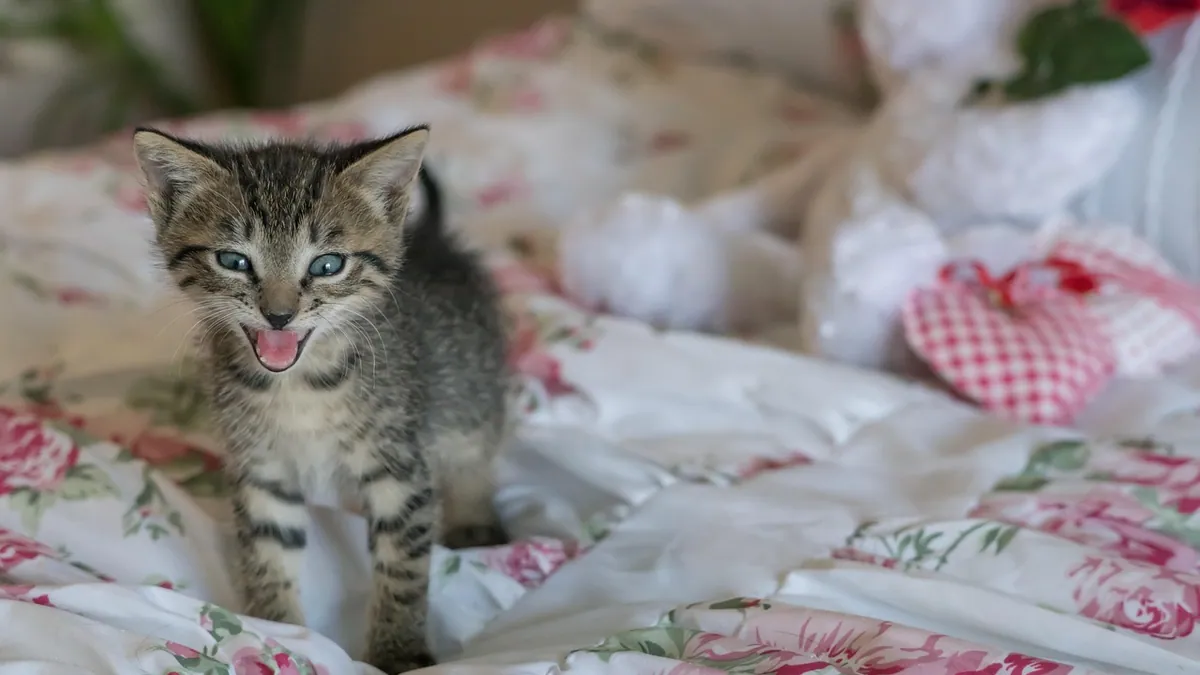
Kittens growl for several reasons, and most of them are normal. A kitten growling during play or while carrying a toy is usually just excited. A kitten growling while eating or backing away from you is telling you something different, and that signal deserves attention.
This article is educational and is not a substitute for veterinary diagnosis or treatment.
Quick Answer
- Growling during play, chasing, or pouncing is common and usually harmless. It is part of normal predatory play [1].
- Growling over food, a toy, or a favorite spot is resource guarding. It means your kitten feels a need to defend something.
- Growling with a crouched body, flattened ears, tucked tail, or dilated pupils is fear-based. Give your kitten space until it calms down [2].
- Never punish a growl. A growl is information. If you punish it, your kitten may skip the warning and bite instead.
- Redirect energy into appropriate play with toys, food puzzles, and daily routine before the growl becomes a habit [1].
Why Is My Kitten Growling? Normal Reasons First
Growling is a vocal warning. In a kitten, it can also be a burst of excitement. The sound alone does not tell you which one it is. You have to read the whole body.
Kitten growls when playing
Play growling shows up most often between 8 weeks and 6 months of age. Your kitten is practicing hunting skills. It stalks, pounces, grabs, and kicks. A low growl may rumble out during the pounce.
Watch the body. A playful kitten has loose posture, ears forward or slightly sideways, and a tail that moves in a relaxed way. It may break off mid-growl to bat at your shoelace. That is play.
Kitten growling with a toy is the same story. Your kitten has "caught" something, and the growl is part of the game. This is normal predatory behavior, and it can be channeled into toys you dangle or pull in front of your kitten [1].
Kitten growling when eating
Food growling is different. Your kitten may growl when you walk past the bowl, when another pet comes near, or when you reach toward the food. This is resource guarding. The kitten is not being mean. It is saying, "This matters to me, and I am not sure you will leave it alone."
Guarding can also happen with a favorite toy, a sleeping spot, or a person. Kittens who were fed in a group, or who had to compete for food, may guard more strongly. It can also appear in single kittens with no competition at all.
Why does my kitten growl at me?
Sometimes the growl is aimed at you. That usually means one of three things.
First, your kitten may be overstimulated. You were petting, and the petting went on too long. Second, your kitten may be afraid. It cannot escape, so it adds a growl to its other signals [2]. Third, your kitten may be guarding something you are near.
A cat growling at me is not a cat that hates me. It is a cat that wants distance or wants me to stop. Respecting that request is the fastest way to keep the relationship calm.
Fear-based growling
Fear aggression happens when a cat perceives a threat and cannot get away [2]. The more threatening the person, animal, object, or sound seems, the stronger the fear reaction becomes [2].
The body tells you which one you are seeing. Fearful or defensive cats crouch, flatten their ears, tuck their tail, lean away, or roll onto their side. Their pupils dilate. They may also hiss, spit, puff up their fur, growl, swat, or bite [2]. Those aggressive signals are especially likely when the cat cannot escape what frightens it [2].
If your kitten looks like that, stop approaching. The best move is often to simply avoid the cat until it calms down [2].
Medical Causes to Rule Out
Most kitten growling is behavioral. Still, sudden growling in a kitten that was previously calm deserves a health check.
Pain is the big one. A kitten with a sore tooth, an injured leg, or abdominal discomfort may growl when handled or moved. A kitten that growls when you touch one specific area is telling you that area hurts.
Other health issues can change behavior too. Hormonal problems, neurologic disease, and vision or hearing loss can all make a cat more reactive. In one reported case, a spayed female cat showed cyclical estrus-like behavior, including vocalization, because a tiny piece of ovarian tissue remained after surgery [3]. That is rare, but it shows how a physical cause can look like a behavior problem.
Kittens also growl when they feel unwell in general. If your kitten is hiding, eating less, or has changes in litter box use, call your veterinarian. A full exam can rule out the medical causes before you build a training plan.
When Growling Becomes a Problem
Growling is a problem when it starts to limit normal life. Here are the patterns that need a plan.
- Your kitten growls at hands, feet, or faces during play and bites hard.
- Your kitten growls over food, toys, or resting spots most days.
- Your kitten growls when you approach, pick it up, or walk past.
- Your kitten growls at another pet in the home, and the tension is rising.
- Your kitten growls and then swats, scratches, or bites.
Problem behavior in cats includes normal behaviors that are too intense or too frequent, such as play biting and overexuberant play [4]. It also includes fear and aggression between cats [4]. A growl that shows up once a week during a wild play session is not the same as a growl every time you enter the room.
If the growling is paired with sudden aggression in a cat that was friendly before, that pattern needs a medical workup. See Cat Sudden Aggression: What Could It Mean? and Why Is My Cat Suddenly Aggressive? Medical Causes to Rule Out.
What to Do Step by Step
1. Read the body before you react
Stop and look. Loose body and forward ears mean play. Stiff body, flattened ears, tucked tail, or dilated pupils mean fear or defense [2]. Guarding looks like hovering over the item with a hard stare.
Your response depends on what you see. Play gets redirection. Fear gets space. Guarding gets management.
2. Redirect play growling into toys
Do not use your hands as toys. Use a wand toy, a stuffed toy, or a ball. Give your kitten something to chase, pounce on, and bite [1].
Play with several different toys until your kitten's interest fades [1]. End the session while your kitten is still interested, not after it gets overexcited. A short session before meals works well.
Food puzzles are another outlet. Put small portions of food or treats inside toys that require batting, chasing, rolling, or pawing to release the food [1]. This satisfies the hunting and feeding drive that fuels a lot of play growling.
3. Manage food guarding
Do not reach into the bowl while your kitten is growling. That teaches your kitten that hands near food mean loss.
Instead, change the setup. Feed in a quiet spot away from foot traffic. Stay at a distance your kitten tolerates. Toss a treat toward the bowl as you walk past, so your approach predicts something good.
If another pet is the trigger, feed them in separate rooms with the door closed. Feed several small meals through the day instead of one large meal [1]. Small meals reduce the "this is my only chance" feeling.
4. Build a calm routine
Cats need normal feline behaviors to stay balanced. Those needs include eating, drinking, elimination, security, play, exploration, climbing, perching, and scratching [1].
Give your kitten a place to climb and perch. Offer boxes and containers to explore. Provide scratching outlets. These outlets lower overall arousal, which lowers growling.
For fear-based growling, use counterconditioning. When your kitten is calm and comfortable, gradually reintroduce the trigger using favorite toys, treats, or food [4]. Go slowly. If your kitten growls, you moved too fast.
5. Change the environment, not the cat
If your kitten guards a specific spot, change what that spot means. You can block access, make the area less appealing, or change its function to playing, scratching, feeding, or sleeping [4].
If the trigger is a sound, a person, or another animal, add distance and a barrier. Give your kitten an escape route. A cat that can leave does not need to growl.
6. Keep the growl as a warning
A growl is a gift. It tells you the kitten is uncomfortable before a bite happens. If you punish the growl, you may remove the warning and get a bite with no notice.
What Not to Do
Do not hit, yell at, or spray your kitten for growling. Punishment adds fear. Fear makes defensive aggression worse [2].
Do not scruff, pin, or hold your kitten down. That is a threat, and a kitten that cannot escape is more likely to escalate [2].
Do not take food or toys away as a "lesson." That confirms the guarding. It teaches your kitten that you really are a threat to the resource.
Do not assume a growl means your kitten is dominant or mean. That myth leads to harsh handling. Growling is communication about fear, excitement, or resources.
Do not force interaction. Forced interactions raise stress hormones in cats, while passive interactions are linked to lower cortisol and higher oxytocin [5]. Let your kitten choose to come to you.
Do not ignore a growl that comes with a hard stare, a stiff body, or a bite. That pattern needs a professional plan.
When to Get Help
Call your veterinarian if the growling is new, sudden, or paired with any change in eating, drinking, litter box use, or activity. Pain and illness can look exactly like a behavior problem.
Ask for a referral to a veterinary behaviorist or a certified behavior professional if:
- Your kitten bites hard or breaks skin.
- Your kitten growls at everyone in the home.
- Your kitten growls at another pet, and the tension is getting worse.
- You have tried redirection and management for several weeks with no change.
- You feel afraid of your kitten.
A behavior professional can build a plan for your specific home. That plan may include counterconditioning, environmental changes, and a slow reintroduction to triggers [4].
Limitations and When to Contact a Veterinarian
This article cannot tell you what your individual kitten is feeling. Only a veterinarian who examines your kitten can do that. Every case needs its own assessment.
Contact your veterinarian the same day if your kitten:
- Growls and will not eat or drink.
- Growls when you touch a specific body area.
- Growls and hides, pants, or seems painful.
- Starts growling after a fall, a fight, or a known injury.
Go to an emergency clinic now if your kitten:
- Has trouble breathing, choking, or gagging. See Why Was My Cat Choking and How To Know If Your Cats Choking.
- Has a swollen, painful abdomen.
- Cannot walk or use a limb.
- Has a bite wound from another animal.
- Collapses or has a seizure.
Schedule a routine visit if the growling is mild but ongoing, especially if it happens around food, handling, or another pet. Bring notes about when it happens, what happens right before, and what your kitten does next. Those notes help your veterinarian sort normal play from a problem that needs treatment.
If a new baby is in the home and your cat is growling, see Cat Hissing and Growling at New Baby: How to Manage.
Frequently Asked Questions
Should I punish my kitten for growling?
No. Punishing a growl can remove the warning without removing the fear or the guarding. Your kitten may then bite with no warning at all. Instead, note what triggered the growl and change that situation.
Is it normal for a kitten to growl while carrying a toy?
Yes. That is play growling, and it is common. Your kitten is treating the toy like prey it has caught. Keep using toys instead of hands, and let the game end on a calm note.
Why does my kitten growl when I pet it?
Your kitten is likely overstimulated or asking you to stop. Some kittens also growl when a touch lands on a sore spot. Stop petting, give space, and watch whether the growl returns the next time you touch that area.
Will my kitten grow out of growling?
Play growling often fades as kittens mature, especially with good toy play. Food guarding and fear growling usually do not fade on their own. They need management and training, and sometimes help from a behavior professional.
Can growling mean my kitten is sick?
Yes, sometimes. Pain and illness can make a kitten growl when handled or approached. If the growling is new, sudden, or comes with appetite or litter box changes, book a veterinary exam before starting any training plan.
Related Articles
- Cat Hissing and Growling at New Baby: How to Manage
- Why Was My Cat Choking
- Cat Sudden Aggression: What Could It Mean?
- Why Is My Cat Suddenly Aggressive? Medical Causes to Rule Out
- How To Know If Your Cats Choking
- Cat Excessive Meowing: What Is Your Cat Trying to Say?
- Why Does My Cat Growl? Normal or Warning Sign?
- Why Is My Kitten So Aggressive? Causes and What to Do
- Why Is My Kitten Yelling at Me? Meowing and Hissing
References
- Behavior Problems in Cats - Cat Owners. Merck Veterinary Manual.
- Aggression in Cats. ASPCA Animal Poison Control Center.
- Ovarian remnant syndrome in a 2-year-old cat with inconclusive diagnostics. JFMS open reports, 2026.
- Behavior Problems of Cats - Behavior. Merck Veterinary Manual.
- EXPRESS: The hormonal effects of owner-cat interactions on pet cats of different potential attachment styles. Journal of feline medicine and surgery, 2026.