How Do Cats Use Their Whiskers? Function and Care
By Dr. Zubair Khalid, DVM, MS, PhD ·
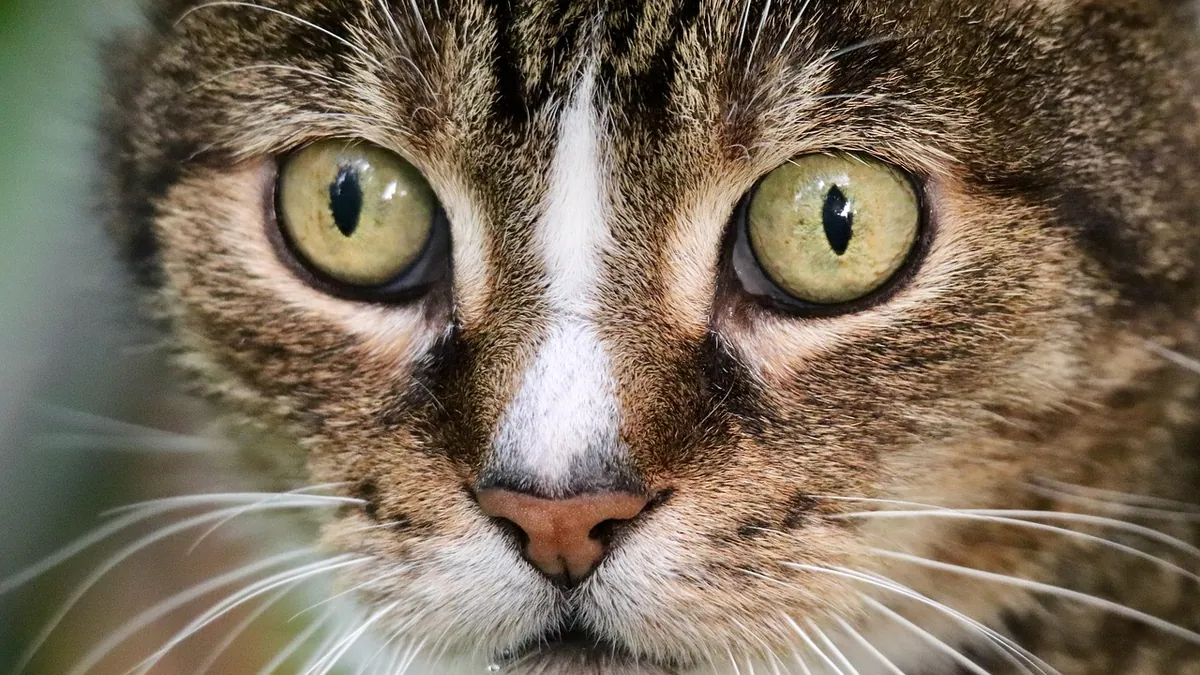
Cats use their whiskers as high-precision touch sensors that detect nearby objects, air currents, and changes in their surroundings, especially in dim light. Each whisker sits in a deeply innervated follicle that sends detailed information to the brain about position, texture, and movement. Whiskers also shift with a cat's mood and help with hunting, balance, and spatial awareness.
This article is educational and is not a substitute for veterinary diagnosis or treatment.
Quick Answer
- Whiskers are not ordinary hair. They are tactile hairs with their own blood supply and nerve-rich follicles, and they work as part of a sensory organ [1].
- Cats use whiskers to judge gaps, detect objects they cannot see well, and track prey or toys moving nearby.
- Whisker position changes with emotion. Forward and fanned out often means alert or curious, pulled back can mean fear or stress.
- Never trim, cut, or pluck a cat's whiskers. Removing them disables part of a sensory organ and causes temporary physical harm [1].
- Sudden whisker loss, wavy whiskers, or whiskers that break easily can signal a health problem that needs a veterinary exam [2].
How Do Cats Use Their Whiskers? The Basics of Whisker Anatomy
Whiskers, also called vibrissae, are stiff tactile hairs found on the muzzle, above the eyes, on the chin, and on the back of the front legs. Each whisker grows from a specialized follicle that is packed with nerve endings and has its own blood supply. This makes whiskers completely different from the rest of the coat [1].
The follicle acts like a tiny motion detector. When the whisker tip touches something or when air moves past it, the follicle bends and fires signals to the brain. The cat's brain then maps where the object is, how close it is, and whether it is moving.
Recent research on whisking animals has identified a specific type of nerve ending, called club-like endings, that responds only to touch and stays silent during the whisking motion itself [3]. This matters because it lets the animal separate its own whisker movement from contact with a real object. In other words, the system is built to filter out self-motion so that touch signals stand out clearly [3].
Cats also have whiskers on the backs of their front legs, just above the paws. These carpal whiskers help with climbing, grabbing prey, and sensing the position of the front limbs.
What Do Cats Use Their Whiskers For?
Navigation and spatial awareness
Whiskers help cats move through tight spaces. A cat can brush its whiskers against both sides of a gap to judge whether its body will fit. This is especially useful at night or in cluttered spaces where vision alone is not enough.
Hunting and prey detection
When a cat hunts, whiskers spread forward and act like a cage around the mouth. They detect the slightest movement of prey, even when the cat cannot see it clearly. This is one reason cats can catch rodents in near darkness.
Balance and body position
Carpal whiskers on the front legs give feedback about footing and limb position. This helps with climbing, landing, and walking along narrow surfaces.
Communication and mood
Whisker position is a visible clue to how a cat feels. Relaxed whiskers sit slightly out to the sides. Alert whiskers point forward. A frightened or defensive cat often pulls its whiskers flat against the face. Reading whiskers along with ears, tail, and pupils gives you a better picture of your cat's emotional state.
Sensing air movement
Whiskers can pick up faint air currents. This helps a cat sense a person or animal moving nearby before it can see or hear them.
How Do Cats' Whiskers Work at the Follicle Level?
Each whisker follicle contains hundreds of mechanoreceptors, which are nerve cells that respond to physical bending [3]. Different types of these receptors have different jobs. Some respond to light touch, some respond during active whisking, and some, like club-like endings, respond only to actual contact [3].
This division of labor lets a cat whisk actively, sweeping its whiskers back and forth, without confusing its own motion with a real object. The club-like endings are anchored in a collagen-rich structure that mechanically isolates them during whisking while keeping them sensitive to touch [3].
The result is a system that gives cats precise information about the world right in front of their faces, even in the dark.
Are Cats' Whiskers Important? Why You Should Never Trim Them
Yes. Whiskers are important enough that removing them counts as disabling a sensory organ. Veterinary literature on tactile hairs in dogs, which have a nearly identical structure to cat whiskers, describes trimming them as a temporary amputation that causes physical harm [1]. The same principle applies to cats.
Without whiskers, a cat loses part of its ability to judge gaps, detect nearby objects, and orient in low light. Indoor cats may adapt over time, but the loss still affects how they experience their environment.
Whiskers do fall out naturally and regrow, just like other hairs. One or two loose whiskers now and then is normal. Losing many whiskers at once, or losing them repeatedly, is not.
Medical Causes of Whisker Changes to Rule Out
Whisker problems are sometimes the first visible sign of a health issue.
Wavy whiskers and feline leukemia virus
Wavy whiskers have been linked to feline leukemia virus (FeLV) infection. In one study of 358 cats, 56 cats had wavy whiskers, and 50 of those 56 (89.3%) tested positive for FeLV [2]. The link held up in multivariate analysis as well [2]. This does not mean every cat with wavy whiskers has FeLV, but it does mean wavy whiskers are a reason to ask your veterinarian about FeLV testing.
Skin disease and parasites
Ringworm, mites, and other skin conditions can damage hair follicles and cause whiskers to break or fall out. If your cat is also scratching, overgrooming, or losing fur, see Why Is My Cat So Itchy? and Why Is My Cat Grooming So Much?.
Nutritional problems
Poor nutrition can affect hair growth, including whiskers. A cat on an unbalanced diet or with a digestive condition that limits nutrient absorption may show coat and whisker changes. For more on this, see Why Is My Cat losing whiskers? Ringworm and Nutritional Deficiency.
Facial injury or infection
Trauma, burns, or infections around the muzzle can damage whisker follicles. Any swelling, discharge, or asymmetry on the face needs a veterinary exam.
Allergies and upper respiratory issues
Chronic sneezing, nasal discharge, and facial rubbing can irritate the whisker area. If your cat is sneezing often, see Why Is My Cat Sneezing?.
When Whisker Changes Become a Problem
A single shed whisker is normal. Contact your veterinarian if you notice:
- Many whiskers missing or broken at the same time
- Whiskers that look wavy, bent, or unusually brittle
- Bald patches, crusting, or redness around the muzzle
- Your cat bumping into objects, misjudging jumps, or acting disoriented
- Whiskers pulled back constantly along with hiding, hissing, or appetite loss
- Any facial swelling or discharge
These signs can point to skin disease, infection, nutritional problems, or a viral illness like FeLV [2]. A veterinarian can examine the whiskers, check the skin, and run blood tests if needed.
What to Do Step by Step
1. Stop any trimming or cutting
If you or a groomer has trimmed your cat's whiskers, stop immediately. They will regrow, but the cat is temporarily without a working sensory organ [1]. Do not pluck whiskers for any reason.
2. Check the environment
Look for hazards that could catch or damage whiskers, such as tight collars, rough bedding, or sharp edges on furniture. Some cats damage whiskers by rubbing against cage bars or tight spaces.
3. Support good nutrition
Feed a complete and balanced diet formulated for your cat's life stage. If you suspect a nutritional problem, ask your veterinarian before adding supplements.
4. Reduce stress
Stress can lead to overgrooming and facial rubbing that damages whiskers. Provide hiding spots, vertical space, and predictable routines. For senior cats, see How To Care For Senior Cats.
5. Keep up preventive care
Regular veterinary visits help catch FeLV, skin disease, and nutritional issues early. If your cat goes outdoors or lives with other cats, ask your veterinarian about FeLV testing and vaccination.
6. Monitor changes
Take photos of your cat's whiskers if you notice changes. This helps your veterinarian see whether the problem is progressing.
What Not to Do
- Do not trim, cut, or pluck whiskers for cosmetic reasons. It is a temporary amputation of a sensory organ [1].
- Do not assume wavy whiskers are just a quirk. They are linked to FeLV infection and should be checked [2].
- Do not punish your cat for whisker-related behavior like bumping into things. That is a sign of a sensory problem, not misbehavior.
- Do not use harsh chemicals, human shampoos, or home remedies on the face without veterinary guidance.
- Do not ignore sudden whisker loss. It can be the first sign of a medical issue.
When to Involve a Veterinarian or Behavior Professional
Contact your veterinarian if whisker loss is sudden, widespread, or accompanied by skin changes, sneezing, or appetite loss. If your cat seems disoriented or is injuring itself because it cannot sense its surroundings, seek care promptly.
A certified behavior professional can help if whisker position suggests chronic fear or stress, or if overgrooming is damaging the face. Behavior and medical problems often overlap, so start with your veterinarian.
Limitations and When to Contact a Veterinarian
This article covers general information, but individual cases need a veterinarian who can examine your cat in person.
Contact your veterinarian the same day if you notice:
- Sudden loss of many whiskers
- Facial swelling, bleeding, or discharge
- Wavy whiskers, especially if your cat has never been tested for FeLV [2]
- Your cat bumping into walls, falling, or refusing to jump
- Scratching or rubbing the face until it is raw
Seek emergency care now if:
- Your cat has trouble breathing along with facial swelling
- There is heavy bleeding from the muzzle
- Your cat is collapsed, seizing, or unresponsive
Schedule a routine visit if:
- You notice a few broken whiskers with no other signs
- Your cat's whiskers look different but the cat is eating and acting normally
- You have questions about FeLV testing or vaccination
Frequently Asked Questions
Do whiskers grow back after they fall out?
Yes, whiskers grow back after they fall out or are trimmed. A plucked or cut whisker will regrow over time, but your cat is without that sensory input until it does. Never trim whiskers on purpose.
Can I cut my cat's whiskers if they look messy?
No. Cutting whiskers removes part of a sensory organ and causes temporary harm [1]. If whiskers look messy because of waviness or breakage, that is a reason to see your veterinarian, not to trim them.
Do all cats have the same number of whiskers?
Whisker counts vary between individual cats, and the exact number is not fixed. What matters more is whether the whiskers are intact, symmetrical, and normal in shape. Sudden changes in number or appearance are the real concern.
Are wavy whiskers always a sign of FeLV?
No, but they are a strong reason to test. In one study, 89.3% of cats with wavy whiskers tested positive for FeLV [2]. Your veterinarian can run a blood test to check your cat's FeLV status.
Can whiskers help a cat see in the dark?
Whiskers do not see, but they give cats information that vision cannot in low light. They detect nearby objects, air movement, and gaps, which helps cats move and hunt when their eyes are less useful.
Related Articles
- Why Is My Cat losing whiskers? Ringworm and Nutritional Deficiency
- Why Is My Cat Grooming So Much?
- Why Is My Cat So Itchy?
- How To Care For Senior Cats
- Why Is My Cat Sneezing?
- Cat Sneezing: When to Worry and How to Help
- Are Cat Whiskers Sensitive? What Whiskers Do and How to Protect Them
- Why Is My Cat Losing Whiskers? Causes and What to Do
- Do Cat Whiskers Grow Back? Regrowth and When to Worry
References
- The importance of the tactile hairs in domestic dogs and the problem of trimming these from an animal welfare perspective. Tierarztliche Praxis. Ausgabe K, Kleintiere/Heimtiere, 2020.
- Wavy changes in the whiskers of domestic cats are correlated with feline leukemia virus infection. BMC veterinary research, 2023.
- Club-like receptors respond to light touch but not to whisking. Nature communications, 2025.