Cat Repellent: Humane Ways to Keep Cats Out of Yards and Off Furniture
By Dr. Zubair Khalid, DVM, MS, PhD ·
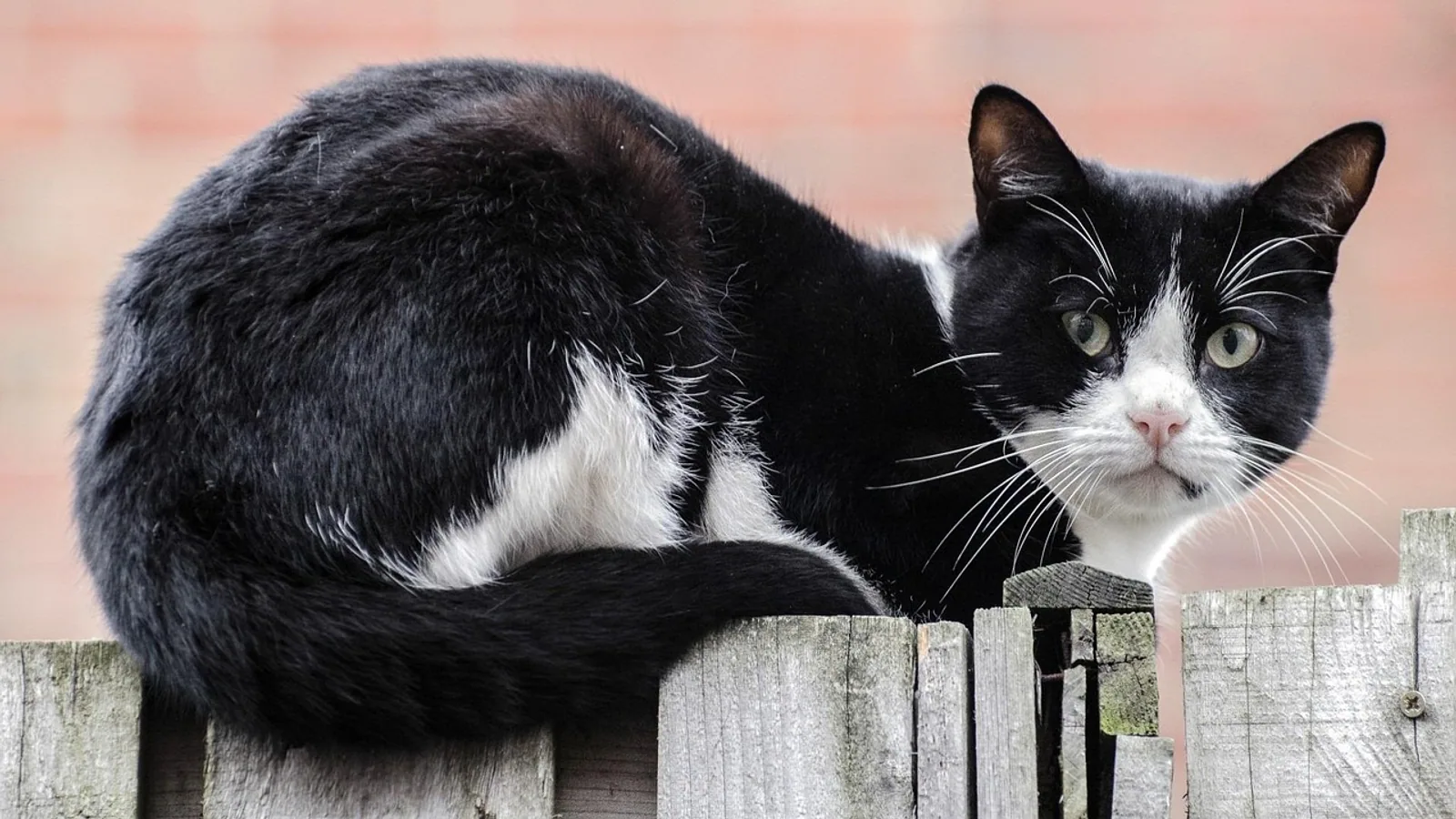
The most reliable cat repellent is not a spray or a gadget. It is a change to the environment that removes what the cat wants and makes the area unpleasant or impossible to use. Motion-activated sprinklers, solid physical barriers, and the removal of food, shelter, and latrine sites do most of the real work. Ultrasonic devices have only modest and inconsistent effects in controlled testing [1]. Many products sold as natural cat repellents, including essential oil sprays and powders, are genuinely dangerous to cats and should never be used around them.
This guide covers what has evidence behind it, what does not, and what can poison a cat. It addresses two different problems that are often confused. The first is keeping neighborhood or feral cats out of a garden or yard. The second is keeping your own cat off counters, tables, and furniture inside the home. The tools overlap but the strategy differs, because you can control your own cat's environment completely and you cannot control a free-roaming cat's owner.
This article is educational and is not a substitute for veterinary diagnosis or treatment.
At a Glance: A Humane Cat Deterrent Checklist
| Goal | First-line action | Evidence level | Safety note |
|---|---|---|---|
| Keep cats out of a garden bed | Motion-activated sprinkler, or a physical barrier with a sloped top | Good for barriers, reasonable for sprinklers | Safe for cats |
| Stop cats using a yard as a latrine | Remove loose dry soil or sand, cover with gravel or mulch, keep ground damp | Good, based on removing the attractant | Safe for cats |
| Stop cats entering under a deck or shed | Close the gap with mesh, boards, or lattice | Good | Check no cat or kitten is trapped inside first |
| Keep cats off a specific outdoor surface | Textured mat, plastic carpet runner upside down, or motion sprinkler | Reasonable | Safe for cats |
| Deter cats with sound | Ultrasonic cat repellent device | Weak and inconsistent [1] | Not a stand-alone solution |
| Keep your cat off counters | Remove food, use clicker training with an alternative perch, use a motion-activated air canister | Reasonable | Never use punishment that frightens the cat |
| Keep your cat off furniture | Provide a better alternative nearby, cover the surface, use double-sided tape | Reasonable | Safe for cats |
| Deter cats with smell | Do not use essential oils, mothballs, cayenne, or citrus oil concentrates | Not supported and unsafe | Toxic to cats [2][3] |
Why Cats Come Into Your Yard in the First Place
A cat deterrent only works if you understand what is drawing the cat in. Free-roaming cats and owned cats that are allowed outdoors are looking for a small number of things. Food is the strongest draw, whether that is a bowl left out, a compost pile, unsecured garbage, or rodents living near a bird feeder. Shelter is the second, and it includes the warm space under a deck, a shed, a porch, or a car hood in cold weather. A third draw is a soft, dry, loose surface for urination and defecation, which is why freshly turned soil and children's sandboxes are favorite latrine sites [4][5][6].
Social factors matter too. An unneutered male cat will roam widely and mark territory. A cat that is being fed by a neighbor will return to that yard repeatedly. Two cats that dislike each other may use your yard as a contested boundary. In these cases no repellent will hold for long, because the motivation to return is strong and continuous.
The practical consequence is that the fastest results come from removing the attractant rather than adding a deterrent on top of it. A motion-activated sprinkler placed next to a food bowl will fail, because the cat will tolerate a spray of water to reach food. Remove the food and the same sprinkler becomes far more effective.
What Actually Works Outdoors
Motion-Activated Sprinklers
A motion-activated sprinkler is the single most useful humane cat deterrent for a yard or garden. It combines two aversive stimuli that cats find genuinely unpleasant, a sudden movement and a burst of water, and it delivers them only when the cat enters the protected zone. The cat learns to associate the specific area with an unpleasant surprise, not with you.
Selection criteria matter more than brand. Look for a unit with an adjustable sensitivity and range, a delay setting so it does not fire at every passing leaf, and a coverage pattern that matches the bed or path you are protecting. A sprinkler that soaks the whole lawn wastes water and trains the cat to simply walk around the edge of the spray. Aim the coverage at the entry points and the latrine sites.
Placement rules that improve success:
- Position the sensor so the cat crosses the trigger zone before reaching the protected area.
- Set the range to cover the full width of the bed, not just the center.
- Check the unit after rain and wind, since a knocked-over sprinkler covers the wrong area.
- Turn the water off in freezing weather and drain the line.
Motion sprinklers are safe for cats. They do not injure, and the cat is free to leave. They also deter other animals, including raccoons and dogs, which is often a bonus.
Physical Barriers
Barriers are the most durable solution because they do not rely on the cat learning anything. A cat that cannot physically reach a surface will stop trying.
For garden beds, a low fence with a top that overhangs or rolls inward prevents a cat from getting a grip to climb over. A smooth, angled top section is the key feature. A simple vertical fence is easy for most cats to climb.
For areas under decks, sheds, and porches, close the gap with galvanized mesh or boards. This is one of the most effective steps you can take, because it removes shelter and a latrine site at the same time. Before sealing any gap, check inside for a cat or kittens. A queen will use a sheltered void to raise kittens, and sealing the entrance with animals inside is a serious welfare and legal problem.
For raised beds and planters, a removable mesh cover or a row cover supported on hoops keeps cats from digging while allowing light and water through.
For sandboxes, a fitted lid or a rigid cover is the only reliable fix. A sandbox is a large, dry, loose latrine that cats find almost irresistible, and no scent repellent will overcome that.
Removing Attractants
This step is unglamorous and highly effective.
- Stop feeding free-roaming cats in the yard unless you are managing a colony deliberately and can place feeding stations away from the house and clean up promptly.
- Secure garbage cans with locking lids.
- Do not leave pet food outdoors.
- Turn compost regularly and keep it covered.
- Clean up fallen fruit.
- Reduce rodent habitat near the house, since rodents attract cats.
- Keep bird feeders well away from the house, or accept that they draw cats.
- Replace loose dry soil or sand with gravel, coarse mulch, or planted ground cover.
- Keep the surface of a latrine site damp, since cats prefer dry, loose substrate.
If a neighbor's cat is the problem, a short, friendly conversation about neutering, feeding, and litter access often solves more than any device. Alley Cat Allies and Best Friends both publish guidance on humane deterrence that is built around removing attractants rather than harming cats [4][6].
Ultrasonic Cat Repellent Devices
Ultrasonic cat repellents are marketed heavily and perform poorly in controlled testing. In a study that measured the behavior of ten cats in a standard test arena, the only significant changes when the device was switched on were an increased likelihood of ear flicking, less time spent actively exploring, and, unexpectedly, more time spent inside the device's stated ultrasonic range [1]. The authors concluded that individual differences between cats explained much of the variation in response, and that the device produced no meaningful avoidance of the protected area [1].
The practical reading of this study is that an ultrasonic cat repellent may annoy a cat for a moment but will not reliably keep it out of a garden. Ear flicking is a sign of auditory discomfort, not of retreat. If you already own one, treat it as a minor addition to a barrier and sprinkler plan, not as the plan itself. Do not rely on it, and do not buy it expecting a solution.
There is also a welfare consideration. A device that causes discomfort without changing the cat's behavior simply makes the cat's day worse for no benefit. If a cat shows signs of distress near an ultrasonic unit, remove the unit.
What About Scent-Based Cat Repellents?
This is where most commercial and homemade cat repellent sprays cause harm. The idea that strong smells deter cats is partly true, but the smells people reach for are the ones most likely to poison a cat.
Mothballs are not a cat repellent. They contain paradichlorobenzene or naphthalene, both of which are toxic to cats and can cause serious illness if inhaled or ingested. Do not place mothballs in a garden, a shed, or a closet that a cat can reach.
Essential oils are a major hazard. Tea tree oil (Melaleuca alternifolia) is a well-documented cause of poisoning in cats. In reported cases, cats developed depression, weakness, incoordination, and muscle tremors after the oil was applied to the skin, typically at inappropriately high doses [2]. Recovery with supportive care took two to three days in those cases, but the margin between a therapeutic and a toxic exposure is narrow [2][3]. Tea tree oil has also caused severe liver damage in a pet bird after only three drops were applied to the skin, which shows how potent these compounds are in small animals [7].
The risk is not limited to direct application. A cat that walks through a sprayed area and then grooms its paws ingests the oil. A cat that lies on a treated surface absorbs it through the skin. A diffuser running in a closed room exposes the cat continuously. Citrus oil concentrates, cayenne pepper, and cinnamon are all irritants that can cause oral pain, vomiting, and skin inflammation, and none of them has evidence supporting them as effective long-term cat deterrents.
Some essential oils do have documented biological activity against parasites and fungi, including oregano, marjoram, rosemary, and oils tested against fleas [8][9][10][11]. That research is about killing fleas and fungi in a laboratory dish, not about repelling cats from a garden, and it does not make these oils safe to scatter around a home with cats. Several of the same studies report cytotoxicity to cells at the concentrations tested [8][10].
The safe conclusion is simple. Do not use essential oil sprays, mothballs, cayenne, or citrus oil concentrates as a cat repellent. If you want a scent-based approach, none of the commonly sold options meets both the safety and the efficacy bar.
How to Keep Cats Out of a Garden: A Step-by-Step Plan
- Walk the yard and identify every attractant. Note food sources, shelter gaps, latrine sites, and entry routes.
- Remove the attractants first. Secure garbage, stop outdoor feeding, cover compost, clean fallen fruit, and cover sandboxes.
- Change the latrine substrate. Replace loose dry soil or sand with gravel or coarse mulch, and keep the surface damp.
- Seal shelter gaps. Close the space under decks, sheds, and porches with mesh or boards after checking for animals inside.
- Install a physical barrier around the beds you care about most. A fence with an inward-sloping or rolling top works better than a plain vertical fence.
- Add a motion-activated sprinkler at the main entry points. Set the range and sensitivity so the cat triggers it before reaching the bed.
- Reassess after two weeks. If cats still enter, the attractant has not been fully removed or the barrier has a gap.
- Do not escalate to poisons, traps, or scent repellents. These are inhumane, often illegal, and dangerous to pets and wildlife.
Humane and Legal Framing
Deterrence is the appropriate goal. Injury, poisoning, and relocation of free-roaming cats are not. In the United States, animal cruelty laws in every state prohibit intentionally harming a cat, including a free-roaming or feral cat, and many municipalities have additional ordinances covering feeding, trapping, and the treatment of community cats. Trapping a neighbor's cat and moving it is illegal in most jurisdictions and is also ineffective, because the cat's place is usually filled by another cat within weeks.
The humane approach is also the practical one. A cat that is frightened but unharmed will avoid your yard. A cat that is injured or trapped creates a legal and ethical problem for you and does nothing to solve the underlying issue. If you are dealing with a colony of free-roaming cats, contact a local trap-neuter-return organization or your municipal animal services for guidance rather than acting alone.
What Is Unsafe for Cats
| Substance | Why it is dangerous | Do not use it for |
|---|---|---|
| Mothballs (naphthalene, paradichlorobenzene) | Toxic if inhaled or ingested | Any outdoor or indoor deterrent use |
| Tea tree oil (Melaleuca alternifolia) | Causes depression, weakness, incoordination, tremors, and liver damage [2][3][7] | Skin application, sprays, diffusers |
| Citrus oil concentrates | Skin and oral irritation, gastrointestinal upset | Sprays on surfaces or plants |
| Cayenne and chili powder | Oral pain, vomiting, eye and skin irritation | Sprinkling on gardens or furniture |
| Cinnamon and other strong spice powders | Respiratory and eye irritation | Any deterrent use |
| Lilies and other toxic plants | Severe kidney injury if ingested | Do not plant where cats roam |
Lilies deserve a separate mention because they are common garden and house plants and they are severely toxic to cats. Even a small amount of pollen or a leaf can cause acute kidney injury. If you are cat-proofing a garden or a home, removing lilies is a higher priority than any repellent.
Indoor Cat Repellents: Counters and Furniture
Indoor problems are different because you have full control of the environment and because the cat is yours. The goal is not to punish the cat but to make the counter or sofa the least rewarding place to be and to give the cat a better option.
Why Your Cat Is on the Counter
Cats jump on counters for food, for warmth, for a high vantage point, for attention, and sometimes because a window or a bird feeder makes the spot interesting. Punishment does not work well with cats. A cat that is squirted with water or shouted at learns to avoid the counter when you are watching, not to avoid the counter. It also learns to associate you with something unpleasant, which damages the relationship.
A Step-by-Step Indoor Plan
- Remove the reward. Put food away, use sealed containers, and wipe the counter after cooking. A clean, empty counter is a boring counter.
- Provide a better place. Place a cat tree or a perch near the counter or the window the cat is watching. Reward the cat for using it. This is the single most effective indoor step.
- Make the surface unpleasant to stand on. A plastic carpet runner placed nub-side up, or double-sided tape, makes the surface uncomfortable without harming the cat.
- Use a motion-activated air canister. These devices release a puff of air when the cat enters the zone. They startle the cat without a person being present, which is the key to breaking the association with the counter rather than with you.
- Cover food and secure trash. A cat that finds food on the counter will keep coming back.
- Be consistent. If the cat is allowed on the counter sometimes, it will keep trying. Consistency across everyone in the household is essential.
- Use clicker training. Cats can be trained to go to a mat or a perch on cue. Reward the behavior you want rather than punishing the behavior you do not want.
Furniture
For sofas and chairs, the same logic applies. Provide a scratching post and a comfortable bed nearby, reward the cat for using them, and cover the off-limits furniture with a throw or a textured mat when you are not using it. Double-sided tape on the arms of a sofa is a simple, safe deterrent. Do not use essential oil sprays on furniture, since the cat will absorb the oil through its paws and coat and will ingest it while grooming [2][3].
For beds and cribs, closing the door is the simplest and most reliable solution. If a cat is urinating on furniture rather than simply resting on it, that is a medical and behavioral issue, not a repellent problem. See the section below.
Cat Repellent Spray: What to Use Indoors
A safe indoor cat repellent spray is one that does not rely on toxins. Options that are safe when used as directed include plain water in a spray bottle used only as a startling stimulus when you are present, and commercial products based on safe, non-toxic ingredients. Read the label and avoid anything containing essential oils, citrus concentrates, or unknown "natural" actives. When in doubt, choose a physical method instead. A mat, a cover, or a motion-activated air canister does the job without any chemical exposure.
Common Mistakes
- Using an ultrasonic device as the only deterrent. It has weak and inconsistent effects [1].
- Leaving food out and expecting a repellent to work. Food beats every deterrent.
- Sealing a gap under a deck without checking for cats inside.
- Using essential oils, mothballs, cayenne, or citrus concentrates. These are toxic or irritating to cats [2][3][7].
- Punishing a cat for being on the counter. This teaches the cat to avoid you, not the counter.
- Inconsistency between household members. A cat that is sometimes allowed on the counter will always test it.
- Treating house soiling as a repellent problem. Urination outside the litter box is often a medical issue.
Troubleshooting
If cats keep returning despite a full plan, work through these questions in order.
Is there still a food source? Check for a neighbor feeding, a compost bin, a bird feeder, or a rodent population.
Is there still a shelter or latrine site? Recheck under structures and look for loose dry soil.
Is the barrier complete? Cats find gaps that people overlook. Walk the perimeter at cat height.
Is the sprinkler aimed correctly? A sprinkler that fires after the cat is already in the bed does nothing. Adjust the sensor.
Is the cat your own? If so, the problem is usually a lack of a better alternative. Add a perch, a scratching post, or a litter box in a better location.
Is the cat sick? A cat that suddenly starts eliminating outside the box, vocalizing at night, or spraying indoors may have a medical problem. This is a reason to see a veterinarian, not to buy a stronger repellent.
Welfare and Safety Points
Deterrence should never cause pain, injury, or lasting fear. Motion sprinklers, barriers, and removal of attractants meet that standard. Ultrasonic devices are borderline, since they cause auditory discomfort, and should be removed if a cat shows distress [1].
Never use a product on or around a cat without knowing what is in it. Essential oils are concentrated and are absorbed through the skin and mucous membranes. Tea tree oil in particular has caused serious poisoning in cats at doses that seemed small to the person applying it [2][3]. The same caution applies to any "natural" repellent, because natural does not mean safe for cats.
If you are managing a free-roaming cat colony, work with a local organization rather than improvising. Humane deterrence guidance from national welfare organizations is built around removing attractants and using barriers, not around chemicals [4][5][6].
Limitations and When to Contact a Veterinarian
This article is educational and is not a substitute for veterinary diagnosis or treatment. Individual cats vary in their response to deterrents, and individual situations vary in what is legal and practical.
Contact a veterinarian promptly if any of the following occur:
- A cat has been exposed to tea tree oil, another essential oil, mothballs, or any unknown repellent, whether by skin contact, inhalation, or ingestion.
- A cat shows weakness, incoordination, tremors, depression, vomiting, drooling, or difficulty breathing after any exposure.
- Your own cat suddenly urinates or defecates outside the litter box, sprays indoors, or vocalizes at night. These can be signs of a medical problem such as a urinary tract infection, arthritis, or another painful condition.
- Your cat stops eating, hides, or shows a change in behavior after you introduce a deterrent.
- A cat or kittens are found trapped inside a sealed space.
For non-urgent behavior concerns, your veterinarian can assess for underlying medical causes and discuss behavior modification. For suspected poisoning, contact a veterinary emergency service or an animal poison control hotline immediately.
Frequently Asked Questions
What is the most effective humane cat repellent?
A motion-activated sprinkler combined with a physical barrier and the removal of food and shelter is the most effective humane approach. Ultrasonic devices have only weak and inconsistent effects in controlled testing [1].
Do ultrasonic cat repellents work?
They work poorly. In a controlled study, the only significant changes when the device was on were increased ear flicking, less active exploration, and more time spent inside the device's stated range, which is the opposite of avoidance [1].
What smells keep cats away safely?
No commonly sold scent repellent is both effective and safe. Essential oils, mothballs, cayenne, and citrus oil concentrates are toxic or irritating to cats and should not be used [2][3][7].
Is tea tree oil safe to use around cats?
No. Tea tree oil has caused depression, weakness, incoordination, and muscle tremors in cats, and it has caused severe liver damage in a pet bird after only a few drops [2][3][7].
How do I keep cats out of my garden without harming them?
Remove food, shelter, and latrine sites, seal gaps under structures, install a barrier with an inward-sloping top, and add a motion-activated sprinkler at the entry points.
How do I keep my cat off the counter?
Remove food from the counter, provide a perch nearby, use a motion-activated air canister, and reward the cat for using the alternative spot. Punishment is ineffective and harms the relationship.
Are mothballs a safe cat repellent?
No. Mothballs contain naphthalene or paradichlorobenzene, both of which are toxic to cats if inhaled or ingested, and they should never be used as a repellent.
What if my own cat is urinating outside the litter box?
See your veterinarian. House soiling is often a medical problem, and a repellent will not fix it.
Related Articles
- How To Stop Cat From Scratching Furniture Spray
- How To Keep Cats From Scratching Furniture Vinegar
- Cat Keeps Gagging But Nothing Comes Out
- My Cat Keeps Dry Heaving But Nothing Comes Out
- My Cat Keeps Dry Heaving But Nothing Comes Out Reddit
- Cat Scratching Furniture
- Smartest Dog Breeds: What the Rankings and Science Say
- Shock Collars for Dogs: What the Evidence Says and Alternatives
- Rabbit Binky: What It Means and Other Signs of a Happy Rabbit
Sources
- Evaluation of the welfare implications and efficacy of an ultrasonic 'deterrent' for cats.
- Toxicity of melaleuca oil and related essential oils applied topically on dogs and cats.
- Toxicity of the essential oil of Melaleuca alternifolia or tea tree oil.
- Humane & Natural Stray & Feral Cat Deterrents & Repellents (alleycat.org)
- Humane Deterrents for Free-Roaming Cats (orangecountync.gov)
- Humane Outdoor Cat Deterrents (bestfriends.org)
- Acute tea tree oil intoxication in a pet cockatiel (Nymphicus hollandicus): a case report.
- Cytotoxicity and anti-Sporothrix brasiliensis activity of the Origanum majorana Linn. oil.
- In vitro activity of essential oils against adult and immature stages of Ctenocephalides felis felis.
- In Vitro Susceptibility of Sporothrix brasiliensis to Essential Oils of Lamiaceae Family.
- In vitro efficacy of essential oils and extracts of Schinus molle L. against Ctenocephalides felis felis.