Do Dogs Dream? What Sleep Studies Show
By Dr. Zubair Khalid, DVM, MS, PhD ·
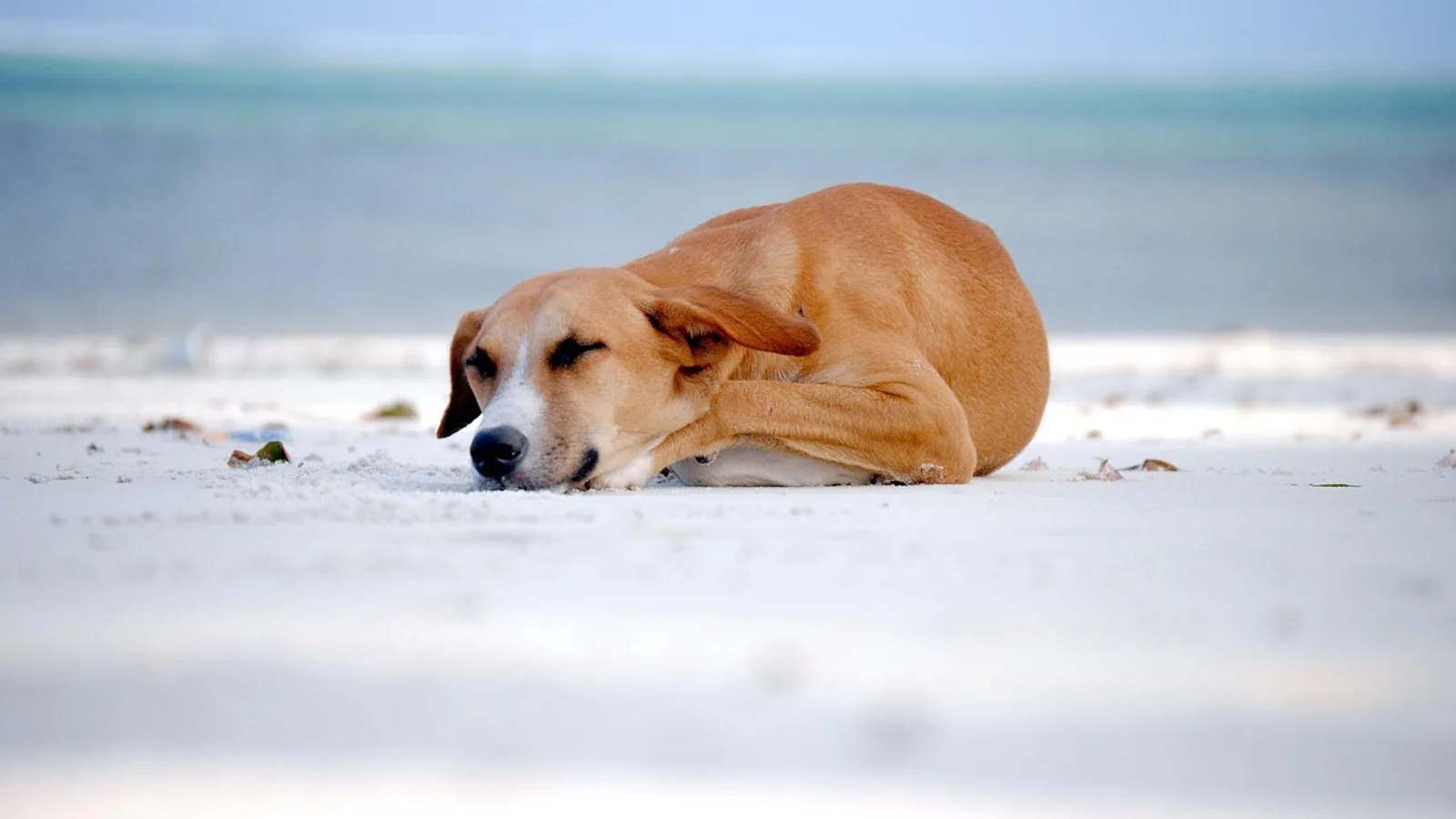
Yes, dogs dream. Electroencephalography (EEG) recordings from sleeping dogs show the same core signature that defines dreaming sleep in humans: rapid eye movement (REM) sleep with vivid brain activity and near-total loss of muscle tone. During that stage, dogs twitch, paddle their legs, and make muffled barks and whines, and researchers interpret these as dream-enactment behavior rather than random noise.
That answer rests on decades of laboratory work in dogs and cats. This article explains what the sleep studies actually measured, how a dog's sleep cycle is organized, what normal twitching looks like, and how to tell it apart from disorders that need veterinary workup.
This article is educational and is not a substitute for veterinary diagnosis or treatment.
The Short Answer: What Sleep Studies Show
Dogs cycle through wakefulness, drowsiness, non-REM sleep, and REM sleep. REM sleep is the stage most closely tied to dreaming in humans, and dogs reach it on a predictable schedule.
In a controlled laboratory study of trained dogs, researchers recorded EEG and ECG during daytime sleep and identified wakefulness, slow wave sleep, and REM sleep from brain-wave patterns plus behavioral criteria. Complete sleep cycles, running wakefulness to slow wave sleep to REM and back, occurred 3.9 to 4.1 times per session. Slow wave sleep lasted a mean of 2.2 to 4.4 minutes, REM sleep lasted 3.5 to 4.6 minutes, and REM latency (the time from sleep onset to the first REM period) was 33.9 to 41.8 minutes [1].
A more recent study using chronic neural implants in freely behaving dogs classified sleep automatically and confirmed that dogs spend a significant amount of the day sleeping. Daytime nap sleep differed from night-time sleep in three measurable ways, including fewer non-REM cycles during the day (about 10.8 cycles per day versus about 22.4 cycles per night) [2].
The practical takeaway: dogs have a real, structured sleep architecture with distinct REM periods, and those periods repeat many times across a 24-hour day.
What REM Sleep Looks Like in a Dog
Brain activity and eye movement
REM sleep is defined by low-voltage, fast EEG activity that looks much like wakefulness, combined with bursts of rapid eye movement. In dogs, this stage is scored from EEG, electrooculogram (eye movement), and electromyogram (muscle) signals recorded during non-invasive polysomnography, the same multi-channel approach used in human sleep medicine [3][4].
Muscle atonia
The defining motor feature of REM sleep is atonia, a reversible paralysis of the skeletal muscles. The brainstem actively silences motor output so the sleeping animal does not act out every movement generated in the dreaming brain. This is why a dog in REM sleep can look limp even while its eyes dart and its paws twitch.
Atonia is not total. Phasic muscle twitches break through, especially in the face, paws, and limbs. These twitches are normal and are the visible surface of REM sleep.
Twitching, paddling, and muffled barks
Owners most often notice:
- Paw and leg twitching, sometimes described as running in place
- Lip smacking, chewing, or suckling motions
- Whisker and ear twitches
- Muffled barks, whines, growls, or snuffling sounds
- Rapid eye movement under closed lids
These behaviors cluster in REM sleep. In one documented case, a dog with generalized tetanus showed excessive paddling and chewing movements that began within 20 to 180 seconds of REM sleep onset and did not occur in any other sleep or wake stage [5]. That timing detail matters: REM-linked movements start shortly after the dog enters REM, not at random points in the night.
Timing after sleep onset
Dogs do not enter REM immediately. In the trained-dog laboratory study, REM latency ranged from about 34 to 42 minutes from the start of the recording session [1]. In practical terms, most owners see twitching after the dog has been asleep for a while, often around the 20-minute mark or later depending on how quickly the dog settles and how the sleep cycle is counted.
The Sleep Cycle: How Often Dogs Dream
Dogs sleep roughly 12 to 14 hours per day, split between night-time sleep and daytime naps. Puppies, senior dogs, and brachycephalic breeds tend to sleep more. A study of brachycephalic dogs found they spent more time sleeping overall, which the authors linked to sleep-disordered breathing and increased daytime sleepiness in these breeds [6].
Adults cycle through REM about every 20 to 30 minutes. Each cycle includes light non-REM sleep, deeper non-REM sleep, and a REM period, then the cycle repeats. Because REM periods are short (roughly 3 to 5 minutes in the laboratory recordings) and recur many times, a dog may enter REM sleep dozens of times across a full day [1].
Sleep architecture changes with age. In juvenile dogs aged 2 to 14 months, age was negatively associated with time spent in REM sleep between 2 and 6 months, meaning younger puppies spent more time in REM than older juveniles. Age was also linked to changes in EEG power, with delta power decreasing and theta and alpha power increasing between 8 and 14 months [7].
Table: Dog Sleep Stages at a Glance
| Sleep stage | EEG feature | Typical behavior | Typical duration |
|---|---|---|---|
| Wakefulness | Low-voltage, fast, mixed-frequency activity | Alert, moving, responsive | Variable |
| Drowsiness | Slower activity, transitional pattern | Eyes half-closed, head drooping, easily roused | Variable, often brief |
| Non-REM (slow wave) sleep | High-amplitude slow delta waves, sleep spindles in the sigma range | Quiet, still, relaxed breathing, no rapid eye movement | About 2 to 4 minutes per cycle in laboratory recordings [1] |
| REM sleep | Low-voltage, fast activity resembling wakefulness, with rapid eye movements | Muscle atonia with phasic twitching, paddling, muffled vocalization | About 3 to 5 minutes per cycle in laboratory recordings [1] |
Sleep spindles deserve a note. These are brief bursts of thalamo-cortical activity in the sigma range (roughly 9 to 16 Hz in dogs). In dogs, the density of these EEG transients during non-REM sleep relates to memory performance and shows sex differences similar to humans, which supports the idea that dog sleep serves cognitive functions, not just rest [8].
The Jouvet Cat Study and Why It Matters for Dogs
The strongest experimental evidence that animals act out dreams comes from cats, not dogs, but the principle transfers directly.
In the 1960s, Michel Jouvet and colleagues created an experimental model of dream-enactment behavior by placing lesions in the pontine region of the cat brainstem. Cats with these lesions lost the normal REM muscle atonia and physically performed complex behaviors, such as stalking, pouncing, and arching, while their EEG showed they were in REM sleep [9].
This work established two things that shaped all later sleep research:
- REM sleep generates motor programs in the brain.
- A brainstem circuit normally suppresses those programs so the body stays still.
When that suppression fails, the animal acts out the dream. This is the biological basis for REM sleep behavior disorder (RBD) in animals and in people. The first formal description of RBD as a distinct parasomnia in humans came in 1986, and the International Classification of Sleep Disorders formally recognized it in 1990 [9]. In other words, the animal experiments came first and predicted the human disorder.
What Do Dogs Dream About?
This is the question owners ask most, and it is also the one science can answer least precisely.
We cannot record dream content in any species, including humans. Dream reports in people come from waking the sleeper and asking what they experienced. Dogs cannot give that report. Any claim about what a specific dog is dreaming about is inference, not measurement.
What the physiology supports is narrower and more defensible:
- Dogs in REM sleep generate motor patterns, which is why twitching looks like running, sniffing, or chewing.
- The behaviors seen during REM sleep in dogs overlap with wakeful behaviors such as locomotion, vocalization, and oral movements [5][10].
- Dream-like mentation is the standard interpretation of REM sleep in mammals because the same brainstem and cortical systems are engaged.
A widely cited veterinary hospital resource frames it plainly: dogs likely dream, and the twitching and vocalizing seen during sleep are consistent with dreaming [11]. What a dog dreams about, whether it is a memory of a walk, a chase, or nothing narrative at all, is not something current methods can determine. Avoid anyone who tells you with certainty what your dog is dreaming about.
Normal Twitching vs. Sleep Disorders
Twitching, paddling, and soft vocalizations during REM sleep are normal. Problems arise when the behavior is violent, injurious, prolonged, or accompanied by other signs. Three conditions are the main considerations.
REM sleep behavior disorder (RBD)
RBD is the loss of normal REM atonia, so the dog physically acts out dream behavior. In dogs, RBD has been documented with EEG confirmation in several contexts.
A 9-month-old female Labrador retriever mix was presented for two types of seizure-like episodes, one occurring only during sleep. EEG showed the sleep-associated episodes occurred during REM sleep, supporting an RBD diagnosis. The waking episodes were diagnosed as seizures based on their appearance and response to antiseizure medication. The dog also had obsessive-compulsive and generalized anxiety disorder, and the RBD and anxiety-related behaviors improved with tricyclic antidepressant therapy [12].
A 3-month-old Airedale with generalized tetanus developed excessive paddling and chewing movements during sleep. EEG with time-locked video over 31 hours showed the movements occurred 20 to 180 seconds after REM sleep onset and at no other time, with no epileptiform activity. The movements resolved six weeks after presentation as the tetanus resolved [5].
A larger study of 61 dogs diagnosed with tetanus found that at least 46 percent of surviving dogs developed abnormal dream-enactment behavior consistent with RBD. Twitching, running, and vocalization were new sleep behaviors in 53, 80, and 60 percent of affected dogs, respectively. Owners described the behavior as violent or nightmare-like in 36 percent of cases and as resembling an epileptic seizure in 40 percent. Antiepileptic medications were ineffective when tried. Onset occurred before discharge in 25 percent of cases, and among dogs that developed signs after discharge, onset was within two weeks in 77 percent. The condition did not worsen in any dog and resolved spontaneously within six months in 43 percent of cases [10].
The tetanus link is important for owners. Tetanus is a more common cause of RBD-like behavior in dogs than previously recognized, and the sleep behavior can be mistaken for epilepsy [10].
Seizures during sleep
Sleep-related seizures can look similar to RBD, and the two can coexist in the same dog. The Labrador case above had both: sleep episodes that were RBD and waking episodes that were seizures [12]. EEG is the tool that separates them. The tetanus case specifically noted that no epileptiform activity was present, which helped confirm the movements were REM-related rather than seizures [5].
Clues that point toward seizure rather than REM behavior:
- Episodes at any time of day, not just during sleep
- Stereotyped, identical episodes every time
- Loss of consciousness or post-ictal confusion
- Salivation, urination, or defecation during the event
- No relationship to REM sleep onset on EEG
Narcolepsy and cataplexy
Narcolepsy is a disorder of the orexin system, the hypothalamic signaling pathway that maintains wakefulness. Permanent loss of orexin function is a hallmark of narcolepsy in rodents, dogs, and humans [13].
Cataplexy is the sudden loss of muscle tone triggered by excitement or strong emotion, and it is best understood as an abnormal intrusion of REM sleep atonia into wakefulness [14]. In canine narcolepsy research, cataplexy responds to different drugs than REM sleep does, which shows the two are regulated by separate mechanisms even though they share the atonia pathway [14].
For owners, the distinction matters:
- RBD happens during sleep and involves active movement.
- Cataplexy happens while awake, often during play or excitement, and involves collapse with preserved consciousness.
Table: Comparing Normal REM Behavior and Disorders
| Feature | Normal REM twitching | RBD | Sleep-related seizures | Narcolepsy-cataplexy |
|---|---|---|---|---|
| When it happens | During REM sleep | During REM sleep | Any sleep stage or wakefulness | While awake, often triggered by excitement |
| Movement type | Brief twitches, paddling, lip smacking | Complex, sometimes violent dream enactment | Stereotyped, often stiffening or jerking | Sudden collapse with flaccid tone |
| Consciousness | Asleep | Asleep | Altered or lost | Preserved |
| EEG finding | Normal REM pattern with atonia | REM sleep with loss of atonia | Epileptiform activity possible | Orexin deficiency, REM atonia intrusion |
| Response to antiseizure drugs | Not applicable | Typically ineffective [10] | Often effective | Not the primary treatment |
Practical Implications for Owners
What to do during a normal episode
If your dog is twitching, paddling, or making soft sounds during sleep and is otherwise healthy, no action is needed. Do not wake the dog abruptly. Let the REM period finish. Most episodes last a few minutes at most.
What to record for your veterinarian
If you are concerned, keep a simple log:
- Time of day the episode occurred
- How long it lasted
- What the dog was doing (twitching, running, vocalizing, stiffening)
- Whether the dog could be roused
- Whether the dog seemed confused afterward
- Whether the episode was triggered by excitement or play
Video is the single most useful thing you can bring to an appointment. A short phone clip often tells the veterinarian more than a written description.
When to seek care
Contact your veterinarian if any of the following apply:
- The behavior is violent enough to risk injury to the dog or to a person nearby
- Episodes are getting more frequent or more severe
- The dog collapses while awake, especially during play or excitement
- Episodes are followed by confusion, disorientation, or difficulty walking
- The dog has other signs of illness, including poor appetite, weight loss, or changes in behavior while awake
- You cannot tell whether the episodes are sleep behavior or seizures
What a workup may involve
Your veterinarian may recommend a neurological examination, bloodwork, and, in some cases, referral to a specialist for EEG or polysomnography. EEG with synchronized video is the definitive way to determine which sleep stage an abnormal movement occurs in and whether epileptiform activity is present [5][12]. This distinction changes treatment. Antiepileptic drugs helped the seizure episodes in the Labrador case but were ineffective for RBD-like behavior in the tetanus cohort [12][10].
Sleep environment and emotional state
Sleep quality in dogs is affected by their environment and their relationship with their owner. A study comparing dogs sleeping with their owner versus a friendly stranger found that when the owner was absent, dogs had increased sleep latency, worse sleep efficiency, and considerably less time in deep non-REM sleep [15].
Pre-sleep emotional state also matters. Heart rate and heart rate variability during sleep are influenced by whether a dog had a positive or negative social interaction before sleeping, though the effect is moderate [16]. A calm, predictable routine before bedtime supports better sleep.
What Is Still Uncertain
Several questions remain open.
Dream content. No method can determine what a dog experiences during REM sleep. The motor patterns suggest the brain is generating action sequences, but whether those correspond to felt experiences in the way human dreams do is not established.
How common RBD is in the general dog population. The tetanus study found RBD-like behavior in at least 46 percent of surviving tetanus cases [10], but that is a specific clinical population. The prevalence in otherwise healthy dogs is not known from the available data.
Why some dogs develop RBD and others do not. The tetanus studies show a clear trigger, but idiopathic RBD in dogs without an underlying condition is less well characterized.
Whether breed or skull shape affects REM behavior. Brachycephalic dogs show measurable differences in sleep architecture, including more REM time and more total sleep [6]. Whether this translates into different dream-enactment behavior has not been directly studied.
How sleep changes across the full lifespan. Sleep EEG parameters in dogs do not fully stabilize by 14 months, and some continue to change later [7]. The long-term trajectory of REM sleep across a dog's life is still being mapped.
Limitations and When to Contact a Veterinarian
This article summarizes published sleep research and cannot account for your individual dog's health, age, breed, or medical history. Individual cases need a veterinarian who can examine the dog and, when needed, order diagnostic testing.
Contact a veterinarian promptly if your dog has episodes that could cause injury, if episodes are increasing in frequency or severity, if your dog collapses while awake, if there is any confusion or weakness after an episode, or if you are unsure whether what you are seeing is normal sleep behavior or a seizure. If your dog has been diagnosed with tetanus, ask your veterinarian about sleep behavior changes during recovery, since these are common and can be mistaken for seizures [10].
Frequently Asked Questions
Do dogs dream?
Yes. Dogs enter REM sleep with brain activity and muscle atonia similar to humans, and they show twitching, paddling, and muffled vocalizations during that stage, which supports the interpretation that they dream.
Can dogs dream every night?
Dogs cycle into REM sleep many times per day and night, so most dogs experience multiple REM periods daily. The number of cycles is higher at night than during daytime naps.
What do dogs dream about?
Science cannot determine dream content in dogs. The motor patterns seen during REM sleep resemble running, sniffing, and vocalizing, but no method can confirm what a dog actually experiences.
How long after falling asleep do dogs start dreaming?
REM latency in laboratory recordings ranged from about 34 to 42 minutes from the start of a sleep session. In practice, owners often notice twitching after the dog has been asleep for roughly 20 minutes or more.
Why does my dog twitch and bark in his sleep?
Twitching and soft barking occur during REM sleep because the brain generates motor patterns while muscle atonia suppresses most movement. Small movements break through, which is normal.
Is it safe to wake a dog during a dream?
It is generally better not to wake a dog abruptly during REM sleep. Let the episode finish on its own unless the dog is at risk of injury.
When is sleep twitching a problem?
Sleep behavior needs veterinary evaluation when it is violent, injurious, increasing in frequency, followed by confusion, or when it cannot be distinguished from a seizure. EEG can separate REM-related movements from epileptic activity.
Can sleep behavior in dogs be a sign of a serious disease?
Yes, in some cases. RBD-like dream-enactment behavior has been documented in dogs recovering from tetanus, and sleep-related seizures can look similar. Narcolepsy with cataplexy causes collapse during excitement while the dog is awake. All three need veterinary workup.
Related Articles
- How Long Do Dogs Sleep
- Dog Crate Training For Sleep
- Puppy Crate Training For Sleep
- Pet Bird Sleep Requirements
- Dog Reverse Sneezing In Sleep
- Dog Bounty Hunter Show
- Pelvic Anatomy: Comparative Guide for Veterinary Study
- Do Fish Sleep? Fish Rest and Activity Cycles
Sources
- Recording of electroencephalograms and electrocardiograms during daytime sleep in trained canines: preparation of the sleeping dogs.
- Automated sleep classification with chronic neural implants in freely behaving canines.
- Reliability of Family Dogs' Sleep Structure Scoring Based on Manual and Automated Sleep Stage Identification.
- Potential Physiological Parameters to Indicate Inner States in Dogs: The Analysis of ECG, and Respiratory Signal During Different Sleep Phases.
- Electroencephalography of rapid eye movement sleep behavior disorder in a dog with generalized tetanus.
- Sleep-physiological correlates of brachycephaly in dogs.
- Developmental features of sleep electrophysiology in family dogs.
- EEG Transients in the Sigma Range During non-REM Sleep Predict Learning in Dogs.
- [[The first film presentation of REM sleep behavior disorder precedes its scientific debut by 35 years].](https://pubmed.ncbi.nlm.nih.gov/17252919/)
- Association between clinically probable REM sleep behavior disorder and tetanus in dogs.
- Do Dogs Dream? - VCA Animal Hospitals
- Diagnosis of rapid eye movement sleep disorder with electroencephalography and treatment with tricyclic antidepressants in a dog.
- Promotion of sleep by targeting the orexin system in rats, dogs and humans.
- Sulpiride, a D2/D3 blocker, reduces cataplexy but not REM sleep in canine narcolepsy.
- Family Dogs' Sleep Macrostructure Reflects Worsened Sleep Quality When Sleeping in the Absence of Their Owners: A Non-Invasive Polysomnography Study.
- Heart Rate and Heart Rate Variability during Sleep in Family Dogs (Canis familiaris). Moderate Effect of Pre-Sleep Emotions.