How Cats Retract Their Claws and When They Learn
By Dr. Zubair Khalid, DVM, MS, PhD ·
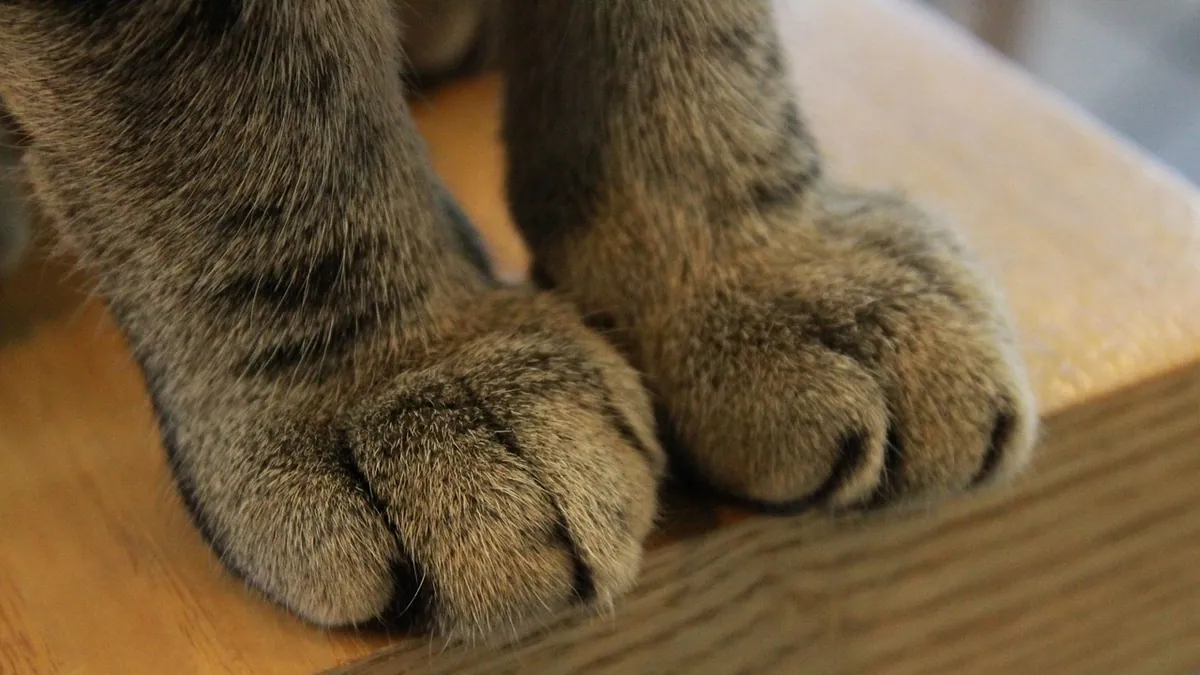
Cats retract their claws through a passive elastic mechanism built into each toe. A ligament pulls the last bone of the toe upward and backward when the muscles relax, lifting the claw off the ground. This means a relaxed cat holds its claws sheathed by default, and the cat must actively flex muscles to extend them.
This article is educational and is not a substitute for veterinary diagnosis or treatment.
Quick Answer
- Claw retraction is passive. Elastic tissue pulls the claw back automatically when the cat is not using it.
- Extension is active. The cat contracts muscles to push the claw out for climbing, gripping, or scratching.
- Kittens are born with the anatomy but have poor control at first. Many kittens have not mastered their claws, which is one reason early nail trims are easier [1].
- Claws normally stay sheathed at rest. A cat that cannot retract a claw, or that has claws catching on fabric, needs a veterinary exam.
- Declawing removes the bone the claw grows from. It cuts the attachment point for the retraction mechanism and can cause lasting pain and lameness [2][3].
How Do Cats Retract Their Claws? The Anatomy in Plain Words
Each cat toe ends in a chain of small bones. The very last bone, called the third phalanx or P3, is the one the claw grows from. This bone is not shaped like a simple peg. It has a curved, hood-like ridge that overhangs the joint below it, forming a recess where the base of the claw sits [4].
The claw itself is a hard cornified sheath produced by living tissue underneath. That tissue wraps the bone and creates the shape of the claw as it grows [4]. The claw is not a separate object glued on top of the toe. It is a continuous growth from the toe, which is why damage to the toe affects the claw.
Two things move this whole unit:
- Elastic ligaments. These connect the last bone to the middle bone and hold tension on the toe. When the flexor muscles relax, the ligament pulls the last bone up and back, and the claw slides into a sheath of skin and fur.
- Flexor muscles and tendons. When the cat wants the claw out, it contracts these muscles. The tendon pulls the last bone down and forward, which swings the claw out past the skin.
So the resting state of a cat's toe is "claw in." Retraction is not an action the cat performs. It is what happens when the cat stops extending. This is different from the way many people picture it, as if the cat has to remember to pull its claws back in.
You can see this in slow motion during a stretch. A cat reaches forward, the toes spread, and the claws flick out. The moment the stretch ends and the paw relaxes, the claws disappear again without any visible effort.
When Do Cats Learn to Retract Their Claws?
Kittens have the same ligaments, bones, and tendons as adult cats. What they lack is coordination. Their nervous systems and muscles are still learning to work together, so claws come out at the wrong times. A kitten walking across your lap may sink claws in without meaning to. A kitten playing may get a claw stuck in a blanket.
This is normal development, not a behavior problem. It is also why the ASPCA recommends starting nail trims while your cat is still a kitten. Kittens often have not mastered the use of their claws, so they benefit from frequent trimming, and they are more likely to accept handling as a routine part of grooming if you start early [1].
There is no single age at which every kitten suddenly gains full control. It varies with the individual cat. Most cats become noticeably more precise with their claws as they grow through their first year, but the exact timeline is not well established in veterinary research.
What you can do as an owner is simple. Handle your kitten's paws gently and often. Trim just a claw or two at a time if that is all your kitten tolerates. The goal is a cat who grows up treating paw handling as ordinary.
Why Cats Knead With Their Claws
Kneading is one of the most common reasons owners ask about claw retraction. A cat presses its front paws rhythmically into a soft surface, and the claws often extend with each push.
Kneading is normal behavior. Kittens knead their mother's belly while nursing, and many cats carry the motion into adulthood. It appears linked to comfort and contentment. Some cats knead blankets, laps, or other pets.
The claw extension during kneading is not aggression and not a sign your cat forgot how to retract. It is part of the pushing motion. The flexor muscles engage with each press, which swings the claws out. When the cat stops kneading, the claws go back in.
If kneading hurts because claws are sharp, the answer is nail trimming, not punishment. A cat who kneads your lap with blunt claws is far more comfortable for both of you. For more on managing claw-related behavior without scaring your cat, see Cat Scratching Furniture: How to Redirect Without Punishment.
Medical Causes to Rule Out
Sometimes a claw problem is not about learning or behavior at all. Several medical issues can affect how a claw sits or moves.
Overgrown claws. Indoor cats may not wear their claws down enough. A claw that curls around and grows into the pad causes pain and infection. You may notice limping, licking at one paw, or a bad smell.
Broken or torn claws. A claw caught in carpet or fabric can split or tear away from the quick. This is painful and bleeds. It needs veterinary care, especially if the claw is partially attached.
Nail bed infection. Bacteria or fungus can infect the tissue where the claw grows. Signs include swelling, redness, discharge, and tenderness.
Tumors of the digit. Growths on the toe or nail bed can distort the claw and prevent normal retraction. Any persistent swelling or odd-looking claw deserves an exam.
Declawing complications. This is a category of its own. Declawing, also called onychectomy, amputates the last bone of each toe. A case series of 86 declawed cats found fragments of the third phalanx remaining in every cat, along with problems including house-soiling, biting, chronic digit infection, nail regrowth, lameness, and malaligned digital pads [2]. Another report described two cats who developed severe flexor tendon contracture after onychectomy, a painful and debilitating complication that required additional surgery [3].
If your cat had this surgery in the past and now has trouble walking, licking the paws, or behaving normally, a veterinary exam can identify what is going on. Surgical removal of retained bone fragments has helped many affected cats [2].
When Claw Behavior Becomes a Problem
Most claw issues are manageable. These are the situations that need more than a trim:
- Your cat cannot fully retract one or more claws, or a claw stays out all the time.
- A claw catches on fabric or carpet constantly, which can mean it is too long or the toe is not moving normally.
- Your cat limps, holds a paw up, or licks one toe repeatedly.
- There is swelling, bleeding, discharge, or a bad odor at a claw.
- Your cat suddenly scratches people or furniture far more than before. A sudden change in behavior can signal pain.
- Your cat is urinating or defecating outside the litter box after a declaw. This is a known complication pattern and worth a veterinary visit [2].
What to Do Step by Step
Start paw handling early and keep it positive
The ASPCA advises beginning claw trimming while your cat is a kitten, because early positive experiences make adult nail trims easier to accept [1]. Plan on taking at least a month just to get your cat comfortable with having paws and toes handled [1]. Go slowly. Touch one paw, give a treat, stop. Build from there.
Trim claws on a schedule
The best time to trim is when your cat is relaxed or sleepy. Do not try right after a stressful event or a wild play session [1]. Most cats do best with a couple of claws per sitting instead of a full pedicure at once [1]. For a full walkthrough, see How to Safely Trim a Cat's Nails at Home: Tips for a Stress-Free Experience.
Provide appropriate scratching surfaces
Cats need to scratch. It sheds the outer layer of the claw, stretches the muscles, and marks territory. Offer a mix of vertical posts and horizontal pads, placed near where your cat already scratches. Sturdy and tall beats small and wobbly.
Redirect scratching instead of punishing it
If your cat scratches the couch, put a proper scratcher right next to it. Reward your cat for using it. For a full plan, see How Do I Stop A Cat From Clawing Furniture.
Watch for stress-related changes
Clawing and kneading often increase when a cat is anxious. Big changes like a move, a new pet, or a new baby can trigger more of it. If your cat is hiding or over-grooming after a household change, see Cat Hiding After Moving: How to Help Your Cat Adjust.
What Not to Do
Do not punish scratching or kneading. Yelling, spraying, or tapping your cat's paws teaches fear, not claw control. Punishment also damages the trust you need for nail trims and vet visits.
Do not assume your cat is being spiteful. Cats do not scratch furniture or knead laps out of revenge. These are normal behaviors with normal triggers.
Do not believe the myth that declawing is just removing nails. It is amputation of the last bone of each toe. The claw grows from that bone, and the retraction mechanism attaches to it. Removing the bone removes the anatomy that makes retraction possible. Declawed cats can develop chronic pain, tendon contracture, and behavior problems [2][3].
Do not try to fix a stuck or torn claw at home. If a claw is broken, bleeding, or partially detached, see a veterinarian. Pulling at it can cause more damage.
Do not use human nail clippers on thick claws. Cat-specific trimmers are designed for the shape of a claw and reduce the risk of splitting.
Limitations and When to Contact a Veterinarian
This article covers general information. Your cat's individual situation needs a veterinarian who can examine the paws, watch your cat move, and take X-rays if needed.
Contact a veterinarian the same day if:
- A claw is torn, bleeding, or partially detached.
- Your cat is limping or refusing to put weight on a paw.
- You see swelling, discharge, or a bad smell at a toe.
- A claw is growing into the pad.
Seek emergency care now if:
- Bleeding from a claw will not stop after a few minutes of pressure.
- Your cat is crying, panting, or cannot walk.
- A toe looks bent at an abnormal angle.
Schedule a routine visit if:
- Your cat's claws seem to catch on everything.
- One claw stays extended all the time.
- Your cat had a declaw in the past and now shows lameness, house-soiling, biting, or paw licking [2].
- You cannot trim your cat's claws and need help.
For behavior concerns that do not improve with training and enrichment, ask your veterinarian for a referral to a certified behavior professional. Sudden behavior changes should always be checked for pain or illness first.
Frequently Asked Questions
Do kittens know how to retract their claws?
Kittens have the anatomy for retraction from birth, but their coordination is still developing. Many kittens have not mastered their claws, which is why they scratch accidentally and why early nail trims are recommended [1]. Control improves as they grow, though the exact timeline varies by cat.
Can a cat retract its claws on command?
No. Retraction is passive, driven by elastic tissue when the flexor muscles relax. A cat cannot choose to hold its claws in the way a person can make a fist. When your cat is calm, the claws are in by default.
Why does my cat extend its claws when kneading?
Kneading uses the same flexor muscles that push the claws out. The claws extend with each rhythmic press and slide back in when the motion stops. It is normal comfort behavior, not aggression.
Is declawing the same as removing the claw?
No. Declawing amputates the last bone of each toe, and the claw grows from that bone. Research on declawed cats has found retained bone fragments, chronic infections, nail regrowth, lameness, and behavior problems like house-soiling and biting [2]. It is a major surgery, not a nail trim.
Can a cat's claws get stuck in the extended position?
Yes, and it usually points to a problem. A claw that stays out can be caused by a torn tendon, a broken claw, infection, a tumor, or a previous declaw. Any claw that will not retract needs a veterinary exam.
How often should I trim my cat's claws?
There is no single schedule that fits every cat. Indoor cats often need trims every two to four weeks, while cats who scratch actively may need them less often. Your veterinarian can help you set a schedule based on your cat's claws and lifestyle.
Related Articles
- Cat Hiding After Moving: How to Help Your Cat Adjust
- How Do I Stop A Cat From Clawing Furniture
- Cat Scratching Furniture: How to Redirect Without Punishment
- How to Safely Trim a Cat's Nails at Home: Tips for a Stress-Free Experience
- How To Introduce New Cat To Cat
- How Do You Introduce A New Cat To Your Cats
- Why Your Cat Stopped Retracting Its Claws
- Cat Paw Anatomy: Bones, Pads, and How Paws Work
- Overgrown Claws in Cats: How to Treat and Fix
References
- Trimming Your Cat’s Claws. ASPCA Animal Poison Control Center.
- Surgical excision of P3 fragments in 86 declawed cats: case series (2013-2023). Journal of feline medicine and surgery, 2024.
- Bilateral flexor tendon contracture following onychectomy in 2 cats. The Canadian veterinary journal = La revue veterinaire canadienne, 2005.
- The structure of the cornified claw sheath in the domesticated cat (Felis catus): implications for the claw-shedding mechanism and the evolution of cornified digital end organs. Journal of anatomy, 2009.