Why Does My Kitten Use Her Claws So Much?
By Dr. Zubair Khalid, DVM, MS, PhD ·
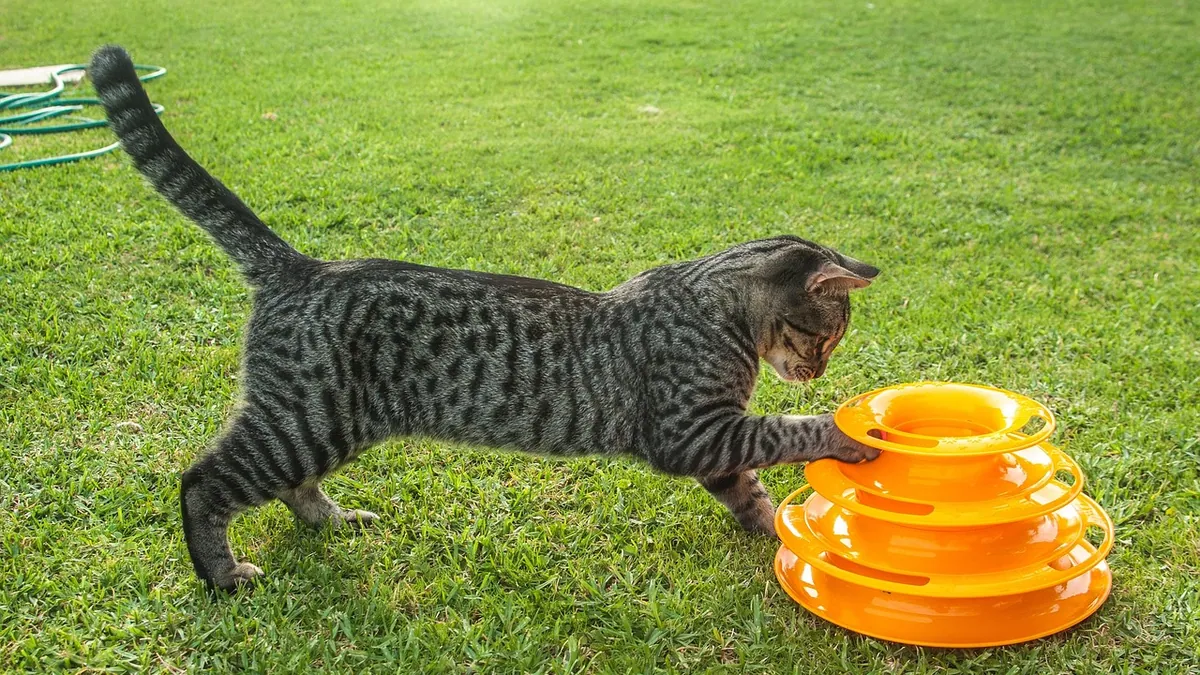
Kittens use their claws so much because scratching is a normal, built-in feline behavior. They scratch during play, while stretching, to sharpen their claws, and to mark territory [1][2]. A kitten who grabs your hand or ankle with her claws is usually doing something natural, not being mean. This article is educational and is not a substitute for veterinary diagnosis or treatment.
Quick Answer
- Scratching is normal at every age, and kittens scratch during play, stretching, and claw maintenance [1][2].
- Most kittens prefer a simple upright post or a cat tree at least 3 feet high, and they use narrow posts more often than wide ones [3].
- Kittens in one study preferred an S-shaped cardboard scratcher over several other types, including a hemp post and carpet-covered options [4].
- Claws out during handling often means overstimulation or play that has gone too far, not aggression.
- Never punish or scruff a kitten for scratching. Redirect her to a post instead [1][2].
Why Does My Kitten Use Her Claws So Much? Normal Reasons First
Scratching is a natural feline behavior
Cats scratch during play, while stretching, and as a way to mark territory or signal a threat to other cats [1]. Claws also need regular sharpening. Scratching removes frayed, worn outer claw layers and exposes new, sharper claws underneath [1][2]. Your kitten is not damaging your sofa out of spite. She is doing what cats are wired to do.
Play and hunting practice
Kittens learn to hunt through play. Pouncing, grabbing, and kicking with the back feet are all practice for catching prey. When your kitten wraps her front paws around your hand and kicks, she is treating your hand like a toy. That is normal play behavior that needs redirection, not punishment.
Claw maintenance and stretching
A full-body stretch often comes with claws extended into whatever surface is nearby. This is one reason cats seem drawn to drapes. Drapes are tall, sturdy, and let a cat stretch fully while sinking her claws in [1]. A good scratching post copies those qualities.
Communication and territory marking
Scratching leaves both visual marks and scent from glands in the paws. Cats scratch to mark territory or as a threatening signal to other cats [1]. In a multi-cat home, you may see more scratching near doorways, windows, or favorite resting spots.
Overstimulation during petting or play
Kittens have a short tolerance for handling. If your kitten is purring one second and grabbing your hand with claws the next, she may be overstimulated. Watch for a twitching tail, flattened ears, or skin rippling along the back. Those are early warnings that she wants a break.
Medical Causes to Rule Out
Claw use that looks sudden, excessive, or out of character can have a physical cause. A kitten who suddenly scratches at herself, her ears, or her face may be itchy or uncomfortable.
Skin parasites and allergies
Fleas, mites, and allergies can make a kitten scratch her own body constantly. If your kitten is scratching herself more than she is scratching furniture, read Why Is My Cat So Itchy? and Cat Licking Paws Excessively: What It Means and What to Do. These articles cover the common itchy conditions in cats.
Pain and nail problems
An injured nail, an ingrown nail, or pain in a paw or joint can change how a kitten uses her claws. She may snag surfaces, limp, or resist having her paws touched. Overgrown nails that curl into the paw pad are painful and need a veterinarian to trim and assess.
Neurologic or behavioral conditions
Rarely, repetitive clawing or self-scratching points to a neurologic problem or a compulsive behavior. A veterinarian can help sort this out after a full physical exam.
When Kitten Clawing Becomes a Problem
Scratching only becomes a problem when it damages people, other pets, or household items you value. In one survey of cat owners in the United States and Canada, 58% reported inappropriate scratching in the home [5]. Another survey found that 83.9% of cats scratched inappropriate items, with 81.5% scratching chairs or other furniture and 64.1% scratching carpet [6]. So if your kitten is clawing your furniture, you are in very normal company.
The bigger concern is human injury. A kitten who regularly grabs hands and arms with claws and teeth can teach herself that skin is a toy. That habit is much harder to break once she is a strong adult cat. Start redirecting now.
Destructive scratching is also a documented reason cats are surrendered to shelters [7]. Getting ahead of the behavior early protects the bond between you and your kitten.
How to Teach Your Kitten to Scratch the Right Things
Provide the right scratchers
Offer a variety of scratching posts with different surfaces and shapes. Try cardboard, carpet, wood, sisal, and upholstery [1]. Some cats prefer vertical posts, others like horizontal or slanted ones, and some prefer a vertical grain for raking while others like a horizontal grain for picking [1]. Once you learn your kitten's preference, buy more of that type and place them around the home [1].
Size matters. In a survey of over 4,000 cat owners, cats scratched the preferred surface more often when the post was a simple upright or a cat tree with two or more levels and at least 3 feet high [3]. Narrower posts (base width 3 feet or less) were used more often than wider ones [3]. All cats want a post that will not shift or collapse when they use it, and most like one tall enough to stretch fully [1].
Kittens have their own tastes. In one study, kittens preferred an S-shaped cardboard scratcher over a hemp post with a toy, a raised scratcher covered with window screen or carpet, and a scratcher covered with bubble wrap [4]. Cardboard is a cheap, easy starting point.
Make the scratchers appealing
Run a wand toy over the scratcher during play so your kitten learns to associate it with fun. You can also sprinkle catnip on it [2]. Do not hold your kitten by the post and force her claws into it. That approach is likely to frighten her and teach her to avoid the post entirely, and she might start avoiding you too [2].
Do not throw out a favorite post just because it looks shredded. Cats prefer shredded and torn objects because they can really dig their claws in, and a used post smells and looks familiar to them [2].
Set up the environment
Place posts near the spots your kitten already targets, such as the corner of the sofa or the drapes. Put one near her sleeping area, since many cats scratch when they wake up and stretch. If you have more than one cat, provide multiple posts in different rooms.
Teach gentle play with hands
Keep hands and feet out of play. Use wand toys, balls, and kicker toys instead. If your kitten grabs your hand, freeze, then calmly remove your hand and offer a toy. End the play session if she keeps going for skin. This teaches her that claws on hands stop the fun, while claws on toys keep it going.
Trim your kitten's nails regularly from a young age so she gets used to paw handling. Ask your veterinarian or a groomer to show you the correct technique. You can also ask about plastic caps that attach to the claws with adhesive. They last four to six weeks, and your cat can still scratch, but the covered nails will not damage your belongings [2].
If furniture scratching is your main struggle, see How Do I Stop A Cat From Clawing Furniture for a step-by-step plan.
What Not to Do
Do not punish or scruff
Yelling, spraying water, or scruffing a kitten does not teach her where to scratch. It teaches her to fear you and to scratch when you are not looking. The ASPCA recommends teaching your cat where to scratch instead of trying to stop scratching altogether [1].
Do not declaw
Declawing is an amputation of the last bone of each toe. It is not a simple nail trim. Many veterinarians and animal welfare groups oppose the procedure, and it can lead to lasting pain and behavior problems. Talk to your veterinarian about humane alternatives first.
Do not believe the myths
A common myth says kittens scratch to dominate you. Scratching is normal feline behavior with practical purposes like claw maintenance and communication [1][2]. Another myth says a kitten who scratches is aggressive. Most claw use in kittens is play, overstimulation, or a request for space.
Do not force the post
Forcing a kitten onto a scratching post backfires [2]. Let her discover it through play and catnip instead.
When to Involve a Veterinarian or Behavior Professional
Call your veterinarian if your kitten scratches herself raw, has visible skin wounds, limps, or cries when you touch her paws. These signs point to pain or a skin problem that needs treatment.
Ask for a behavior referral if your kitten's clawing is intense, directed at people, or getting worse despite your training efforts. A certified behavior professional can build a plan for your home. If your kitten also vocalizes excessively, Cat Excessive Meowing: What Is Your Cat Trying to Say? may help you understand what she is communicating.
Limitations and When to Contact a Veterinarian
This article covers general kitten behavior. Every kitten is an individual, and her claw use needs to be assessed by a veterinarian who can examine her in person.
Contact a veterinarian the same day if your kitten has a swollen or bleeding paw, a nail that is torn or stuck in the pad, or sudden lameness. Go to an emergency clinic now if your kitten is bleeding heavily from a nail, has trouble breathing, or seems suddenly painful and cannot be touched. Book a routine visit if the scratching is new, persistent, or paired with hair loss, scabs, or weight change.
Frequently Asked Questions
Is it normal for a kitten to use her claws when playing?
Yes, claw use during play is normal. Kittens practice hunting through play, and grabbing with the front paws is part of that. The goal is to redirect her claws to toys instead of hands.
Why does my kitten grab my hand with her claws?
She is likely treating your hand as prey or a toy. This is common in kittens who were not taught to keep claws off skin. Freeze, remove your hand, and offer a wand toy instead.
Do kittens grow out of scratching?
No, scratching is a lifelong feline behavior. Kittens do not outgrow it, but they can learn which surfaces are acceptable with consistent training and the right scratchers.
Should I get my kitten declawed?
Declawing is a major surgery that removes the last bone of each toe. Most veterinarians recommend against it. Ask your veterinarian about nail trims, plastic claw caps, and scratching posts instead.
Can scratching mean my kitten is in pain?
Sometimes. If your kitten scratches at her own body, paws, or ears constantly, or cries when you touch her, pain or itching may be the cause. Have a veterinarian examine her.
Related Articles
- Why Is My Cat Grooming So Much?
- How Do I Stop A Cat From Clawing Furniture
- Cat Excessive Meowing: What Is Your Cat Trying to Say?
- Cat Licking Paws Excessively: What It Means and What to Do
- Why Is My Cat So Itchy?
- Cat Overgrooming: Why It Happens and What to Do
- Why Does My Kitten Keep Biting Me? Causes and Training Tips
- Why Is My Kitten So Aggressive? Causes and What to Do
- Why Does My Kitten Chew and Bite My Fingers?
References
- Destructive Scratching. ASPCA Animal Poison Control Center.
- Scratching Behavior in Cats. ASPCA Animal Poison Control Center.
- Owner observations regarding cat scratching behavior: an internet-based survey. Journal of feline medicine and surgery, 2016.
- Preference of kittens for scratchers. Journal of feline medicine and surgery, 2019.
- Unwanted Scratching Behavior in Cats: Influence of Management Strategies and Cat and Owner Characteristics. Animals : an open access journal from MDPI, 2022.
- Survey of cat owners on features of, and preventative measures for, feline scratching of inappropriate objects: a pilot study. Journal of feline medicine and surgery, 2018.
- Common feline problem behaviors: Destructive scratching. Journal of feline medicine and surgery, 2019.