Overgrown Claws in Cats: How to Treat and Fix
By Dr. Zubair Khalid, DVM, MS, PhD ·
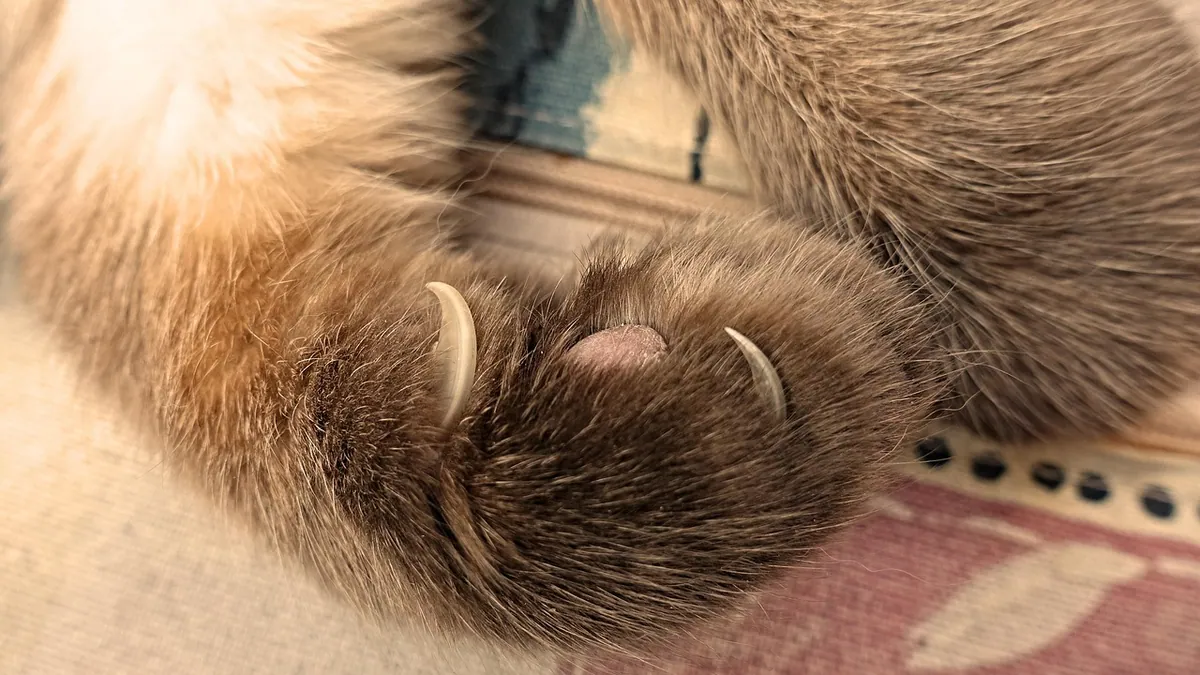
Overgrown claws in cats are common and usually simple to fix with regular trimming at home. You clip just the clear, curved tip of each claw, staying well away from the pink quick inside. Most cats need a trim every two to four weeks, and a patient, low-stress approach matters more than speed.
This article is educational and is not a substitute for veterinary diagnosis or treatment.
Quick Answer
- Trim only the sharp, clear hook at the end of each claw, leaving the pink inner core (the quick) untouched.
- Use a guillotine-style cat nail clipper with sharp blades, and never use human nail clippers [1].
- Start by handling paws for a few weeks before you ever cut, and aim for just a couple of claws per sitting [1].
- The best time to trim is when your cat is relaxed or sleepy, not right after play or a stressful event [1].
- See a vet if a claw is broken, bleeding, ingrown into the pad, or if the claw bed looks swollen, crusty, or painful.
How to Fix Overgrown Cat Claws: Step by Step
Step 1: Get Your Cat Used to Paw Handling
If you rush straight to the clippers, most cats will pull away and you will both end up frustrated. Start by touching and gently pressing each paw while your cat is calm. Press the pad softly so the claw extends, then let go and offer a treat. Do this for a few days before you cut anything.
Plan on taking at least a month just to familiarize your cat with having their paws and toes handled [1]. That sounds slow, but it pays off. Cats who learn early that paw handling is boring and safe are far easier to trim for life. Kittens often accept trims more readily because they have not yet mastered their claws and benefit from frequent trimming [1].
Step 2: Pick the Right Clipper
Pet nail clippers come in two basic styles, guillotine and nipper. Cat claws are best trimmed with the guillotine clipper [1]. The guillotine style has a small circular blade that slides over the claw tip, which suits the thin, curved shape of a cat claw.
Replace your clippers as soon as the blades feel dull [1]. Dull blades crush and squeeze the claw instead of slicing it, which makes the trim more uncomfortable and stressful for your cat [1]. Do not use human nail clippers, since they are shaped for flat nails and can split a cat's curved claw [1].
Step 3: Find a Calm Moment
The best time to trim your cat's claws is when they are relaxed or sleepy [1]. A cat dozing on the couch is a far better candidate than one who just finished racing around the house. Avoid giving a pedicure right after a stressful experience or an energetic round of play [1].
If your cat hates being held, try trimming while they nap in a favorite spot. You do not need to restrain them. You need a few seconds of stillness per claw.
Step 4: Extend the Claw and Identify the Quick
Gently press the top of the toe and the pad below it. The claw slides out of its sheath. Look at the claw in good light.
You will usually see two zones. The outer shell is clear or translucent. Inside, toward the base, there is a pink core called the quick, which contains blood vessels and nerves. On clear claws the quick is easy to see. On dark claws it is harder, so trim in small slivers and stop when you see a gray or pink dot in the cut surface.
Step 5: Clip the Tip Only
Place the clipper opening over the curved tip, angled to match the claw's natural curve. Squeeze once, firmly and quickly. Aim to remove just the sharp point, a small fraction of an inch at a time. Cutting small amounts is safer than trying to take the whole overgrowth in one pass.
If you are unsure where the quick ends, cut less. You can always take another sliver. You cannot put it back.
Step 6: Stop Before Your Cat Does
You will be most successful if you do not expect to trim more than a couple of claws in one sitting [1]. Some cats learn to accept all four paws in one session. Others tolerate one paw at a time or just a couple of claws at a time, and that is fine [1]. End on a good note with a treat, even if you only did two claws. Come back tomorrow for two more.
Cat Claw Trimming Schedule and Checklist
| Item | What to do | How often |
|---|---|---|
| Front claws | Trim the clear tip of each claw | Every 2 to 4 weeks for most indoor cats |
| Back claws | Trim tips, often less growth than front | Every 3 to 6 weeks |
| Dewclaws | Check the inner claw on each front leg | Every trim session |
| Paw check | Look for swelling, crusts, cuts, or discharge | Every trim session |
| Clipper blades | Test on a piece of paper, replace when dull | As soon as cutting feels rough [1] |
| Paw handling practice | Press pads, extend claws, reward | Daily for the first month [1] |
Senior cats, cats with arthritis, and cats who sleep most of the day often need more frequent trims because they wear their claws down less. Cats who scratch on posts and rough surfaces may need less. Check the claws themselves instead of following a strict calendar.
When Overgrown Claws Signal a Health Problem
A long claw is usually just a grooming issue. Sometimes it is a symptom.
Claws That Curl Into the Pad
When a claw grows so long that it curves back into the paw pad, it causes pain and can create an open wound. This is common in older cats who stop scratching. Do not try to yank the claw out. A veterinarian can trim it safely, treat the wound, and check for infection.
Swelling, Crusts, or Discharge Around the Claw Bed
Problems at the claw fold (the skin cuff the claw comes out of) are not normal. One report described a cat with chronic wounds and crusts over the claw and claw folds that turned out to be linked to diabetes mellitus [2]. Once the diabetes was treated and went into remission, the claw and skin lesions also resolved without any specific skin treatment [2]. That is a reminder that claw and skin changes can reflect a problem elsewhere in the body, so a vet visit is worthwhile when the claw bed looks abnormal.
Claws That Look Thick, Twisted, or Overgrown on Their Own
Abnormal claw growth can appear alongside other skin disease. In one report, two cats with chronic skin lesions also had varying degrees of onychogryphosis, which is marked claw overgrowth and deformity [3]. If your cat's claws look thick, ridged, or misshapen instead of simply long, have your vet examine them.
Sudden Onset of Long Claws in a Cat Who Used to Scratch
If your cat stopped scratching and grooming normally, think about pain or illness. Arthritis, dental pain, and general malaise can all reduce grooming. This is a routine vet visit, not an emergency, but it should not wait months.
If your cat is also scratching, licking, or losing hair, other skin conditions may be involved. Our guide to How to Treat Your Cat's Excessive Scratching: Vet-Approved Steps covers that workup. If you see fleas or flea dirt, see How To Treat Flea Dermatitis In Cats and Flea Treatment For Cats.
Common Mistakes Owners Make
Cutting Too Close to the Quick
This is the most common error. It causes bleeding and pain, and it teaches your cat that the clippers hurt. Once that lesson lands, future trims get much harder. Trim tiny amounts and stop early.
Using Human Nail Clippers
Human clippers are shaped for flat nails and can crack or split a cat's curved claw [1]. Use a guillotine-style pet clipper instead [1].
Letting the Blades Go Dull
Dull blades put more pressure on a cat's claws, making the trimming more uncomfortable and stressful [1]. If you have to squeeze hard or the claw crushes instead of slicing, replace the clipper.
Trying to Do Everything at Once
Owners often decide to "get it over with" and force all eighteen claws in one go. That usually backfires. A couple of claws per sitting, repeated over days, gets the job done with far less drama [1].
Skipping the Dewclaws
The dewclaw sits higher on the inner side of each front leg and never touches the ground, so it never wears down. It is the claw most likely to curl into the skin. Check it every single time.
Trimming Right After Play or a Scare
A wound-up or stressed cat is a bad candidate for a pedicure [1]. Wait for the sleepy window.
Supplies and Setup That Matter
You do not need much, but the small details change how the session goes.
- Guillotine clipper. This is the recommended style for cat claws [1]. Keep a spare or replace blades promptly.
- Styptic powder. If you nick the quick, press a pinch of styptic powder onto the tip with a clean cloth. If you do not have it, cornstarch or flour works in a pinch.
- Good lighting. A bright lamp or a headlamp makes the pink quick visible on lighter claws.
- A towel. A thick towel on your lap gives your cat something to grip and protects you from a startled swipe.
- Treats. Small, high-value treats keep the session positive. Reward after each claw, not just at the end.
- A quiet room. Skip busy times of day and loud rooms. Calm surroundings help a nervous cat settle.
One more setup note: keep your own hands safe. A cat who suddenly pulls a paw can cause the clipper to slip. Hold the toe firmly but gently, and if your cat starts to struggle, stop and try again later.
Limitations and When to Contact a Veterinarian
Home trimming works well for normal, healthy claws. It does not replace a veterinary exam when something looks wrong.
Contact a veterinarian the same day if:
- A claw is broken or torn and bleeding does not stop after a few minutes of pressure.
- A claw has grown into the paw pad.
- You see pus, a foul smell, or spreading redness around a claw.
- Your cat is limping or will not let a paw be touched.
Seek emergency care now if:
- Bleeding from a torn claw is heavy or will not stop.
- Your cat is crying out, holding a leg up, or showing signs of severe pain.
- You suspect a claw injury plus a wound that looks deep.
Schedule a routine visit if:
- Claws look thick, ridged, twisted, or deformed [3].
- The claw folds are crusty, swollen, or scabby [2].
- Your cat has stopped scratching or grooming normally.
- You cannot safely trim the claws at home, even with a slow approach.
Individual cases need a veterinarian. Your cat's age, weight, other health conditions, and temperament all affect the plan, and a vet can trim claws safely under sedation if needed. If your cat has other skin or parasite issues in addition to long claws, your vet may also want to look at conditions like Cat Flea Treatment or, in rare cases, What Is The Treatment For Cat Scratch Disease.
Frequently Asked Questions
How often should I trim my cat's claws?
Most indoor cats need a trim every two to four weeks, though this varies with age, activity, and scratching habits. Senior cats and cats with arthritis often need more frequent trims because they wear claws down less. Check the claws weekly and trim when you hear clicking on hard floors.
What happens if I cut the quick?
The quick contains blood vessels and nerves, so nicking it hurts and bleeds. Press styptic powder onto the tip and give your cat a break. The claw will grow back normally, but your cat may be wary of the clippers for a while, so go extra slow next time.
Can I use human nail clippers on my cat?
No. Cat claws are curved and thin, and human clippers are designed for flat nails, so they can split or crack the claw [1]. Use a guillotine-style pet clipper with sharp blades, and replace it when the blades dull [1].
My cat won't let me trim their claws. What should I do?
Slow down and lower your expectations. Start with paw handling only, no cutting, for several weeks [1]. Then trim just one or two claws per session when your cat is sleepy [1]. If it still is not working, ask your vet to trim them and show you the technique.
Do long claws cause arthritis or walking problems in cats?
This is not well established in veterinary research. A study in healthy dogs found no significant changes in gait after nail trimming, though paw length and some local pressure measures shifted slightly [4]. The same question has not been settled in cats. Long claws are still worth trimming because they can snag, curl into the pad, and cause local injury.
Can a medical condition make a cat's claws overgrow?
Yes, in some cases. Claw and claw-fold changes have been reported alongside diabetes mellitus in a cat, and the lesions resolved when the diabetes went into remission [2]. Abnormal claw overgrowth has also been reported with chronic skin disease in cats [3]. If claws look deformed or the surrounding skin is abnormal, see your vet.
Related Articles
- How to Treat Your Cat's Excessive Scratching: Vet-Approved Steps
- How To Treat Flea Dermatitis In Cats
- Flea Treatment For Cats
- What Is The Treatment For Cat Scratch Disease
- Cat Flea Treatment
- How to Treat Minor Cat Bites at Home and When to See a Vet
- Do Cat Quicks Recede? How to Shorten Overgrown Claws
- Cat Nail Infection and Ingrown Nails: Treatment Steps
- Ingrown Nail in Cats: Causes, Signs, and Treatment
References
- Trimming Your Cat’s Claws. ASPCA Animal Poison Control Center.
- Uncommon dermatologic manifestation (paronychia) in a cat with diabetes mellitus. Topics in companion animal medicine, 2024.
- Immunohistochemical characterization of cutaneous leishmaniasis in cats from Central-west Brazil. Veterinary parasitology, regional studies and reports, 2019.
- Trimming of nails in healthy dogs does not change gait parameters when comparing pre- and post-nail trim. Frontiers in veterinary science, 2026.