How to Teach Your Dog to Use a Doggy Door
By Dr. Zubair Khalid, DVM, MS, PhD ·
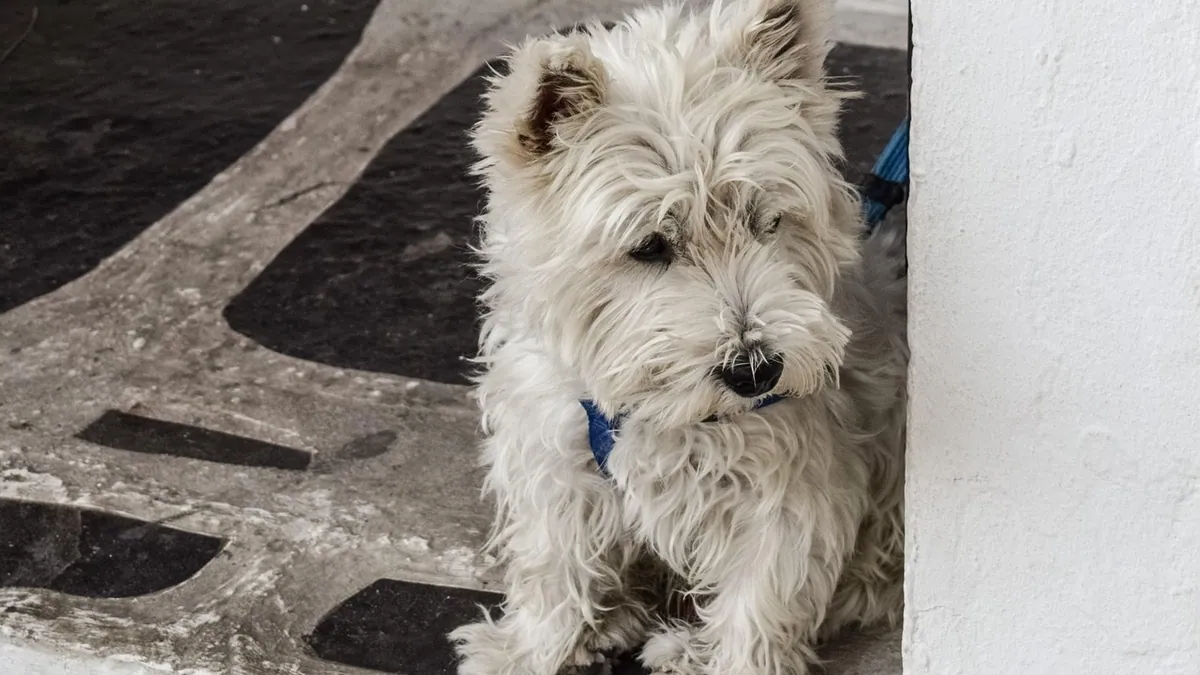
Teaching a dog to use a doggy door works best when you break it into small steps: show the flap, reward nose touches, then guide your dog through with treats and praise. Most dogs learn the basic motion in a few short sessions, but comfort and confidence take longer. If you are asking how to get my dog to use the doggy door, plan on several days of practice, not one afternoon.
This article is educational and is not a substitute for veterinary diagnosis or treatment.
Quick Answer
- Start with the flap held open or removed so your dog can walk through without touching it.
- Reward every step: looking at the opening, touching the flap with the nose, stepping through, and coming back.
- Practice in 2 to 5 minute sessions, several times a day, with high-value treats.
- Keep the door unlocked and the yard secure before your dog ever uses it alone.
- Pair the doggy door with your existing potty routine, and take your dog out through the regular door for potty breaks until the doggy door is reliable.
Why Dogs Avoid the Doggy Door
Most dogs are not being stubborn. They are reacting to something new, and new things can feel risky.
A doggy door moves, makes noise, and blocks the view. To a dog, that flap can look like a solid wall. Pushing through it means losing sight of you for a second, which many dogs find uncomfortable.
Early experiences shape how a dog handles new objects and situations. The socialization phase runs roughly from 3 to 12 weeks of age, and puppies who lack positive exposure to new things during that window are more likely to show fear, anxiety, or aggression as adults [1]. A doggy door introduced calmly during that period is usually easier to teach than one introduced to a nervous adult dog.
Age at adoption also matters. Dogs adopted at 1 or 2 months of age showed more behavioral signs of fear, anxiety, and attention-seeking than dogs adopted later [1]. If your dog came home very young, you may need extra patience with anything unfamiliar.
Breeders and early rearing environments also influence temperament, and many breeders recognize that their practices shape a puppy's behavior [2]. That means some dogs arrive already comfortable with novel objects, and some do not.
None of this means your dog cannot learn. It means you should expect the process to move at your dog's pace.
Medical Causes to Rule Out First
Sometimes a dog avoids the doggy door for physical reasons, not behavioral ones.
Watch for these signs before you assume it is training:
- Reluctance to walk on certain surfaces or through narrow spaces
- Stiffness, limping, or slow rising after rest
- Squinting, head turning, or reluctance to go outside in bright light
- Frequent accidents indoors despite access to the yard
- Straining to urinate or defecate, or going very often in small amounts
Pain, vision problems, and urinary or gastrointestinal disease can all change how a dog moves and where they eliminate. A dog with arthritis may avoid pushing a stiff flap. A dog with sore eyes may dislike the glare outside.
If your dog was previously using the doggy door and suddenly stops, that change is a medical red flag until proven otherwise. Book a veterinary visit.
When Doggy Door Avoidance Becomes a Problem
A slow learner is not a problem. These situations are:
- Your dog panics at the sight of the flap, trembles, or tries to escape the room
- Your dog injures the nose, paws, or nails pushing through a stiff or broken flap
- Your dog uses the door to bolt from the yard or to escape the house
- Your dog has accidents indoors even with free access to the yard
- Your dog guards the door area from other pets or people
- Your dog regresses after weeks of reliable use
Sudden behavior changes in an adult dog deserve a veterinary exam. Pain and illness are common causes of new avoidance.
How to Get My Dog to Use the Doggy Door: Step by Step
Step 1: Check the Door and the Yard
Before training starts, confirm the basics:
- The flap moves easily and is the right size for your dog
- The opening is not too high off the ground
- The yard is fully fenced with no gaps
- Gates latch securely
- No hazards in reach (pool without a fence, chemicals, sharp objects, trash)
- Your dog wears ID tags and, ideally, a microchip with current registration
A doggy door gives your dog freedom. It also gives wildlife, stray animals, and strangers a way in if the flap is flimsy. Check the latch and frame.
Step 2: Remove the Barrier
Take the flap off, or tape it up and out of the way. Let your dog walk through an open hole with no resistance.
Feed treats on both sides of the opening. Toss a treat through, let your dog step through to get it, then toss one back. Do this 5 to 10 times per session.
Keep sessions short. End while your dog still wants more.
Step 3: Desensitize to the Flap
Once your dog moves through the open frame easily, lower the flap partway.
- Hold the flap up and let your dog poke their nose at it
- Reward any nose contact with the flap
- Let the flap rest lightly on your dog's back as they pass, then reward
- Lower it a little more each session
If your dog backs away, you moved too fast. Go back one step.
This is the same principle behind crate training, where you build comfort with a confined space in small increments. Our guide on How To Use A Dog Crate For Training covers that progression.
Step 4: Add a Cue and Reward the Full Pass
Pick one word, such as "door" or "through." Say it right before your dog moves, then reward on the other side.
Use a treat your dog rarely gets. Reward:
- Nose touching the flap
- Head pushing through
- Full body through
- Turning around and coming back
Coming back matters. A dog who only goes out may stand at the closed human door and bark. Practice both directions from day one.
Step 5: Fade the Treats
Once your dog moves through the flap without hesitation, reward every second or third pass, then every fifth. Keep occasional praise and petting for life.
If your dog stops using the door after you stop treating, go back to rewarding more often for a few days.
Step 6: Build Duration and Independence
Start with you standing right at the door. Then step a few feet away. Then leave the room for a few seconds.
Add distance and time slowly. A dog who only uses the door when you are watching is not yet trained.
Step 7: Pair With Potty Training
A doggy door does not potty train your dog by itself. It only removes the need for you to open the door.
Keep a schedule. Take your dog out on a routine, reward elimination outside, and supervise indoors. Our guide on How To Potty Train A Dog walks through the timing.
Some owners add a bell or a sound cue at the door. If you want to try that, see Dog Potty Training Bell For Door.
Puppies need more frequent trips than adult dogs. A young puppy may not have the bladder control or the judgment to use a doggy door alone, so keep supervised potty breaks until your veterinarian confirms your puppy is ready for more freedom.
Training Tips That Speed Things Up
- Train when your dog is hungry, before meals
- Use tiny, soft treats so you can reward many reps
- Keep the yard boring during training so your dog returns inside
- Practice at the same times each day
- Use a helper on the other side to call your dog through
- Stop before your dog gets frustrated
Dogs learn same and different concepts with odors, but research shows this learning does not always transfer to new situations [3]. The practical lesson: your dog may master the flap in the kitchen door but act confused at the patio door. Retrain at each door.
What Not to Do
Do not push your dog through the flap. Forcing a dog through a moving object can create a lasting fear of the door and of you handling them.
Do not shove the flap into your dog's face to "show them." That teaches the opposite of what you want.
Do not scold or punish a dog who avoids the door. Punishment adds stress to an already stressful task.
Do not leave a puppy unsupervised with doggy door access. Puppies can slip out, get stuck, or chew the flap.
Do not assume a doggy door replaces training. It is a tool, not a substitute for house training, recall, or supervision.
Do not use a doggy door as a fix for separation anxiety. A dog who panics when alone needs a behavior plan, not more outdoor access.
Do not rely on the doggy door for exercise. A dog let into a yard alone often stands at the door waiting to come back in.
Safety Concerns With Doggy Doors
- Small dogs and puppies can squeeze through gaps around a poorly fitted flap
- Large dogs can damage a lightweight flap and cut themselves on broken edges
- Other animals, including wildlife and neighborhood pets, can enter through the flap
- A dog can be injured if the flap slams on a paw or tail
- Dogs left outside alone can bark, dig, or escape
- Extreme heat and cold make outdoor access risky for brachycephalic breeds, very young, and very old dogs
Check the door weekly for cracks, loose screws, and worn flaps. Replace damaged parts right away.
When to Involve a Veterinarian or Behavior Professional
Contact your veterinarian if your dog shows any of these:
- Sudden refusal to use a door they used before
- Limping, stiffness, or yelping when moving through
- Nose, paw, or nail injuries from the flap
- Accidents indoors despite free yard access
- Trembling, drooling, or panic at the door
- Any behavior change in an adult dog
Ask for a referral to a certified behavior professional if your dog shows fear, aggression, or anxiety that does not improve with slow, reward-based training. Early intervention matters, since fear and anxiety patterns in adult dogs often trace back to early experiences [1].
Limitations and When to Contact a Veterinarian
Training advice cannot cover every dog. Individual cases need a veterinarian who can examine your dog, review the history, and rule out medical causes.
Contact your veterinarian the same day if your dog:
- Starts limping or refuses to bear weight after using the door
- Has a cut, torn nail, or bleeding paw
- Vomits, has diarrhea, or stops eating
- Shows new anxiety or aggression around the door
Go to an emergency clinic now if your dog:
- Is hit by a car after slipping out
- Has a deep wound or heavy bleeding
- Collapses, has a seizure, or has trouble breathing
- Eats something toxic or a foreign object
For poison emergencies in the United States, call the ASPCA Animal Poison Control Center at (888) 426-4435 or the Pet Poison Helpline at (855) 764-7661. A consultation fee may apply.
Schedule a routine visit if your dog has a gradual change in mobility, vision, or house training habits. Your veterinarian can check for arthritis, dental pain, urinary issues, and other conditions that affect how a dog moves and where they eliminate.
Frequently Asked Questions
How long does it take to teach a dog to use a doggy door?
Most dogs learn the basic motion in a few days of short, frequent sessions. Reliable, unsupervised use often takes two to four weeks. Nervous dogs and dogs with no prior experience with new objects may take longer.
Can I teach an older dog to use a doggy door?
Yes. Adult dogs can learn new physical skills, and reward-based training works at any age. Older dogs may need a veterinary check first if they show stiffness, vision changes, or reluctance to step over thresholds.
Should I leave the doggy door open all the time?
Not at first. Keep the flap closed or blocked when you cannot supervise, and open it only during training sessions. Once your dog is reliable, you can decide based on your yard security, the weather, and your dog's temperament.
What if my dog goes out the doggy door but will not come back in?
Practice both directions from the start, and reward the return trip heavily. Call your dog back within a minute or two, reward, and repeat. If your dog stays outside to bark or dig, the yard may be too stimulating, so shorten the trips.
Do doggy doors cause behavior problems?
No, the door itself does not cause problems. Problems come from unsupervised access, poor yard security, or using the door to replace training and attention. A dog with separation anxiety or fear issues needs a behavior plan, not more outdoor time.
Can a puppy use a doggy door?
A puppy can learn the motion, but should not have free, unsupervised access. Puppies need frequent supervised potty breaks and cannot be trusted alone in a yard. Ask your veterinarian when your puppy is ready for more independence.
Related Articles
- How To Teach A Dog To Sit
- How To Use A Dog Crate For Training
- How To Potty Train A Dog
- Dog Potty Training Bell For Door
- How To Teach A Dog To Fetch
- Dog Potty Training Spray How To Use
- How to Teach Your Dog to Ask to Go Outside
- How to Stop Your Dog From Running Out the Door
- Why Dogs Open Doors and How to Stop It
References
- The Puppies' Age at Adoption Time Influences the Behavioral Responses of Adult Dog. Veterinary sciences, 2025.
- A Quantitative Exploration of Australian Dog Breeders' Breeding Goals, Puppy Rearing Practices and Approaches to Socialisation. Animals : an open access journal from MDPI, 2025.
- Same-different learning of odour stimuli in dogs. Animal cognition, 2026.