Dog Won't Walk on Leash: Causes and Training Steps
By Dr. Zubair Khalid, DVM, MS, PhD ·
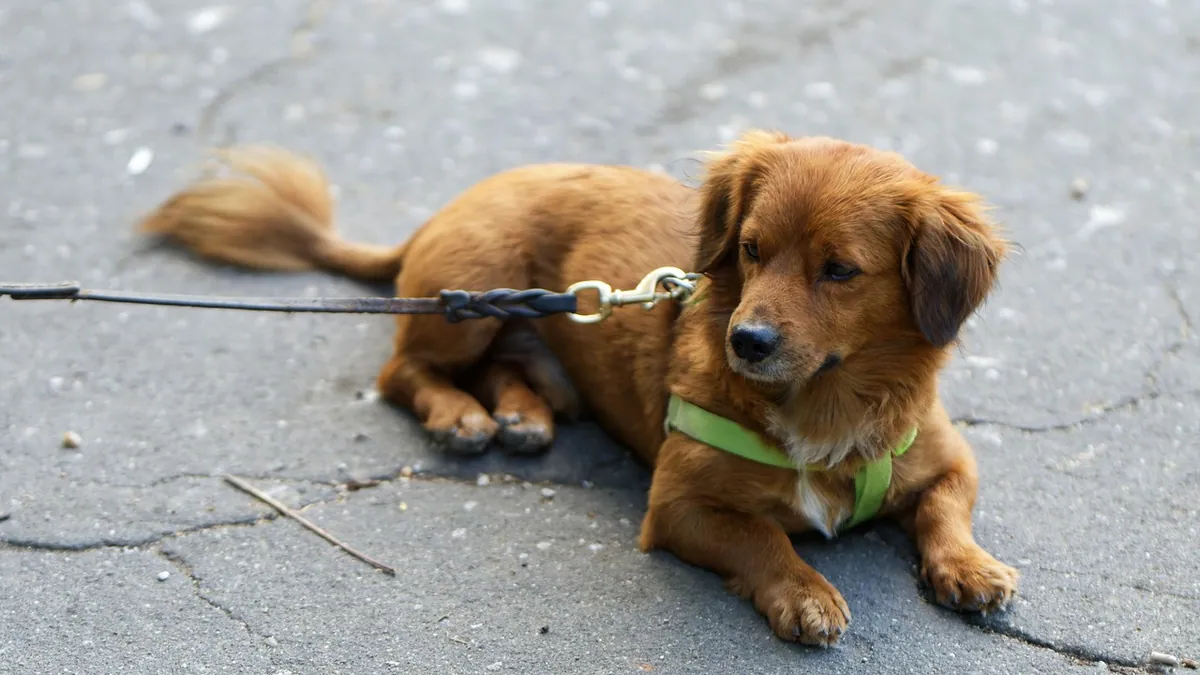
If your dog not wanting to walk has become a daily standoff, you are not alone. Most cases come down to one of three things: fear or anxiety, pain or a medical problem, or a training and equipment issue. The good news is that each cause has a different fix, and you can usually sort out which one you are dealing with in a few days.
This article is educational and is not a substitute for veterinary diagnosis or treatment.
Quick Answer
- A dog who plants his feet at the door, the driveway, or the same spot every walk is often scared, not stubborn. Fear is the most common driver of aggression and avoidance in dogs, especially when they are leashed and cannot escape [1].
- Pain is a major hidden cause. Among dogs seen by veterinary behaviorists, 28% to 82% showed signs of pain [2]. A dog who was fine on leash last month and refuses today needs a medical check first.
- Stop pulling, dragging, or pushing your dog forward. Forcing a scared dog past his threshold can make the fear worse and can trigger a defensive bite [1].
- Reward what you want. Training based on rewards produces fewer behavior problems and less fear than training based on punishment or confrontation [3].
- If your dog is relaxed at home and only freezes on leash, the leash itself, the gear, or the route is part of the problem. That is a training issue you can work on.
Why Your Dog May Not Want to Walk
Normal reasons dogs stop on walks
Some dogs stop because they are overwhelmed, not because anything is wrong with them. A puppy on his first few walks, a rescue dog in a new neighborhood, or a dog who has never worn a harness may simply freeze. Dogs that are more relaxed during a behavioral assessment tend to be less reactive on leash, with lower leash tension and less pulling [4]. Relaxation and leash skills go together.
Other normal reasons include:
- Heat, cold, or rough pavement. Paw pads and joints react to extreme surfaces.
- A scary event on that route. One loud truck or loose dog can make a dog refuse that street for weeks.
- Boredom with the same loop. Some dogs lose interest in a route they have walked a hundred times.
- Age. A senior dog may slow down before you notice anything else.
When the leash itself is the problem
Some dogs are fine off leash in the yard and freeze the moment the leash clips on. That pattern points to the gear or the handling, not the walk. A tight collar, a heavy leash, or a handler who pulls hard can all create tension. In one study, volunteers with more neurotic personalities pulled the leash harder, and the dogs they walked showed more lip licking and body shaking [5]. Your dog reads your hands and your pace.
If your dog has started dodging the leash specifically, see Why Is My Dog Suddenly Scared of the Leash?.
Medical Causes to Rule Out First
Before you build a training plan, get a veterinary exam. This is not optional. Pain is an important risk factor for behavior problems, and a study of veterinary behaviorists' cases found that between 28% and 82% of patients showed signs of pain [2].
Conditions that can make a dog refuse to walk include:
- Orthopedic pain. Arthritis, cruciate injuries, hip dysplasia, and back pain all show up as "he just doesn't want to walk anymore."
- Neurologic disease. Weakness, wobbling, or dragging a paw needs same-week attention.
- Organ dysfunction. Kidney or liver disease and hormonal disorders of the adrenal, sex, or thyroid glands can change behavior and energy [1].
- Dental pain or ear infections. These can make a dog head-shy about the collar and leash.
Pain aggression is a defensive reaction that happens when a dog is in pain, and it may appear when the dog anticipates being moved or touched [1]. If your dog growls when you reach for the harness, that is a pain clue, not a dominance issue.
Your veterinarian will decide what testing is needed. There is no single test that rules out pain, so the exam and history matter as much as any lab work.
When Not Wanting to Walk Becomes a Problem
A dog who skips one walk after a thunderstorm is not a behavior case. A dog who refuses most walks for more than a week, or who shows distress, is.
Watch for these signs that the behavior has crossed into a problem:
- Freezing, pancaking, or lying down and refusing to move at the same spot every time.
- Trembling, drooling, tucked tail, or trying to bolt home.
- Growling, snapping, or lunging when you reach for the leash or try to move him.
- Pulling so hard that you cannot control the walk. Leash pulling is a common complaint, and it can hurt both of you. In one study, half of the participants experienced leash tension of 125 N or greater, and the largest pulling event recorded was 412.5 N [6].
- You have started avoiding walks entirely.
Fearful dogs may try to avoid a threat, but when they cannot escape (for example, when they are leashed), they can become aggressive [1]. A dog who is trapped on a tight leash and scared is a dog at risk of biting.
What to Do: A Step-by-Step Plan
Step 1: Get a medical check
Book a routine veterinary visit and describe exactly when your dog stops, what he does, and what has changed. Bring a short video of a walk. Your veterinarian will rule out pain and illness before you invest weeks in training [2].
Step 2: Change the gear
Equipment matters more than most owners expect. A back-connection harness can actually increase pulling when a dog is motivated by a treat, compared with a neck collar [7]. Front-connection harnesses and martingale collars are common alternatives, and pulling force differs measurably between equipment types [8].
Fit matters too. A harness that rubs the shoulders or a collar that sits too high can cause discomfort on every step. Ask your veterinarian or a certified trainer to check the fit in person.
Step 3: Shrink the walk
Do not aim for the full loop. Aim for the end of the driveway. Walk three minutes, reward calm behavior, and go home before your dog panics. Short, successful walks build confidence faster than long, stressful ones.
Step 4: Use reward-based training
The techniques that work best for fear and anxiety focus on changing your dog's emotional response to the trigger (counterconditioning) and replacing the unwanted response with a wanted one using rewards (response substitution) [2]. In plain terms: pair the scary thing with something great, and teach a behavior you can reward.
Teach these three behaviors at home first, with no leash pressure:
- Look at me. Say your dog's name, mark, and treat when he makes eye contact.
- Sit. A dog who is sitting cannot be pulling.
- Relaxed down. Reward a dog who settles on a mat.
Then practice them on the driveway, then the sidewalk, then the block. Food is one of the best ways to motivate a dog, so avoid any trainer who refuses to use treats [3].
For a full training progression, see Dog Training Tips For Leash Walking.
Step 5: Desensitize to the scary parts
If your dog freezes at a specific spot, do not drag him through it. Desensitization means exposing your dog to the trigger at a low intensity, then slowly increasing it while he stays calm [3]. Start ten houses away, reward calm, and retreat. Repeat over days, not minutes.
Step 6: Meet his exercise needs another way
A dog who will not walk still needs activity. Fetch in a fenced yard, indoor nose work games, food puzzles, and tug all burn energy. Meeting your dog's behavioral needs at home makes the leash work easier, not harder [2].
Step 7: Keep a simple log
Write down the time, route, weather, what happened right before the stop, and how long it lasted. Patterns show up fast. A dog who stops only on hot afternoons has a different problem than a dog who stops only when a specific dog is out.
What Not to Do
Do not punish the freeze. Yelling, jerking the leash, or forcing your dog forward can make fear worse. Punishment-based and confrontation-based training is more likely to lead to fear, avoidance, and increased aggression [3]. It also teaches your dog that walks are unpredictable.
Do not use flooding. Flooding means forcing a dog to stay in a scary situation until he stops reacting. It is not used often because it is more likely to make animals worse [3].
Do not rely on "dominance" methods. Training that encourages owners to assert leadership through physical confrontation is not recommended [3].
Do not assume it is stubbornness. A dog who will not move is usually scared, hurting, or confused. The label does not matter. The cause does.
Do not skip the vet because training seems cheaper. If pain is the cause, no amount of treat training will fix it, and you may make the underlying problem worse by pushing a painful dog to walk.
Do not ignore leash pulling as "just excitement." Pulling force on a routine walk can reach levels that affect your own gait and stability [6]. It is a safety issue for both of you.
When to Involve a Veterinarian or Behavior Professional
Call your veterinarian if:
- Your dog refuses walks for more than a few days, or the refusal is getting worse.
- You see limping, stiffness, wobbling, or reluctance to climb stairs.
- Your dog growls, snaps, or bites when you reach for the leash or harness.
- Your dog is losing weight, vomiting, or has changes in appetite or thirst.
- You have tried reward-based training for two to three weeks with no improvement.
Ask for a referral to a veterinary behaviorist or a certified reward-based trainer if your dog shows fear, anxiety, or aggression that you cannot safely manage. If your dog has bitten a person or another animal, that is a same-day call.
If you are dealing with lunging and barking at other dogs on walks, read Dog Aggression on Leash: Why It Happens and How to Manage.
Limitations and When to Contact a Veterinarian
No article can tell you whether your dog's refusal to walk is pain, fear, or habit. That requires an exam and a history taken in person. Individual cases need a veterinarian.
Contact your veterinarian the same day if:
- Your dog suddenly cannot bear weight on a leg.
- Your dog collapses, drags a limb, or seems disoriented.
- Your dog shows sudden severe pain when touched or moved.
- Your dog has a first-time seizure or a sudden change in behavior.
Go to an emergency clinic now if:
- Your dog is struggling to breathe, has pale gums, or is unresponsive.
- Your dog has a swollen, painful abdomen or repeated unproductive vomiting.
- Your dog has been hit by a car or had another trauma, even if he seems fine.
Book a routine visit if:
- Walks have been declining for more than a week.
- Your dog is stiff after rest or slow to rise.
- Your dog is anxious on leash but normal at home.
- You want help choosing gear or building a training plan.
Frequently Asked Questions
Why is my dog fine off leash but not on leash?
The leash removes your dog's ability to escape, and that changes how he responds to anything scary. Fearful dogs can become aggressive when they cannot flee, including when they are leashed [1]. Off leash in a familiar yard, your dog has options. On leash, he does not.
Should I drag my dog if he refuses to move?
No. Dragging a scared dog past his threshold can worsen the fear and increase the risk of a defensive bite [1]. Stop, wait, and either reward calm movement or end the walk early. Then rebuild in smaller steps.
Can pain really make a dog stop walking?
Yes. Pain is an important risk factor for behavior problems, and a large share of dogs seen by veterinary behaviorists showed signs of pain [2]. Arthritis, back pain, and paw injuries are common culprits. A veterinary exam is the first step, not the last resort.
How long does leash training take?
It varies with the dog, the cause, and how consistent you are. In one feasibility study of a six-class leash manners course, 86% of enrolled owners completed it, and 73% reported their leash walking skills improved [9]. Plan on weeks, not days, and expect setbacks.
Do harnesses make dogs pull more?
It depends on the harness and the situation. In one study, dogs pulled with greater maximal and mean leash tension when restrained by a back-connection harness compared with a neck collar when a food treat was used as a motivator [7]. Front-connection harnesses and other designs behave differently, and pulling force varies by equipment type [8].
What if my dog only stops on certain streets?
That is a strong clue that something specific on that route is scaring him. Desensitization and counterconditioning work well for location-specific fear [3]. Start far enough away that your dog will still take treats, reward calm, and add a few steps closer each session.
Can I just walk my dog less?
You can shorten walks, but you still need to meet his exercise and enrichment needs another way. A dog who is under-exercised often becomes more reactive, not less. If walks are on hold, add yard play, puzzles, and training games while you work on the underlying cause.
Related Articles
- Why Is My Dog Suddenly Scared of the Leash?
- Dog Training Tips For Leash Walking
- How to Stop a Dog from Pulling on the Leash: Training That Works
- Dog Aggression on Leash: Why It Happens and How to Manage
- Dog Training Tips Leash Pulling
- Dog Leash Training Tips
- Puppy Refuses to Walk on Leash? Training Tips That Work
- Why Won't My Dog Go Outside? Causes and What to Do
- How to Get Your Dog to Focus on You During Walks
References
- Behavior Problems in Dogs - Dog Owners. Merck Veterinary Manual.
- Behavior Problems of Dogs - Behavior. Merck Veterinary Manual.
- Behavior Modification in Dogs - Dog Owners. Merck Veterinary Manual.
- Do Canine Behavioural Assessments and Characteristics Predict the Human-Dog Interaction When Walking on a Leash in a Shelter Setting?. Animals : an open access journal from MDPI, 2020.
- Two Ends of the Leash: Relations Between Personality of Shelter Volunteers and On-leash Walking Behavior With Shelter Dogs. Frontiers in psychology, 2021.
- Assessment of Dog-Leash Pulling Force and the Impact of Dog-Walking on Gait Kinematics. Annals of biomedical engineering, 2026.
- Dog Pulling on the Leash: Effects of Restraint by a Neck Collar vs. a Chest Harness. Frontiers in veterinary science, 2021.
- Comparing efficacy in reducing pulling and welfare impacts of four types of leash walking equipment. PeerJ, 2024.
- Testing Leash Walking Training as a Physical Activity Intervention for Older Adult Dog Owners: A Feasibility Study. Geriatrics (Basel, Switzerland), 2022.